


Antique Wash Basin Table
An antique wash basin table is a practical piece of period furniture designed for personal washing, combining timber frames with marble, ceramic or glass fittings.
Antique Wash Basin Table
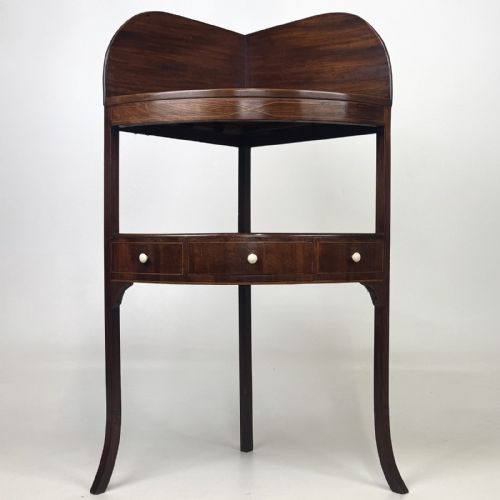
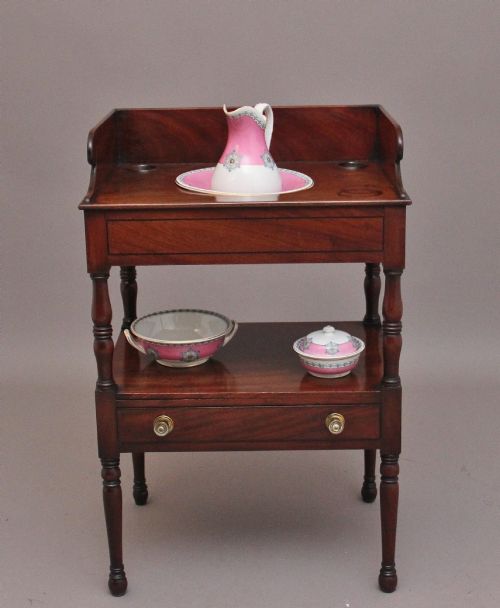
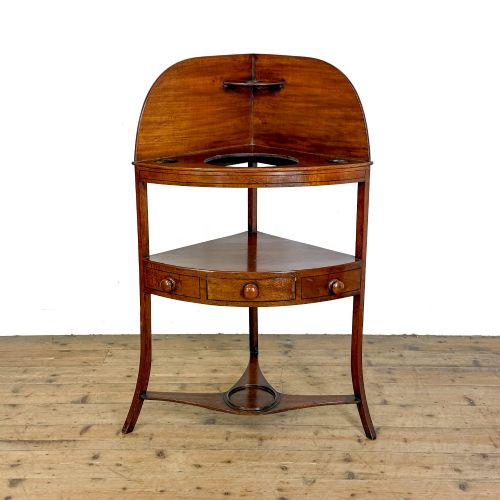
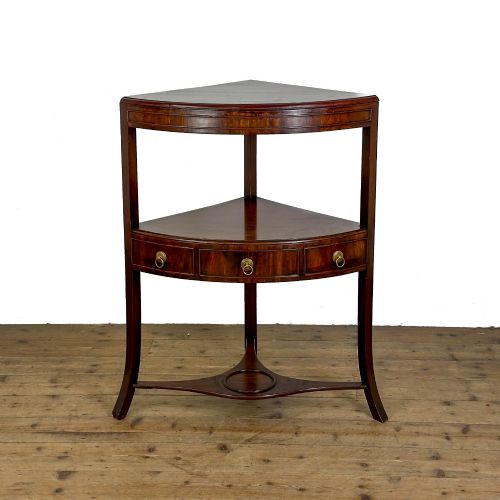
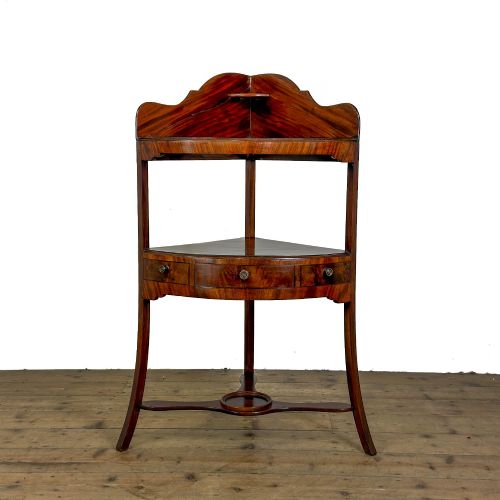
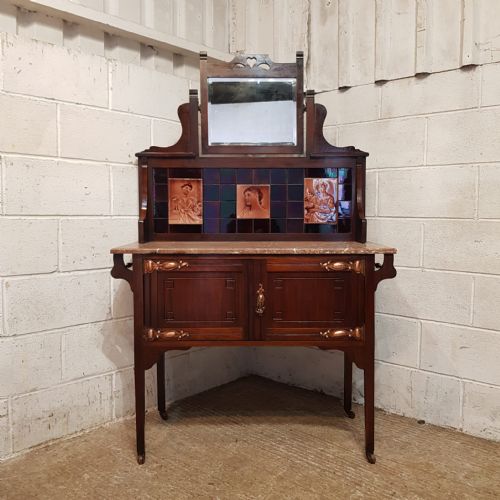
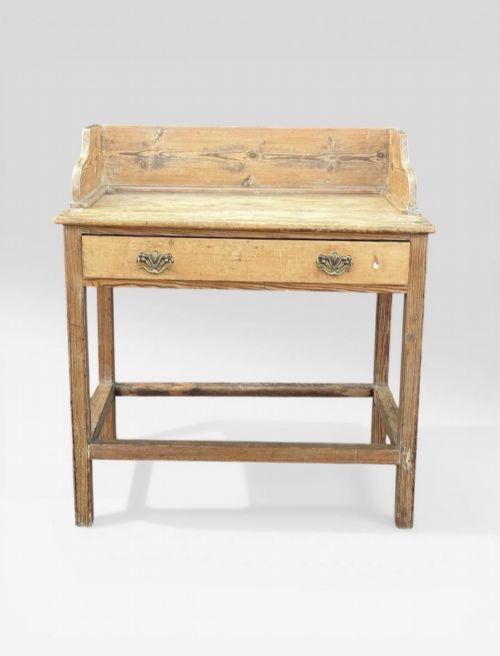
An antique wash basin table serves as a dedicated washing station from the Georgian, Victorian and Edwardian eras. These items include corner washstands, painted pine wash stands and freestanding mahogany tables designed for domestic use.
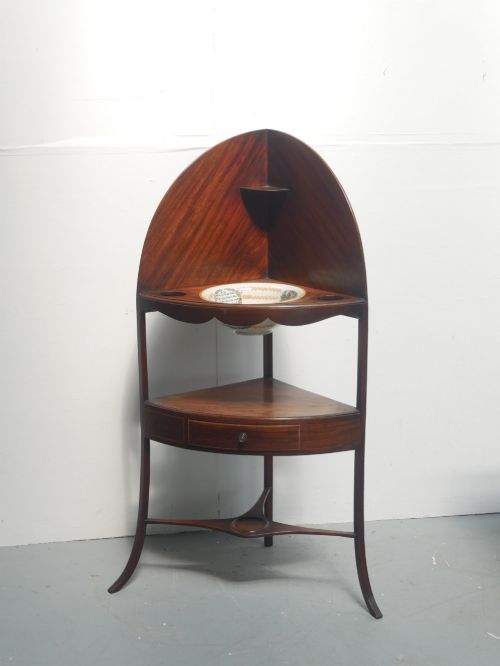
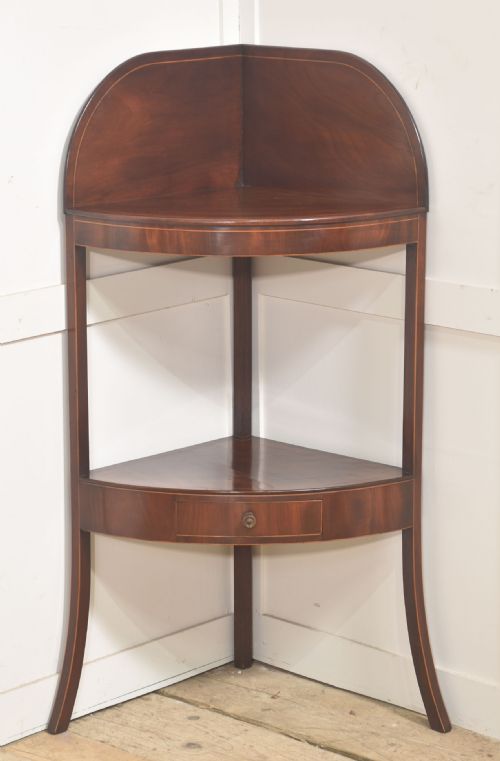
The most common examples on this page are Georgian mahogany corner washstands built to fit snugly into room angles, alongside Victorian pine and Edwardian mahogany variants.
Makers shaped these utilitarian items using timber frames, occasionally incorporating cupboards, shelves or basin apertures to hold jugs and bowls.
How they were made
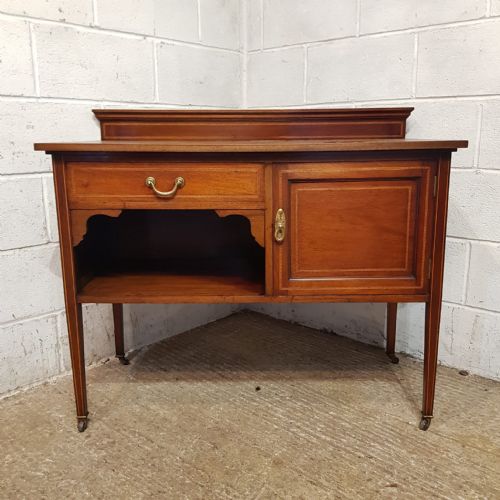
Cabinetmakers constructed these frames primarily from solid mahogany, pine and satinbirch, sometimes utilising boxwood inlay for decorative contrast. Carpenters joined structural elements using traditional joints suited to load-bearing washstands.
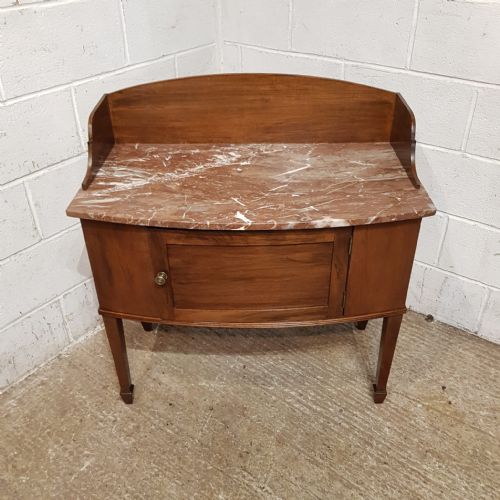
Worksurfaces frequently incorporate fitted marble slabs to resist water damage from basins and jugs. Metal components such as brass fittings and forged iron provide structural support and functional hardware.
One unusual survivor is a ships teak combined washstand table built to withstand maritime motion.
What varies in quality
The choice of primary timber dictates the build tier, ranging from simple painted pine to figured mahogany and satinbirch. Finer examples display precise boxwood inlay and well-fitted marble tops rather than plain wooden surfaces.
Construction methods also separate standard utility items from refined pieces, visible in the neatness of corner joints, the preservation of original paint finishes and the integration of subsidiary cabinets or shelves.
The Antique Wash Basin Table Glossary
- Corner washstand
- A triangular-shaped wash basin table designed specifically to fit into the corner of a room. These space-saving items date frequently from the Georgian period.
- Wash set
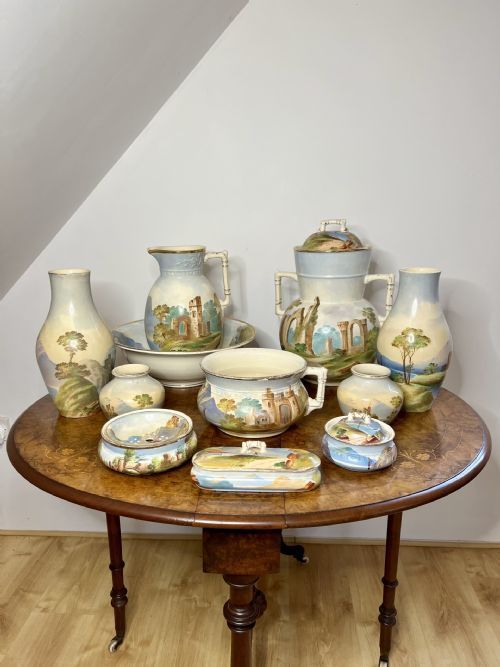
- A collection of ceramic or glass vessels comprising a basin and jug used for personal washing on these tables. They sit upon the marble or wooden surface.
- Satinbirch
- A pale, lustrous timber derived from birch trees, utilised during the late Victorian period for cabinetwork. It provides a distinct golden grain appearance.
- Boxwood inlay
- Contrasting light wood inserted into recesses on the mahogany surface to form decorative lines or geometric patterns. It marks a more refined level of manufacture.
- Forged iron
- Metal shaped by heating and hammering, utilised for structural framing on specific industrial or rustic wash stands. It offers durability and strength.
Antique Wash Basin Table: Frequently Asked Questions
What is an antique wash basin table used for today?
These tables function well as hallway lamp tables, plant stands or occasional side tables in modern rooms. Their fitted tops and compact proportions suit smaller spaces.
Original basin apertures can occasionally house planters or glass inserts, adapting the historic utility item for decorative interior display.
How do I identify a Georgian washstand?
Georgian examples often feature mahogany timber, tripod or square supporting legs, and specific cut-outs designed to hold wash basins and soap cups securely.
Corner designs are particularly prevalent in this era, engineered to maximise bedroom space before plumbed bathrooms became standard.
Did all washstands include marble tops?
Not all pieces feature stone surfaces, as many earlier Georgian and Victorian variants rely entirely on solid timber tops. Marble became more widespread by the late Victorian and Edwardian periods.
Stone slabs provided a durable, waterproof surface that resisted splashing during daily washing routines.
What is the difference between pine and mahogany washstands?
Pine wash stands were typically utilitarian pieces intended for servants' quarters or country homes, often finished in plain paint or simple varnish. They represent a more rustic domestic tradition.
Mahogany tables served principal bedrooms, displaying finer cabinetwork, richer grain patterns and occasionally decorative inlay work suited to formal spaces.