


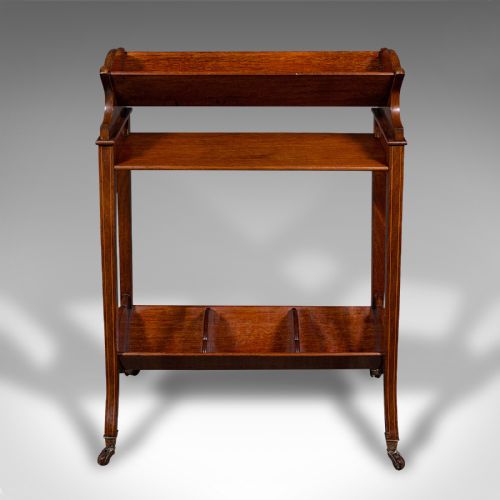

Antique Walnut Library Stand
These antique walnut library stand examples bring warmth and functional storage to reading spaces, offering refined timber work and rotating or open book storage.
Antique Walnut Library Stand
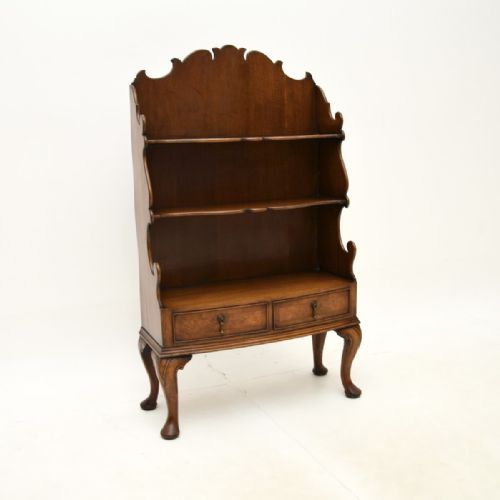
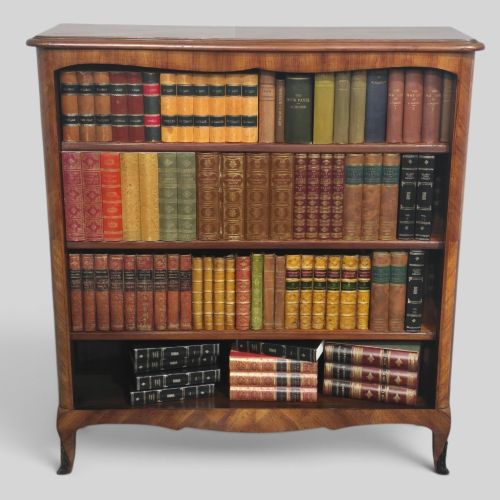
An antique walnut library stand encompasses diverse forms designed for organising books, folios, and reading accessories in domestic interiors. When searching for this phrase, buyers encounter pieces ranging from revolving bookstands and stationary bookcases to music cabinets and folio stands.
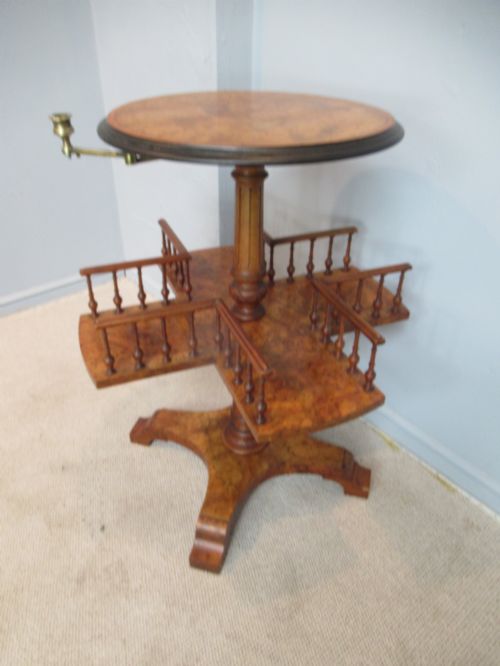
The selections available here draw principally from Victorian and Edwardian periods, alongside Georgian and early twentieth-century examples. Common formats include rotating novel libraries, open adjustable bookcases, and freestanding tables incorporating walnut veneer and brass mounts.
How they were made
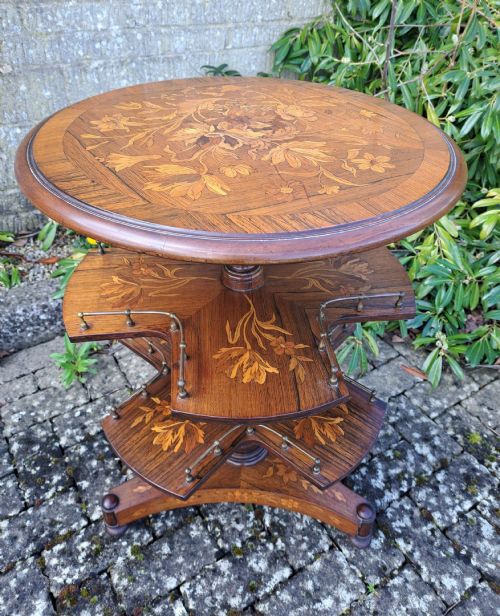
Cabinetmakers utilised solid walnut and figured burr walnut veneers over secondary timbers, often accentuating the grain patterns on tabletops and revolving tiers. Marquetry inlay, fruitwood, and satinwood details appear across various regional interpretations.
Hardware components typically include brass mounts, casters, and mechanical pivots for rotating bookstands. Interior sections integrate iron framing, glass, and tailored compartment dividers designed to support heavy volumes.
Early twentieth-century makers thoughtfully ensured you could reach your favourite novel without leaving your armchair.
What varies in quality
Quality rests upon the selection of timber veneers, where highly figured burr walnut displays superior depth compared to plainer stock. The crispness of marquetry work and the delicacy of inlay further separate standard production from finer cabinetmaking.
Structural integrity of rotating mechanisms and joints dictates functional longevity. Fine examples maintain smooth rotation and precise joinery without excessive play in the moving tiers.
Edwards and Roberts·Maple and Co·Gillows
The Antique Walnut Library Stand Glossary
- Canterbury
- A low piece of furniture featuring partitioned vertical sections designed for holding sheet music, folios, or loose periodicals. These stands frequently incorporate small drawers below the main rack.
- Marquetry
- The art of applying decorative veneer pieces in wood, shell, or ivory to form intricate pictorial or floral patterns. Dutch examples often display elaborate floral motifs across the rotating surfaces.
- Etagere
- A set of open shelves for displaying small decorative objects, books, or desk accessories. Diminutive versions appear in nineteenth-century walnut.
- Folio stand
- A dedicated piece of furniture designed to hold large books, maps, or unbound prints flat or at a slanted viewing angle. They utilise sturdy timber framing to support oversized paper goods.
Antique Walnut Library Stand: Frequently Asked Questions
How do revolving bookcases work?
Revolving bookcases utilise a concealed central pivot mechanism and ball bearings beneath the tier structure. This allows the stacked book compartments to turn smoothly in either direction for easy browsing.
The mechanical assemblies are generally housed between the base and the lowest shelf, keeping the rotating action stable even when fully loaded with heavy volumes.
Where were library stands placed?
These stands sat beside reading chairs, near desks, or freestanding within home libraries and studies. Revolving models functioned well beside seating areas where multiple volumes needed to remain within arm's reach.
Larger bookcases and folio stands occupied wall spaces or open floor areas to house reference collections and oversized prints.
How do I identify a Victorian stand?
Victorian pieces often display rich burr walnut veneers, dark patination, and robust construction suited to heavy domestic use. Details such as brass mounts and turned uprights frequently accompany this nineteenth-century period.
Proportions tend to be heavier and more ornate than later Edwardian counterparts, which lean towards lighter framing and simpler outlines.
Can these stands hold heavy books?
Library stands were constructed to support substantial reference volumes and bound folios in daily use. Solid timber frames and sturdy revolving platforms distribute weight evenly across the base.
Care should be taken to balance heavier volumes across compartments on revolving stands to ensure smooth operation of the central pivot.