


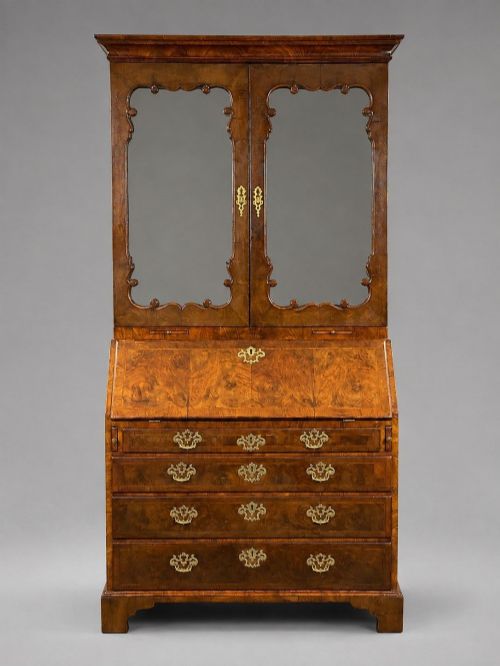
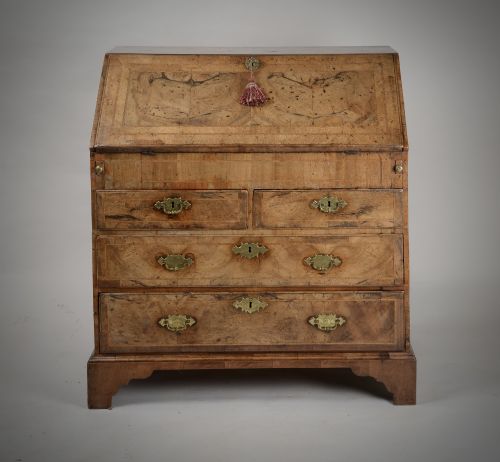
Antique Walnut Fall Front
An antique walnut fall front brings tactile warmth and concealed workspace into a room through a hinged writing flap that drops down to reveal fitted interiors.
Antique Walnut Fall Front
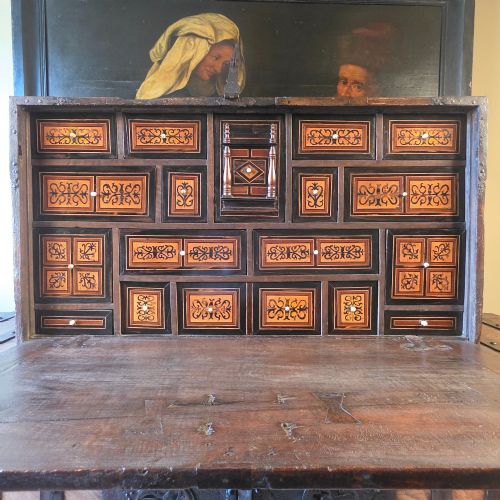
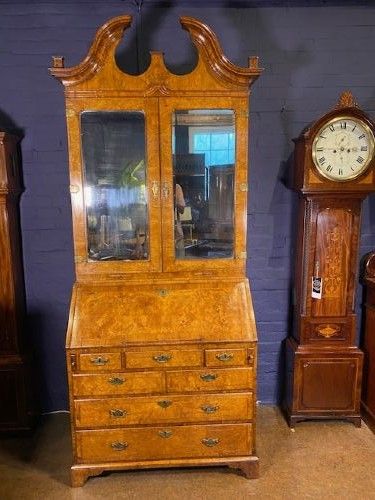
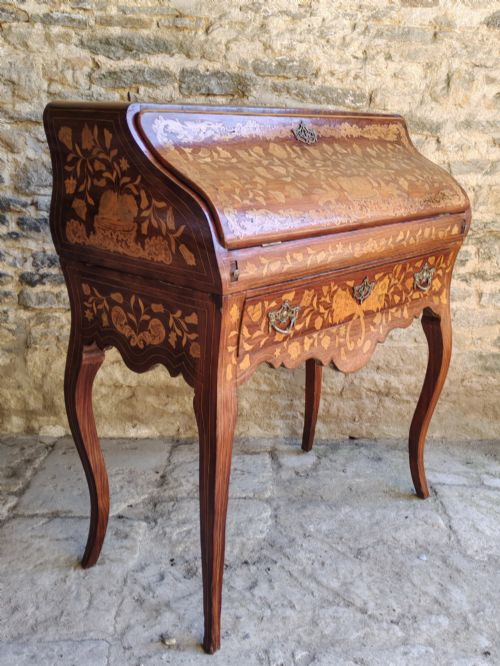
When you search for an antique walnut fall front, you encounter writing furniture spanning from the seventeenth century through to the art deco period. The selection includes bureau bookcases, desks, and cabinet forms originating from English, Dutch, French, and Spanish workshops.
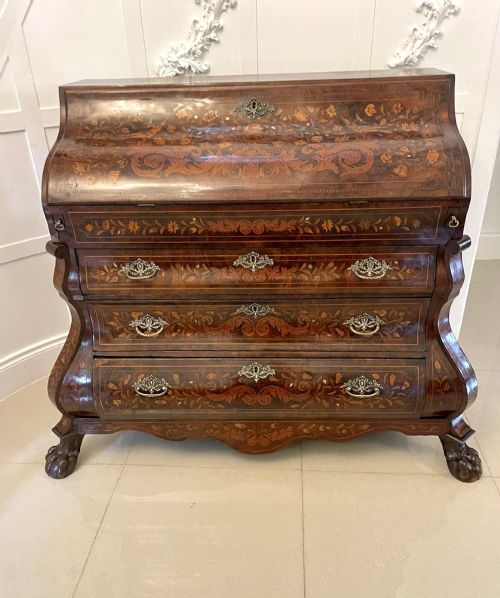
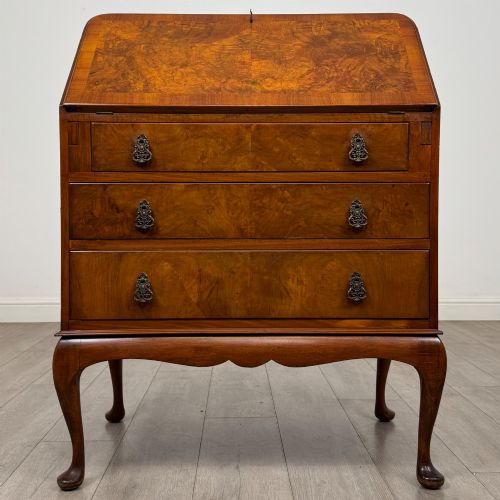
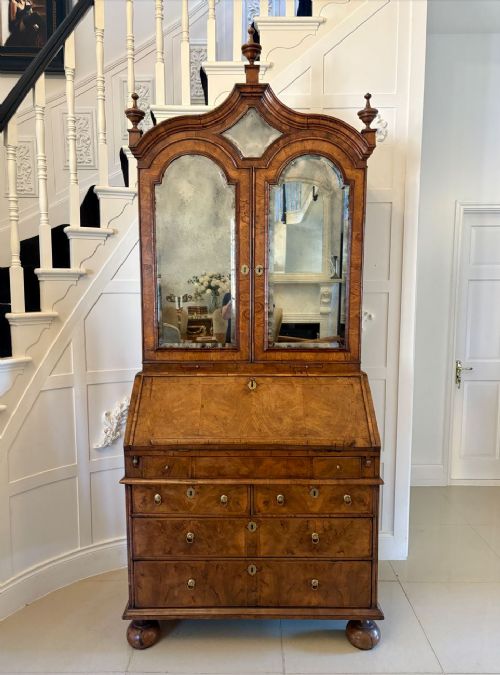
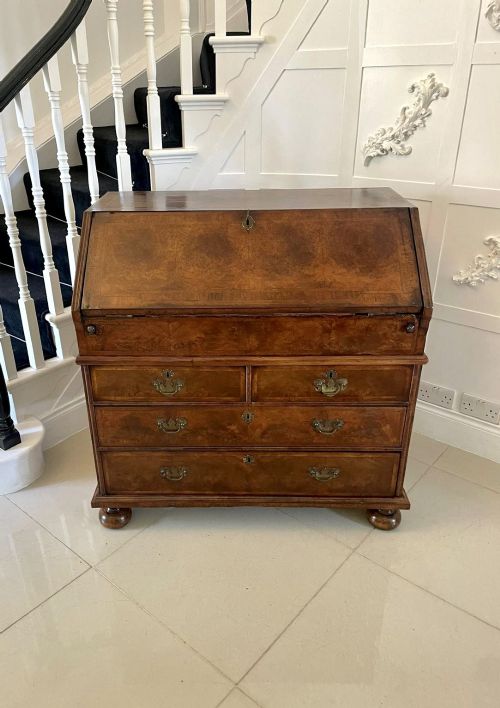
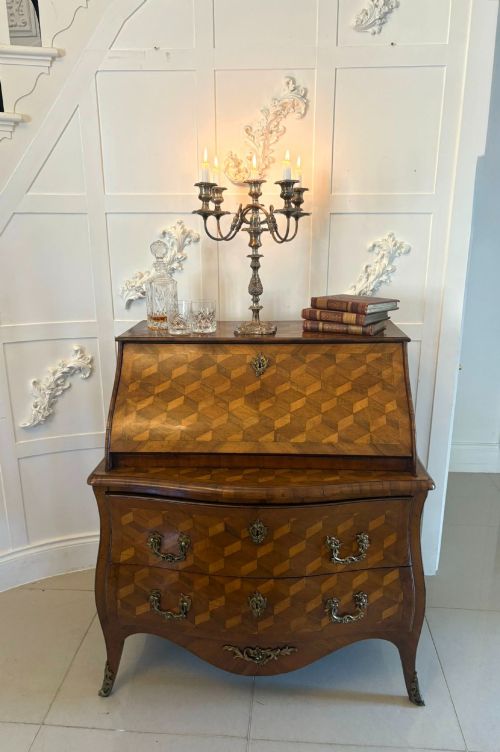
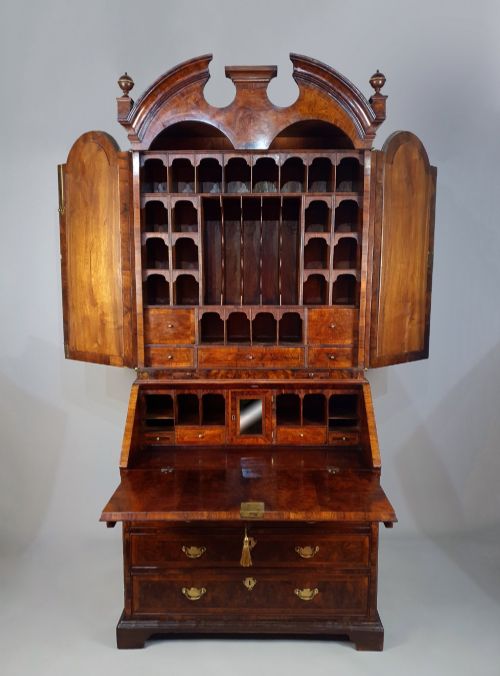
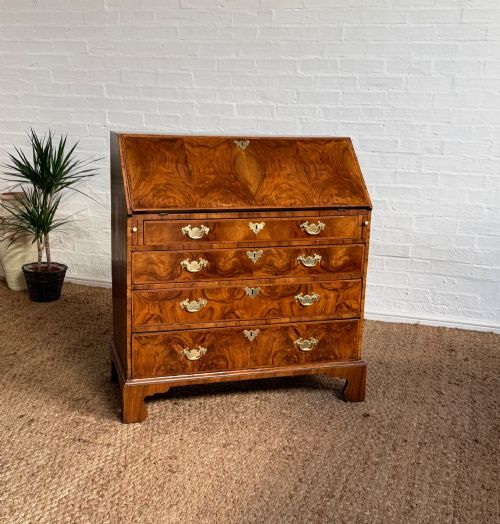
The most common form on this page is the bureau, where the sloping fall front opens to disclose small drawers and pigeonholes above lower storage drawers. Bureau bookcases add a glazed upper cabinet for display, while taller escritoires and secretaires provide vertical writing space with drop-down panels.
Earlier examples often show Queen Anne and Georgian influences with featherbanding and marquetry, whereas later nineteenth and twentieth-century pieces incorporate Victorian carvings or clean art deco lines.
How they were made
Cabinetmakers constructed carcasses primarily using solid oak or fruitwood, applying figured walnut, burr walnut, and exotic veneers across the exterior surfaces. Walnut veneers were carefully matched to create symmetrical patterns across drawer fronts and the writing flap.
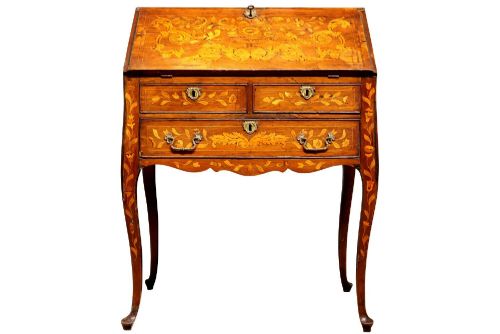
Inlaid decoration relied on floral marquetry and geometric parquetry using contrasting timbers, while brass handles, escutcheons, and occasional gilt bronze mounts provided hardware accents. Interiors often integrated red leather writing surfaces, small pigeonholes, and secret compartments concealed behind sliding panels.
Listings feature walnut, burr walnut, oak, fruitwood, and leather across pieces originating from the seventeenth century through to art deco designs.
What varies in quality
The distinction between tiers rests upon the choice of timber and the precision of the veneer work. Burr walnut and highly figured veneers arranged with careful grain continuity command greater regard than plain timber surfaces.
Execution of decorative details marks the standard of the piece, from the crispness of floral marquetry and featherbanding to the integration of fitted interior drawers and pigeonholes. Structural cohesion, including the smooth movement of the heavy fall front and the integrity of internal fittings, dictates the enduring character of each desk.
F.H. Marshall & Co Glasgow
The Antique Walnut Fall Front Glossary
- Fall front
- A hinged writing flap that drops down to a horizontal position to serve as a desk surface. It conceals pigeonholes and small drawers when closed.
- Burr walnut
- A prized timber harvested from walnut tree growths, yielding intricate swirling grain patterns. Cabinetmakers sliced it into thin veneers for decorative exterior panels.
- Featherbanding
- A form of inlay using small strips of veneer arranged in a herringbone pattern around the borders of drawer fronts and panels. It frames the central burr walnut grain.
- Marquetry
- The art of forming decorative patterns using fitted pieces of various coloured woods. Floral motifs are common on Dutch examples.
- Escritoire
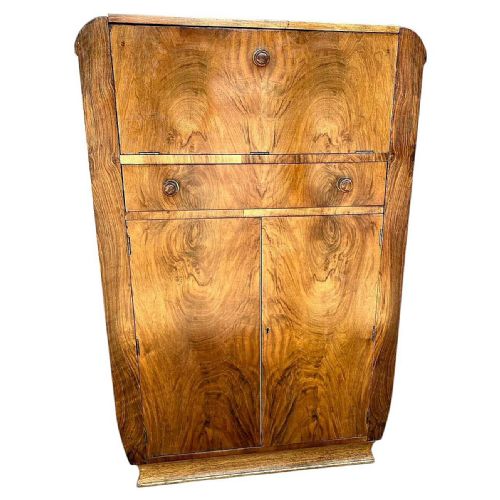
- A tall writing cabinet featuring a fall-front panel that opens to reveal an organised interior. They date back to the seventeenth and eighteenth centuries.
Antique Walnut Fall Front: Frequently Asked Questions
How do I use a fall front desk?
The hinged flap pulls down toward you, resting horizontally on support brackets or pull-out lopers to create a writing surface.
Inside, you will find small drawers and pigeonholes intended for stationery storage and correspondence.
Are these desks difficult to maintain?
Walnut requires protection from direct sunlight and excessive dryness to prevent timber splitting and veneer lifting.
Regular polishing with traditional wax helps preserve the sheen and nourish the historic wood surface.
How do I date an early walnut bureau?
Constructive details such as oak drawer linings, hand-cut dovetails, and specific brass hardware styles help indicate the period.
Earlier seventeenth and eighteenth-century pieces often feature cross-grained mouldings and featherbanding around the drawer edges.
What is the difference between a bureau and an escritoire?
A bureau typically slopes its fall front at an angle when closed, whereas an escritoire presents a vertical flat front that drops down horizontally.
Escritoires also tend to stand taller against a wall with greater vertical storage capacity above the writing level.