
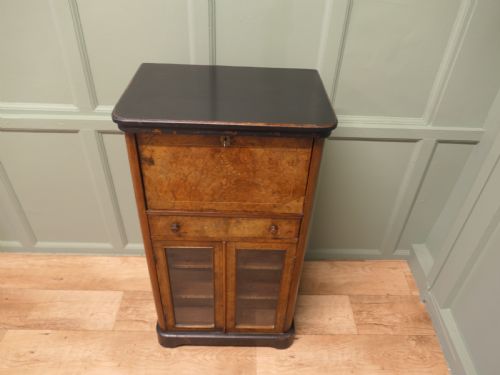

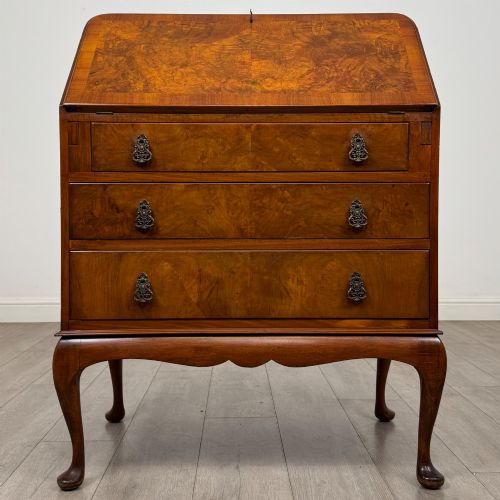
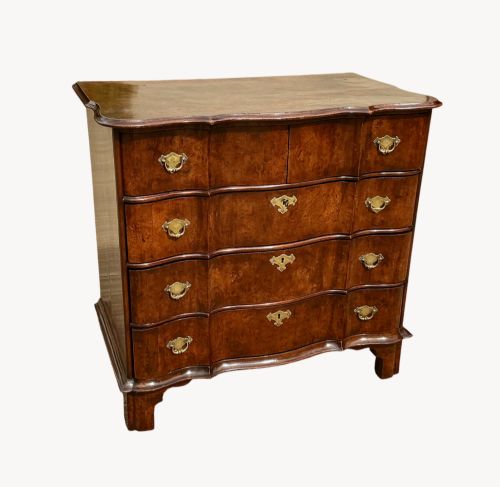
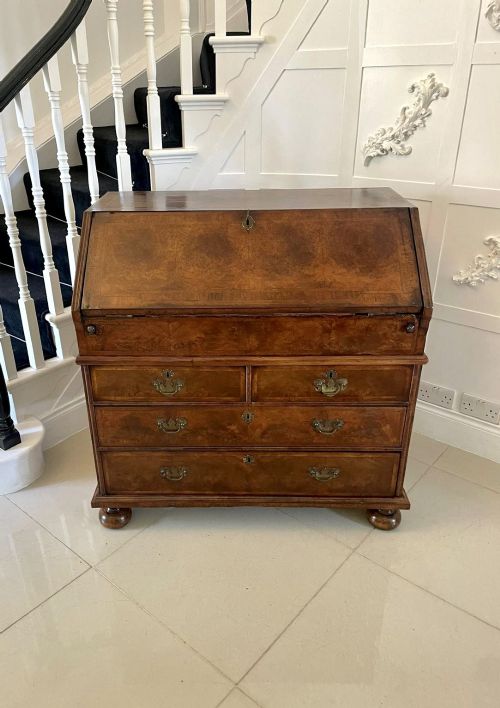
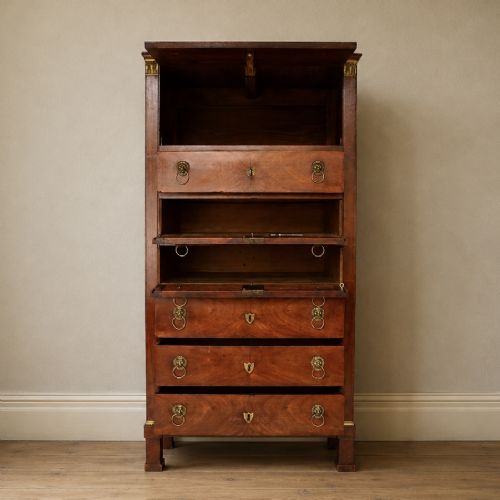

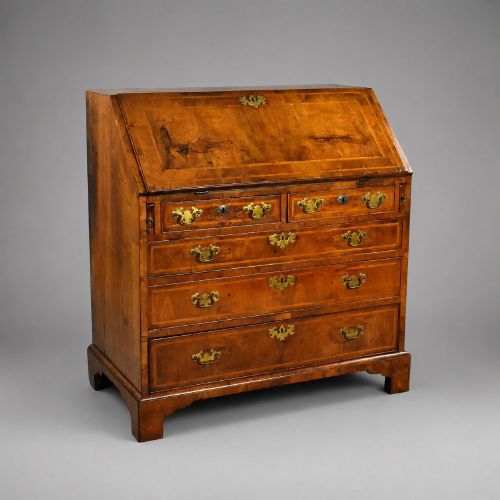
Antique Walnut Drop Front
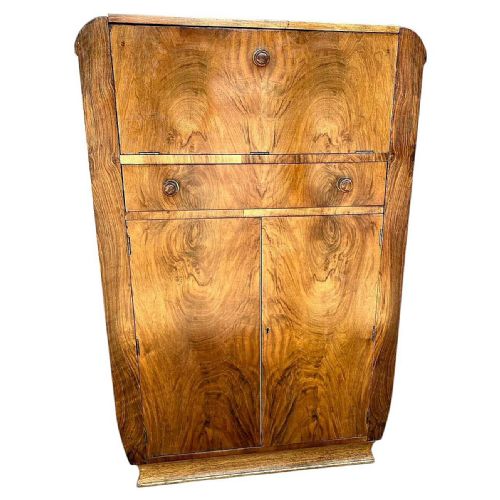
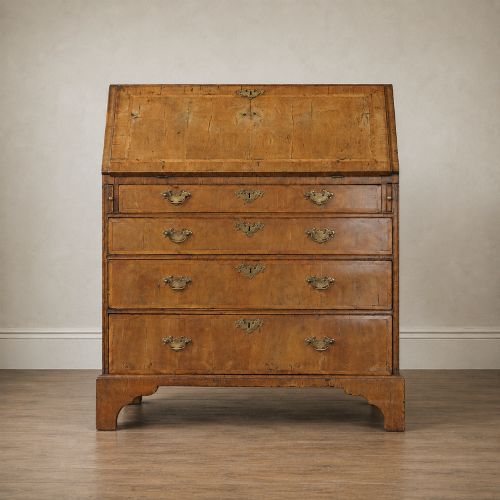
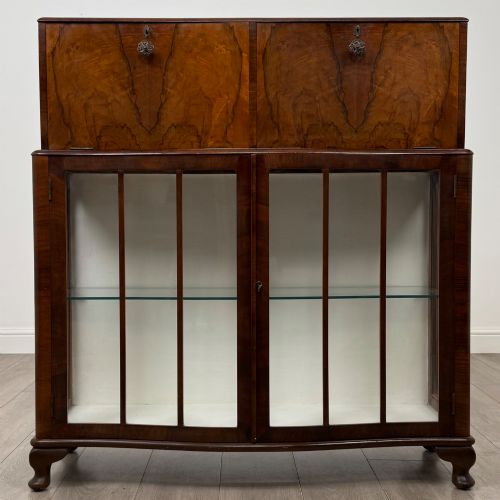
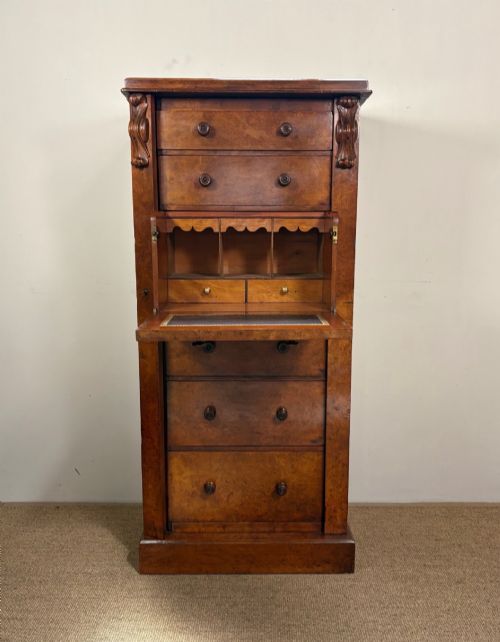
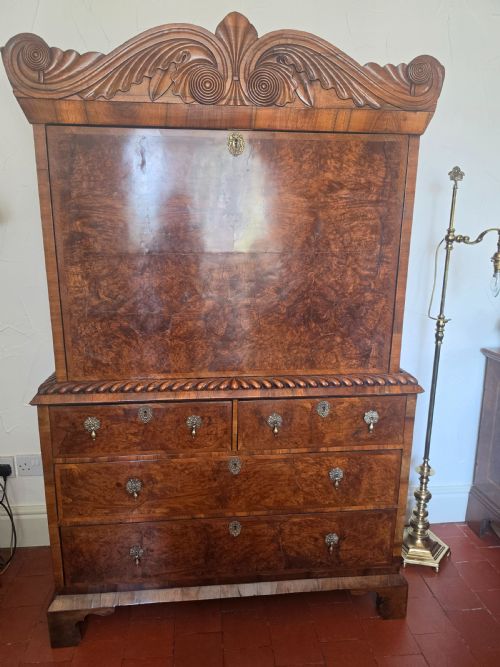
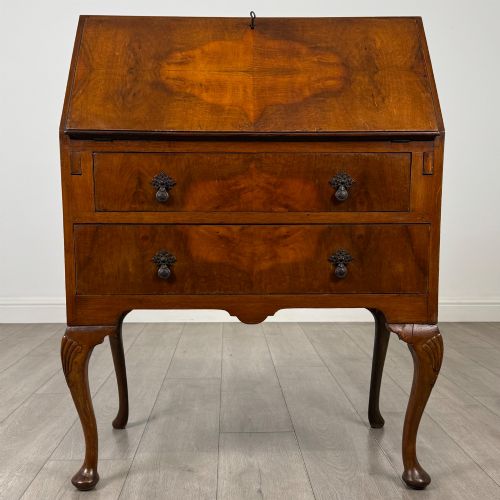
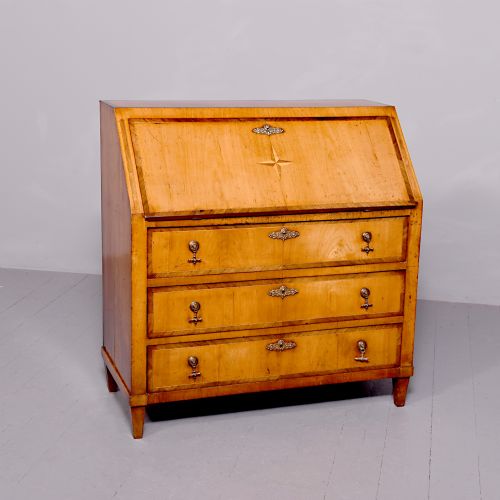
When you look for an antique walnut drop front, you seek a writing cabinet that folds down to reveal compartments.
Antique Walnut Drop Front
An antique walnut drop front serves as a writing desk or cabinet featuring a hinged writing surface that conceals drawers and pigeonholes when closed. These pieces appear across several centuries, spanning periods from the seventeenth century through the Georgian era to later twentieth-century interpretations.
The selections on this page range from compact bureaux and writing cabinets to larger bureau bookcases and tall escritoires. Bureau bookcases and fall-front desks dominate the offerings, built with fitted interiors intended for correspondence and record-keeping.
How they were made
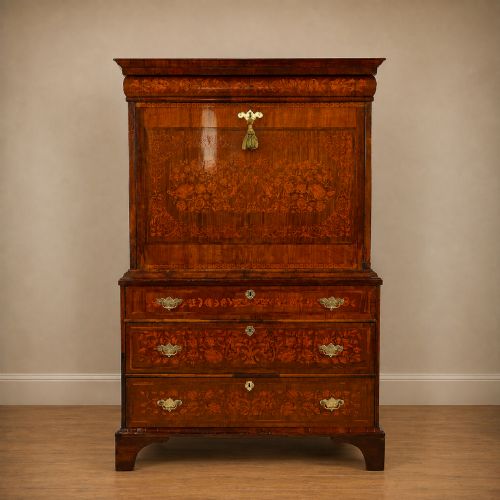
Cabinet makers utilised solid timber and veneers of walnut, burr walnut, and oyster walnut over foundational woods such as oak and elm. Surfaces often display decorative techniques including marquetry, parquetry, and herringbone inlay, matched with brass handles, escutcheons, and hinges.
Structural elements vary by period, incorporating fall-front lids supported by lopers, drop-front writing surfaces above drawers, and specialised mechanisms for secretaire drawers and compartment doors.
Listings feature walnut, burr walnut, and rosewood alongside oak and elm across Georgian, Victorian, and Art Deco periods.
What varies in quality
The distinction between tiers rests upon timber selection, figure matching, and the intricacy of internal joinery. Pieces displaying figured burr walnut veneers or complex floral marquetry represent higher craftsmanship than plain surfaces.
Original brass hardware, intact internal fittings, and the survival of secondary woods like oak contribute to the standing of an individual desk or cabinet within its period.
F.H. Marshall & Co Glasgow
The Antique Walnut Drop Front Glossary
- Drop front
- A hinged panel that folds down from a vertical position to provide a horizontal writing surface. This panel conceals internal drawers and compartments when closed.
- Bureau
- A sloping or fall-front writing desk fitted with drawers beneath. Early examples often rest on a separate stand or frame.
- Escritoire
- A writing cabinet featuring a fall-front panel and internal compartments. These tall pieces frequently incorporate drawers or cupboards beneath the writing section.
- Marquetry
- Decorative veneer work forming pictorial or geometric patterns using various coloured woods. Craftsmen cut contrasting timbers to create floral or abstract motifs across the fall front.
- Oyster veneer
- Transverse slices of small branches arranged in circular or repeating patterns resembling oyster shells. This technique appears on seventeenth-century walnut furniture.
- Secretaire
- A cabinet or chest containing a concealed writing drawer or drop-front desk section. Some variations include a fitted upper writing compartment behind a pull-down front.
Antique Walnut Drop Front: Frequently Asked Questions
What is a drop front desk?
A drop front desk is a writing cabinet with a hinged lid that lowers to create a flat writing surface. Inside, small drawers and pigeonholes organise correspondence.
When closed, the vertical panel hides the internal compartments and keeps the workspace tidy.
How do I date a walnut bureau?
Dating relies on construction methods, drawer linings, and veneer choices. Early pieces from the seventeenth and early eighteenth centuries often feature oyster veneers and candle slides.
Later Edwardian and Art Deco examples show different handle styles, lighter secondary woods, and machine-cut dovetails.
Where were these cabinets used?
These desks functioned in studies, libraries, and withdrawing rooms for private correspondence and household accounts. The lockable drop front kept confidential papers secure from general view.
Wealthy households placed larger bureau bookcases in principal rooms to display bound volumes alongside writing facilities.
How should I care for walnut veneer?
Walnut veneer benefits from stable room temperatures away from direct sunlight and heat sources, which cause timber to dry and split. Regular dusting with a dry, soft cloth maintains the finish.
Applying microcrystalline wax occasionally protects the polish without building up greasy residues.