


Antique Walnut Bar
An antique walnut bar provides a dedicated station for home entertaining, usually taking the form of a fitted cocktail cabinet or a rolling drinks trolley.
Antique Walnut Bar
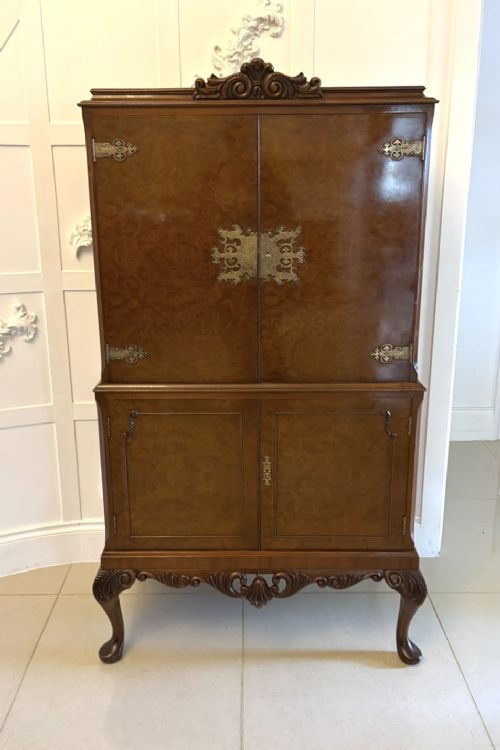
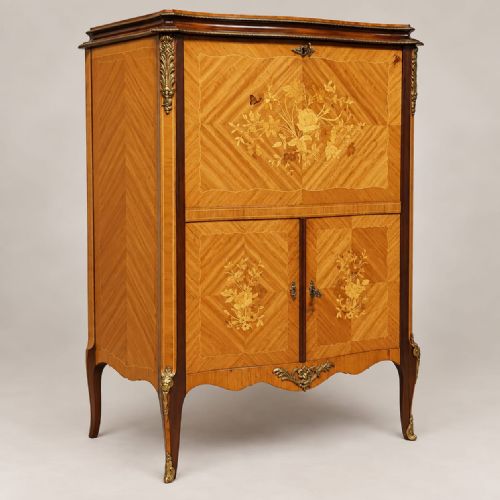
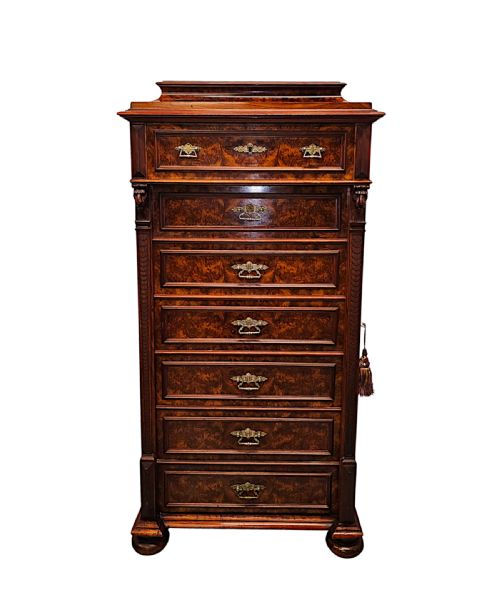
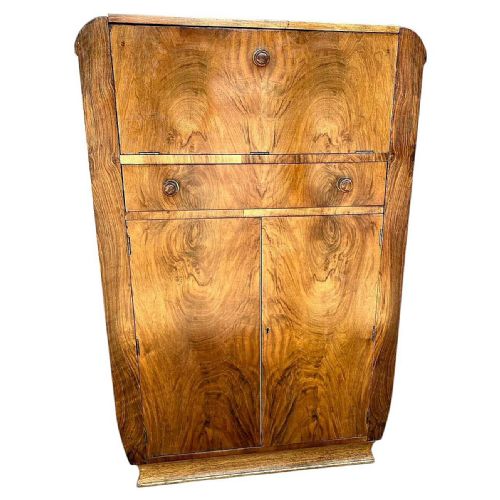
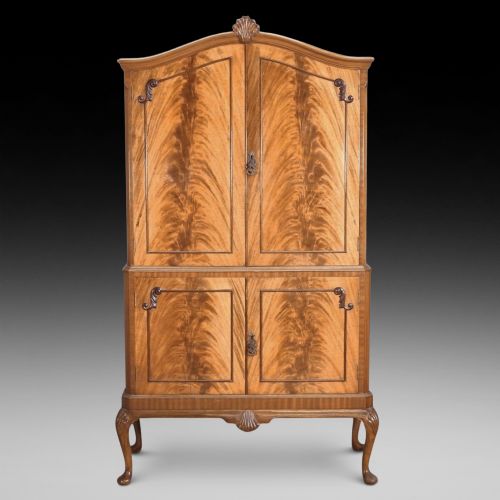
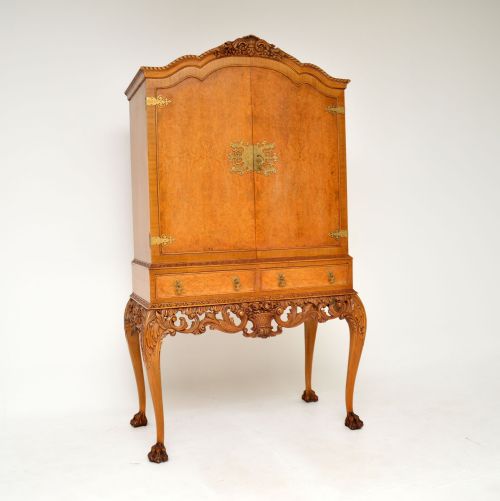
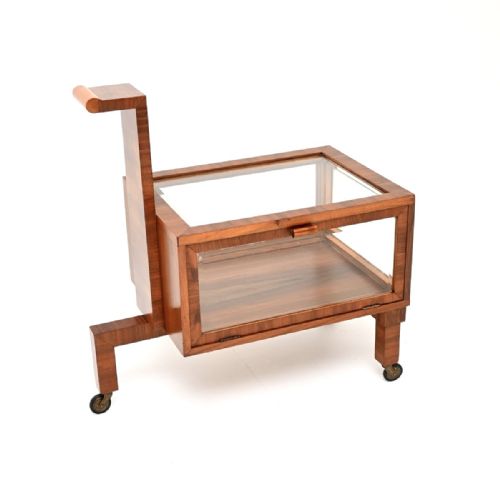
When you search for an antique walnut bar, you encounter primarily mid twentieth century cocktail cabinets and serving trolleys rather than fixed counters. These pieces date predominantly from the Art Deco period, alongside earlier Victorian and Edwardian examples that repurposed tall drawers or secretaries for hospitality.
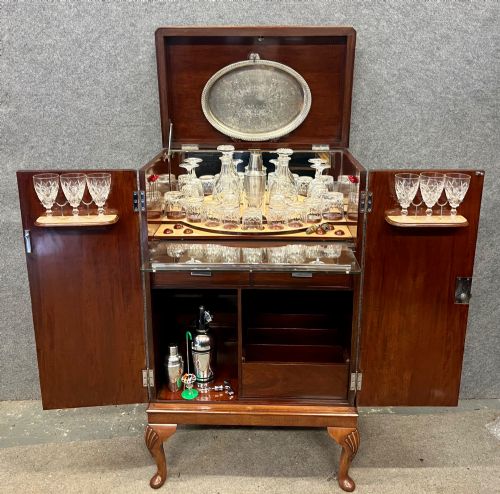
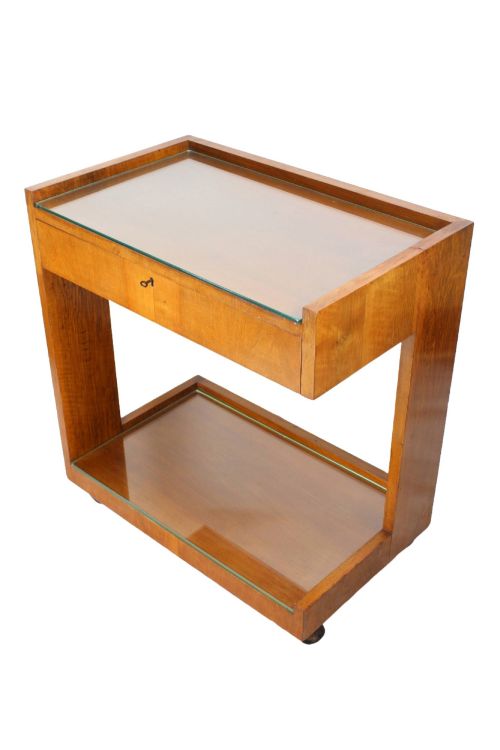
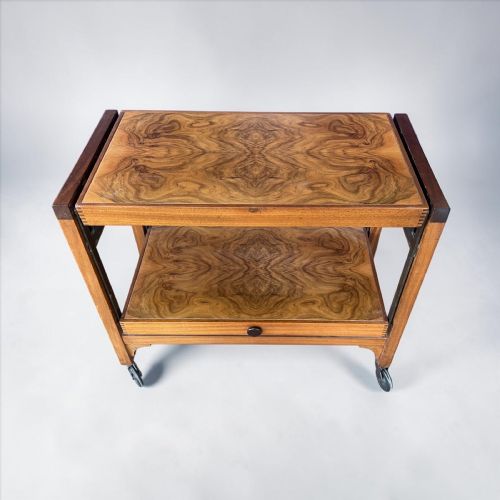
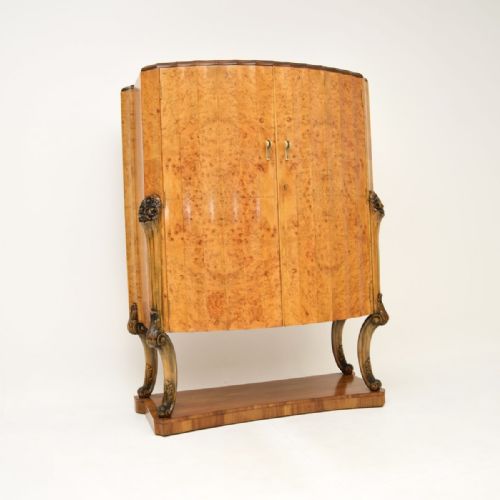
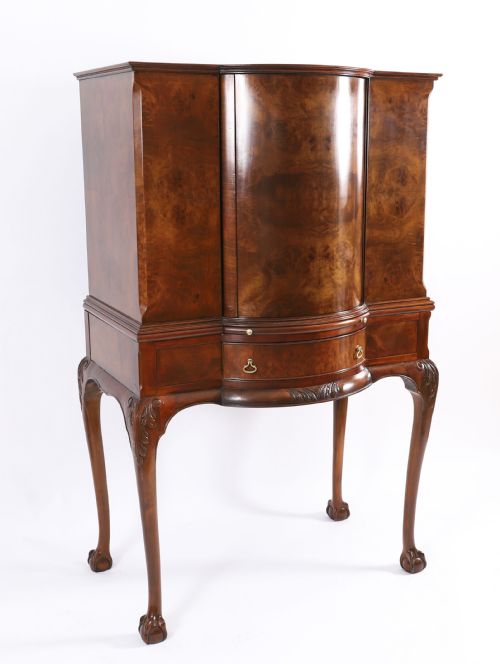
The dominant forms include double bow fronted cocktail cabinets, revolving dry bar cabinets, and two tier serving carts. Many incorporate fitted interiors designed specifically for glassware, bottles, and mixing utensils.
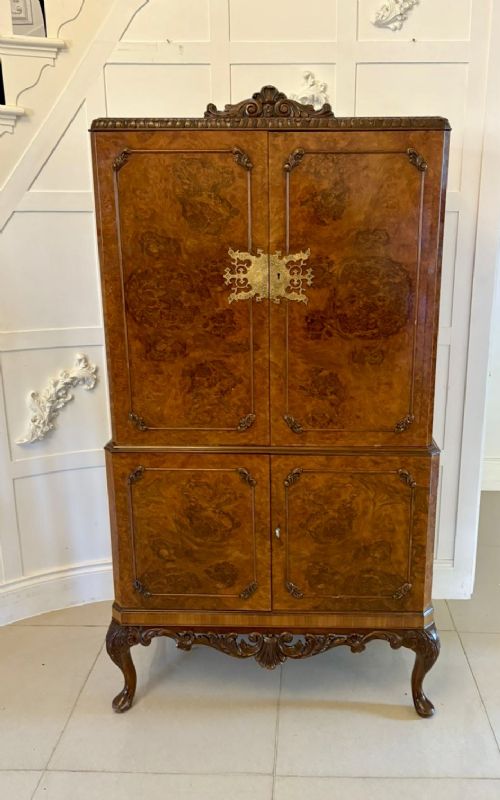
The materials span solid walnut and burr walnut veneer, frequently paired with mirrored glass, chrome, and brass hardware. Styling moves between Queen Anne Revival, Louis XV Revival, and streamlined Art Deco designs.
How they were made
Cabinet makers utilised choice cuts of walnut and burr walnut veneer laid over stable secondary woods to achieve striking grain patterns on curved and serpentine surfaces. Marquetry inlay appears on select items to provide decorative geometric or floral borders.
Internal mechanisms on metamorphic trolleys and pop up tables rely on brass hinges, metal struts, and geared tracks that allow the furniture to expand or transform smoothly. Mirrored glass backing panels and glass shelving are integrated into the upper compartments to reflect light behind stored bottles.
Antique Walnut Bar Retail Price Guide 2026
Typical asking prices for walnut bar among the pieces listed under this phrase on Sellingantiques today, from the lower quarter to the upper quarter. They describe what is for sale here now, not the wider market.
Some Art Deco trolleys hide their hospitality duties entirely until a clever mechanical strut pops the drinks tray upward with a single motion.
What varies in quality
The selection of the walnut veneer dictates much of the visual impact, with tightly figured burr patterns demanding superior craftsmanship to lay evenly across compound curves and bowed doors. Finer cabinets exhibit book matched grain symmetry across their primary facades.
Internal appointments mark the difference between standard production and exceptional commissions, particularly the inclusion of original fitted glassware trays, pull out mixing slides, working interior lighting, and signed maker plaques.
Epstein·Harry and Lou Epstein·Hille·Incorporall
The Antique Walnut Bar Glossary
- Burr walnut
- A veneer taken from the knotted growth of a walnut tree, yielding a highly swirled and mottled grain pattern. It is prized for decorative cabinet fronts.
- Cocktail cabinet
- A specialised piece of furniture designed for storing and serving alcoholic drinks, typically featuring a drop down mixing flap and glass lined interior. These emerged strongly during the Art Deco era.
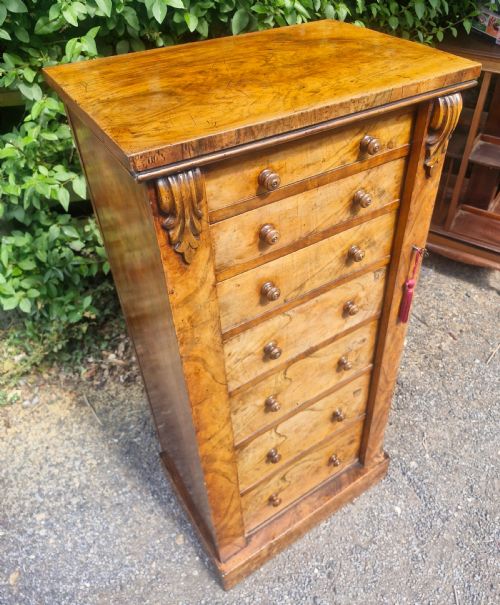
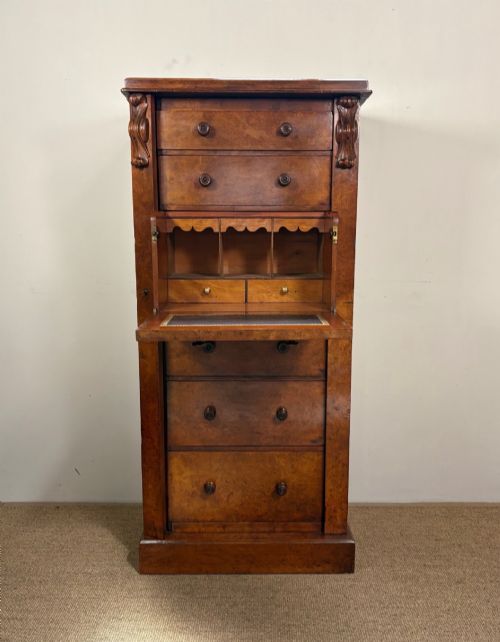
- Wellington chest
- A tall, narrow chest of drawers secured by a locking side stile that fastens over the drawer edges. 19th century examples occasionally serve as modified drinks storage.
- Metamorphic trolley
- A serving cart or side table engineered with folding leaves or rising tiers that expand the surface area. They allow for flexible use during hosting.
- Marquetry
- The art of applying pieces of veneer to a structure to form decorative patterns and pictures. It provides intricate surface detail on select cabinets and chests.
Antique Walnut Bar: Frequently Asked Questions
What is an antique walnut bar used for?
These pieces function as dedicated storage and preparation stations for home mixology and entertaining. Interiors typically accommodate wine bottles, spirits, decanters, and cocktail glasses.
Many designs incorporate drop down flaps that act as serving counters or pull out slides for mixing drinks. They keep hospitality equipment neatly enclosed behind decorative doors when not in use.
How do I identify an Art Deco walnut bar?
Art Deco examples usually date from the 1920s to the 1930s and display streamlined silhouettes, geometric door panels, and rich burr walnut veneers. Chrome handles and mirrored glass interiors frequently accompany these designs.
Unlike earlier revival styles that feature carved cabriole legs, Art Deco pieces often stand on plinth bases or U shaped wooden feet. The focus rests on clean exterior curves and dramatic wood grain patterns.
Are these bars stationary or mobile?
The inventory encompasses both stationary cabinetry and mobile serving carts. Cocktail cabinets and tall chests remain fixed in place, acting as statement furniture pieces against a dining room or living room wall.
Serving trolleys and bar carts feature wheels or castors, allowing them to be wheeled between rooms during gatherings. Some tables include folding leaves to adjust their footprint.
How should I care for walnut veneer surfaces?
Walnut furniture benefits from regular dusting with a soft, dry cloth to prevent grit accumulation on the polished veneer. Avoid placing pieces in direct sunlight or near heat sources to prevent the wood from drying out.
Keep liquids away from unsealed edges and wipe up spills immediately to protect the polish and prevent water marks. Occasional application of a suitable wax helps maintain the lustre of the timber.