
Antique Wall Hanging Shelves
These antique wall hanging shelves organise domestic spaces with timber craftsmanship from Georgian, Victorian and Edwardian workshops.
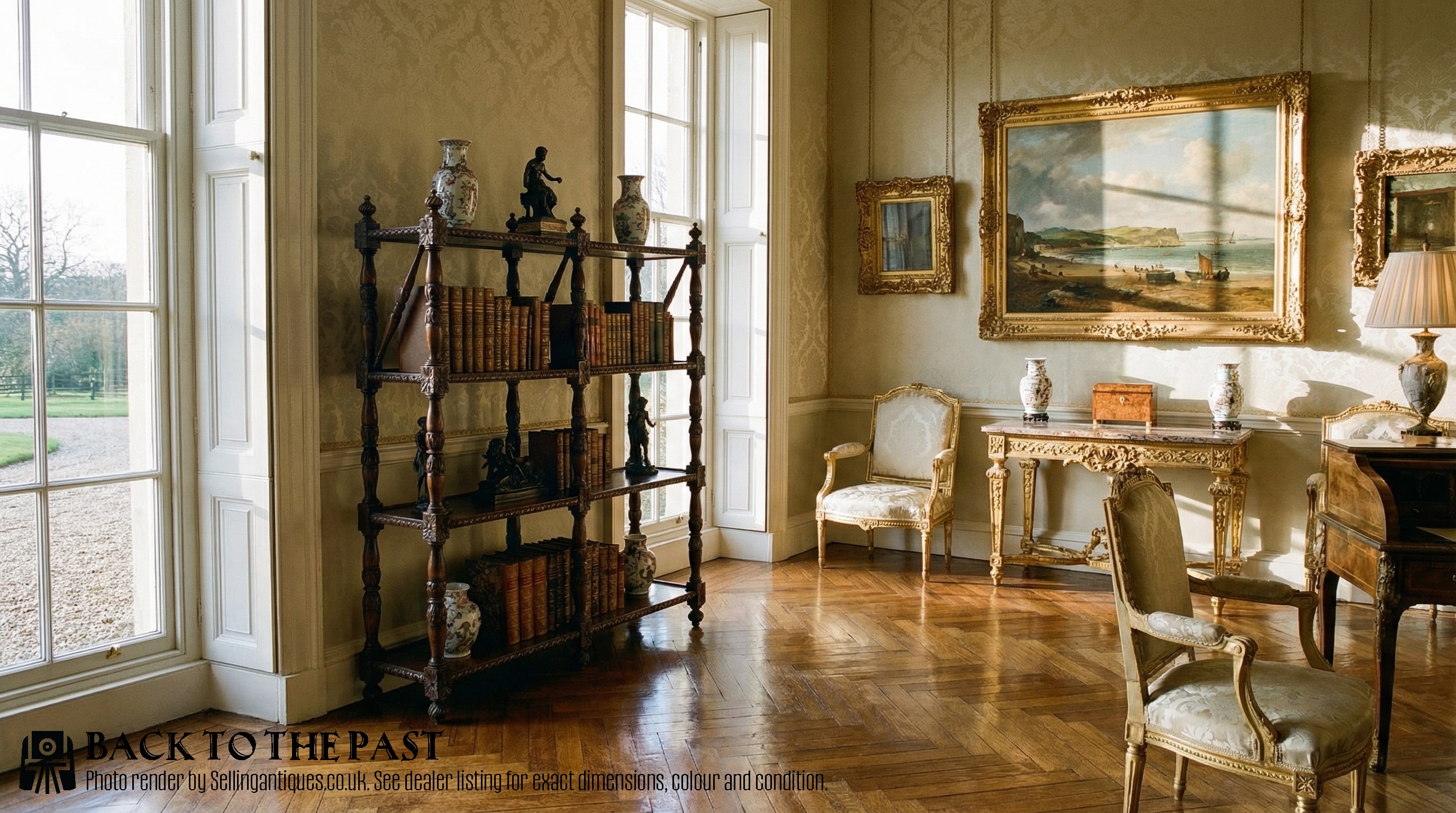
Antique Wall Hanging Shelves
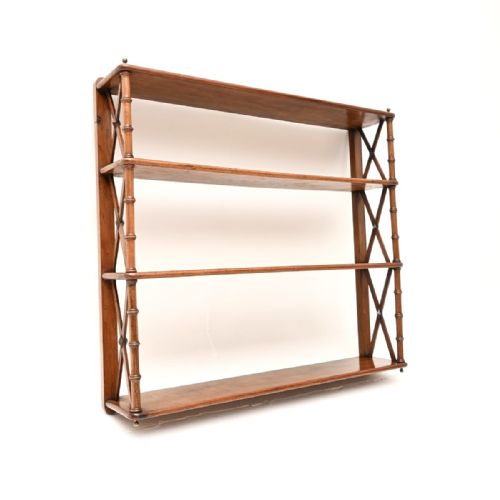
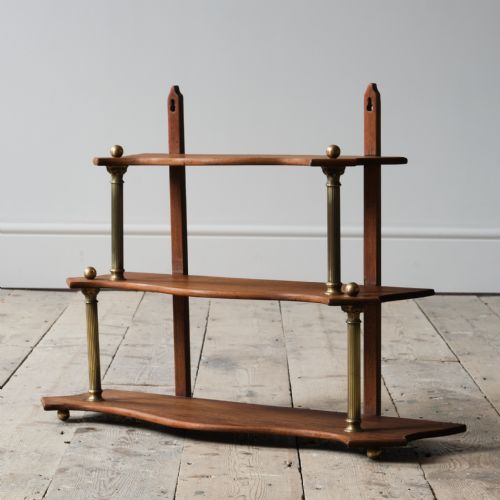
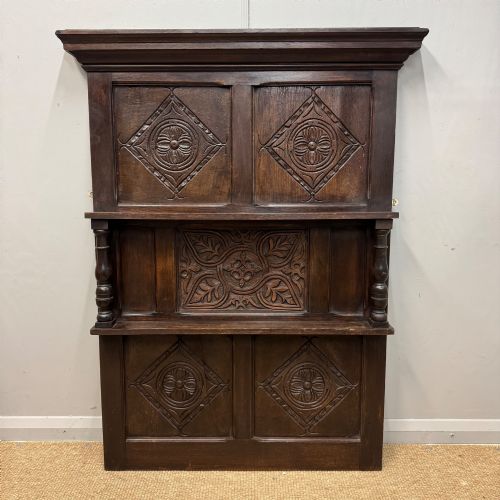
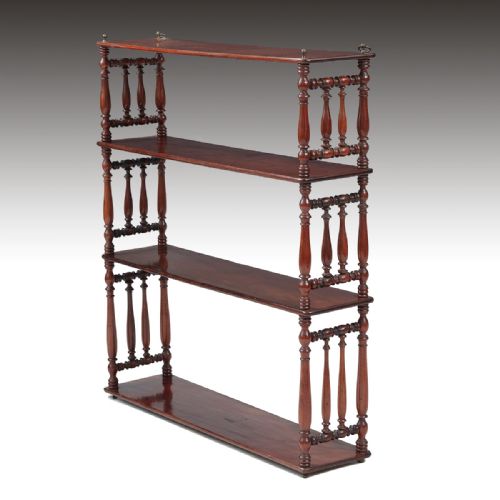
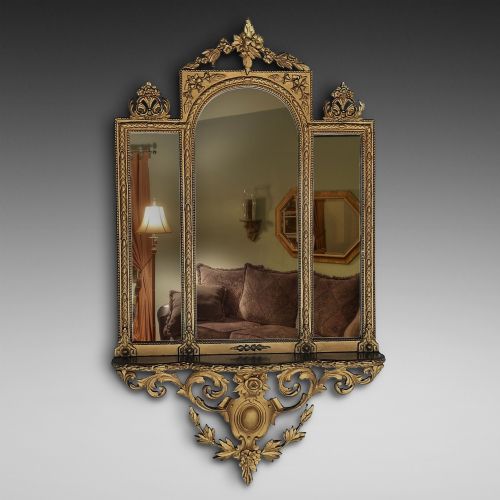
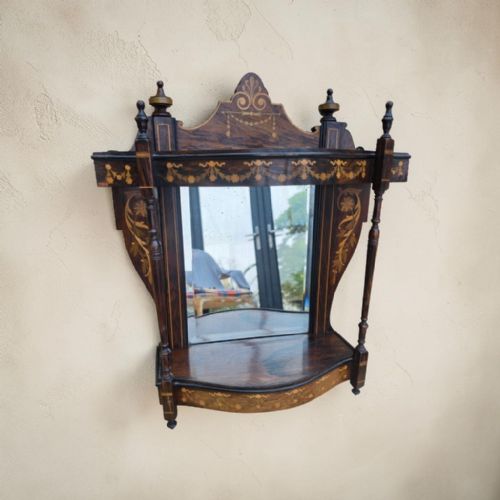
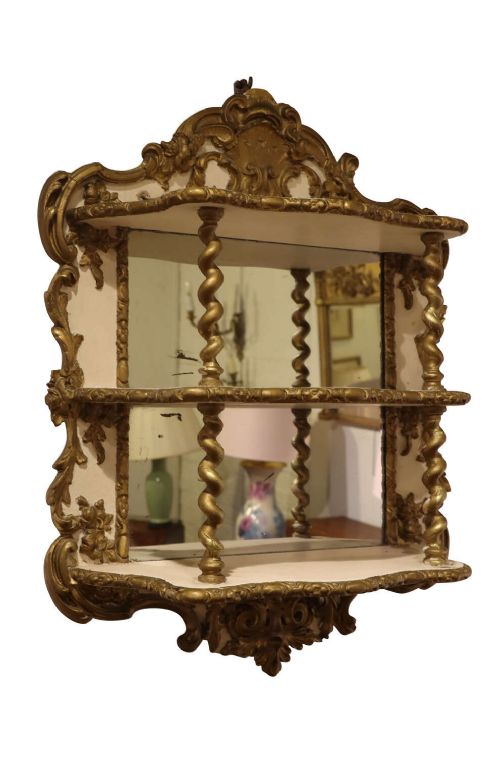
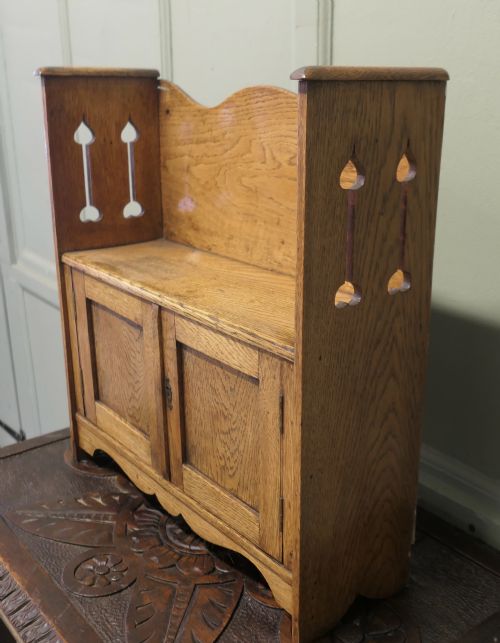
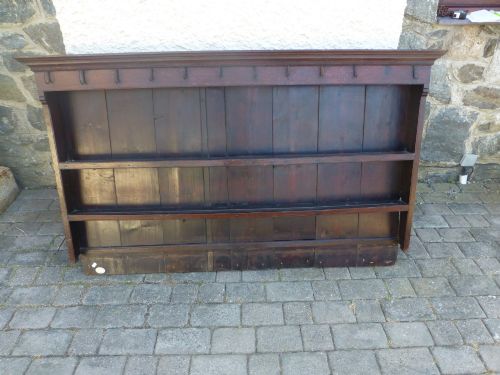
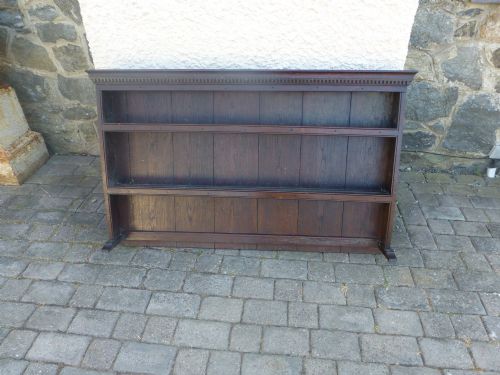
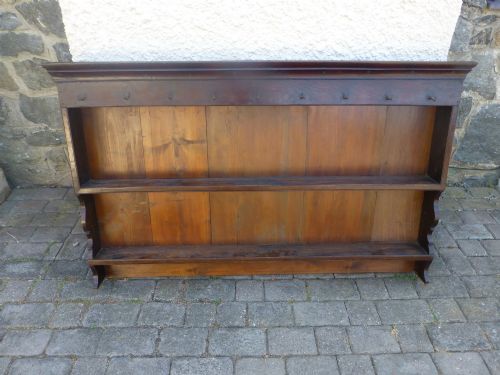
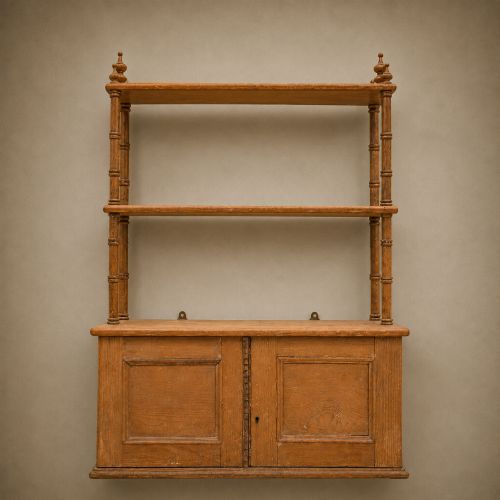
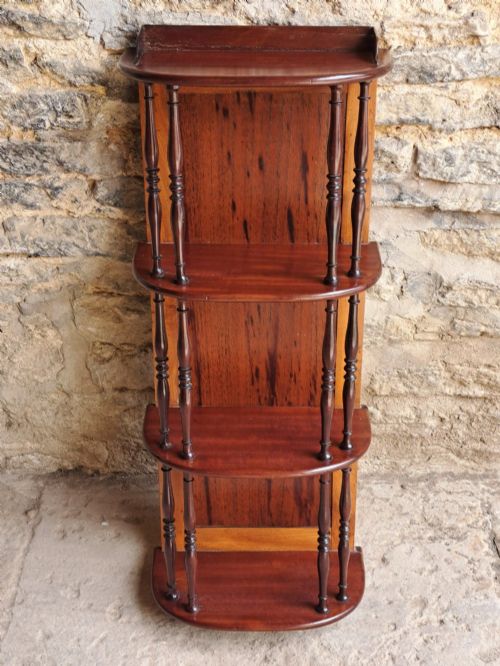
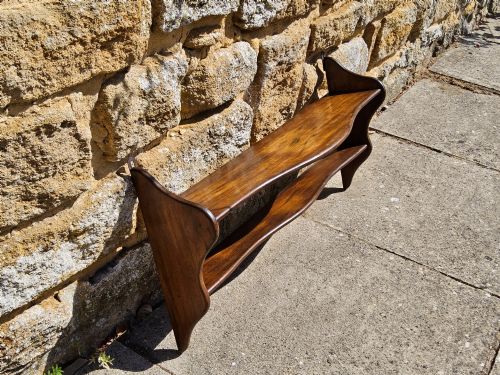
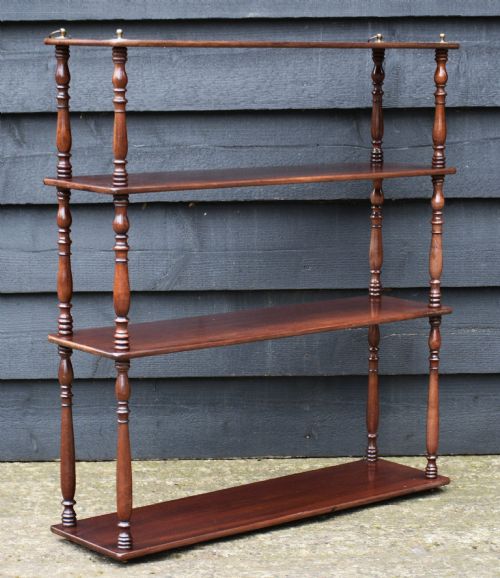
When searching for antique wall hanging shelves, collectors encounter various forms including open tier displays, corner brackets, plate racks, and small wall cabinets. These pieces mount directly to vertical surfaces to hold books, ceramics, and decorative objects in domestic rooms.
The selections span distinct periods from 18th-century Georgian designs through Victorian and Edwardian eras. Mahogany and oak remain the most frequent timbers found across these listings.
Makers produced both simple utilitarian kitchen racks and elaborate reception room display shelves. Examples range from plain pine utility cupboards to finely inlaid walnut and satinwood waterfall bookcases.
How they were made
Joiners constructed these pieces using dense hardwoods like mahogany, oak, walnut, and rosewood alongside softer timbers such as pine and limewood. Brass brackets, hinges, and gilt accents frequently provide structural support and decorative contrast.
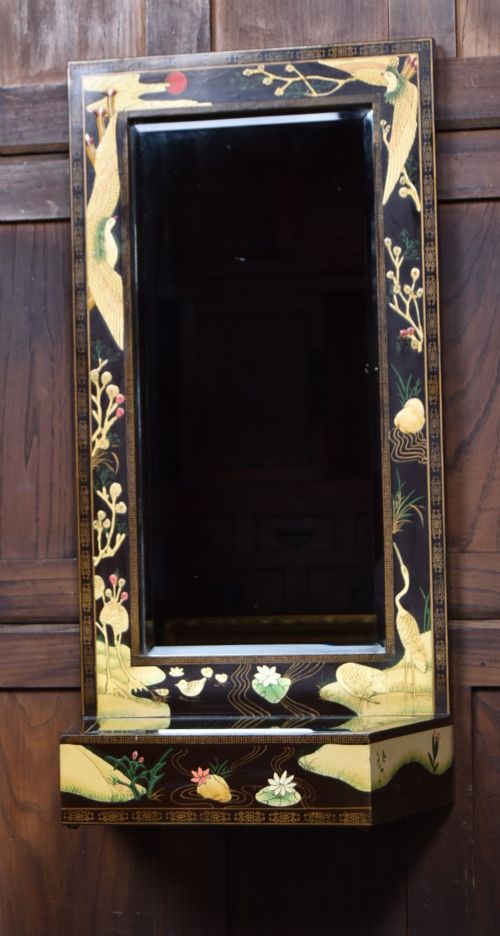
Craftsmen applied various surface techniques including hand painting, ebonising, carving, and marquetry inlay. Many open shelves feature shaped side supports and pegged joints characteristic of period cabinetmaking.
Sorrento workshops sent olive wood corner shelves across Europe, proving that tight corners deserve decorative ambition.
What varies in quality
Quality rests upon the selection of timber figures, the crispness of carved details, and the integrity of the structural joints. Pieces displaying meticulous dovetailing or deliberate inlay sit above plain utilitarian boxes.
Design ambition separates standard iterations from exceptional examples. A well-proportioned set of waterfall shelves or an attributed piece carries greater design interest than a basic pine kitchen rack.
George Edmund Street·John Moyr Smith·Arthur Simpson
The Antique Wall Hanging Shelves Glossary
- Plate rack
- A wall-mounted rack featuring horizontal wooden slats or grooves designed to display ceramic plates upright. These utility pieces are frequently found in oak from the 18th century.
- Waterfall bookshelves
- Graduated open shelves where each tier steps back progressively from bottom to top. This form appears in mahogany and satinwood.
- Corner shelves
- Triangular wall shelves designed to fit snugly into room angles. They economised floor space in period interiors.
- Overmantel
- A decorative architectural frame with shelves or mirrors positioned above a fireplace opening. They utilise timbers such as oak and walnut.
- Marquetry
- The art of applying decorative veneer pieces to a structure to form geometric or pictorial designs. Sorrento workshops utilised this technique on olive wood.
Antique Wall Hanging Shelves: Frequently Asked Questions
How do I hang antique wall shelves safely?
Wall-mounted antique shelves require secure fixings into solid masonry or proper stud supports behind plaster. Weight distribution across the timber brackets must balance safely against the wall.
Heavier hardwood bookcases and cabinets demand robust steel screws matching the original hanging points or reinforced backplates. Checking the stability of antique joints prevents structural strain once loaded.
What rooms suit antique wall hanging shelves?
Kitchens accommodate oak plate racks and pine cupboards for displaying ceramics and everyday utensils. Living rooms and studies suit mahogany or walnut bookcases for books and decorative items.
Smaller corner shelves and mirrored cabinets fit narrower spaces like hallways or bedrooms. Their compact wall-mounted formats conserve floor area while adding period character.
How do I date an antique shelf?
Dating relies on timber selection, construction methods, and stylistic details recorded across periods. Georgian pieces often display dense mahogany or joined oak, while Victorian examples introduce ebonised finishes and Gothic revival motifs.
Later Edwardian and Arts and Crafts pieces show characteristic hand-craftsmanship or specific design hardware. Comparing edge profiles and joint types clarifies the manufacturing era.
Can antique shelves hold heavy books?
Most hanging shelves suit lighter volumes, decorative ornaments, and ceramic plates rather than heavy encyclopaedias. Assessing the depth of the timber tiers and the strength of the wall fixings determines capacity.
Smaller desktop pigeon holes and delicate waterfall shelves function best for stationery or pamphlets. Heavier bookcases require secure wall anchoring to prevent displacement.