
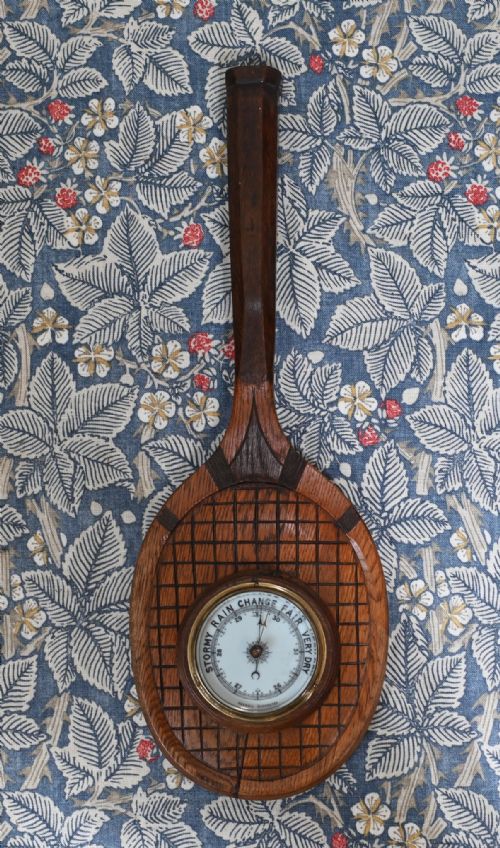


Antique Wall Gauge
An antique wall gauge measures atmospheric change or physical force, bringing precision brass dials and carved timber into rooms.
Antique Wall Gauge
When you search for an antique wall gauge, you enter a field dominated by nineteenth-century barometers, thermometers, and hydrometers intended for domestic weather monitoring or industrial measurement.
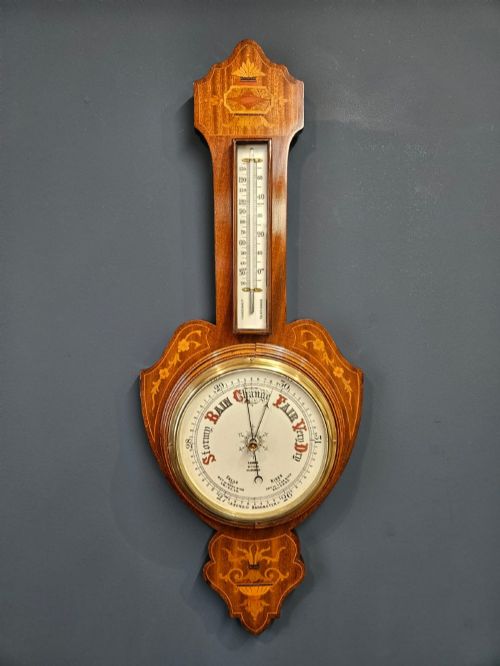
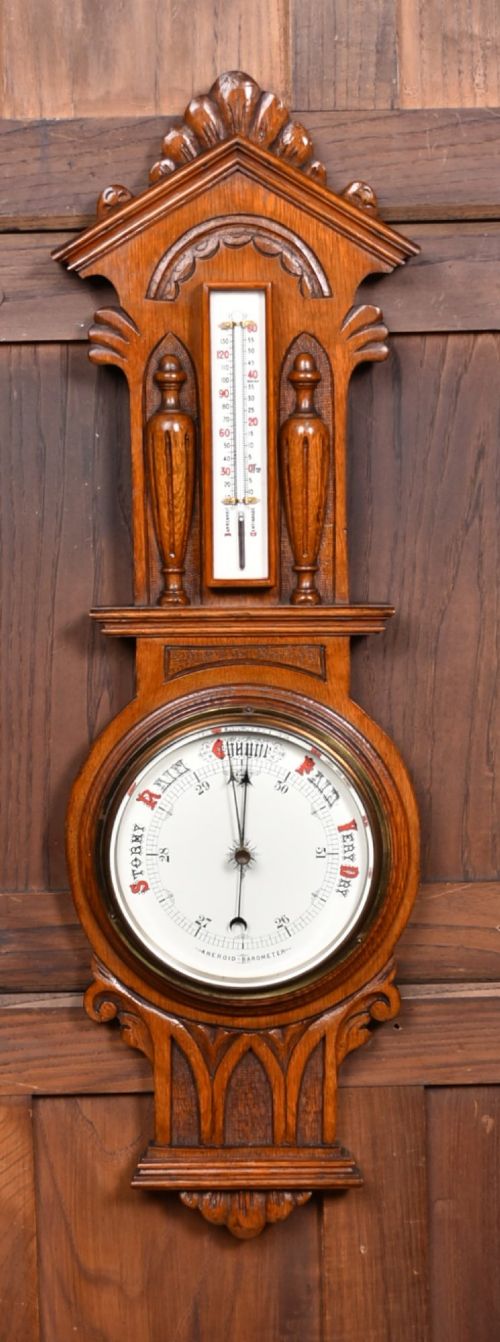
The most common examples on this page are Victorian aneroid barometers housed in carved oak, mahogany, or rosewood cases, alongside wheel and banjo configurations.
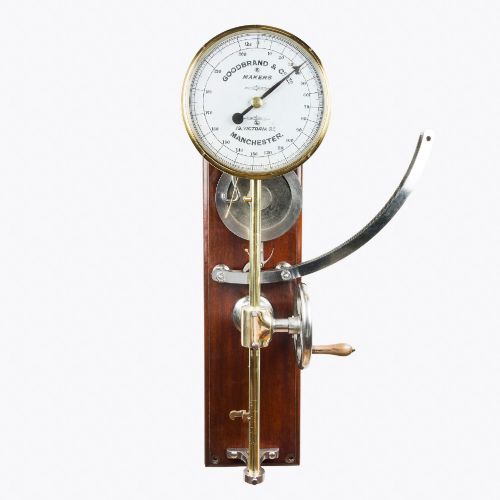
Scientific instruments and weather stations also appear, reflecting a period when recording atmospheric pressure and temperature was both a practical necessity and a parlor science.
How they were made
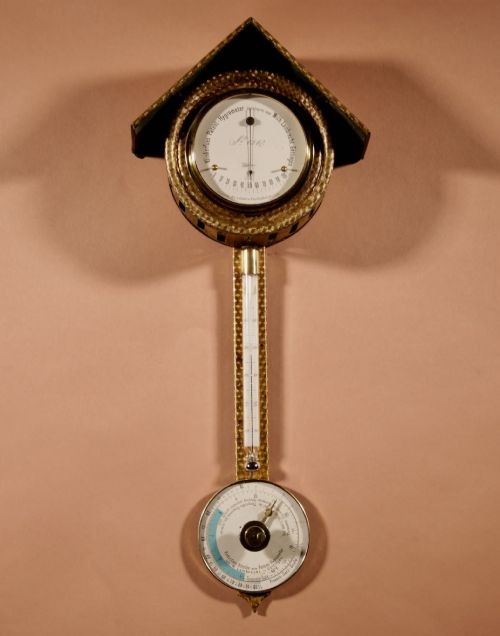
Cases utilise dense timbers like mahogany, oak, walnut, and rosewood, often turned, carved, or inlaid with lighter veneers in styles ranging from Black Forest to Chinoiserie.
Dials combine glass bezels with engraved ceramic, metal, or enamel faces, housing delicate steel and brass internal movements designed to respond to minute shifts in air pressure or temperature.
Listings span from the eighteenth to the twentieth century, combining Victorian oak, mahogany, and brass with specialised scientific instruments.
What varies in quality
Quality rests in the crispness of the case carving and the precision of the maker's movement, separating standard utility pieces from exhibition-grade scientific instruments.
The clarity of the enamel or ceramic dial and the integrity of the original glass and bezel dictate whether a piece retains its historical legibility and character.
Goodbrands & Co·Wilh. Lambrecht·Poulenc Freres·Elliott Brothers·Short & Mason·George Adams·Alexander Wright·Negretti & Zambra·Cox of Plymouth Dock·James H Kelly·Blake & Son·Dollond of London
The Antique Wall Gauge Glossary
- Aneroid barometer
- A barometer that measures air pressure using a flexible metal box rather than liquid mercury. It expands and contracts with atmospheric changes to move an indicator needle.
- Banjo barometer
- A domestic weather instrument shaped like a banjo, featuring a circular dial at the base and a long trunk holding a thermometer or hygrometer.
- Hygrometer
- An instrument used for measuring humidity in the atmosphere. Early versions often utilised human hair to gauge moisture levels.
- Stick barometer
- A tall, vertical barometer containing a long glass tube filled with mercury. This form provides a direct reading of barometric height without mechanical amplification.
- Fortin barometer
- A precision mercury barometer equipped with an adjustable cistern to set the mercury level against an ivory point. It represents a high standard of scientific accuracy.
Antique Wall Gauge: Frequently Asked Questions
How do I hang a heavy barometer?
Secure a sturdy brass screw directly into a wall stud rather than relying on standard plaster plugs. The weight of dense mahogany or oak cases requires solid physical support.
Ensure the hanging bracket on the rear of the case is firmly fixed to the timber frame before mounting the instrument at eye level.
Do antique barometers still work?
Many aneroid and mercury instruments remain fully operational after decades of use. Internal linkages respond to real-time weather fluctuations when properly calibrated.
Moving an instrument to a new elevation requires gentle adjustment via the back-plate screw to align the needle with current local pressure.
How do I tell a fake from an original?
Examine the timber shrinkage, screw types, and dial lettering for signs of genuine nineteenth-century age. Hand-engraved brass plates and oxidized steel components display natural wear patterns.
Reproduction instruments often use modern fixings and synthetic finishes that lack the patina and weight of Victorian scientific equipment.
What is a Black Forest barometer?
These pieces originate from the mountainous Black Forest region of Germany, celebrated for elaborate hand-carved wooden cases. They frequently feature deep relief foliage, birds, or hunting motifs.
The regional carvers applied traditional woodworking skills to house standard aneroid movements in striking decorative frames.