


Vintage Wall Thermometer
A vintage wall thermometer is an instrument for measuring temperature that brings practical utility and period character to domestic spaces.
Vintage Wall Thermometer
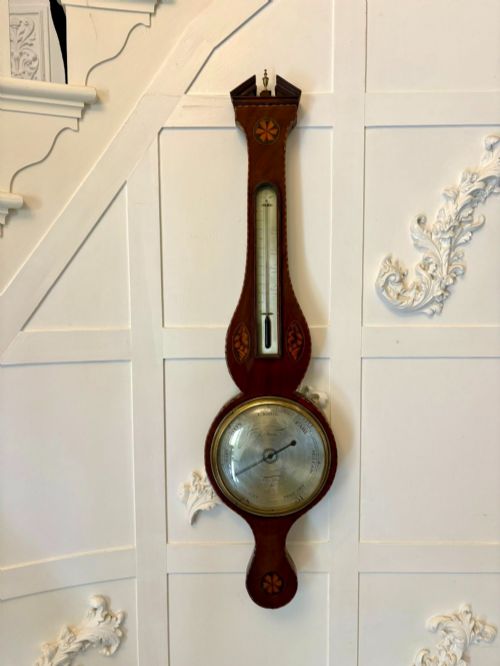
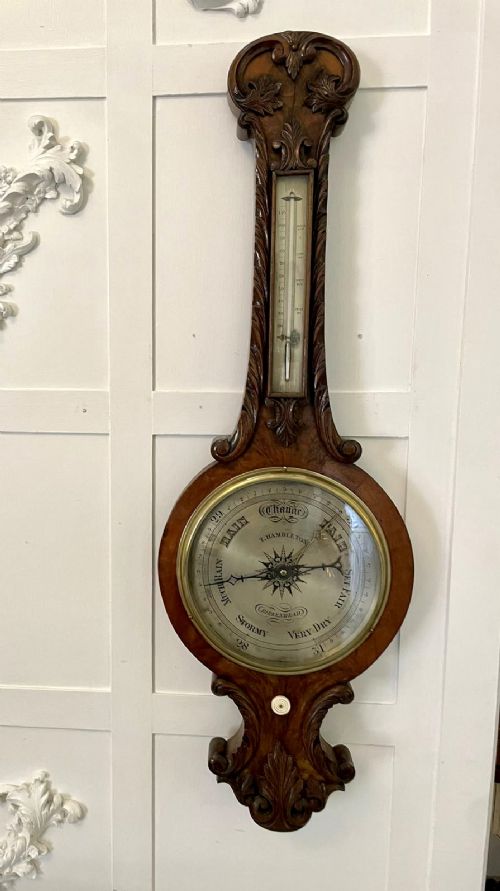
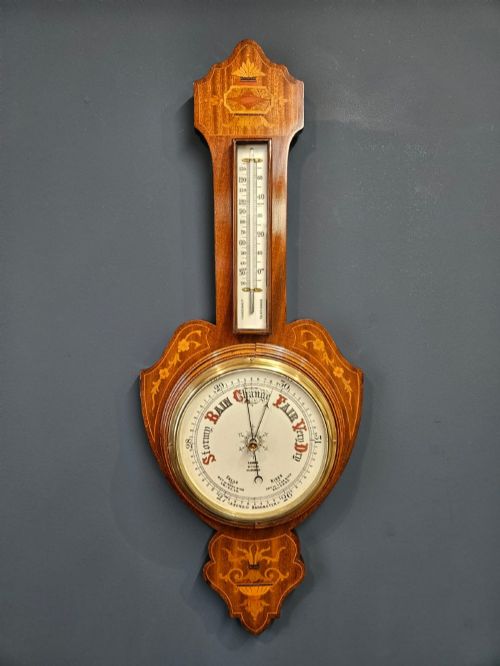
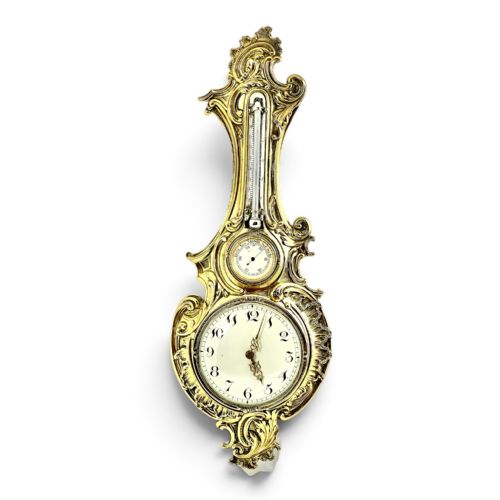
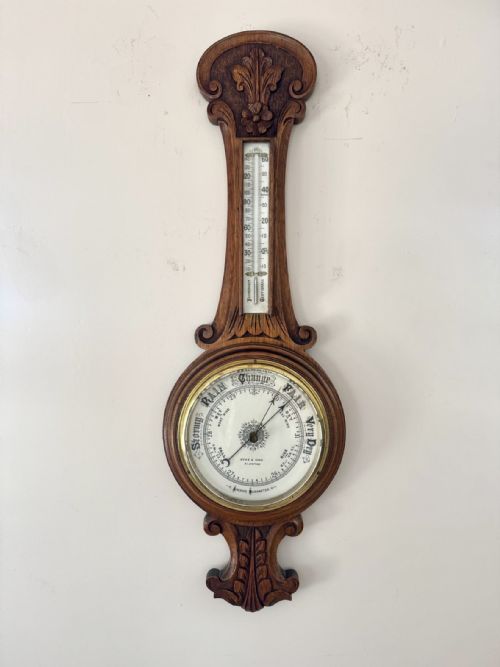
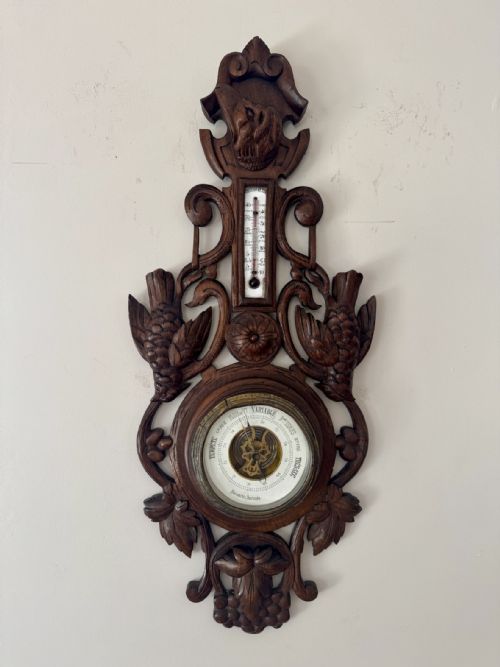
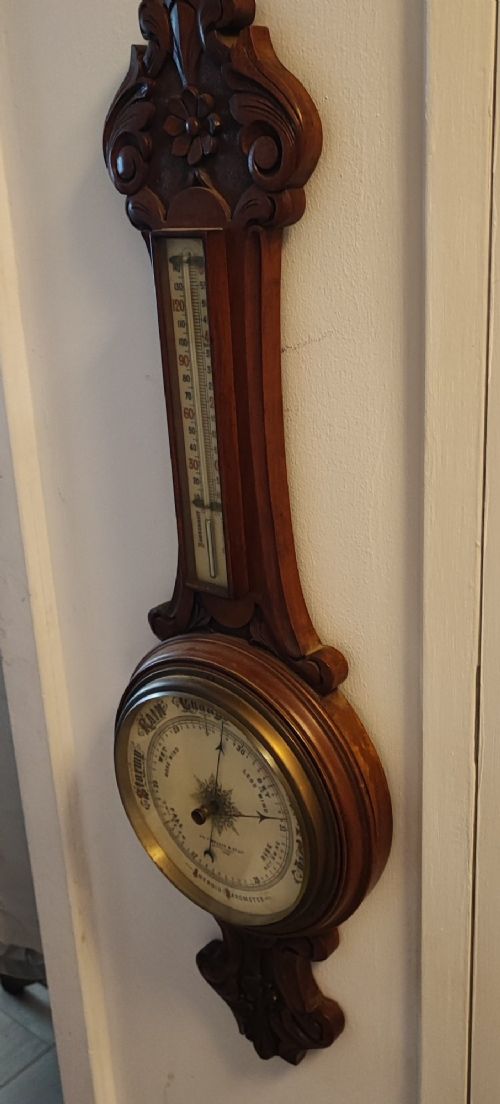
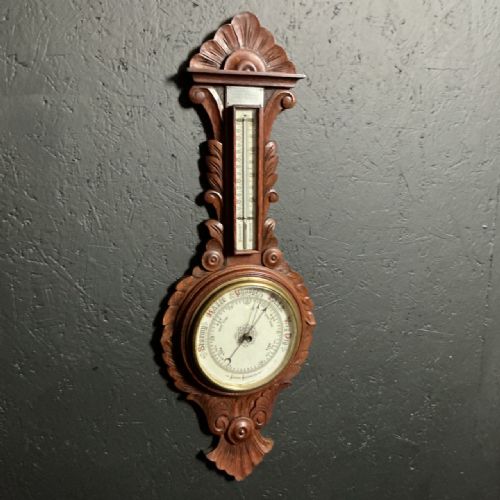
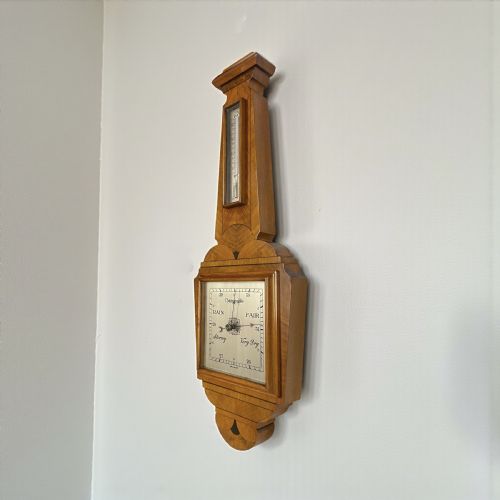
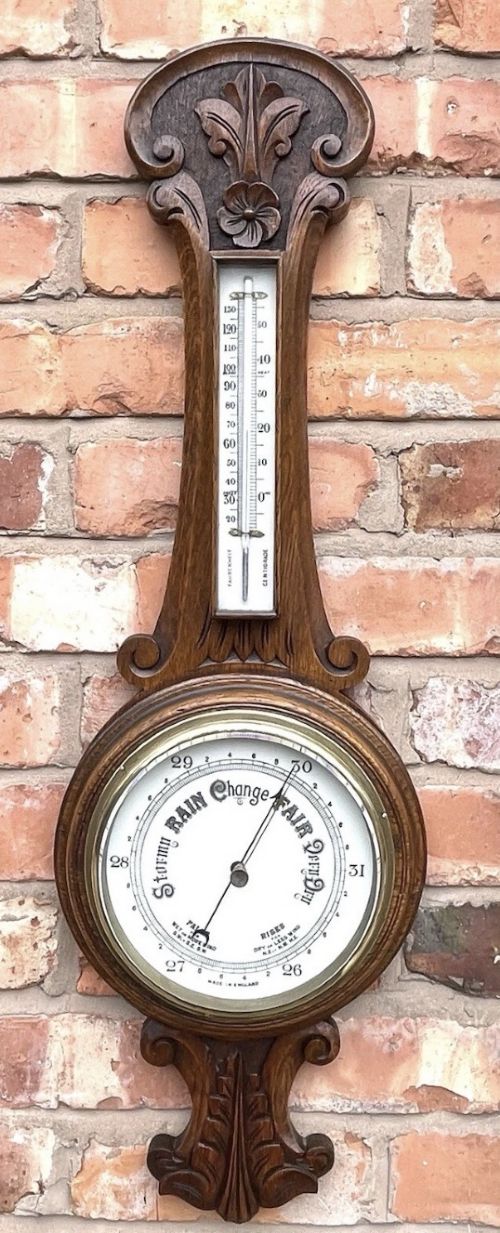
A vintage wall thermometer is an instrument designed to record atmospheric temperature while serving as a decorative fixture for interior walls. Buyers searching for a vintage wall thermometer will encounter examples integrated into larger weather stations or combined with barometers and clocks.
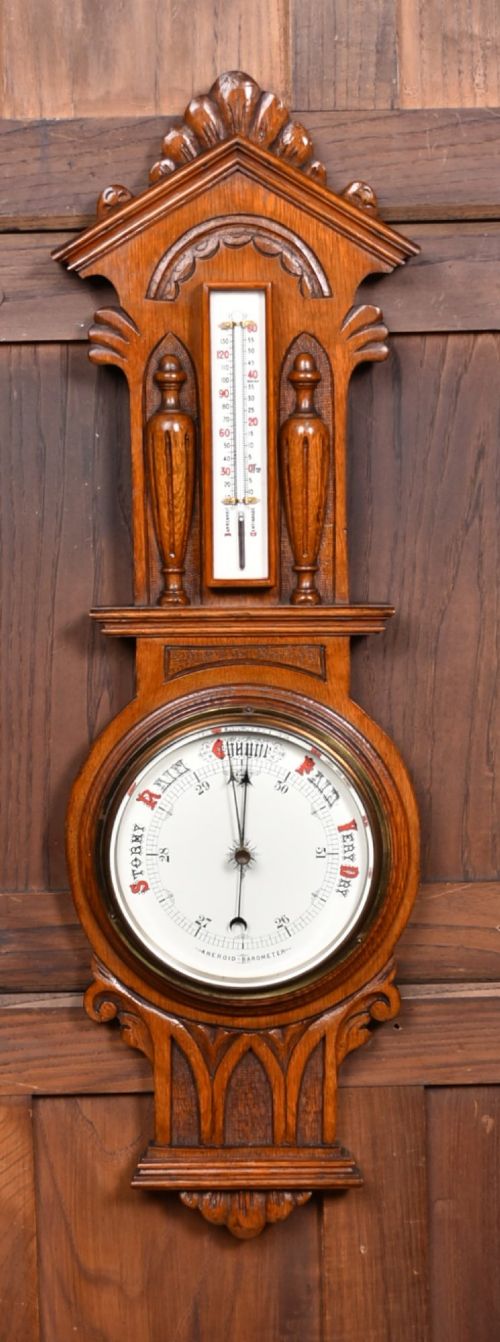
The pieces available span from Georgian and Victorian eras through to the Edwardian period and the Art Deco style of the nineteen-thirties. Walnut, mahogany, and carved oak provide the wooden housings for these instruments, often finished with glass and brass components.
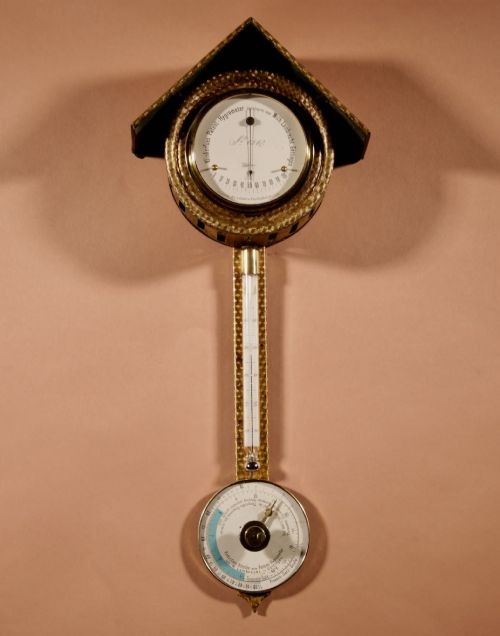
Composites of multiple weather-measuring instruments appear frequently alongside standalone wall thermometers. These complex weather stations combine humidity tracking and barometric pressure reading with the standard thermometer scale.
Materials and construction methods
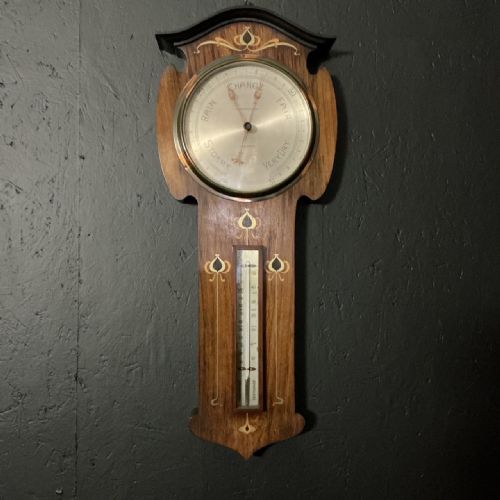
Cabinet makers utilised dense hardwoods such as mahogany, oak, walnut, and rosewood to construct the housing frames. These woods were carved, polished, and occasionally inlaid with satinwood or mother of pearl.
Glass tubes containing mercury or alcohol provide the functional mechanism for temperature measurement. Brass dials, silver gilt plates, and carved wooden bezels frame these delicate instrument parts.
Listings feature oak, mahogany, walnut, and rosewood cases housing glass thermometer tubes and brass fittings across Georgian, Victorian, and Edwardian periods.
Indicators of quality
The standard of cabinet work dictates the baseline quality of the piece, visible in the depth of the wood carving and the precision of any shell inlay or marquetry. Finely figured burr walnut and carefully selected mahogany indicate superior manufacture.
The legibility and engraving quality of the scale plate separate standard items from superior examples. Signed dials by known makers and integrated multi-instrument combinations demonstrate elevated craftsmanship.
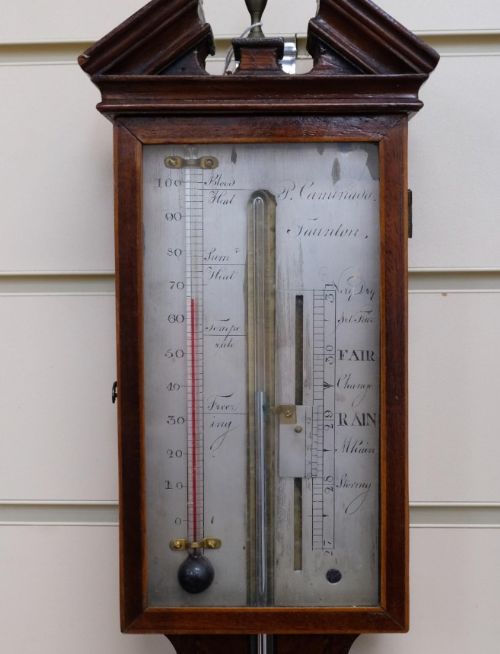
Hyde & Sons Sleaford·Wilh. Lambrecht Göttingen Germany·P. Caminada Taunton·B. Besozzi of Weymouth·George Adams of Fleet Street·Negretti & Zambra
The Vintage Wall Thermometer Glossary
- Banjo barometer
- A domestic weather instrument housed in a symmetrical wooden case shaped like a banjo. These often incorporate a thermometer alongside the main dial.
- Aneroid barometer
- A device that measures atmospheric pressure without using liquid, relying on a flexible metal box. It frequently accompanies the thermometer on a wall-mounted board.
- Mercury thermometer
- A temperature-measuring instrument using mercury sealed inside a calibrated glass tube. These provide precise readings across varying atmospheric conditions.
- Inlay
- A decorative technique where contrasting pieces of wood or shell are inserted into recesses in the primary surface. Satinwood and mother of pearl serve this purpose.
- Weather station
- A combined wall-mounted panel housing a barometer, thermometer, and hygrometer. Such instruments offer comprehensive meteorological data in a single wooden frame.
Vintage Wall Thermometer: Frequently Asked Questions
How do I read a mercury wall thermometer?
Read the temperature by aligning your eye with the top of the mercury column against the engraved scale plate. The numbers indicate the ambient temperature in the room or hallway.
Older instruments may use different temperature scales compared to modern equivalents. Check the graduations carefully to interpret the reading correctly.
Where should I hang a vintage wall thermometer?
Mount the instrument on an interior wall away from direct sunlight and heat sources such as radiators. Stable room conditions ensure accurate temperature measurement over time.
Secure the piece using appropriate wall fixings suited to the weight of the hardwood case. Oak and mahogany weather stations require sturdy support.
How do I date a wooden wall thermometer?
Examine the style of the wooden case, the typography on the scale plate, and the surrounding woodwork. Georgian and Victorian pieces feature distinct carving styles and timber choices compared to Edwardian or Art Deco examples.
Signatures or maker names on the dial provide a direct indicator of the production era. Researching the active dates of the maker narrows the timeline.
What is the difference between a thermometer and a barometer?
A thermometer measures ambient temperature using an expansion fluid in a glass tube. A barometer measures atmospheric pressure to help forecast weather changes.
Many antique wall pieces combine both instruments onto a single wooden board. These combined units function as complete domestic weather stations.