


Antique Wall Bracket Tables
Antique wall bracket tables bring sculptural form to domestic interiors, offering fitted surfaces supported directly from the wall.
Antique Wall Bracket Tables
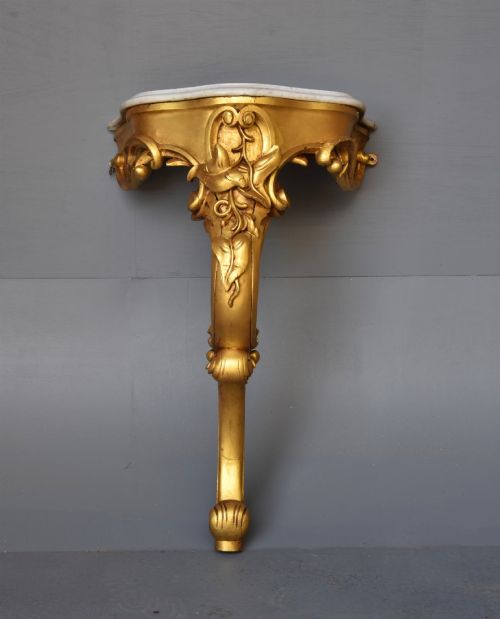
When searching for antique wall bracket tables, buyers encounter console tables, wall consoles, and bracket-supported timepieces intended for wall mounting. These items emerge primarily from the eighteenth and nineteenth centuries, spanning Georgian, Victorian, and various revival styles.
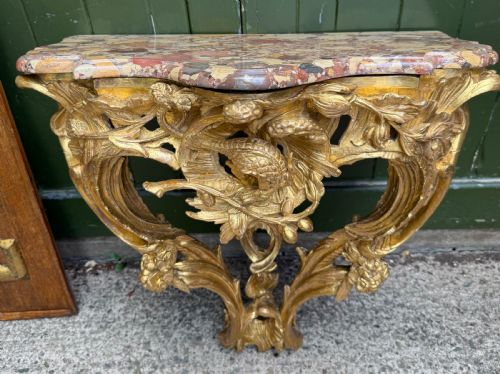
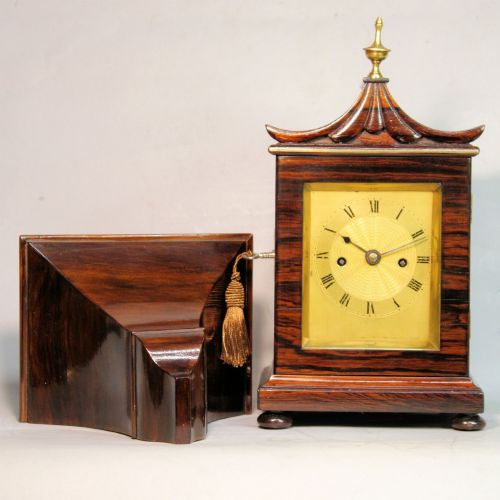
The console table format dominates the selection, often appearing in matched pairs featuring marble tops. Alongside these tables, the listings include clock wall brackets designed to support fusee and mantel clocks in timber cases.
Materials and construction
Carved timber provides the structural foundation for these pieces, with mahogany, walnut, and giltwood appearing frequently across the inventory. Artisans applied gesso to wooden bases before gilding, creating rich surfaces for French Rococo and Neoclassical designs.
Marble slabs serve as the primary tabletop material, cut to fit the serpentine and rectangular contours of console frames. Brass and glass elements also integrate into clock cases and mirror combinations.
Materials represented include figured marble, giltwood, mahogany, walnut, and brass.
Assessing quality and craftsmanship
The depth and crispness of hand-carving distinguish superior examples from simpler production, particularly in the rendering of scrolling foliage, eagles, and rococo motifs. Original finishes, such as aged gilding and patinated walnut, command higher regard than later surface treatments.
The integration of the marble top with its wooden base indicates the level of bespoke attention given to the piece. Harmonious proportions between console brackets and their corresponding tables also determine the standing of an item.
Cording of London·Thomas Connold of Alysham·John Seddon of London·Lenzkirch·Armstrong of Manchester
The Antique Wall Bracket Tables Glossary
- Console table
- A table designed to be fixed against a wall, traditionally supported by ornamental brackets or legs rather than four independent vertical supports.
- Giltwood
- Timber coated with gold leaf or a gold-coloured metallic preparation, standard in decorative furniture of the eighteenth and nineteenth centuries.
- Gesso
- A plaster-like mixture applied to wood to create a smooth surface for subsequent gilding or painting.
- Breche d'alep
- A specific type of variegated breccia marble featuring broken patterns of colour, frequently used for high-end table tops.
- Fusee clock
- A clock driven by a spring connected to a cone-shaped pulley, ensuring even tension as the mainspring unwinds.
Antique Wall Bracket Tables: Frequently Asked Questions
How do I secure a wall console?
Wall consoles require sturdy anchorage into masonry or properly located timber studs due to their weight, especially versions fitted with heavy marble tops.
Professional installation is recommended to ensure the bracket supports bear the downward load safely.
Can these tables stand without a wall?
Traditional wall consoles rely on their brackets or wall fixings for stability and cannot stand independently as standard four-legged tables.
Some variants include front legs for additional support while still requiring a wall anchor.
How do I clean gilded wood?
Gilded surfaces require dusting with a soft, dry brush to avoid damaging the delicate metallic leaf applied over gesso.
Moisture and modern chemical cleaners must be avoided entirely to preserve the historic finish.
Are clock wall brackets matching?
Clock wall brackets were often made specifically to pair with matching timepieces, sharing identical timber veneers and carving styles.
Some brackets are later adaptations designed to display mantel clocks originating from the same period.