


Antique Village Scene Canvas
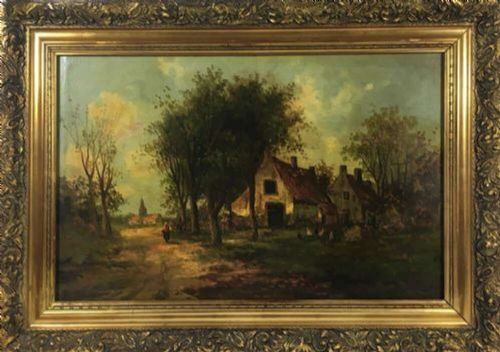
An antique village scene canvas captures rural life through oil paint on stretched fabric, offering a window into past communities.
Antique Village Scene Canvas
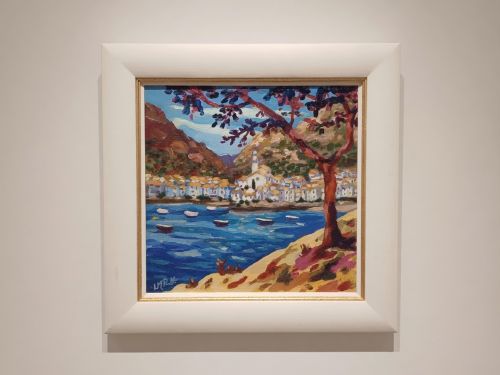
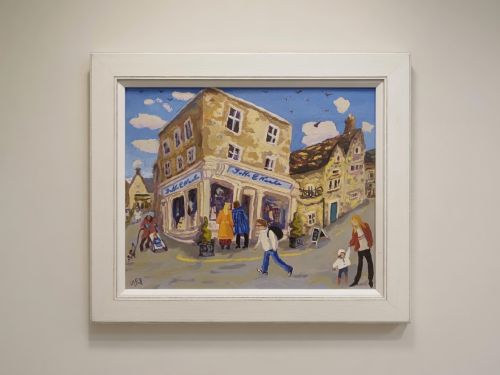
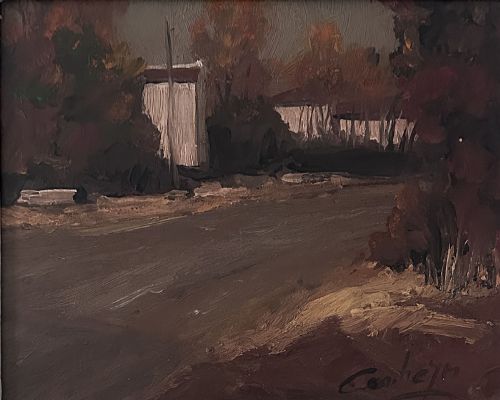
When searching for an antique village scene canvas, you encounter works portraying rural settlements, country lanes, and rustic architecture rendered in oils. These paintings capture daily life, agricultural tasks, and seasonal changes across European and British settings.
The pieces on this page span from the Victorian era through the mid-twentieth century, encompassing British Impressionism, Folk Art, and 19th Century Realism. You will find works depicting English villages, French farmyards, Dutch streetscapes, and Yorkshire hamlets.
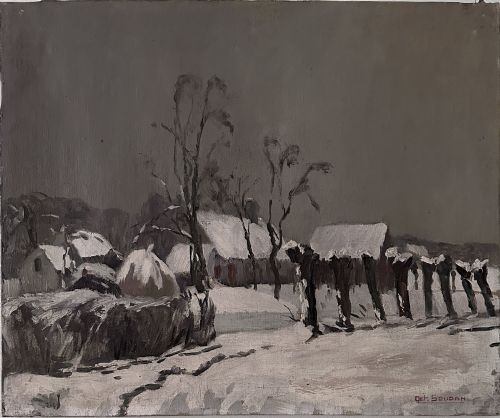
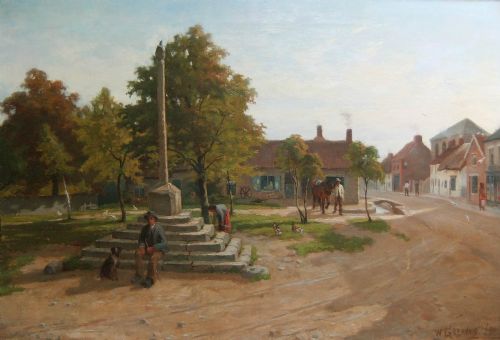
Common formats include framed landscapes on canvas and board, ranging from small cabinet pictures to larger wall art. The subjects vary from quiet winter snow scenes to bustling village taverns with figures, horses, and carts.
Materials and Techniques
Painters applied oil paint directly onto stretched canvas or wooden board, utilising the texture of the fabric to impart depth to foliage, stone, and earth. The ground layer often received a pale priming coat to increase the luminosity of subsequent pigment layers.
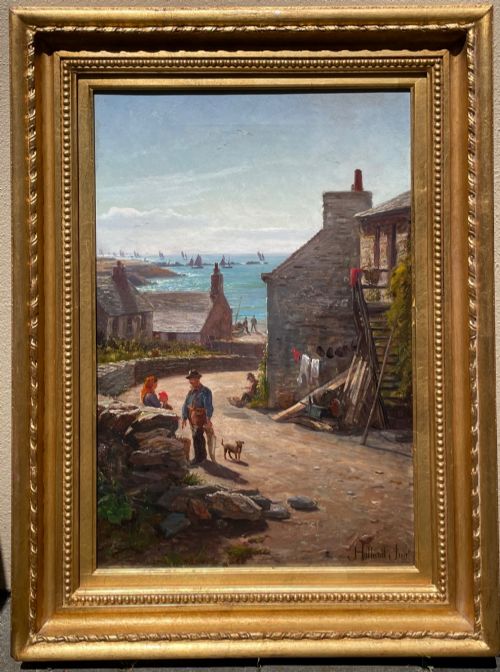
Many works retain their original wood and gilt frames, sometimes enhanced with gold leaf accents to complement the tonal palette of the composition. Brushwork ranges from tight, academic realism in the nineteenth century to looser, expressive marks in later impressionist examples.
Several canvases swap grand landscapes for humble village ducks, horses, and tavern gossip.
Variations in Quality
Quality rests in the handling of light, atmospheric perspective, and the confident placement of figures within the topographical setting. Superior works demonstrate a sophisticated understanding of tonal relationships, where colour harmony unites sky, architecture, and landscape.
The strength of the artist's draftsmanship and the preservation of the original paint surface dictate the standing of a piece. Works by named regional painters or members of established schools often display more deliberate composition and pigment layering than unsigned vernacular pieces.
William Greaves·John Holland·Charles Vickers·George Gregory·Joseph Thors·John Ritchie
The Antique Village Scene Canvas Glossary
- Canvas
- A heavy woven fabric stretched across a wooden frame to serve as a foundation for oil painting. It provides a flexible, textured surface that absorbs pigment well.
- Oil Paint
- A slow-drying medium composed of pigments suspended in a drying oil, typically linseed. This medium allows for rich blending, impasto effects, and subtle colour transitions.
- Giltwood
- Wood that has been coated with a thin layer of gold leaf or metallic powder. It frequently surrounds these paintings in period frames.
- Barbizon School
- A nineteenth-century French movement focused on plein-air landscape painting and naturalistic rural scenes. Artists from this circle prioritized mood and direct observation.
- Genre Painting
- The pictorial representation of scenes from everyday life, involving ordinary people engaged in common activities. These works often feature village figures, markets, or tavern gatherings.
Antique Village Scene Canvas: Frequently Asked Questions
What periods do these village paintings come from?
The selection spans the nineteenth century through the mid-twentieth century, including Victorian, Edwardian, and later impressionist periods. Many pieces date from the 1860s up to the 1950s.
Earlier works often reflect academic realism or Barbizon influences, while later examples embrace British Impressionism and folk art styles.
How were these canvases framed originally?
Many paintings are housed in period wooden frames, occasionally finished with gilt or gold leaf. These surrounds complement the tonal palette of the rural landscapes.
Original frames help date the artwork and protect the edges of the stretched fabric from environmental wear.
Where do the depicted village scenes take place?
The locations include English counties like Yorkshire, Derbyshire, and Sussex, alongside French, Dutch, and Iranian settings. Some canvases portray specific named hamlets while others capture anonymous pastoral idylls.
Artists frequently painted local rural topography, country lanes, coastal villages, and agricultural farmyards.
How should I care for an oil painting on canvas?
Keep the artwork away from direct sunlight, high humidity, and rapid temperature fluctuations to protect the oil paint and canvas substrate. Dust the surface gently with a dry, soft brush when necessary.
Avoid using water or chemical cleaners on the paint layer or the gilt frame.