

Rustic Oil Painting Canvas
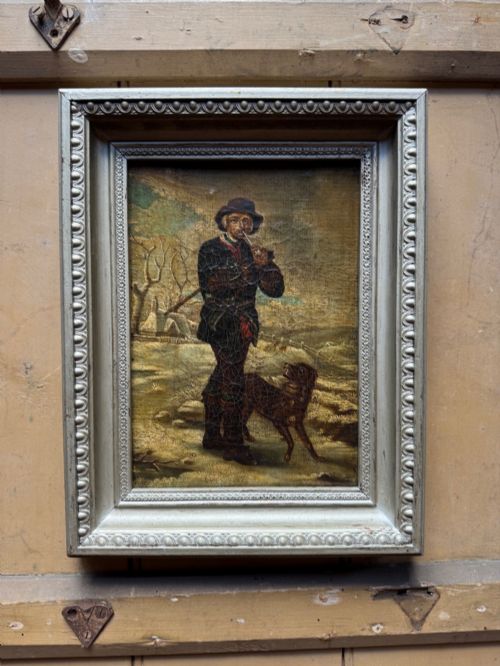
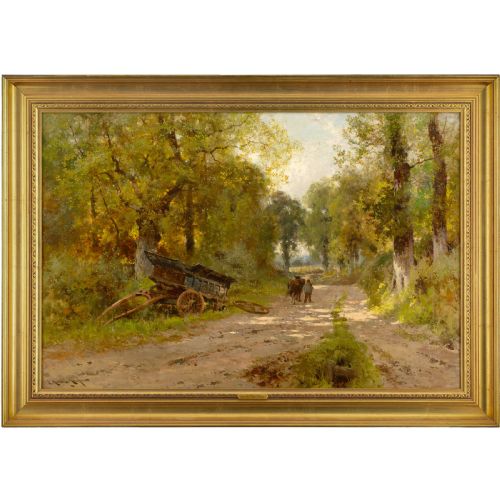
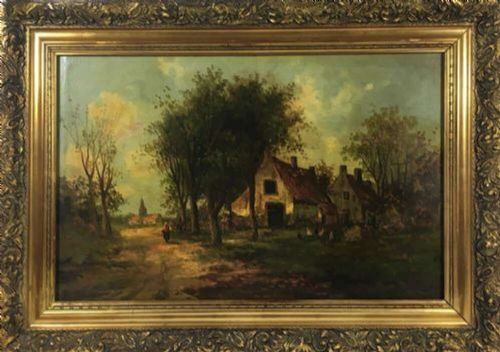
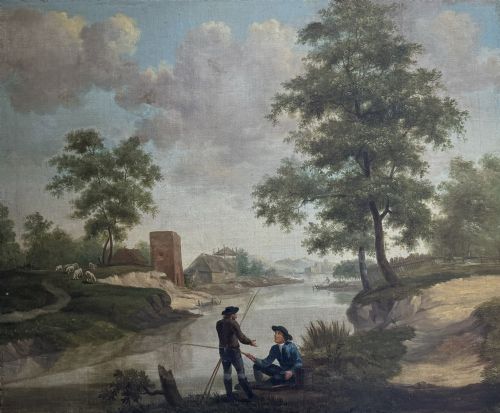
When you search for a rustic oil painting canvas, you find works executed in oil on canvas that capture pastoral scenes, farmyards, and country dwellings.
Rustic Oil Painting Canvas
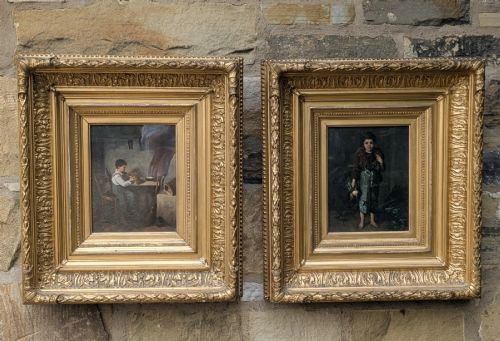
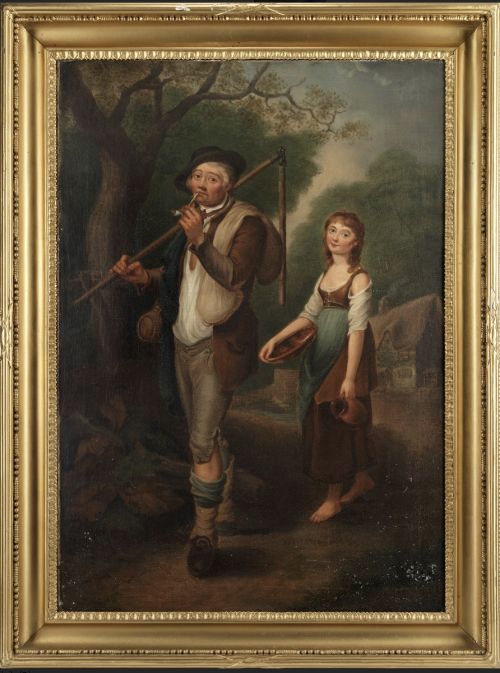
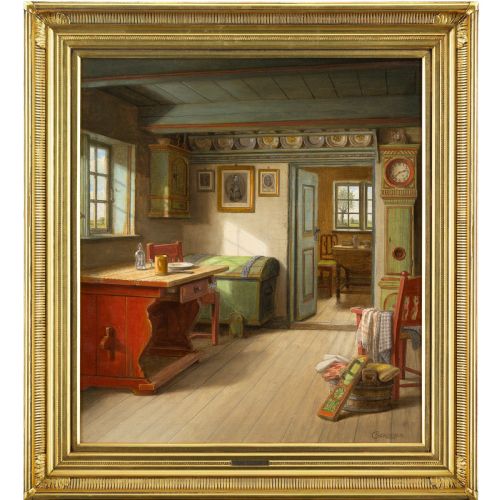
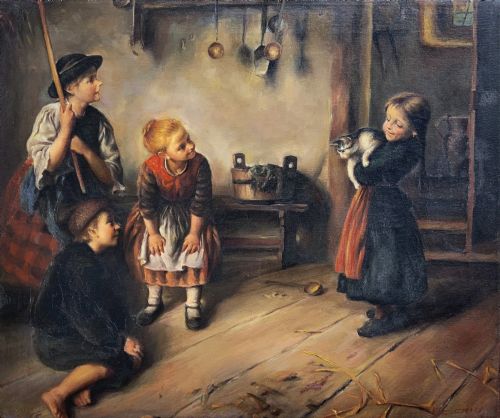
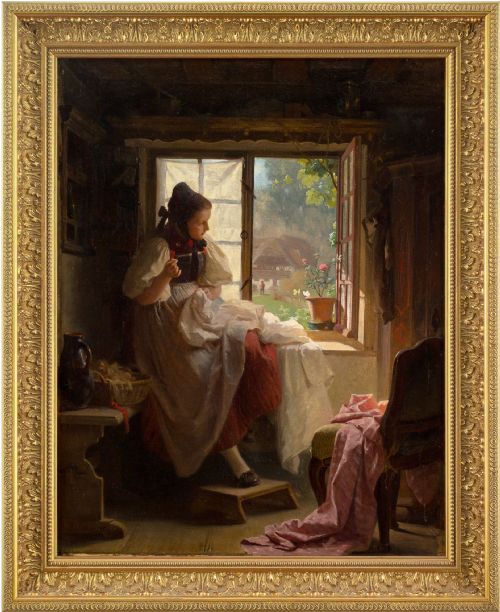
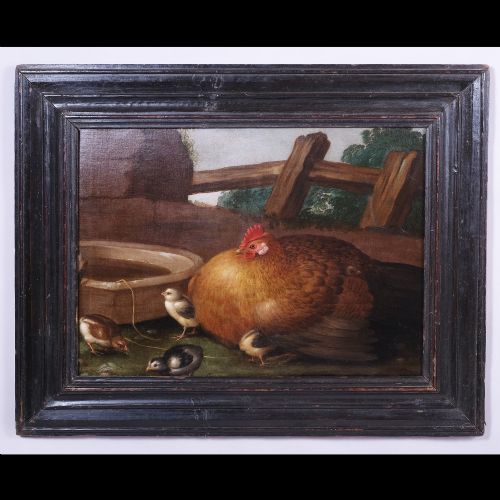
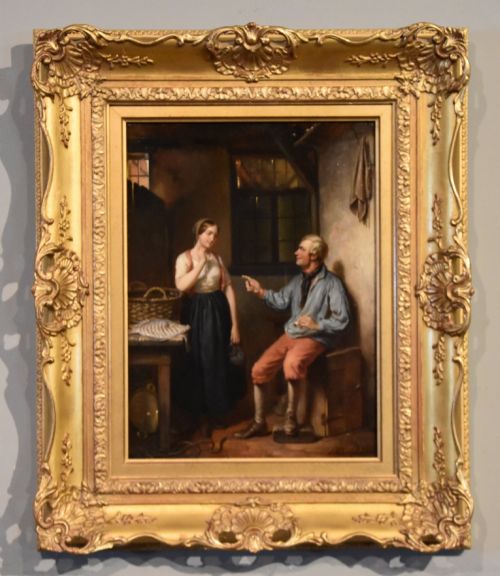
A rustic oil painting canvas brings rural life into interior spaces through depictions of farm animals, cottage interiors, and countryside landscapes. These works often portray livestock, agricultural laborers, and thatched cottages in oil on canvas.
The selections span from the eighteenth century through to the mid-twentieth century, with nineteenth-century examples appearing frequently. Works range from British and French school landscapes to intimate genre scenes of domestic life.
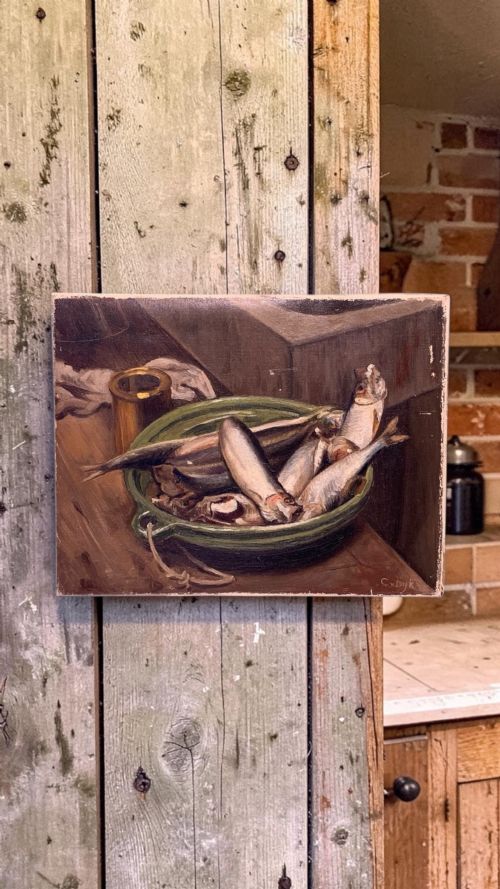
Subjects encompass pastoral views, farmyard scenes with cattle and sheep, and quiet cottage interiors. Painters utilise oil paint to capture the textures of rural subjects, from rustic dwellings to livestock.
How they were made
Artists painted primarily with oil paint applied to woven canvas supports, sometimes later laid onto board for structural stability. Wooden stretchers provided the internal framework to hold the canvas taut during the painting process.
Many surviving examples retain their original framing materials, incorporating wood, gesso, and giltwood or gold leaf accents. These frames complement the oil on canvas works by providing traditional ornamentation around the rural compositions.
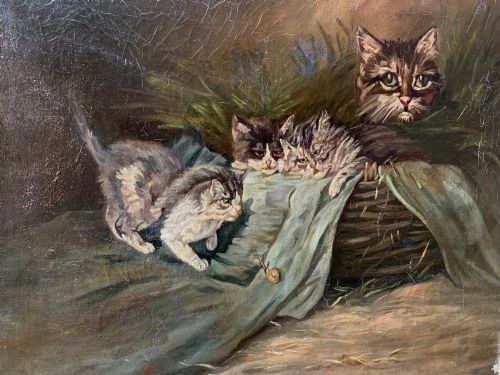
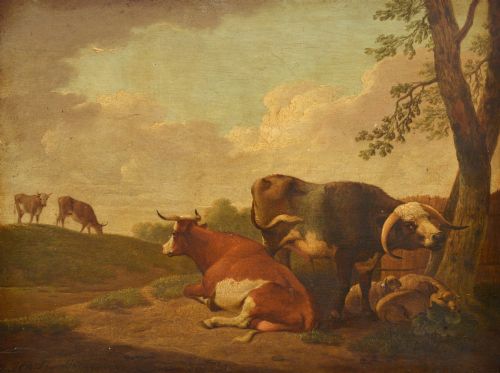
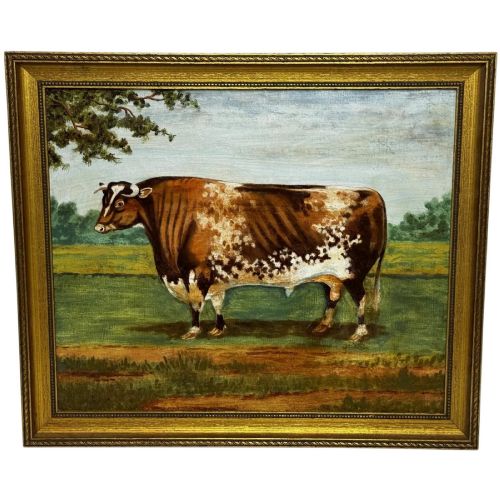
Sows, piglets, snails, and prized shorthorn bulls populate these rustic farmyard canvases.
What varies in quality
Quality rests in the handling of light, brushwork, and anatomical accuracy within pastoral and genre subjects. Stronger works demonstrate confident execution in depicting livestock, figures, and atmospheric country landscapes.
The depth of composition and the fidelity of the rural scene distinguish finer examples from standard decorative pieces. Provenance and attribution to documented artists working within British, French, or Belgian schools elevate the standing of a canvas.
John Horace Hooper·Hendrik Willem Schweickhardt·Thomas Barker of Bath·Max Kaltenmoser·Edgar Hunt·Henry Schouten·Harry Brooker·Claude Cardon·Thomas Hicks·Owen Bowen·Haynes King·Henry John Yeend King·Vincenzo Irolli·Edwin Thomas Roberts·James Kyd·Charles Vickers·Percival Glenfern·J Barclay·James William Booth·Charles Greville Morris·Amédée Degreef
The Rustic Oil Painting Canvas Glossary
- Canvas
- A heavy woven fabric used as a support surface for oil paintings. It is typically stretched over a wooden frame before painting.
- Giltwood
- Wood carved and coated with gold leaf or a gold-coloured finish. This material is commonly found on traditional picture frames housing these paintings.
- Genre Painting
- The pictorial representation of scenes from everyday life, such as domestic interiors or farmyard activities. These works focus on ordinary people engaged in daily tasks.
- Gesso
- A plaster-like mixture applied to wooden frames as a base for moulding and gilding. It provides a smooth surface for subsequent layers of gold leaf.
- Pastoral
- A style of art that idealises rural life, shepherds, and country landscapes. Such scenes emphasise the peace and simplicity of agricultural environments.
Rustic Oil Painting Canvas: Frequently Asked Questions
What is a rustic oil painting canvas?
It is an artwork created with oil paint on a woven canvas support featuring rural, agricultural, or cottage subjects. These pieces record farm life, landscapes, and domestic scenes from past centuries.
The category includes works from British, French, and Belgian schools ranging from the eighteenth century to the mid-twentieth century. They capture the textures of countryside life through traditional painting techniques.
How do I date a rustic oil painting?
Dating relies on stylistic evidence, clothing in genre portraits, stretcher construction, and the type of canvas weave. Signatures and attribution to documented nineteenth or early twentieth-century artists also help establish the period.
Comparative analysis with dated works by the same school or artist provides a reliable timeframe for unrecorded pieces.
Where should I hang these paintings?
These works suit spaces that benefit from warm, traditional focal points, such as living rooms, studies, or dining areas. They pair well with natural wood furniture and classic interior schemes.
Positioning them away from direct sunlight and excessive moisture protects both the oil paint and the canvas support over time.