




Antique Victorian Tureen
An antique victorian tureen brings nineteenth-century dining grandeur to the table with heavy earthenware, transfer-printed pottery, and shining silver plate.

Antique Victorian Tureen
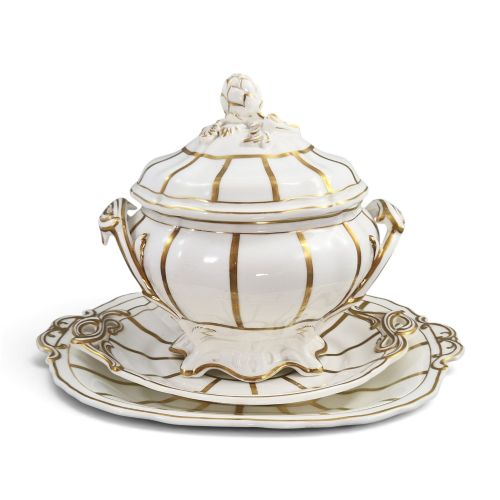
An antique victorian tureen encompasses lidded vessels designed for serving soups, vegetables, sauces, and game at nineteenth-century dining tables. These pieces range from substantial soup vessels intended for the centre of the table to smaller sauce and cream tureens supplied with matching stands and ladles.
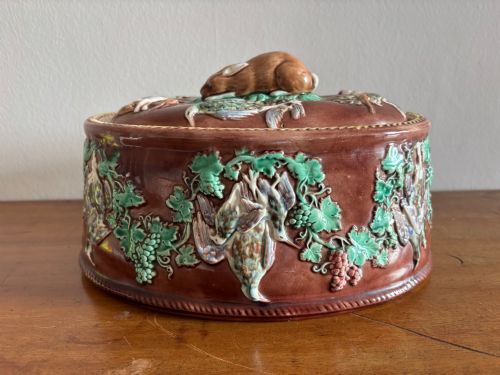
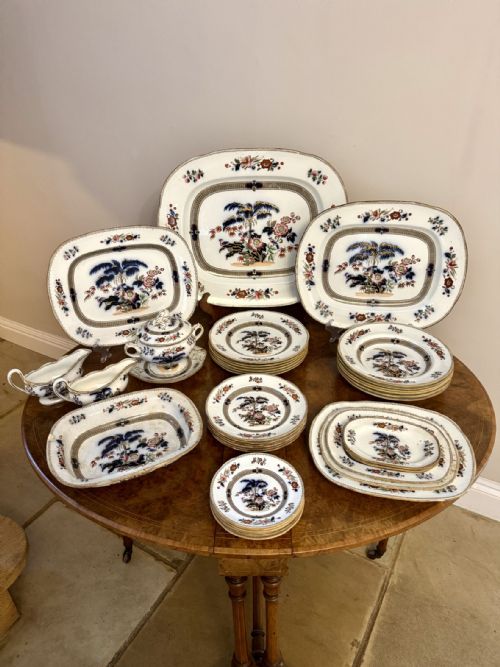
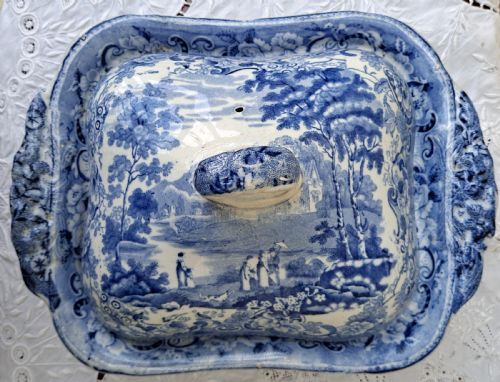
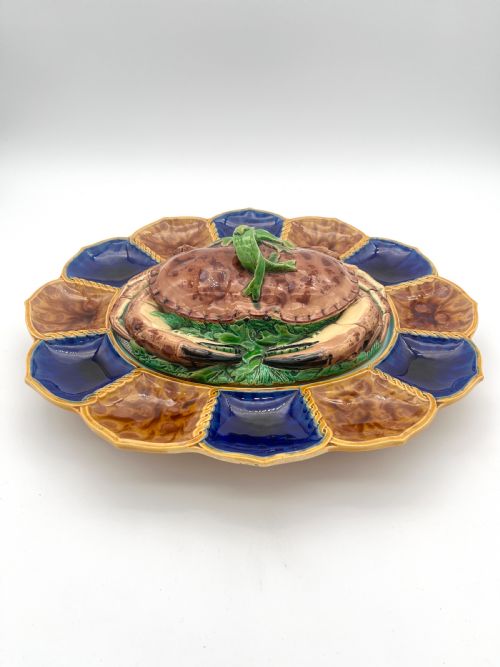
The varieties encountered most frequently on this page include transfer-printed earthenware vegetable tureens, ironstone serving dishes, and silver plated entree dishes. Makers also produced novelty forms such as game pie dishes and hen-on-nest egg crocks in majolica and caneware.
Originating predominantly from English potteries and silversmiths active during the Victorian era, these objects served both utilitarian functions in large domestic service and decorative roles in formal dining rooms.
Materials and methods of production
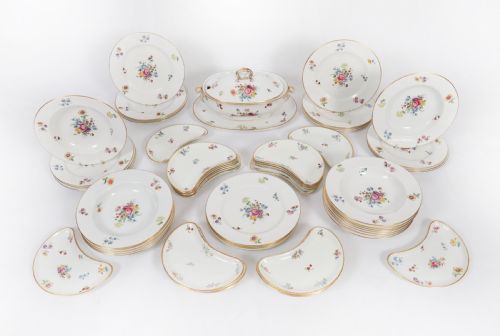
Potters utilised earthenware, bone china, ironstone, and ceramic bodies, frequently decorating the surfaces with blue and white transfer printing, flow blue techniques, enamel colours, and rich glazes. Majolica pieces show moulded botanical or animal reliefs finished with coloured lead glazes.
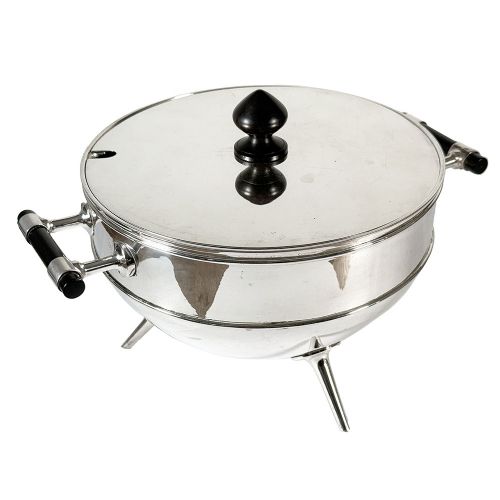
Metal vessels combine silver plate, sterling silver, and gold leaf over base metals, often paired with cast handles, finials, and ebonised wood accents. Silversmiths employed techniques such as revolving lids and chased ornamentation to create complex serving dishes and entree tureens.
Materials span earthenware, ironstone, silver plate, ceramic, and gold leaf.
Distinctions in manufacture and execution
The calibre of an antique victorian tureen depends on the crispness of the modelled detail, the clarity of transfer-printed scenes, and the balance of the proportions. Superior ceramic pieces display even glaze application without pooling, whilst metal examples exhibit solid weight in the base and handles.
Distinctions also arise from the completeness of the set, such as retaining the original cover, matching stand, and serving ladle. Master potteries and prominent silversmiths achieved greater refinement in their finishing work, elevating standard dining vessels into decorative focal points.
James Wallace and Company·Christopher Dresser for Hukin and Heath·Tiffany and Company·Hamilton and Inches·Mappin and Webb·Daniel and Arter·Edward and John Barnard·Walker and Hall·Elkington
The Antique Victorian Tureen Glossary
- Ironstone
- A dense, durable ceramic perfected in the nineteenth century as a robust alternative to porcelain. It takes glazes and transfer prints well.
- Transfer print
- A decoration technique where an engraved metal plate transfers a design onto paper, which is then stamped onto the ceramic body before firing.
- Silver plate
- A manufacturing method fusing a thin layer of silver to a base metal such as copper or nickel silver. It provided the lustre of solid silver at lower cost.
- Majolica
- A colourful, lead-glazed earthenware characterised by vibrant hues and naturalistic moulded forms. It became exceptionally popular during the mid-nineteenth century.
- Caneware
- A fine stoneware body with a warm, pale buff or bamboo colour reminiscent of unglazed pottery. It was frequently used for Victorian game pie dishes.
Antique Victorian Tureen: Frequently Asked Questions
What was a tureen used for?
These lidded vessels held and retained the heat of soups, gravies, vegetables, and meats at the Victorian dining table. Servants brought them from the kitchen to the dining room for communal serving.
Larger versions accommodated soups and stews, while smaller sauce and game tureens served specialised accompaniments and specialty pies.
Can I use silver plated tureens for food?
Most silver plated serving dishes remain suitable for serving dry foods, roasted items, and breads. If the silver plating has worn down to the base metal, avoid acidic foods.
Inspect the interior surfaces for wear before using them for wet sauces or soups.
How do I distinguish ironstone from porcelain?
Ironstone is a heavier, opaque ceramic body designed for durability under heavy domestic use. True porcelain is thinner, harder, and frequently translucent when held to the light.
Ironstone pieces often bear specific impressed or printed factory marks characteristic of nineteenth-century potteries.