
Antique Victorian Canterbury
An antique Victorian canterbury is a purposeful compartmentalised stand for sheet music and periodicals, bringing warmth and refined organisation to a period drawing room.
Antique Victorian Canterbury
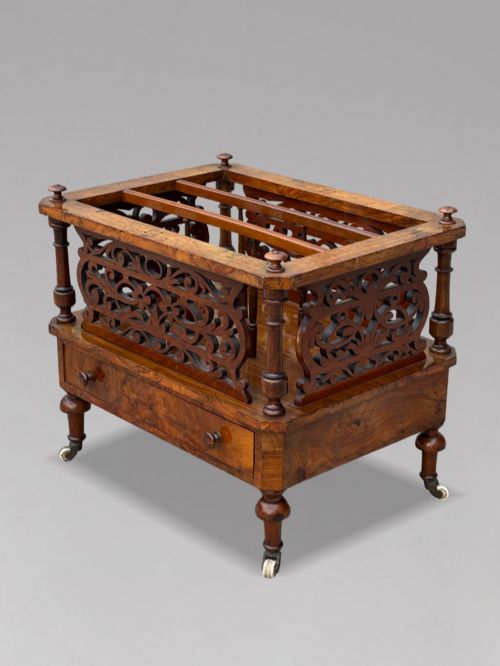
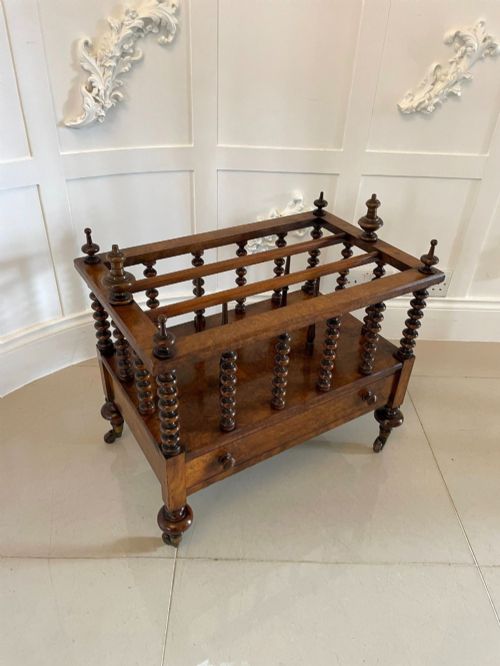
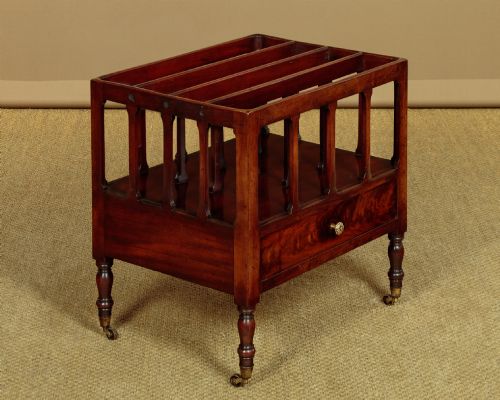
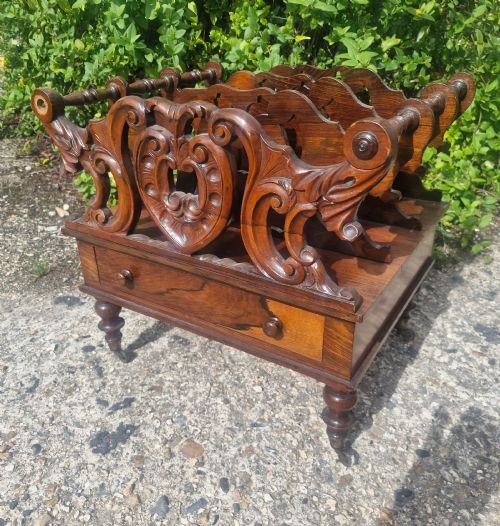
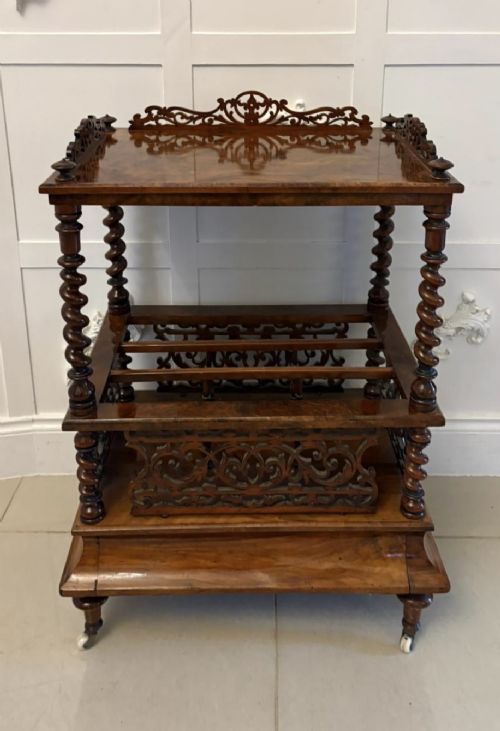
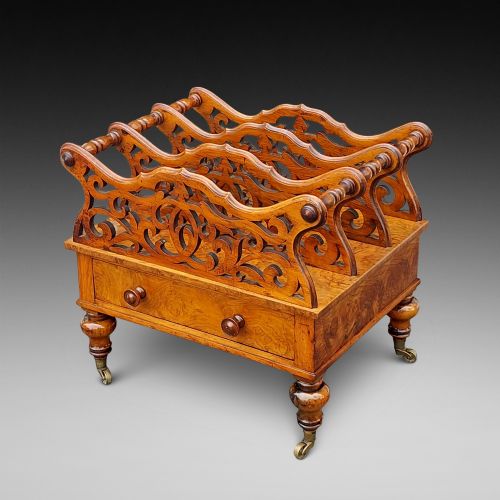
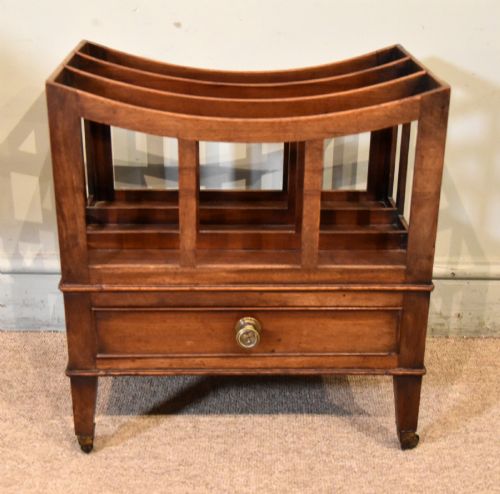
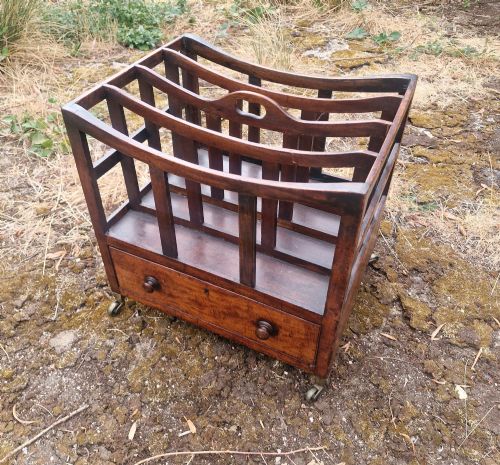
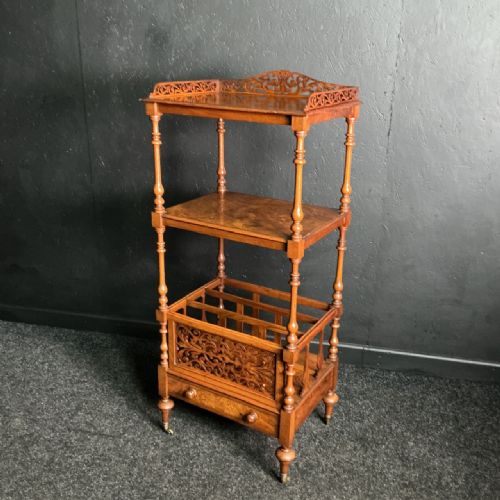
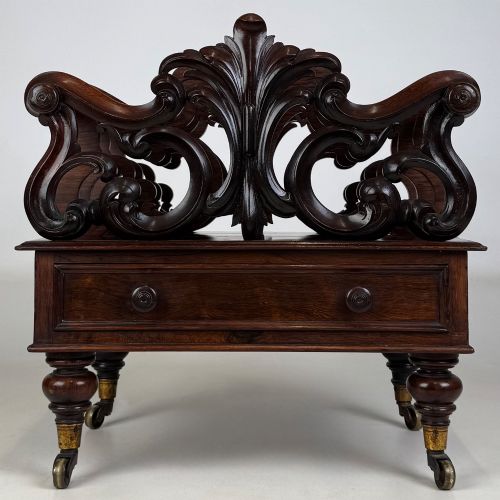
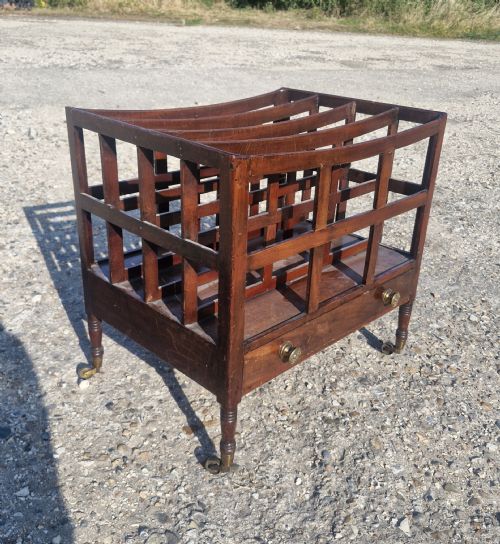
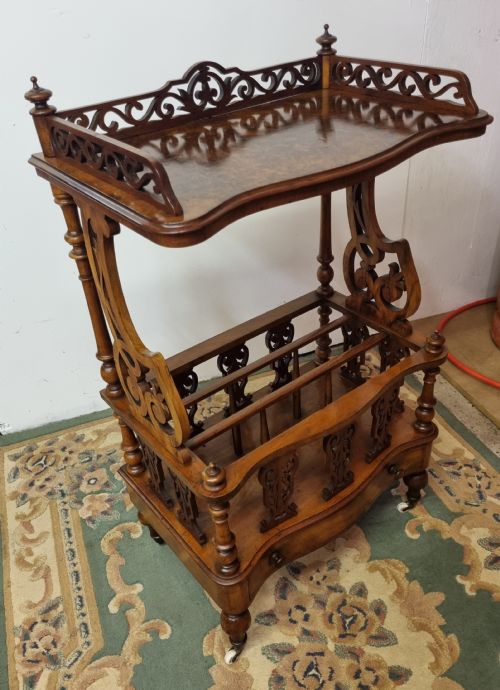
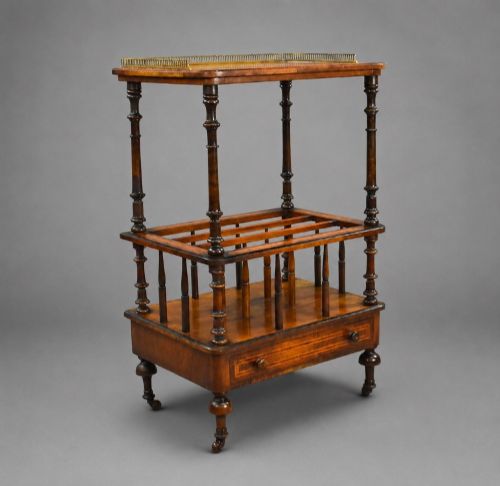
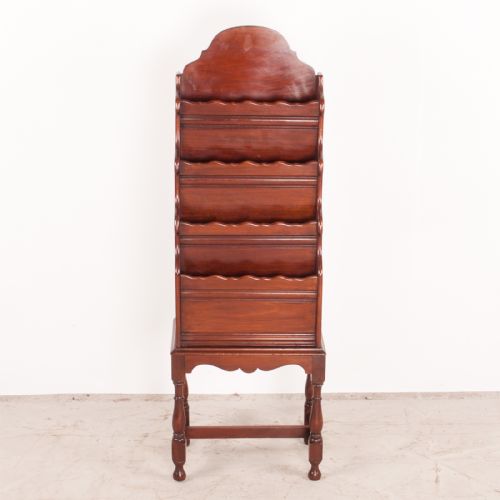
An antique Victorian canterbury is a dedicated receptacle designed originally to hold folios, sheet music, and newspapers beside a pianoforte. The form typically stands on castors, featuring slatted or divided upright tiers above a low drawer, though variations range into combined whatnots and side tables.
Buyers seeking this phrase encounter pieces predominantly in figured walnut or rich rosewood from the mid-nineteenth century. Walnut examples frequently display elaborate marquetry inlay and serpentine shapes, whereas rosewood versions lean towards turned supports and brass detailing.
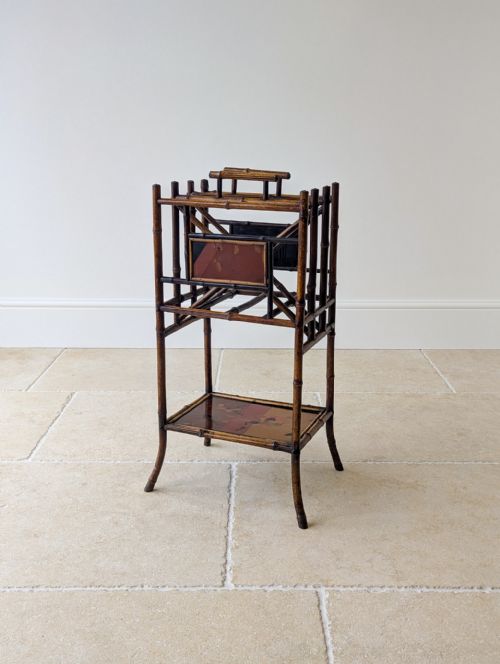
The typology also encompasses later nineteenth-century aesthetic movement iterations constructed from bamboo or lacquered wood alongside heavier mahogany William IV models. These disparate materials reflect changing domestic tastes while maintaining the foundational compartmentalised framework.
Materials and construction methods
Cabinet makers utilised choice timber veneers, applying burr walnut and rich rosewood over sturdy secondary woods to achieve deep, lustrous surfaces. Solid mahogany and fruitwood also feature prominently, shaped into turned spindles and curved divisions.
Joinery techniques combined traditional framing with delicate fretwork panels, brass castors, and porcelain or ceramic elements. Inlaid pieces frequently incorporate lighter fruitwoods and boxwood strings, contrasting sharply against the darker carcass.
Distinctions in craftsmanship
Superior examples exhibit dense, highly figured burr walnut veneers carefully book-matched across the top surface and drawer fronts. The execution of inlaid marquetry and the turning of structural spindles indicate the workshop's investment of time and skill.
Structural integrity reveals itself in the rigidity of the upright slats and the smooth operation of any integrated base drawer. Finer pieces incorporate substantial brass fittings, finely castors, and multi-functional tiers combining book rests or whatnot shelves.
Edwards & Roberts·Henry Ogden & Son
The Antique Victorian Canterbury Glossary
- Canterbury
- A low stand with partitions for holding music sheets, newspapers, and magazines. The piece originated in the late eighteenth century and evolved elaborate Victorian forms.
- Whatnot
- A set of open shelves supported by pillars, used for displaying ornaments. Many Victorian canterburys integrate a whatnot top tier.
- Burr Walnut
- A decorative wood veneer taken from the gnarly growths of a walnut tree. It produces intricate, swirling grain patterns highly prized by Victorian cabinet makers.
- Marquetry
- Decorative veneer patterns arranged in pictorial or geometric designs. Craftsmen assemble contrasting woods like boxwood and fruitwood to embellish the carcass.
- Serpentine
- A furniture shape featuring a double-curved edge that bends outward at the centre and inward at the sides. This contour adds visual movement to the base of the cabinet.
Antique Victorian Canterbury: Frequently Asked Questions
What were canterburys originally used for?
These stands were designed to hold folios of sheet music, scores, and song books near domestic keyboard instruments in the Victorian parlour.
Over time, owners also utilised the divided compartments for daily newspapers, periodicals, and correspondence before the introduction of modern magazine racks.
How do I distinguish walnut from rosewood models?
Walnut pieces display a warm brown tone with pronounced, swirling grain patterns and are frequently enhanced with lighter marquetry inlay.
Rosewood variants offer a heavier, darker reddish-brown appearance with fine black grain streaking, often complemented by turned spindles and simpler brass mounts.
Can I use an antique canterbury as a side table?
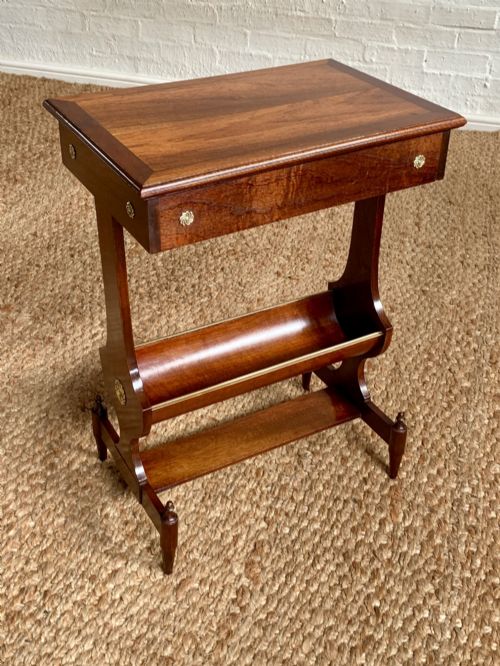
Many surviving examples incorporate a flat top surface or work table attachment, making them well suited for placement beside a sofa or armchair.
The partitioned base sections securely store contemporary magazines or books while the surface holds lamps or decorative items.
What indicates an aesthetic movement canterbury?
These late nineteenth-century pieces depart from traditional mahogany and walnut by employing exotic materials such as Japanese-inspired lacquer or natural bamboo.
They display simpler, rectilinear silhouettes influenced by contemporary design reform movements, often paired with copper or brass hardware.