




Ebonised Library Side Table
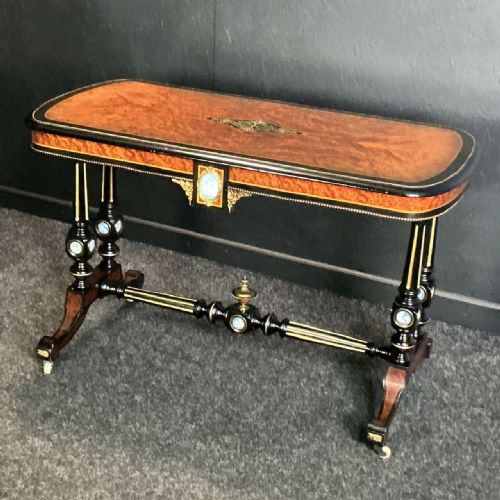
An ebonised library side table brings dark, heavy presence and striking contrast to a room, often detailed with marquetry, brass or porcelain.
Ebonised Library Side Table
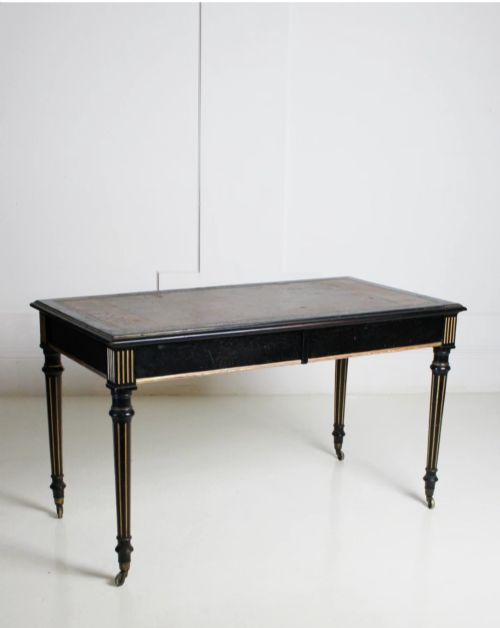
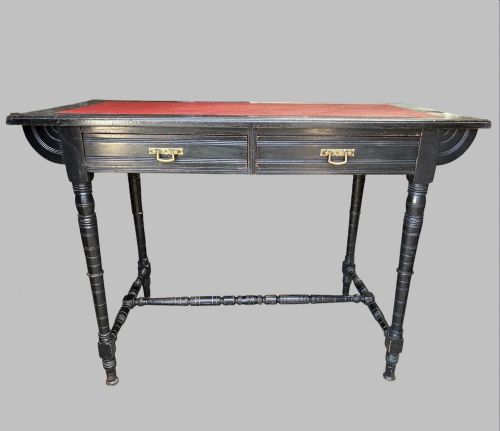
An ebonised library side table represents a dark-finished surface suited for study, reading and display. These tables appear most frequently from the nineteenth century and the Victorian era, drawing on Aesthetic Movement and French Napoleon III styles.
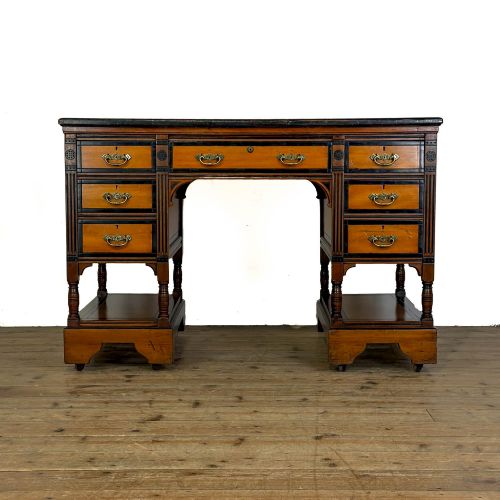
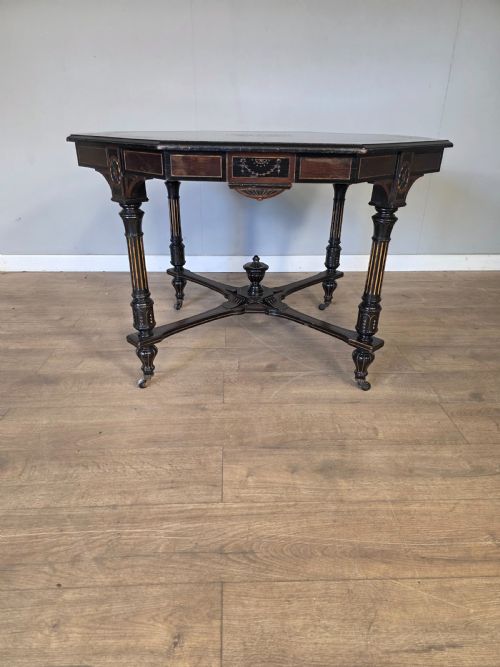
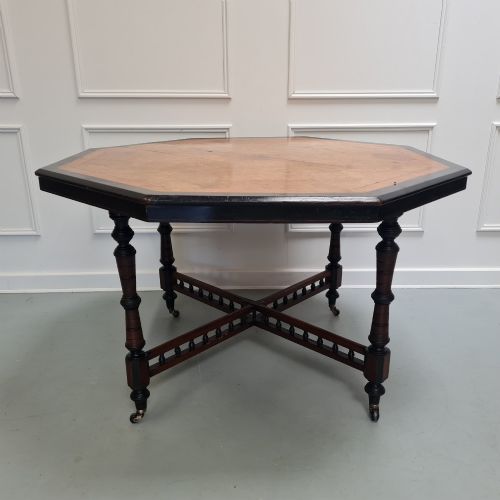
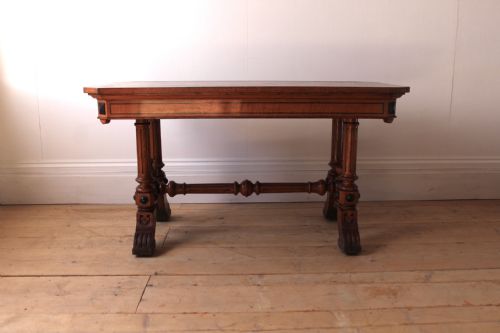
The form spans centre tables, writing desks and partners desks, alongside related pieces like canterburys and stretcher tables. Many examples incorporate intricate inlays, octagonal tops or double-sided drawer arrangements designed for placement in the middle of a room.
How they were made
The construction relies on solid woods and secondary timbers finished with a dark ebonised coating to imitate ebony. Cabinet makers combined these blackened surfaces with contrasting secondary timbers including walnut, amboyna, burr walnut and mahogany.
Makers integrated decorative elements such as brass mounts, ormolu details, cast solid brass sabots and leather writing surfaces. Marquetry and bone inlay further enriched the surfaces of French and German pieces.
Several tables hide their paperwork behind double-sided drawers, meaning you can argue with two people at once.
What varies in quality
The distinction between tiers of work rests upon the crispness of the ebonisation and the precision of the underlying timber preparation. Finer examples display meticulous joinery and well-fitted drawer linings rather than superficial surface masking.
Hardware and mounts also separate standard production from superior workshops. Solid brass sabots, finely chased ormolu and detailed marquetry indicate a higher grade of craftsmanship by notable makers and Parisian ateliers.
Maison Millet·Daniel Cottier·Cottier & Co.·Diehl Paris
The Ebonised Library Side Table Glossary
- Ebonised
- Wood finished with a dark stain, paint or polish to simulate expensive ebony. This treatment became popular during the nineteenth century for furniture in the Aesthetic Movement and French revival styles.
- Ormolu
- Gilt bronze mounts applied to furniture for decoration. These metal details appear on finer nineteenth-century tables and desks.
- Sabot
- A protective or decorative metal casing fitted to the foot of a table leg. Cast solid brass sabots are frequently found on nineteenth-century pieces.
- Marquetry
- Decorative veneer patterns assembled from various woods, metals or bone to create pictorial designs on table tops. German and French pieces frequently employ this technique.
- Partners Desk
- A large double-sided desk designed with drawers on opposing faces so two people could work opposite each other. These library tables were built for grand institutional or domestic studies.
Ebonised Library Side Table: Frequently Asked Questions
How do I care for ebonised wood?
Keep these pieces away from direct sunlight and excessive heat sources to prevent the dark finish from fading or cracking.
Dust regularly with a soft, dry cloth and avoid harsh chemical polishes that can damage the ebonised surface.
Where should I place a centre table?
A centre table works best positioned in the middle of a room where its details can be appreciated from all angles.
Ensure there is enough walking space around the piece, particularly for larger octagonal or double-sided library tables.
What is the difference between a side table and a partners desk?
A side table stands against a wall or in the open as a surface for display and light writing.
A partners desk is built to be accessed from both sides with integrated drawers, designed for shared study.
How can I identify an Aesthetic Movement piece?
Aesthetic Movement pieces often feature ebonised wood combined with minimalist lines, subtle brass hardware and influences from Japanese design.
These nineteenth-century works prioritise artistic harmony over heavy Victorian ornamentation.