


Antique Magazine Stand Castors
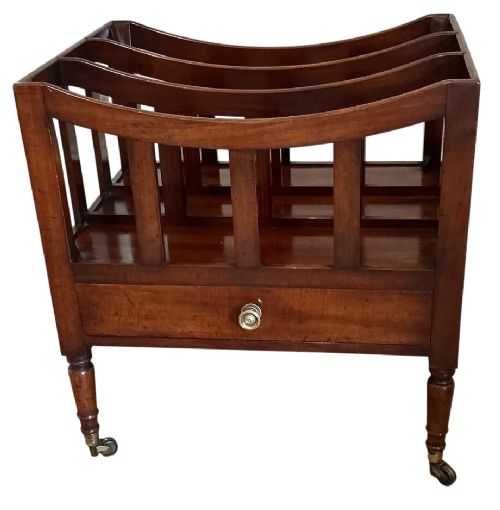
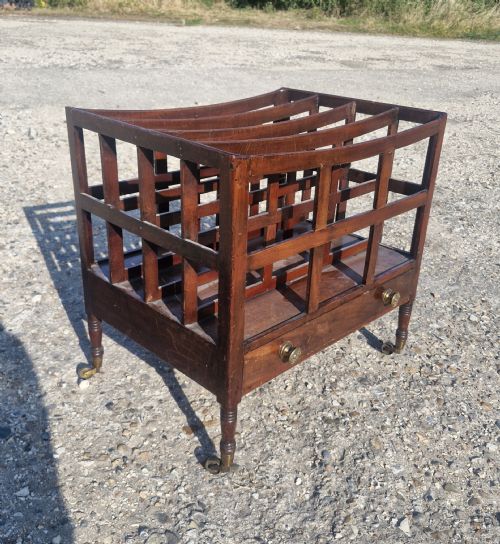
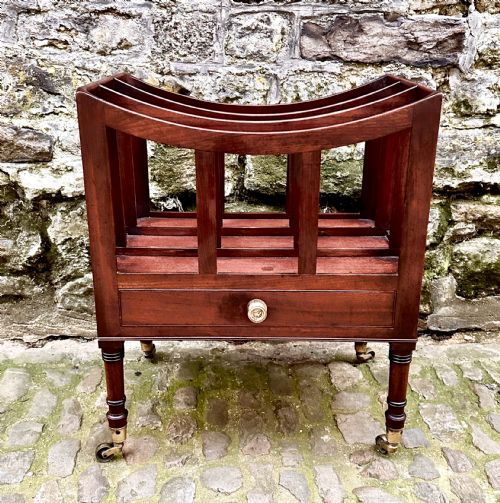
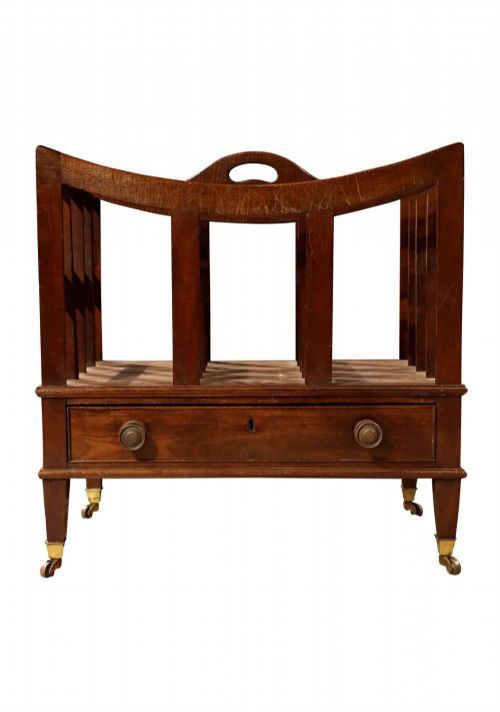
These antique magazine stand castors and canterburys offer mobile organisation for periodicals, holding folios and papers on small wheels for easy movement.
Antique Magazine Stand Castors
When you search for antique magazine stand castors, you find pieces designed to hold newspapers, folios and sheets of music close to hand. The most frequent form on this page is the Canterbury, a compartmented stand traditionally fitted with low wheels for rolling across carpeted floors.
The selections span from the Georgian and Regency eras through the Victorian period to the early twentieth century. Makers constructed these stands in boat shapes, tiered book troughs, and four-division racks, frequently combining storage compartments with a single lower drawer.
Originating as stands for musical scores and folios, these items adapted naturally to hold later weekly magazines and newspapers. They sit on turned legs, block feet or slender uprights supported by brass or timber castors.
How they were made
Cabinet makers relied primarily on mahogany and rosewood for the structural frames, often selecting burr walnut and satinwood for decorative veneering. Selected pieces include contrasting ebony banding or delicate marquetry inlay across the divisions and drawer fronts.
Castors were cast from brass, sometimes paired with turned wooden wheels, allowing the heavy timber furniture to move without damaging floorboards. Joinery techniques involved precise mortise and tenon construction for the vertical divisions and low drawer boxes.
Listings feature timbers including mahogany, rosewood, walnut, satinwood, and burr walnut across Georgian, Regency, and Victorian periods.
What varies in quality
Superior examples distinguish themselves through fine timber selection, such as figured mahogany or rich burr walnut, combined with crisp carving and precise banding. The finesse of the turned legs and the original quality of the brass castors indicate the standing of the original workshop.
Proportion and structural integrity separate standard utility pieces from exceptional ones, particularly in oversized country house models or those exhibiting elaborate Italian Rococo and inlaid details. The retention of original castors and working drawer mechanism preserves the integrity of the piece.
Gillows of Lancaster·J.C.Loudon
The Antique Magazine Stand Castors Glossary
- Castor
- A small swiveling wheel attached to the base of furniture legs to allow easy rolling across floors. They are frequently made of brass or wood in these periods.
- Folio stand
- A larger piece designed to hold oversized paper sheets, books, and prints. These often share the proportions and castor mountings of major canterburys.
- Book trough
- An open rack designed to hold volumes upright on a table or floor. Examples appear in tiered formats utilising carved or inlaid timbers.
- Ebony banding
- Thin strips of dark contrasting wood inlaid around the edges of panels and tabletops. Cabinet makers used this technique to define geometric borders on mahogany surfaces.
Antique Magazine Stand Castors: Frequently Asked Questions
What is a Canterbury used for?
Canterburys were originally built to store sheet music, folios, and books near a piano or seating area. Over time, their partitioned wooden slats made them equally useful for holding newspapers and weekly magazines.
Today, they serve the same practical function in a sitting room while displaying period cabinet work. The small wheels allow owners to reposition the stand easily beside a chair.
How do I date a mahogany Canterbury?
Dating relies on observing the changing styles of the legs, wood selection, and construction details from the Georgian period onward. Early nineteenth-century examples often feature crisp Regency reeding or boat-shaped frames, while Victorian pieces lean toward burr walnut, ebonising, or elaborate inlay.
Checking the drawer dovetails and timber grain helps separate earlier handmade pieces from Edwardian revivals. Original brass castors also offer clues regarding the manufacturing period.
Are these stands strong enough for modern magazines?
Solid mahogany and rosewood frames provide robust structural strength suitable for everyday domestic use. The vertical divisions easily support standard contemporary periodicals and books.
Care should be taken when rolling them across thick carpets to protect the original castor mountings. Regular dusting preserves the polished hardwood surfaces.