
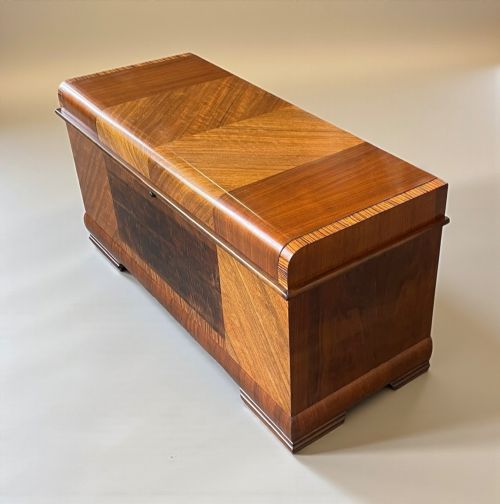


Antique Veneer Box
An antique veneer box is a timber container surfaced in fine decorative woods, prized for rich grain patterns spanning multiple centuries.
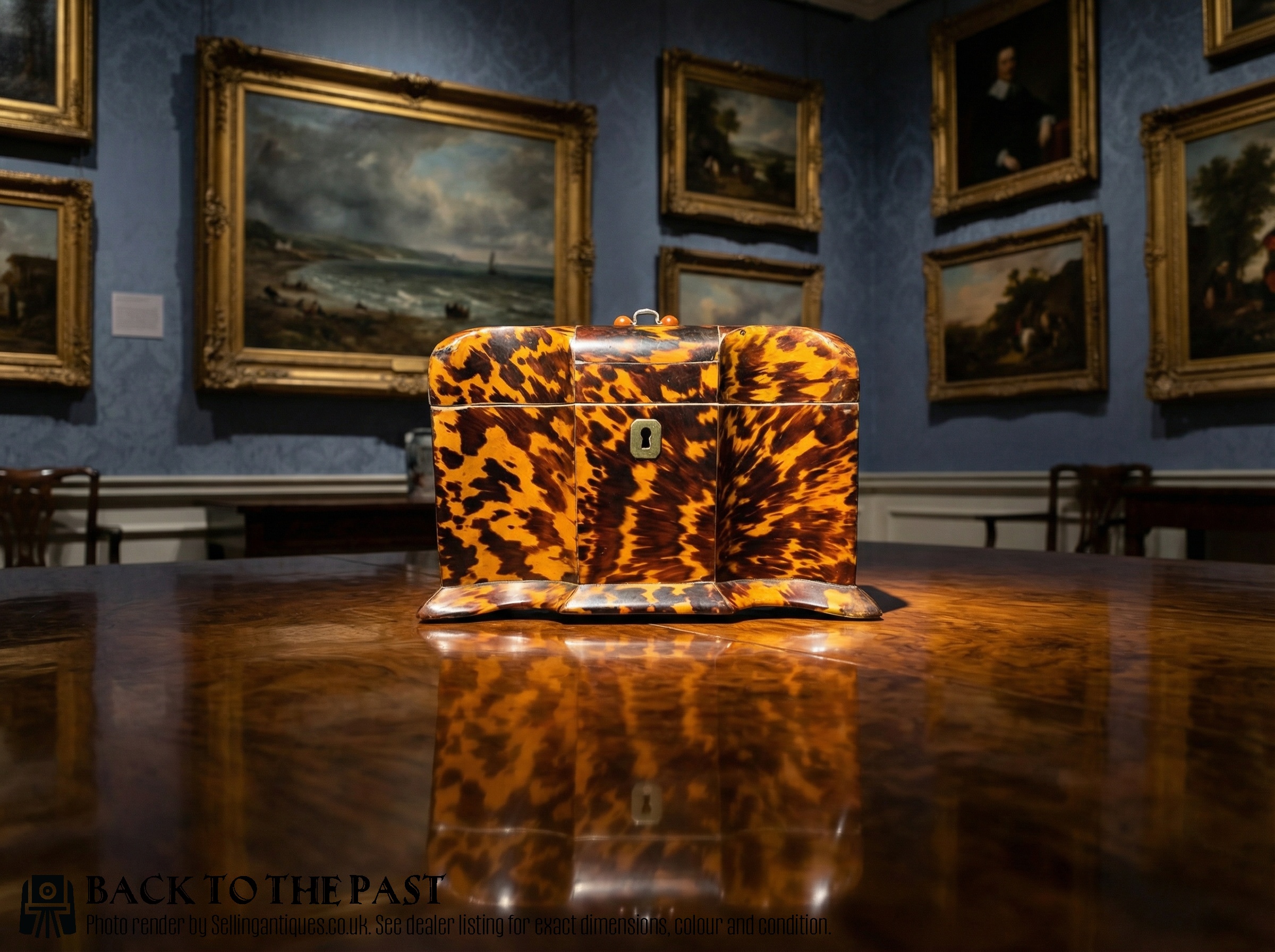
Antique Veneer Box
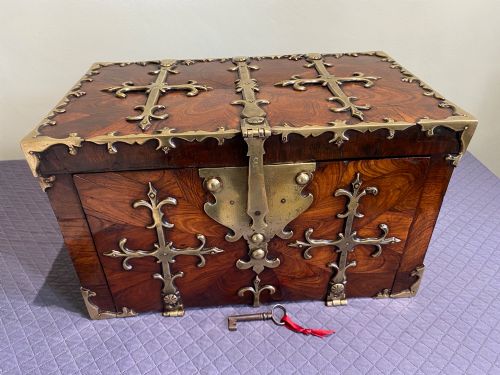
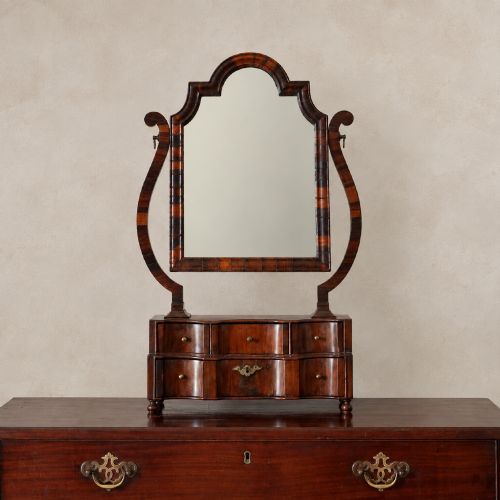
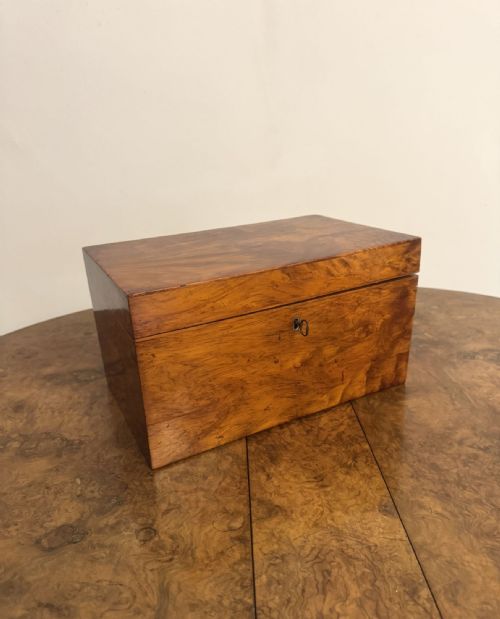
When you search for an antique veneer box, you encounter a diverse range of lidded containers and chests spanning from the seventeenth century through the twentieth century. These pieces include tea caddies, lace boxes, coffre fortes, games boxes, and miniature commodes designed to store valuables, dry leaf, or personal items.
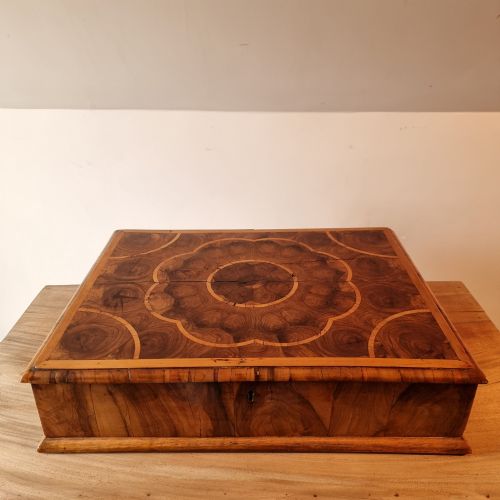
The specimens appearing here most frequently draw from Regency, Georgian, and Victorian periods, utilising decorative timber applied over a secondary carcass. Forms vary from simple rectangular caddies to elaborate oystered collector boxes and miniature chests of drawers.
How they were made
Cabinet makers applied thin slices of decorative timber such as kingwood, laburnum, walnut, and mahogany onto sturdy foundational woods to create striking exterior patterns. Workshops frequently incorporated contrasting stringing, parquetry inlay, and internal brass or glass fittings to finish the piece.
Oyster veneering involved slicing small branches transversely to produce circular rings of grain, which were then fitted closely together across the surface. Artisans also utilised specialised sawing techniques to harvest burr thorn, amboyna, and olive wood for maximum visual impact.
Listings feature timbers including laburnum, kingwood, amboyna, olive wood, and tortoise shell across the seventeenth, eighteenth, and nineteenth centuries.
What varies in quality
The standard of an antique veneer box rests upon the choice of timber and the precision of the grain alignment across the lid and sides. Superior examples display carefully matched cuts that flow naturally around corners and edges without interruption.
Depth of colour and the preservation of the original polished surface dictate the visual appeal of each container. Finer pieces maintain crisp parquetry geometry and intact internal compartments rather than heavily restored or replaced sections.
The Antique Veneer Box Glossary
- Veneer
- A thin layer of decorative wood applied to a base carcass. This technique allowed cabinet makers to display expensive grain patterns economically.
- Oyster veneer
- Timber sliced across the branch to produce circular or oval patterns resembling oyster shells. It appeared frequently on late seventeenth and early eighteenth century pieces.
- Tea caddy
- A lidded box originally built to store loose tea leaves securely. Many examples featured internal compartments and locking lids.
- Parquetry
- Geometric patterns formed by small pieces of wood fitted together in a mosaic arrangement. This technique adorned the exterior surfaces of games boxes and caddies.
- Coffre forte
- A heavy strongbox or chest reinforced for securing valuables. These seventeenth and eighteenth century pieces often utilised dense kingwood veneers.
Antique Veneer Box: Frequently Asked Questions
What were antique veneer boxes used for?
These containers served specific domestic functions such as storing dry tea leaves, holding lace collars, housing playing cards, or keeping personal letters secure.
Tea caddies often featured internal lead or wood canisters with locking lids to protect expensive leaf, while larger chests accommodated valuables or documents.
How do I date an antique veneer box?
Dating relies upon observing the underlying construction methods, hardware types, and the specific choice of decorative timber. Seventeenth century pieces often display oystered laburnum or olive wood on thick oak carcasses, while Regency and Victorian items employ mahogany, rosewood, or exotic fruitwoods over lighter pine or deal foundations.
Secondary woods inside drawers and the style of hinges or locks provide further chronological clues.
How should I care for an antique veneer box?
Maintain a stable room temperature away from direct sunlight and strong heat sources to prevent the thin timber layers from shrinking or lifting. Dust gently with a dry, soft cloth and apply traditional beeswax sparingly when the surface appears dry.
Avoid placing damp items directly onto the polished wood to protect the historical finish.