
Antique Velvet Armchair Pair
An antique velvet armchair pair brings matched seating and tactile depth to a room, spanning styles from Victorian to French Chateau.
Antique Velvet Armchair Pair
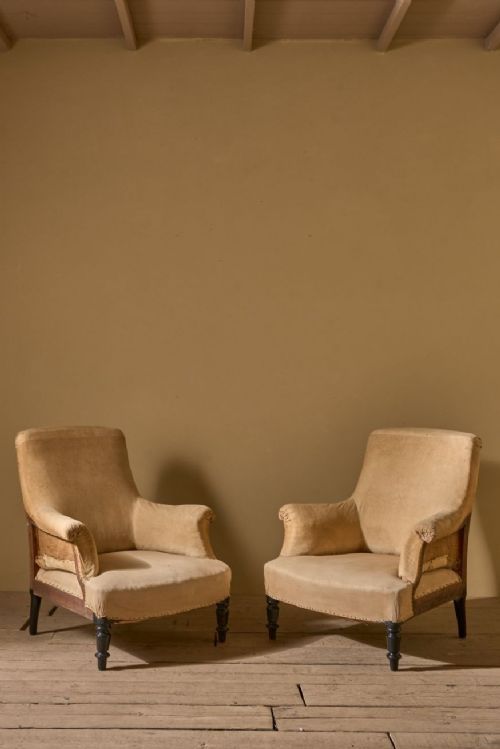
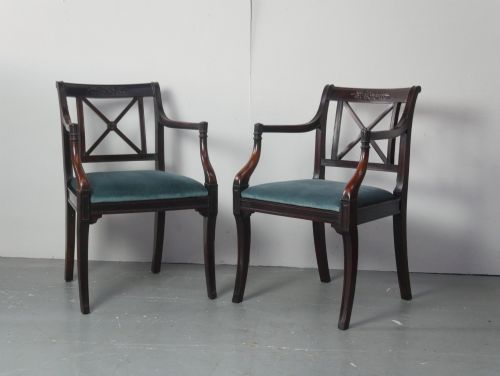
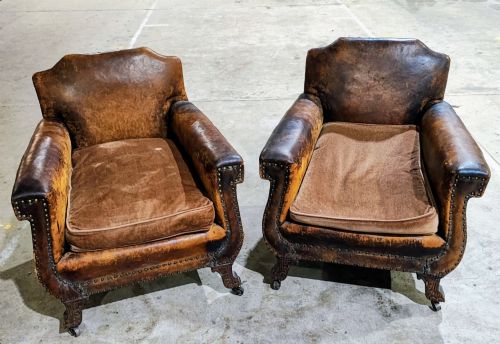
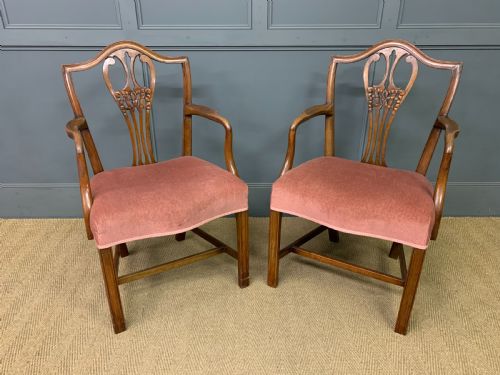
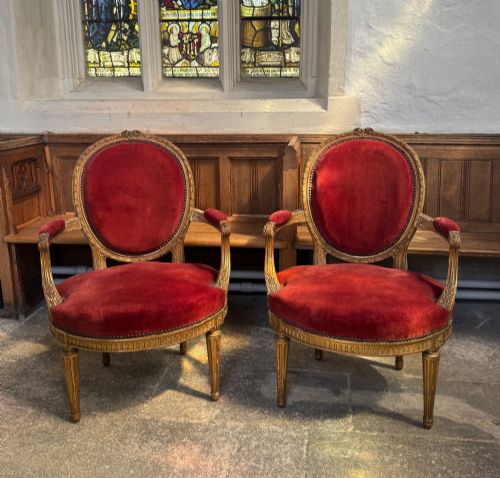
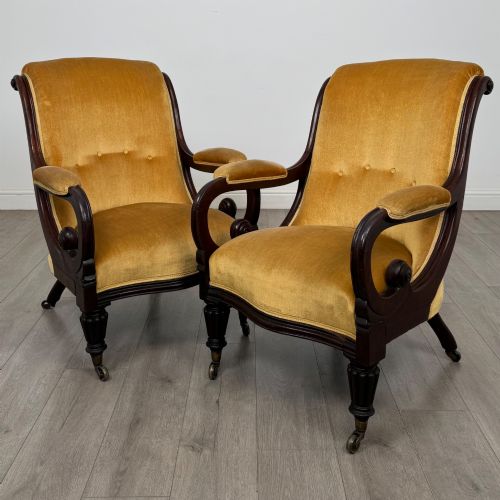
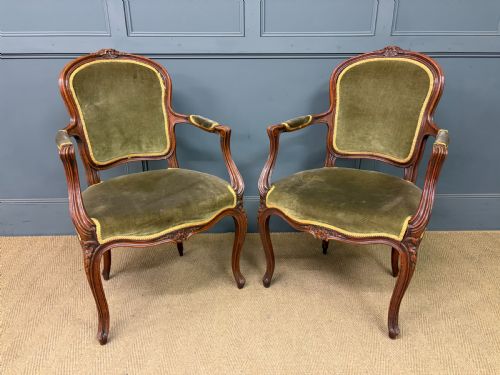
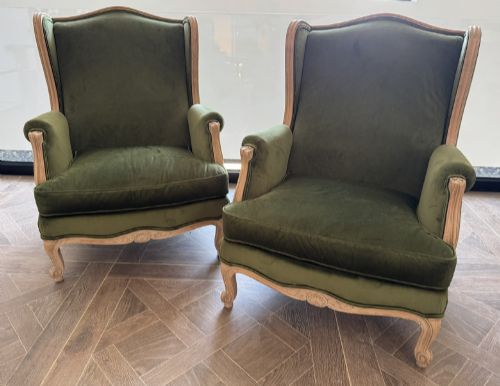
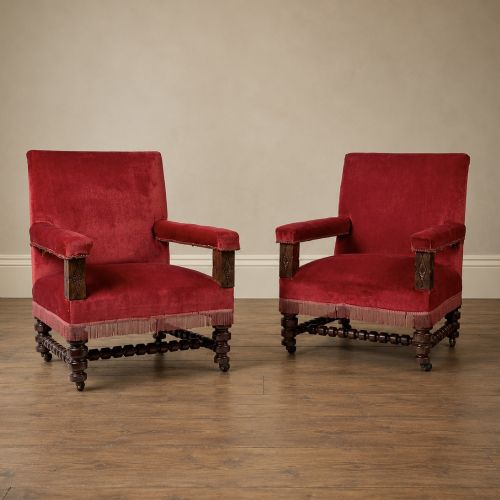
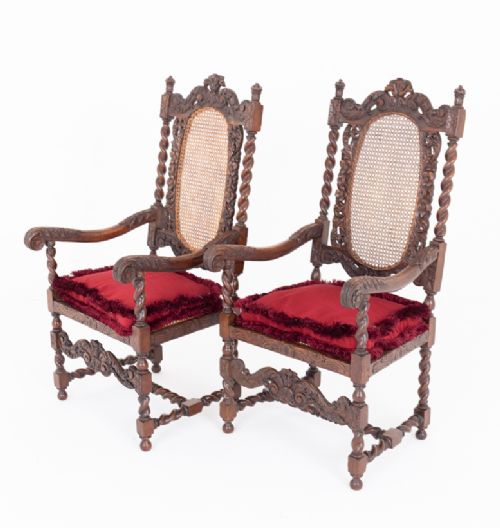
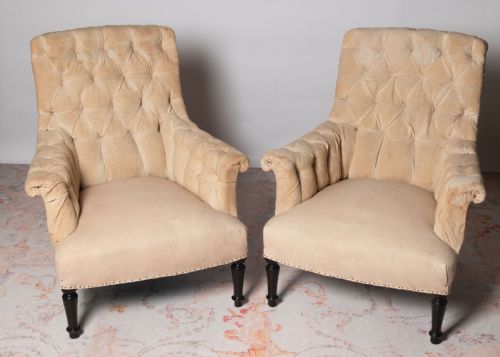
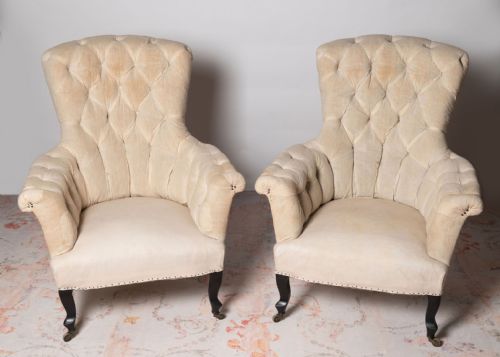
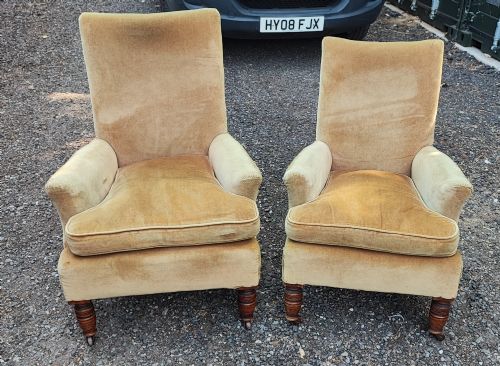
An antique velvet armchair pair unites two matched seats designed for formal parlours, libraries, or drawing rooms, offering both symmetry and comfort. Buyers seeking an antique velvet armchair pair will encounter various forms, ranging from high-buttoned Napoleon III seats and French bergere armchairs to heavy Victorian oak and red velvet designs.
The evidence shows these pairs originating primarily across the nineteenth and early twentieth centuries, encompassing Victorian, Edwardian, and Regency periods alongside specific French revival styles. Walnut, mahogany, and giltwood frames predominate, frequently paired with plush pile upholstery in rich tones.
Most examples hail from French or English workshops, demonstrating either restrained classical lines or elaborate carved decoration. Whether structured as open fauteuils or enclosed wing chairs, these sets provide a balanced focal point for interior schemes.
Materials and construction methods
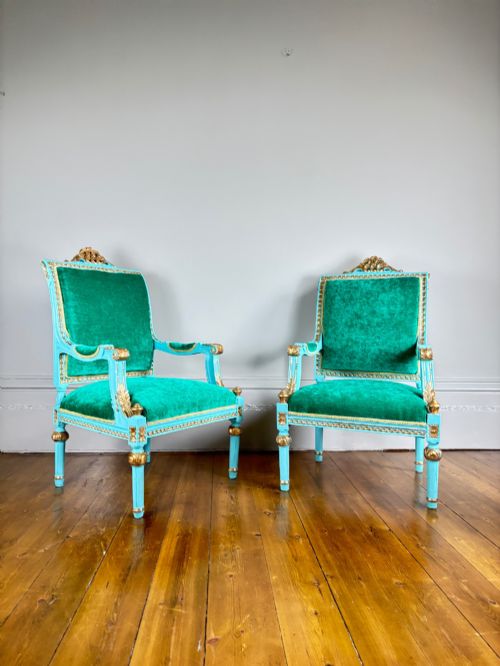
Frames rely on dense timbers such as mahogany, walnut, oak, and beech, selected for their structural rigidity and capacity to hold intricate hand-carved details. Giltwood and painted finishes appear frequently on continental salon chairs, providing a decorative surface layer over the underlying wood.
Upholstery relies on traditional stuffing techniques enclosed by velvet, leather, or silk fabrics, secured with careful hand-tacking along the frame rails. Brass accents and gilding complete the ornamental scheme on select nineteenth-century and revival pieces.
Listings feature eighteenth and nineteenth-century revival styles including Louis XV, Louis XVI, and Napoleon III alongside Victorian and Edwardian periods.
Distinguishing quality across examples
The distinction between standard production and exceptional craftsmanship rests in the execution of the timber frame and the depth of the carving. Crisp hand-carved details on walnut or mahogany indicate superior workshop origin compared to softer cast elements or plain mouldings.
The integrity of the frame construction and the fidelity of revival styles dictate overall worth. Pairs retaining their original gilding or high-grade velvet upholstery display a higher degree of preservation that elevates the pieces above standard utilitarian seating.
J. and T. Scott
The Antique Velvet Armchair Pair Glossary
- Fauteuil
- An open-framed armchair with upholstered back and armrests, originating in France during the eighteenth century and frequently revived in later periods.
- Bergere
- An enclosed upholstered armchair featuring solid sides and a padded back, often constructed with a cane or fabric panel beneath a loose seat cushion.
- Giltwood
- Timber coated with a thin layer of gold leaf or gilt powder over a prepared gesso surface, common on decorative nineteenth-century salon seating.
- Napoleon III
- A nineteenth-century French design period characterised by eclectic revivals, buttoned upholstery, and lavish decorative flourishes.
Antique Velvet Armchair Pair: Frequently Asked Questions
How do I care for antique velvet?
Velvet upholstery requires gentle brushing with the grain to prevent pile crushing and maintain the reflective lustre of the fabric. Avoid direct sunlight to preserve the depth of the original hue.
Professional cleaning is advised for accumulated dust, while minor pressure marks often lift with careful steam application from a safe distance.
Where should I place them?
An armchair pair suits symmetrical arrangements flanking a fireplace, console table, or large window in a drawing room. Their matched scale provides visual balance to sitting areas.
Ensure adequate clearance around the arms to protect fragile carved wood and delicate velvet edges from daily traffic.
How do I identify French styles?
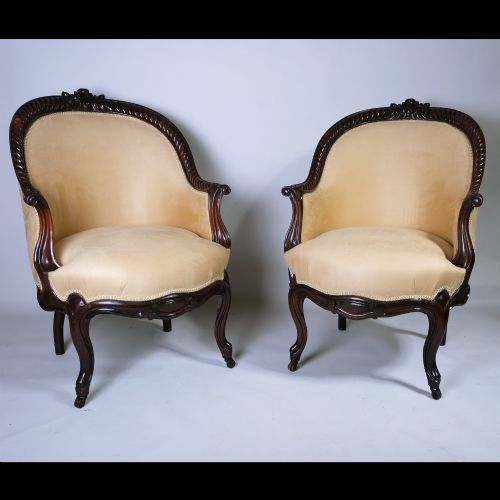
French pieces often display curved cabriole legs, carved floral motifs, and exposed giltwood or painted frames characteristic of Louis XV and Louis XVI revivals. Upholstery frequently follows distinctive fauteuil or bergere proportions.
English equivalents tend to feature heavier mahogany frames with buttoned backs and turned wooden legs.