
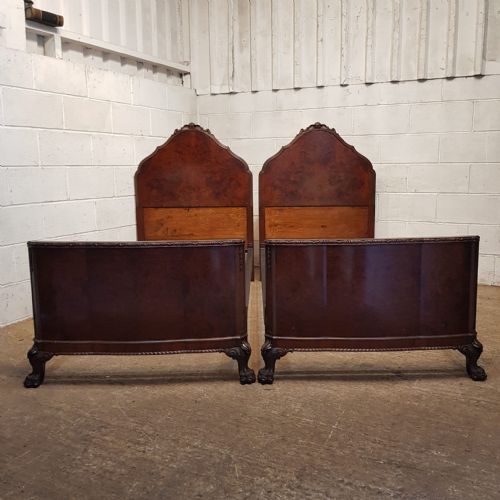


Antique Twin Headboards
Antique twin headboards bring matched period character to a bedroom, offering distinct woodwork and metalwork from the nineteenth and early twentieth centuries.
Antique Twin Headboards
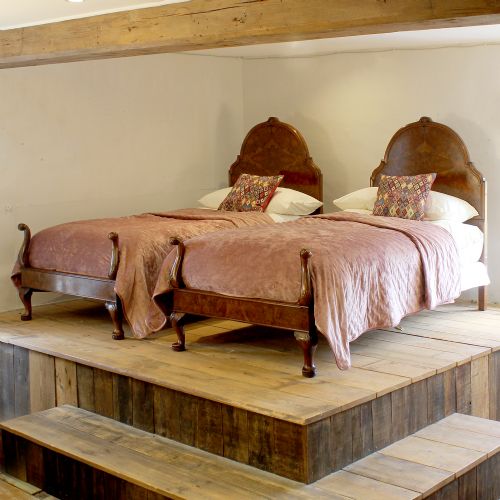
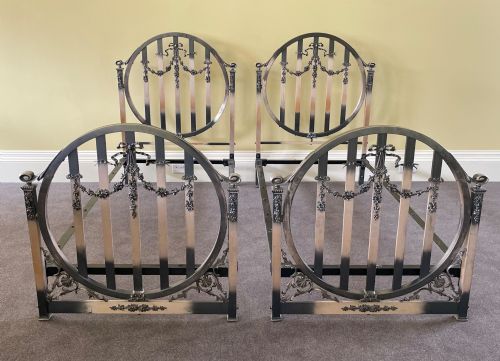
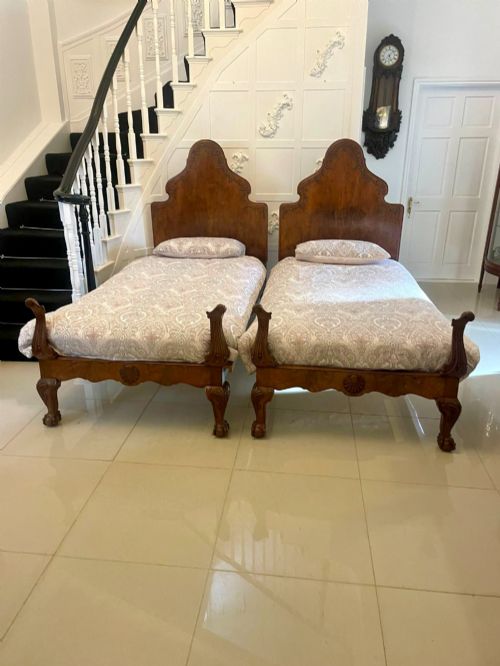
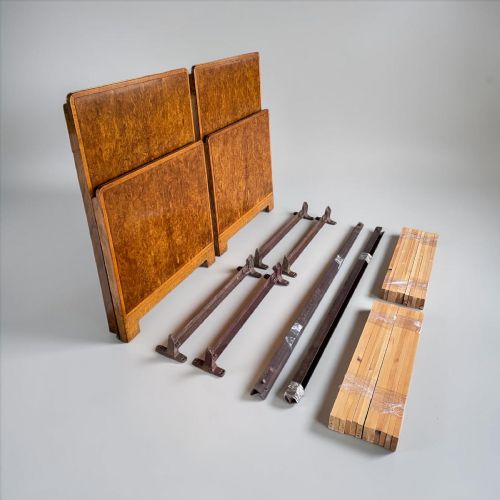
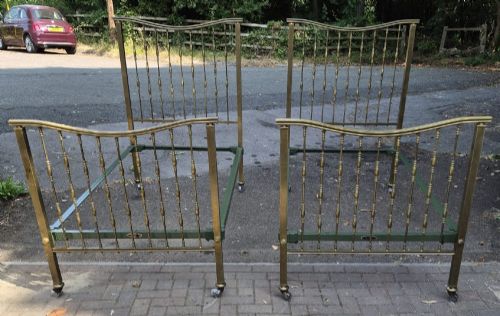
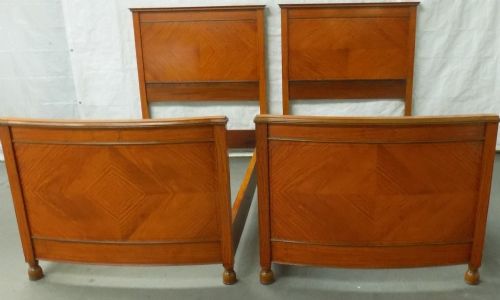
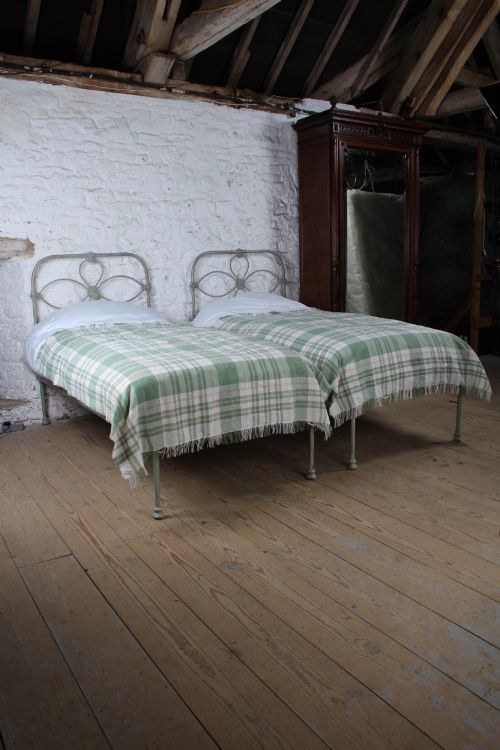
When you search for antique twin headboards, you encounter matched pairs of single bed frames and bedsteads originating from periods between eighteen seventy and nineteen thirty. These pieces often derive from single beds and bed frames that span Victorian, Edwardian, and Art Deco styles.
Makers utilised various timbers and metals to construct these bedframes, creating matching pairs designed for twin sleeping arrangements. The selections encompass both simple iron frames and elaborately carved walnut or satinwood structures.
The objects take the form of paired single bedsteads, many of which retain the capability to be joined together or utilised separately. These pieces reflect the domestic furniture requirements of the late nineteenth and early twentieth centuries.
Materials and construction methods
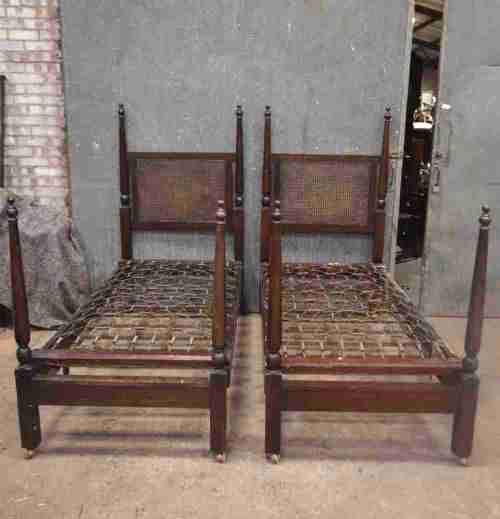
Carpenters and metalworkers shaped these pieces using solid timbers like oak, walnut, and mahogany alongside metals such as brass, iron, and nickel. Workshops applied carved ornamentation, parquetry, and painted leather panels to wooden surfaces.
Cabinetmakers constructed wooden frames using traditional joinery, while metal foundries cast iron and brass components into structural and decorative shapes. Some pieces combine wood and metal elements, such as brass-mounted iron frames or walnut panels set within larger structures.
Distinctions in quality and execution
The standard of carving and inlay work distinguishes workshop output, separating plain utilitarian frames from elaborately detailed pieces by notable makers. Precision in the joinery and the selection of figured timbers like burr walnut dictate the refinement of the woodwork.
Metal components show variation in finish and weight, ranging from standard iron castings to nickel-plated and polished brass fittings. The integration of decorative elements, such as embossed leather panels or hand-painted details, marks the distinction between standard production and higher-grade commissions.
Hoskins And Sewell·R W Winfield·Shapland And Petter·Heals·Betty Joel·Heal And Son
The Antique Twin Headboards Glossary
- Bedstead
- The framework of a bed, comprising the headboard, footboard, and side rails. This term frequently appears in nineteenth-century and early twentieth-century furniture descriptions.
- Bergere
- An enclosed armchair or bed component featuring woven cane panels. This French style appears on select twentieth-century wooden bed frames.
- Inlay
- A decorative technique where contrasting materials are inserted into depressions in a wooden surface. Satinwood and other fine timbers often feature this ornamentation.
- Parquetry
- Geometric mosaic woodwork used for decorative paving on floors or furniture surfaces. Fruitwood furniture frequently displays this patterned technique.
- Nickel Plated
- Coated with a thin layer of nickel to prevent corrosion and provide a bright finish. Edwardian metal bed frames often utilise this treatment.
Antique Twin Headboards: Frequently Asked Questions
Can antique twin beds be joined together?
Many paired single bedsteads from this era were constructed with the flexibility to stand independently or be linked together. Specific hardware or configuration options often permit joining.
Buyers should examine the side rails and foot configurations to determine if a particular pair accommodates connection without modification.
What periods do these bed frames date from?
The listings span from the late nineteenth century through the Edwardian era and into the nineteen thirties. Victorian, Arts and Crafts, and Art Deco movements dominate the stylistic output.
Design characteristics and material choices usually clarify whether a piece originates from the eighteen nineties or the nineteen twenties.
Which woods are most common?
Walnut, oak, mahogany, and satinwood represent the primary timbers utilised in these bed frames. Cabinetmakers frequently selected figured walnut and burr walnut for prominent panel surfaces.
Fruitwood and painted finishes also appear, particularly in pieces influenced by French regional styles.
How do iron and brass frames differ?
Iron frames provide robust structural support with straightforward painted or black finishes, while brass frames offer bright metallic aesthetics. Some pieces combine both metals alongside nickel plating.
Cast iron components often feature decorative mouldings unique to late nineteenth-century foundries.