




Arts and Crafts Single Beds
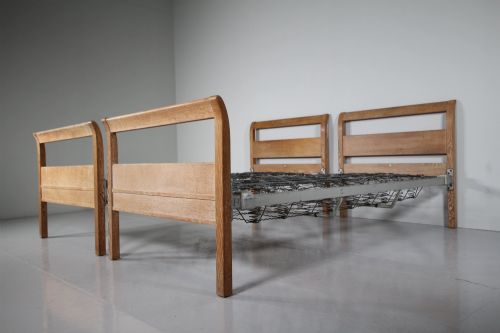
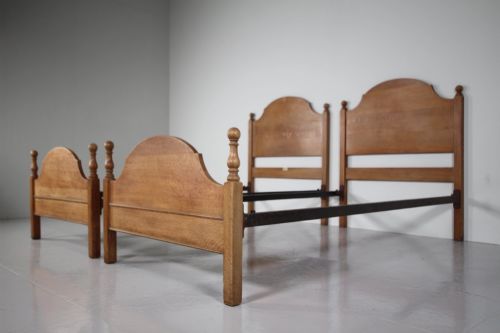
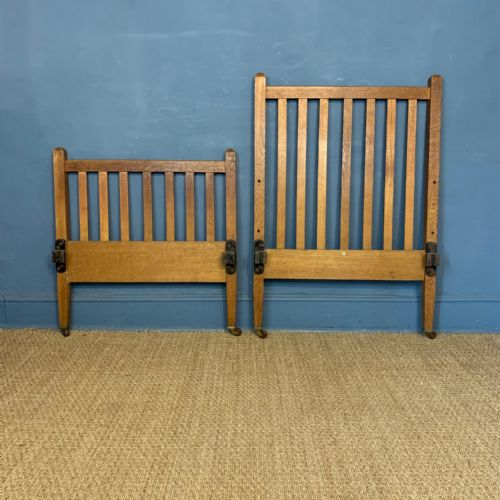
These arts and crafts single beds bring honest joinery and timber grain into the bedroom, offering sturdy construction that lasts generations.
Arts and Crafts Single Beds
When you search for arts and crafts single beds, you encounter sturdy wooden and metal frames spanning the late nineteenth century through to the mid twentieth century. Oak dominates the selection, appearing alongside fruitwood, satinwood, and iron components.
Most examples date from the Edwardian period or the 1920s, reflecting the enduring popularity of Heal and Son designs. You will find single wooden framed beds, panelled bedsteads, and matched pairs labelled by prominent workshops.
Makers utilised straightforward forms that celebrate natural timber, whether in the manner of Heal and Son or through the distinctive output of Shapland and Petter. These beds function as practical sleeping furniture while displaying the craftsmanship of the movement.
How they were made
Carpenters constructed these frames primarily from solid oak, fruitwood, and satinwood, often accentuating the grain with simple panelled designs and carved details. Metal variants combined iron, brass, and steel to create robust bed frames and bedsteads.
Workshops employed traditional joinery techniques rather than hiding structures behind veneer, allowing the natural qualities of the timber to form the primary decoration. Labelled pieces often bear the marks of makers who oversaw every stage of production.
Oak is the predominant material across the selection, appearing alongside iron, brass, steel, fruitwood, and satinwood.
What varies in quality
The distinction between standard production and exceptional work rests on timber selection and the presence of maker attribution. Matched pairs and pieces bearing original makers' labels command greater attention from collectors than anonymous vernacular frames.
Subtle details such as carved oak panelling, fine fruitwood figuring, or branded workshop labels elevate a piece above simpler alternatives. The integrity of the original construction and the preservation of the surface finish determine the standing of each bed.
Heals·Heal and Son·Oliver Morel·Shapland and Petter
The Arts and Crafts Single Beds Glossary
- Bedstead
- A framework of wood or metal supporting a bed. This term often appears in descriptions of older furniture frames.
- Edwardian
- Pertaining to the reign of King Edward VII, spanning from 1901 to 1910. Furniture from this period frequently adopts lighter proportions than Victorian designs.
- Panelled
- Constructed with flat pieces of wood fitted within a sturdier surrounding frame. This technique prevents warping in large wooden surfaces.
- Satinwood
- A hard, durable timber with a lustrous yellowish grain. Makers used it for fine cabinet work and decorative furniture.
- Fruitwood
- Timber derived from fruit-bearing trees such as pear or apple. It provides a dense, smooth material for detailed carving and construction.
Arts and Crafts Single Beds: Frequently Asked Questions
Are these beds standard modern sizes?
Older single beds often vary slightly from contemporary mattress dimensions. Check the internal measurements of the frame carefully before sourcing a mattress.
Many period frames accommodate custom or slightly shorter mattresses to fit the original wooden rails.
How do I identify a labelled piece?
Workshops typically placed paper labels or stamped marks on the inner wooden rails or headboards. These marks name the maker and sometimes include a model title.
Original labels confirm attribution and help establish the manufacturing period of the bedstead.
Can I use these beds every day?
These frames were built for daily use using solid timbers and robust iron or steel components. Proper assembly ensures they remain as sturdy today as when first made.
Many buyers pair antique frames with modern slatted bases to provide reliable support for regular sleeping.
What is the difference between oak and fruitwood beds?
Oak beds offer a heavy, prominent grain and traditional Arts and Crafts aesthetic. Fruitwood and satinwood provide smoother textures and lighter tones.
Both materials were chosen for their durability, though rarer timbers often indicate bespoke workshop production.