

Antique Turkmen Weaving
When searching for antique turkmen weaving, collectors encounter tribal carpets, bags, and horse covers originating from Central Asia during the nineteenth and early twentieth centuries.
Antique Turkmen Weaving
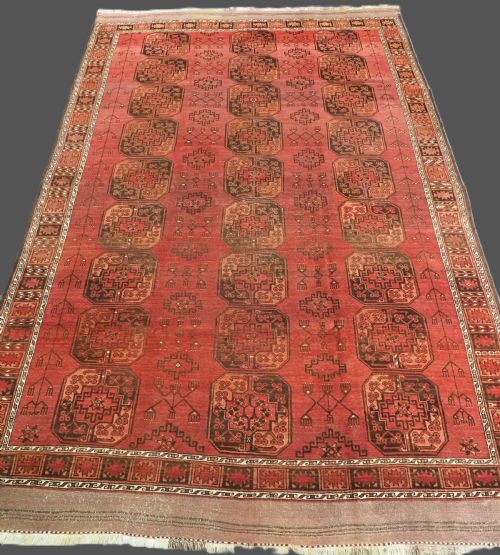
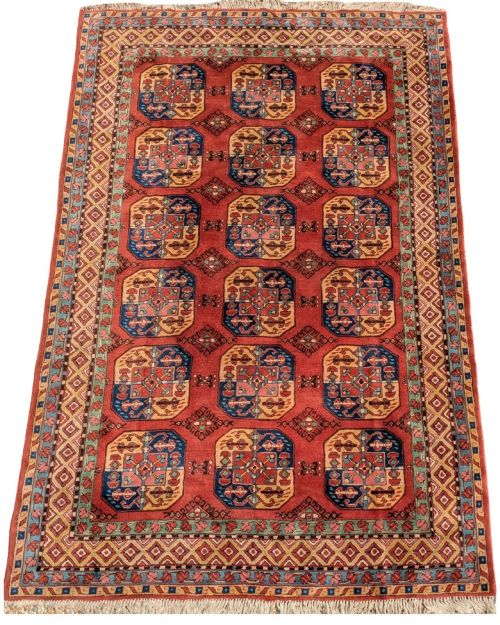
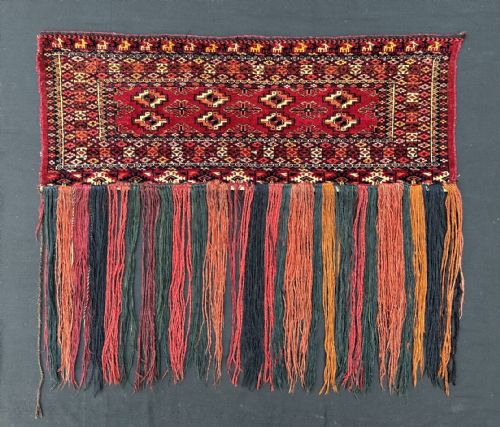
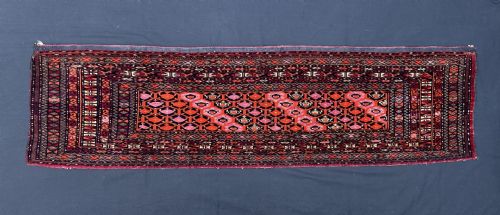
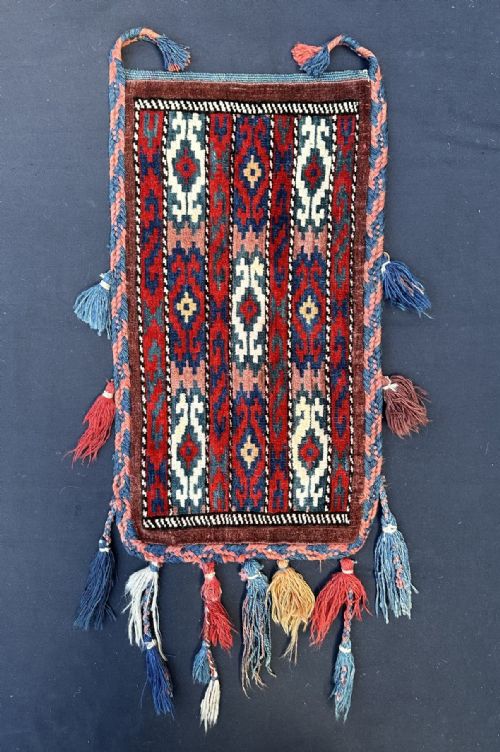
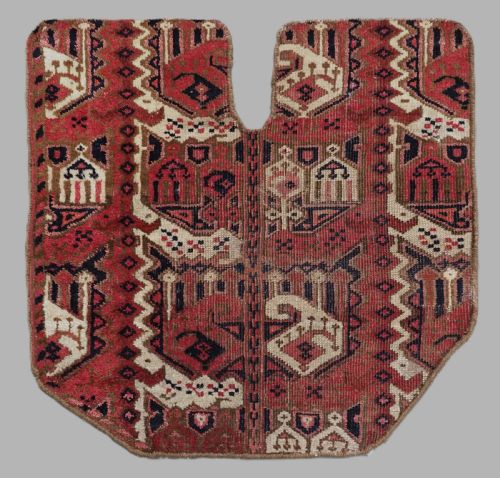
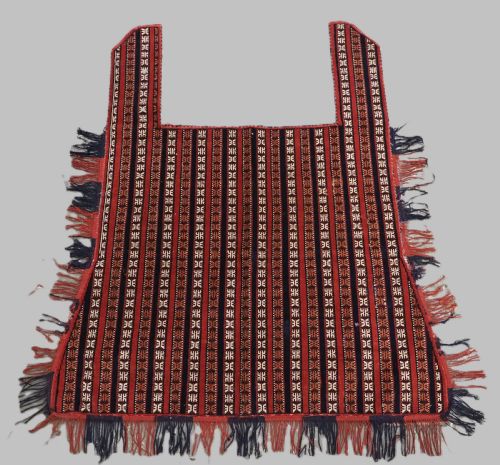
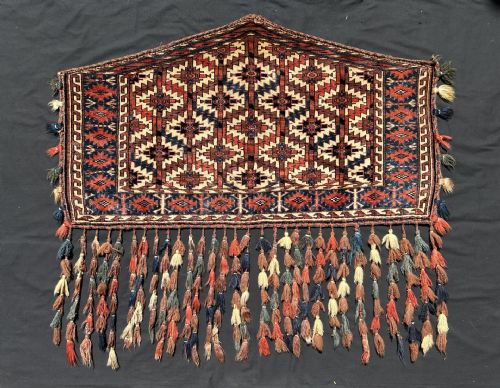
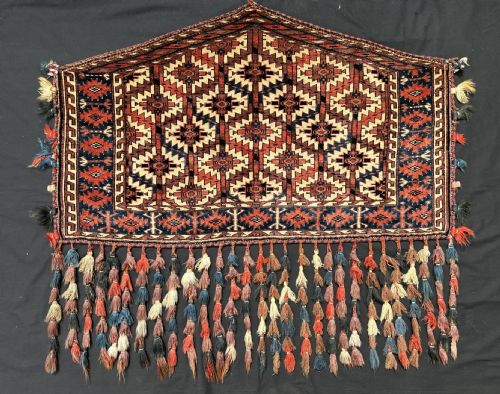
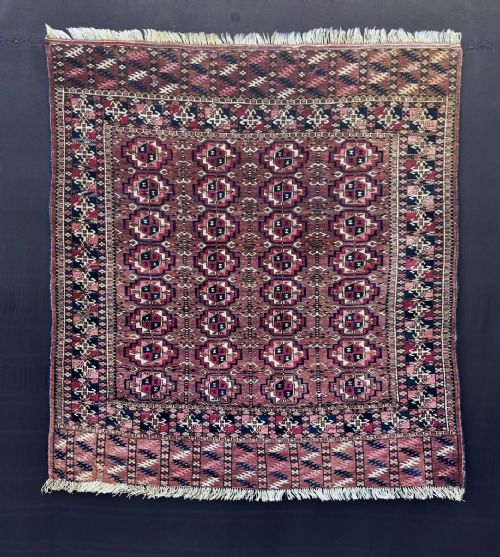
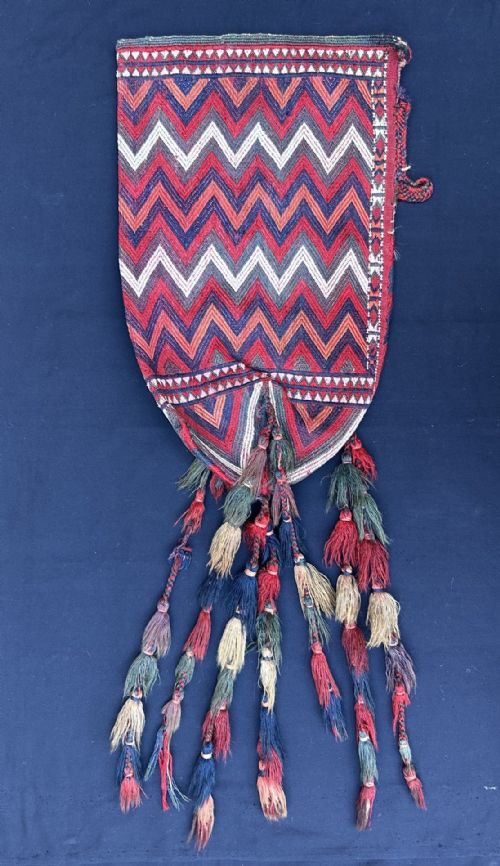
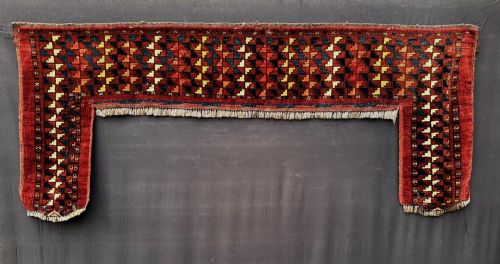
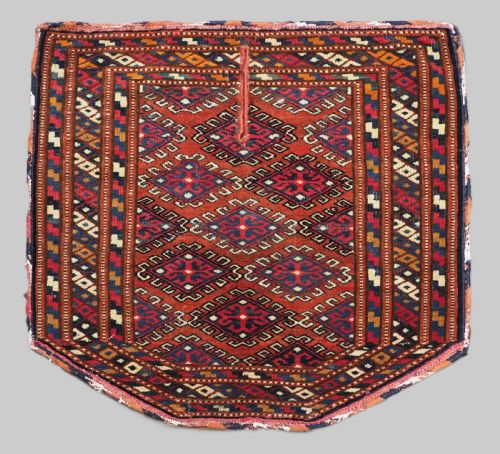
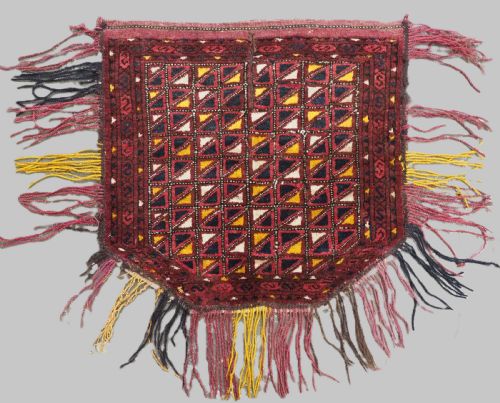
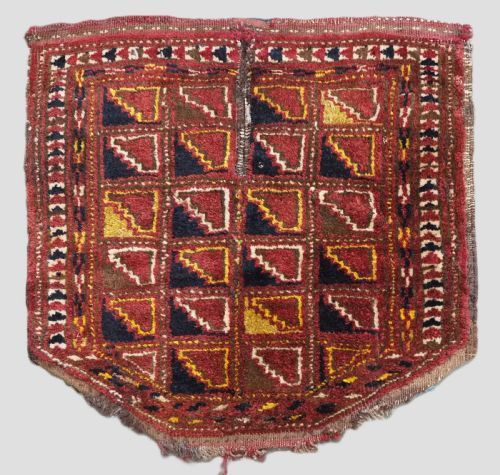
The pieces grouped under antique turkmen weaving encompass utilitarian and ceremonial textiles created by nomadic and semi-nomadic tribes across Central Asia, including the Yomut, Tekke, Ersari, and Saryk groups. These items served practical purposes within tribal life, functioning as tent door rugs, saddle covers, storage bags, and dowry trappings rather than decorative floor coverings for Western parlours. Buyers browsing this page will frequently encounter smaller utility pieces such as torbas, chuvals, and asmalyks alongside larger main carpets dating from the mid-nineteenth century to the early twentieth century.
The design vocabulary relies heavily on repeating geometric medallions known as güls, which often identify the specific tribe or clan responsible for the weaving. Format and function are closely linked, with tent bags featuring flat-woven backs for attachment to yurt walls and horse covers shaped specifically for ceremonial processions. Regional variations span from the Trans-Caspian steppes to the Merv and Yolatan oases, reflecting the distinct artistic traditions of each tribal grouping.
How they were made
Weavers utilised hand-spun wool for the foundation and pile, frequently incorporating natural dyes to achieve deep reds, madder tones, and contrasting ivory grounds. Cotton and occasional silk highlights appear in specific decorative elements, adding textural variation to the dense wool structure.
The construction relies on sturdy knotting techniques designed to withstand nomadic daily use, paired with flat-woven plain-weave backs on bags and utilitarian hangings. Natural dye absorption varies across the wool fibres, creating the subtle abrash colour shifts characteristic of these Central Asian textiles.
Some spindle-bags still carry the phantom weight of ancient yarn-making.
What varies in quality
Quality in these tribal textiles depends upon the density of the weave, the precision of the geometric gūl drawing, and the depth of the natural dye palette. Finer knotting allows for sharper definition in complex patterns such as the curled leaf design or turreted Saryq motifs.
The preservation of original finishes, including tassels, side cords, and plain-weave backs, distinguishes pieces retained in complete condition from those altered or reduced over time.
The Antique Turkmen Weaving Glossary
- Gul
- A repeating geometric medallion motif used by Central Asian tribes to denote specific clans and lineages. These primary design elements form the visual core of most tribal carpets and storage bags.
- Asmalyk
- A pentagonal or hexagonal trapping produced as part of a bride's dowry and displayed during wedding processions on the flank of a camel. Pairs of these decorative covers are particularly prized by textile collectors.
- Torba
- A small horizontal wall-hanging storage bag utilised inside the nomadic tent for domestic items. They frequently display precise gūl arrangements across the face.
- Chuval
- A large tent bag used for storing household goods within the yurt. Their broad faces often repeat primary tribal motifs in structured rows.
- Kapunuk
- A tent door surround or rug designed to frame the wooden entrance of a nomadic dwelling. These architectural textiles display distinctive tripartite structures intended to ward off misfortune.
Antique Turkmen Weaving: Frequently Asked Questions
What is a Turkmen asmalyk used for?
Asmalyks were ceremonial trappings created as part of a bride's dowry during the nineteenth century. They were mounted on the flanks of camels during wedding processions.
Following the ceremonies, these pentagonal or hexagonal pieces transitioned into domestic use as interior wall decorations within the nomadic tent.
How do you identify different Turkmen tribes?
Tribal attribution relies on specific structural characteristics, colour palettes, and repeating medallion designs known as gūls. Yomut, Tekke, Ersari, and Saryk weavers each utilised distinct geometric vocabularies.
Examining the border patterns, secondary motifs, and wool preparation helps determine the likely regional origin across the Central Asian steppes and oases.
What are torbas and chuvals?
Torbas and chuvals are utilitarian storage bags produced by nomadic weavers for domestic organisation inside the yurt. Chuvals are larger horizontal sacks used for general household storage, while torbas are smaller hanging bags.
Both types typically feature a highly decorative pile face combined with a sturdy, plain-weave back designed for hanging against tent walls.
How should antique Turkmen textiles be displayed?
These historical weavings require careful mounting to distribute weight evenly across the wool foundation if hung on a wall. Using a sleeve sewn with supportive conservation fabric prevents undue strain on the ancient fibres.
Direct sunlight should be avoided to protect the natural madder dyes and wool pile from fading over time.