





Antique Tripod Waiter
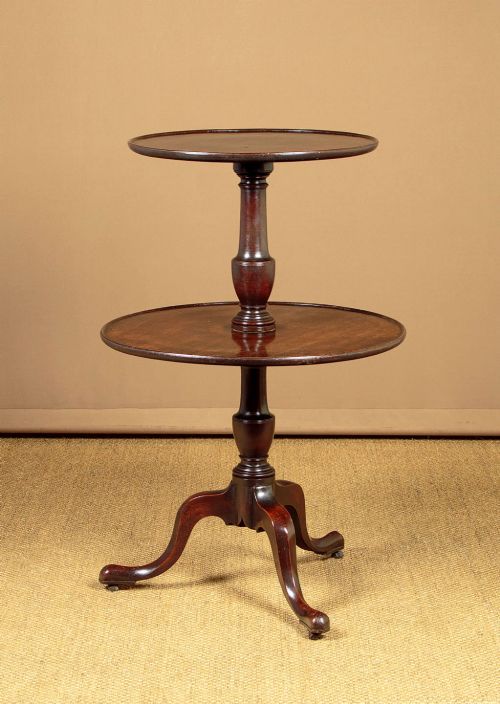
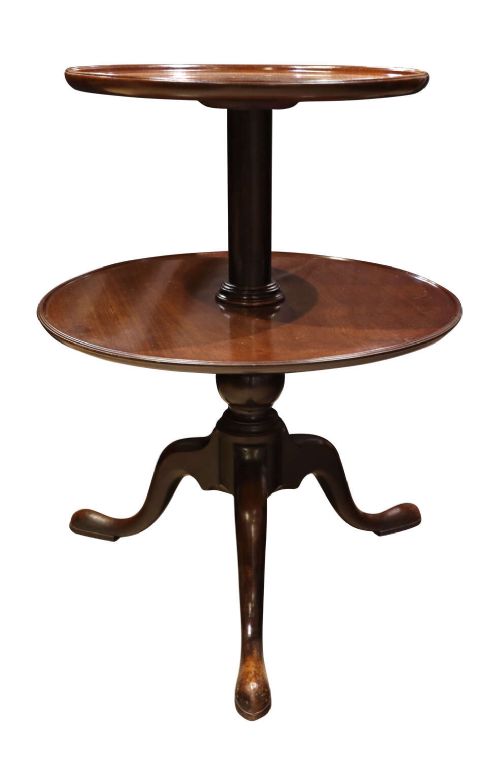
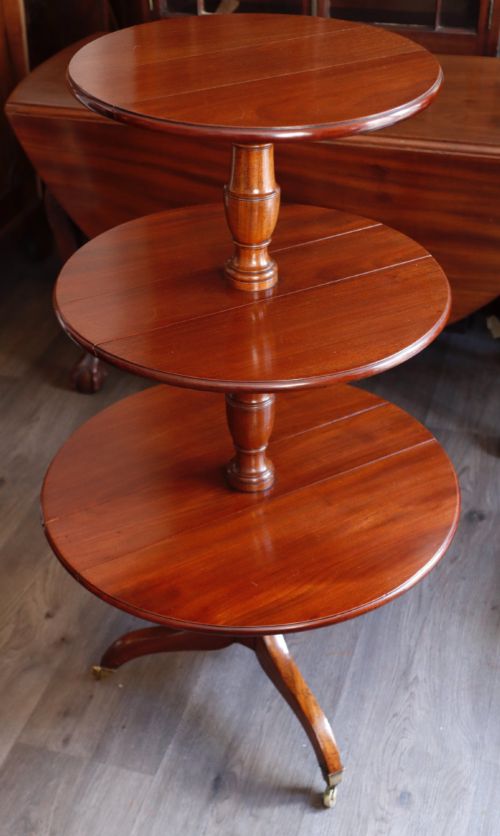
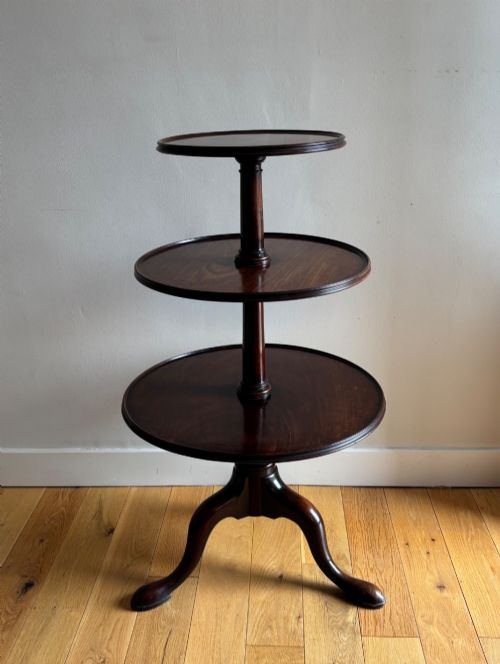
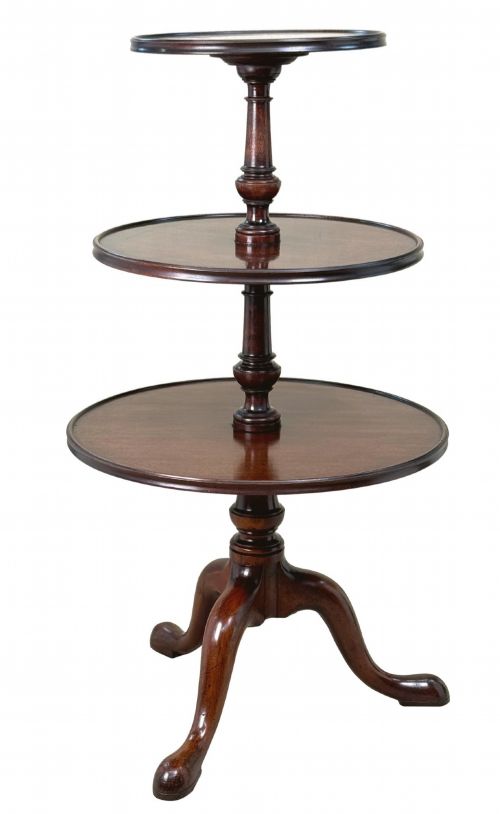
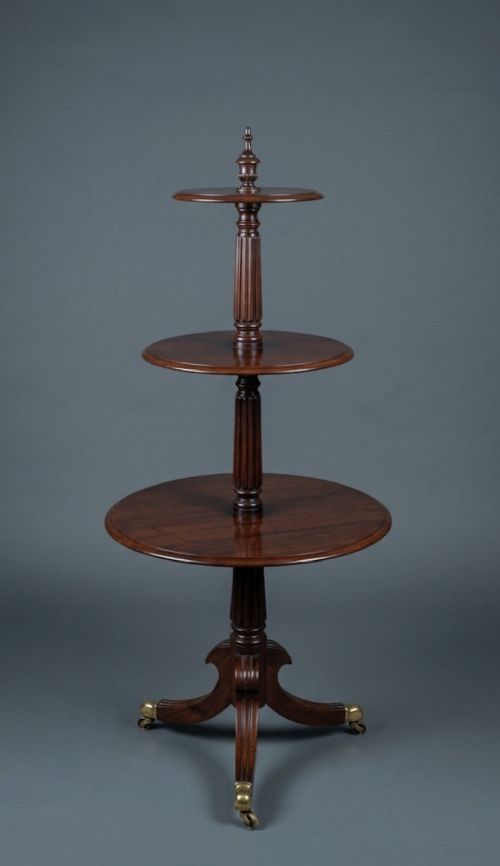
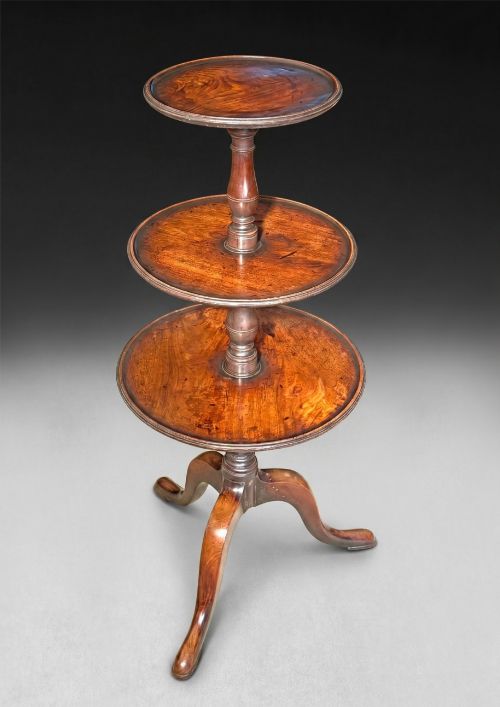
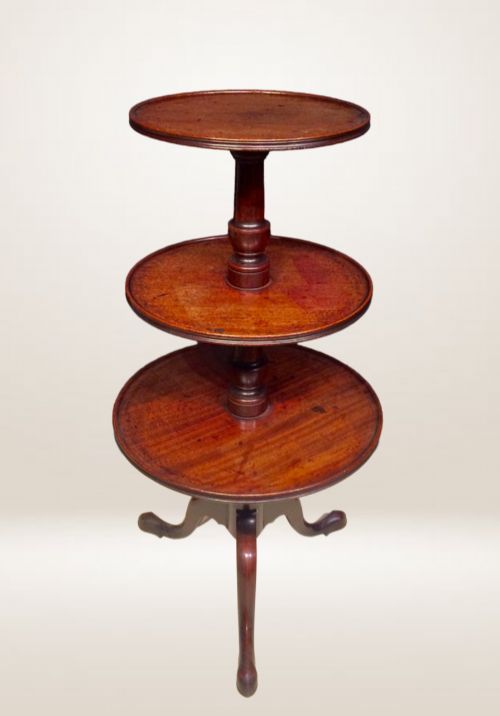
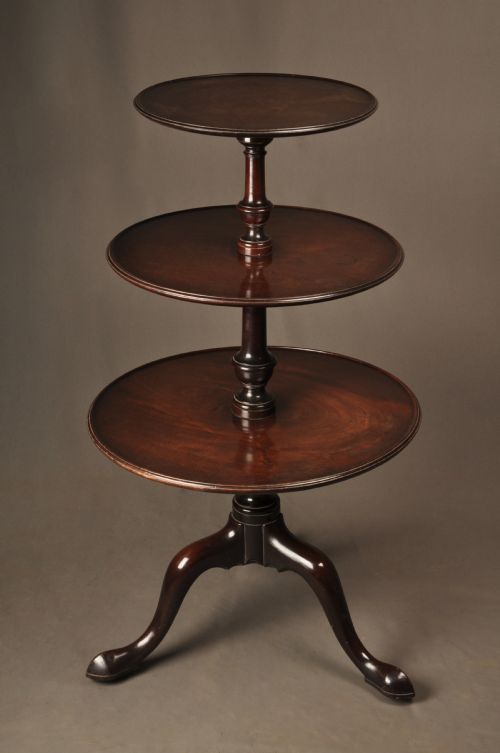
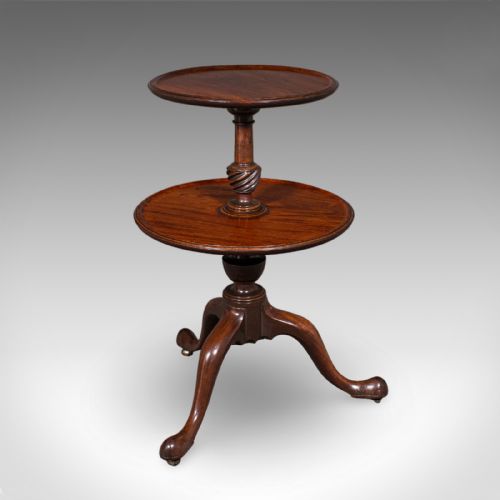
An antique tripod waiter provides tiered timber serving surface on a slender central column supported by three legs.
Antique Tripod Waiter
The term antique tripod waiter covers tiered circular tables designed for serving food and drink, commonly known as dumb waiters. These pieces appear primarily in mahogany, ranging from two-tier and three-tier examples to occasional serving stands.
Most entries belong to the Georgian and Regency periods, spanning the late eighteenth century into the early nineteenth century. Makers built these forms to hold dishes, decanters and afternoon tea without cluttering the main dining table.
Buyers encounter revolving tiers and static circular trays raised on slender pedestals. The standard configuration rests upon three splayed legs terminating in castors or plain feet.
Materials and construction
Cabinetmakers utilised solid mahogany and Cuban mahogany, selecting timber for deep grain patterns and sturdy weight. Rosewood also appears in later nineteenth-century examples alongside brass hardware and cast iron internal supports.
Turned central columns support graduated circular trays fixed with tiered brackets or pivoting mechanisms. Joinery relied on sturdy central threading and pegged tripod joints to bear the heavy load of glass and ceramics.
Cabinetmakers built these silent helpers so diners could converse without household staff hovering nearby.
Judging standard and finish
Quality rests in the richness of the timber grain, the crispness of the turned column, and the proportions of the graduated tiers. Superior pieces exhibit figured mahogany surfaces with deep, warm patination achieved through age and wax polish.
Mechanism fluidity separates standard pieces from finer examples, particularly where revolving trays turn smoothly on brass pivots. The stability of the tripod base and the grace of the splayed legs dictate the overall harmony of the design.
The Antique Tripod Waiter Glossary
- Tripod base
- A furniture support consisting of three legs radiating from a central column. This arrangement ensures stability on uneven floors.
- Dumb waiter
- A tiered serving table designed to hold food and bottles near a dining table. Servants utilised these pieces to reduce noise during meals.
- Cuban mahogany
- A dense, dark timber imported from the Caribbean used in high-status furniture. Cabinetmakers favoured it for its rich figure and durability.
- Tiered table
- Furniture featuring multiple horizontal surfaces arranged vertically on a single axis. Each platform typically diminishes in diameter toward the top.
- Revolving tray
- A circular tabletop fitted on a central pivot allowing rotation. This permits diners to access items without moving the entire stand.
Antique Tripod Waiter: Frequently Asked Questions
What is an antique tripod waiter used for?
These tables served dining rooms as auxiliary surfaces for holding heavy decanters, plates and dishes. Diners placed food and drink upon the tiers to save space during lengthy meals.
Today, buyers utilise them as lamp tables, plant stands or decorative display surfaces in reception rooms and hallways.
How do I date a mahogany tripod waiter?
Dating relies on leg profiles, timber choice, and edge moulding details found on the circular trays. Eighteenth-century examples often feature pad feet or simple cabriole legs transitioning into slender turned pillars.
Later nineteenth-century pieces display heavier pedestals, rosewood veneers, or brass mechanisms associated with Victorian production methods.
Can I use a dumb waiter for serving drinks?
Solid mahogany construction and sturdy tripod bases make these pieces well suited for holding bottles and glassware. The tiered format provides ample space for spirits and bar accessories.
Care should be taken to protect antique polished surfaces from moisture rings by utilising coasters.
What is the difference between a two-tier and three-tier table?
Two-tier models feature a main tray with a smaller upper surface, offering a compact footprint for smaller rooms. Three-tier versions incorporate an extra intermediate platform, increasing the storage capacity for dinner services.
Both variants maintain the characteristic central column and three-legged footprint.