
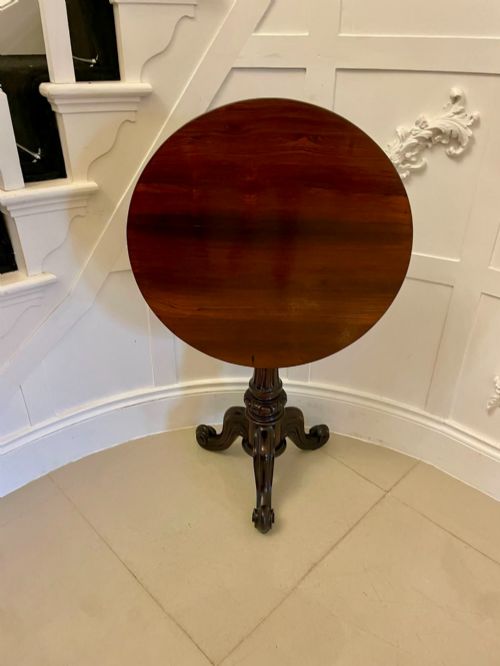
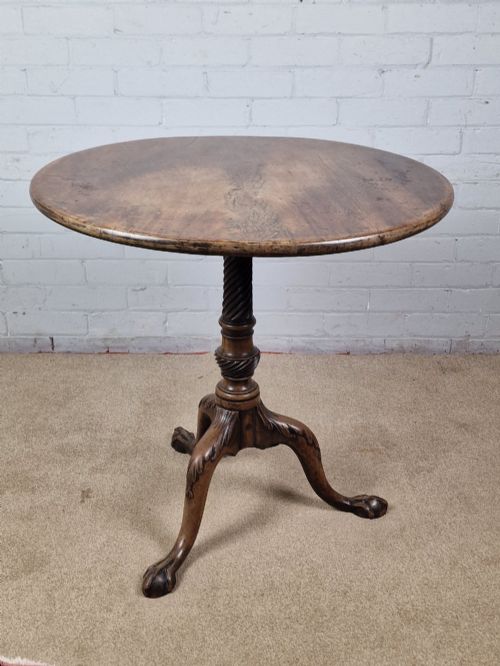

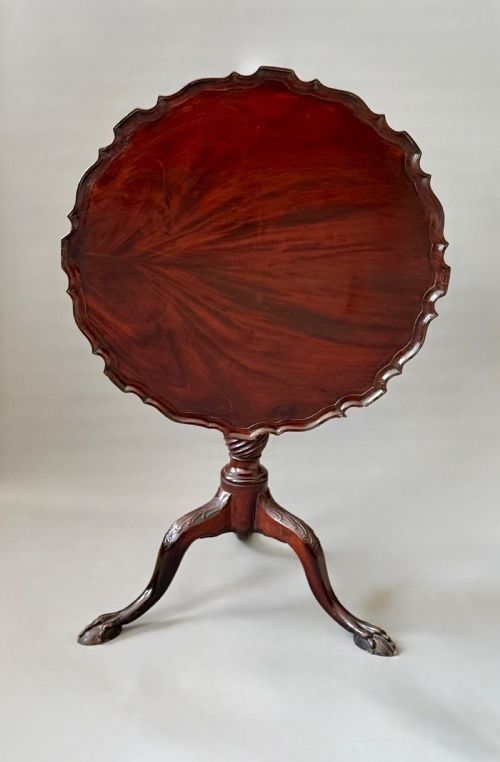
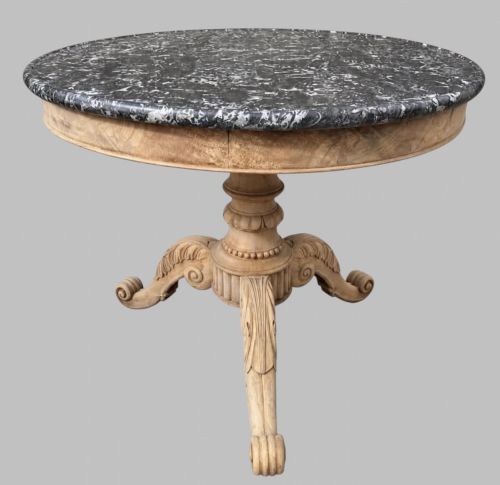
Antique Tripod Tilt Top
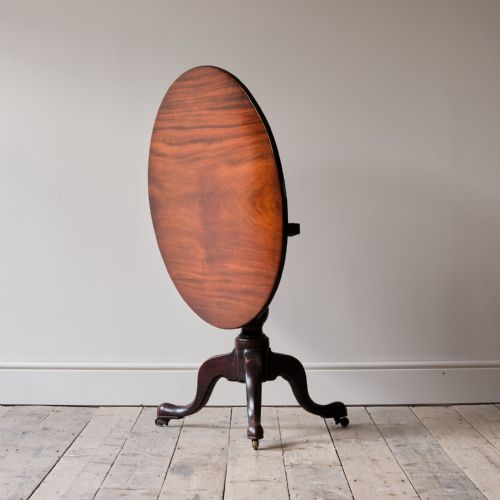
When you handle an antique tripod tilt top, you discover a versatile piece of furniture designed to save space against a wall when not in use.
Antique Tripod Tilt Top
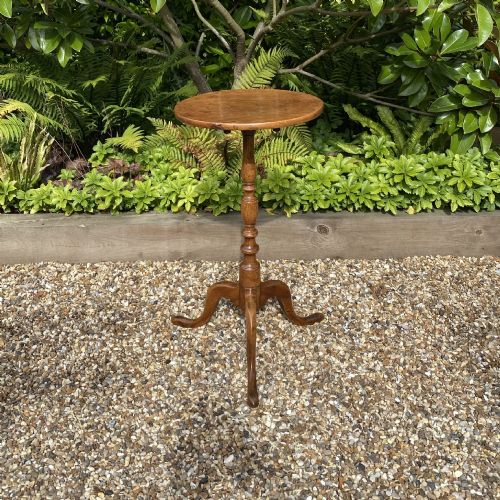
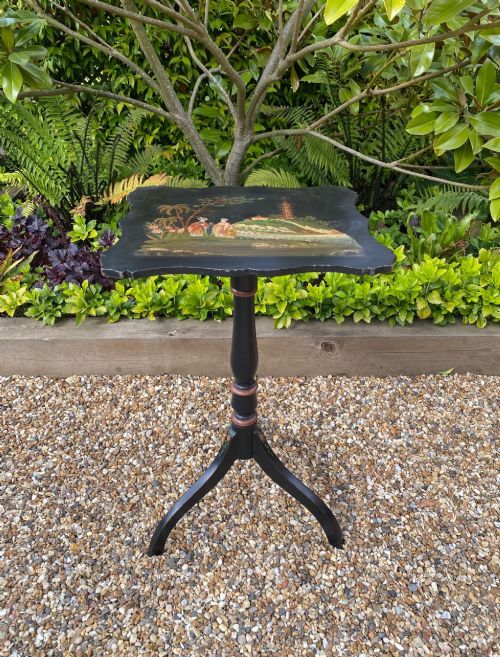
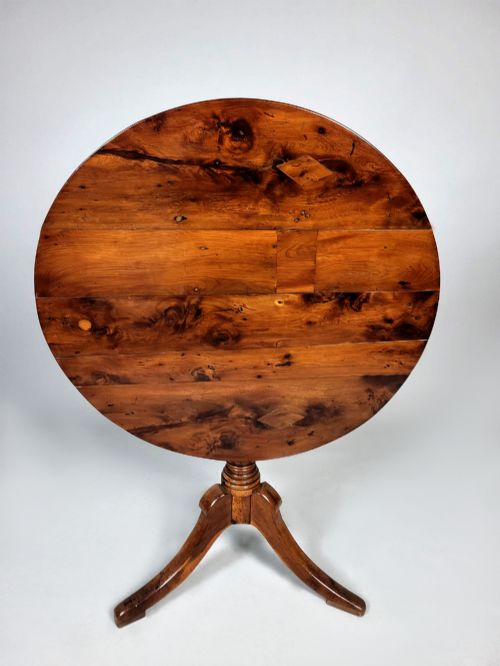
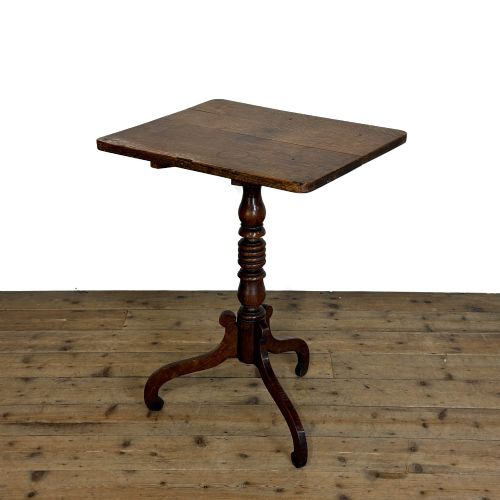
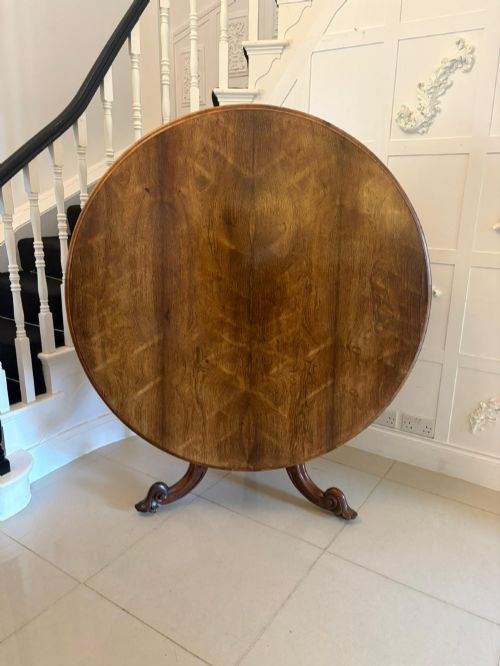
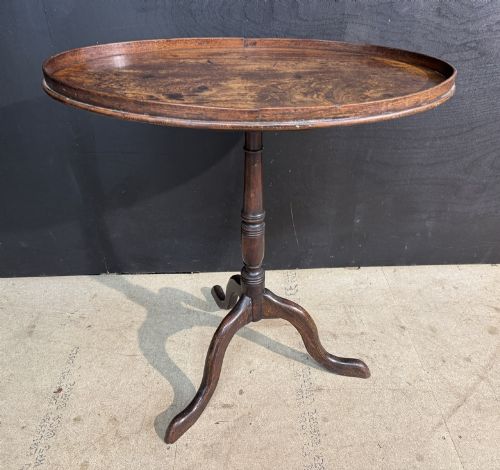
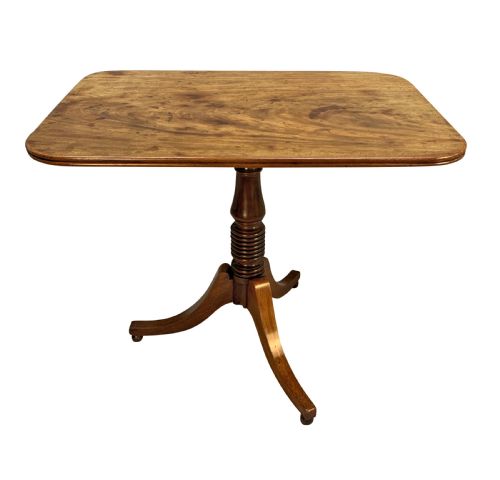
An antique tripod tilt top table combines a circular or oval top with a folding mechanism supported by a central pillar and three legs. These tables emerged primarily during the Georgian and Victorian periods, serving as wine tables, occasional surfaces, or supper tables.
Materials and Construction
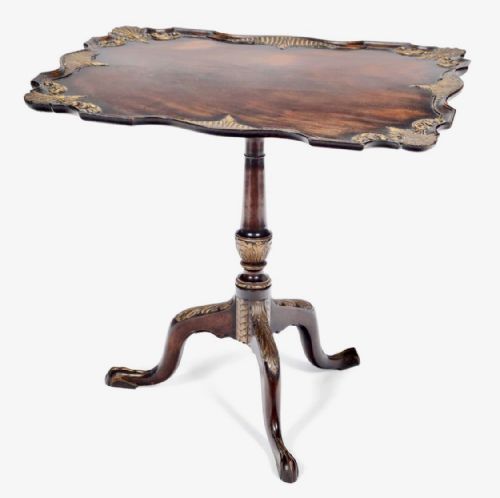
Cabinet makers utilised dense timbers such as mahogany, oak, and occasionally fruitwood or rosewood, often selecting figured veneers like Cuban mahogany or burr walnut for the top surface. Solid timber provided the necessary strength for the central pillar and three splayed legs.
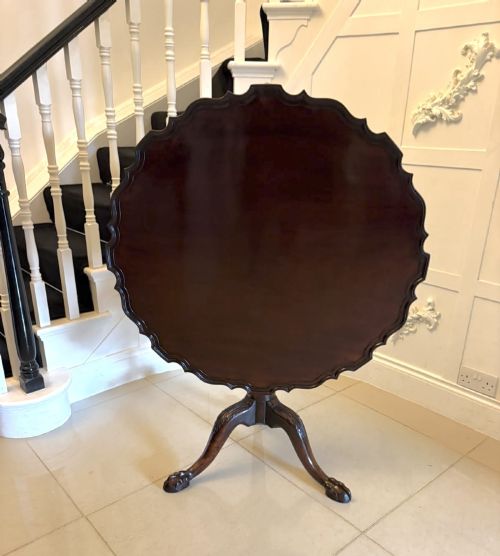
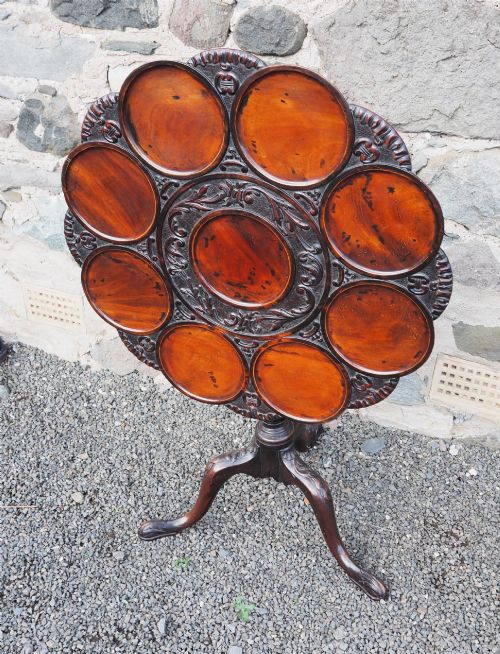
Sophisticated joinery included birdcage mechanisms - rotating wooden frameworks beneath the top that allowed both pivoting and spinning - alongside hand-carved tripod bases and occasionally pie crust or raised edges shaped from solid wood.
Listings feature woods such as mahogany, oak, walnut, rosewood, and fruitwood spanning the Georgian, Regency, and Victorian eras.
Judging Quality and Execution
Quality rests upon the crispness of the carving on the knees and feet of the tripod base, as well as the stability of the tilt mechanism. Finer pieces maintain a rigid connection between the pillar and legs without excessive wobble.
The choice of timber creates a distinct hierarchy, with heavily figured Cuban mahogany or finely grained walnut commanding greater appreciation than plain secondary woods. Original brass catches and intact birdcage mechanisms further elevate a piece.
Gillow
The Antique Tripod Tilt Top Glossary
- Tilt top
- A table top mounted on a hinge mechanism that allows the surface to fold into a vertical position for storage.
- Tripod base
- A support structure featuring three splayed legs radiating from a central turned pillar.
- Birdcage
- A rotating wooden framework fitted beneath the table top that enables the surface to both pivot and revolve.
- Pie crust edge
- A raised, decorative carved rim around the perimeter of the table top, reminiscent of pastry work.
- Cuban mahogany
- A dense, dark variety of mahogany prized for its rich grain patterns and heavy weight in Georgian furniture.
Antique Tripod Tilt Top: Frequently Asked Questions
How do I operate the tilt mechanism?
Most tables feature a small brass catch or wooden wedge beneath the top. Releasing this latch allows the surface to pivot smoothly on its pivot pins.
Once vertical, the table can be pushed flush against a wall to maximise floor space in a parlour or drawing room.
Were these tables used for dining?
Smaller versions served as wine tables or candle stands next to seating, while larger examples functioned as supper tables for light meals.
The tilting function made them practical for multi-use spaces where furniture needed frequent rearrangement.
What is a birdcage mechanism?
A birdcage is a small wooden assembly of horizontal discs and vertical spindles positioned directly beneath the table top.
This clever addition allowed the top to spin horizontally as well as tilt vertically, giving users greater flexibility when serving.
How can I tell Georgian from Victorian examples?
Georgian tables typically exhibit restrained classical proportions, often utilising solid Cuban mahogany with understated tripod legs and subtle turning.
Victorian pieces frequently display heavier carving, darker rosewood veneers, or more elaborate decoration reflecting the revival styles of the mid-19th century.