

Victorian Rosewood Tilt Top
Victorian rosewood tilt top tables combine rich, dark timbers with clever mechanism, serving as both dining surfaces and space-saving furniture.
Victorian Rosewood Tilt Top
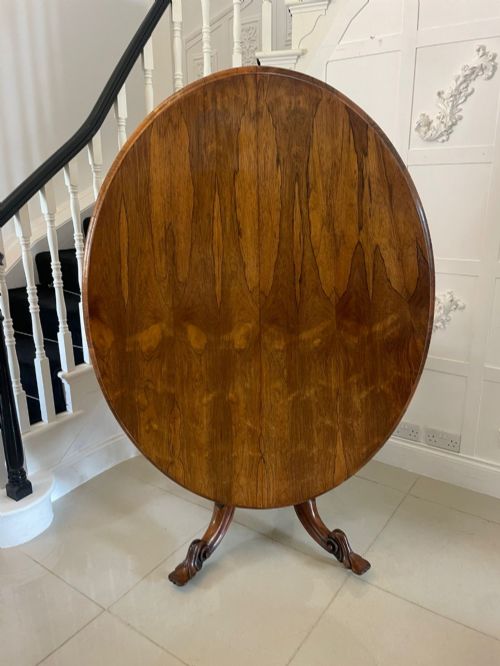
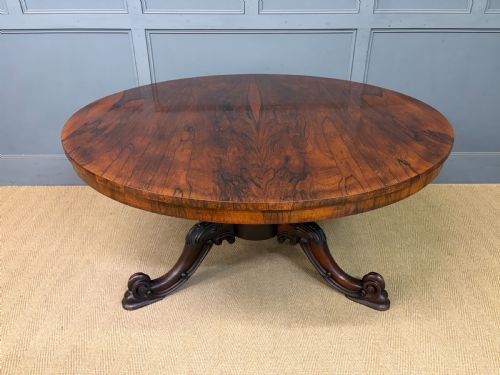
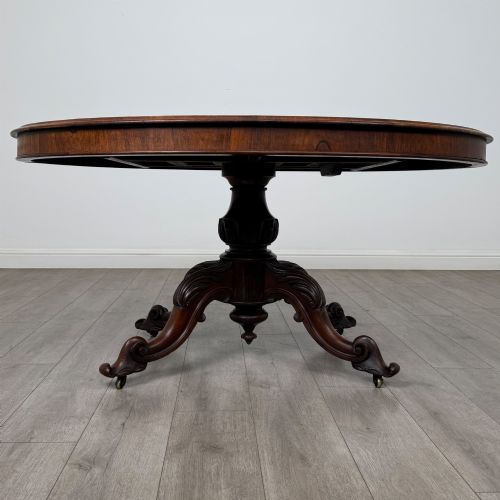
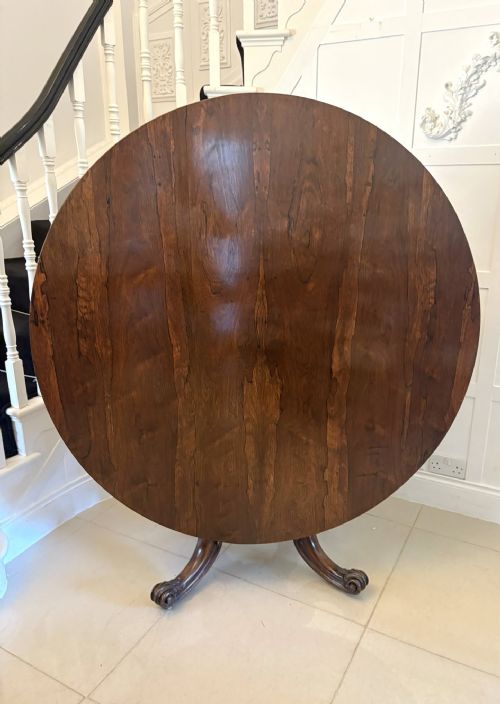
When you search for victorian rosewood tilt top, you encounter large round dining pieces, breakfast tables, and loo tables designed to tilt vertically when not in use. The examples seen here span the nineteenth century, including specific dates from the eighteen-fifties through the eighteen-eighties, alongside earlier Georgian and William IV pieces.
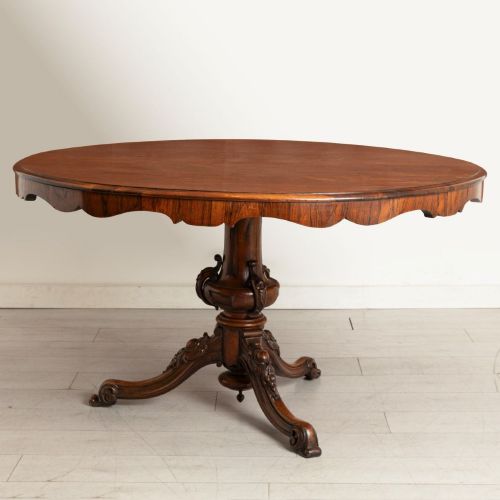
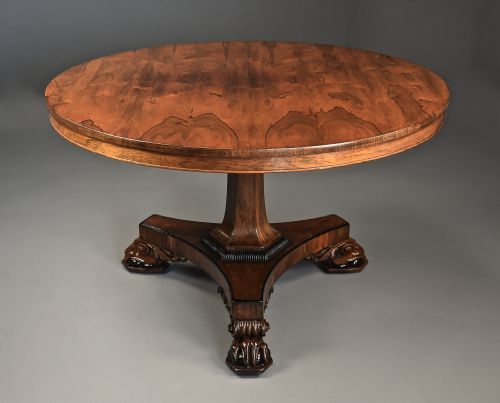
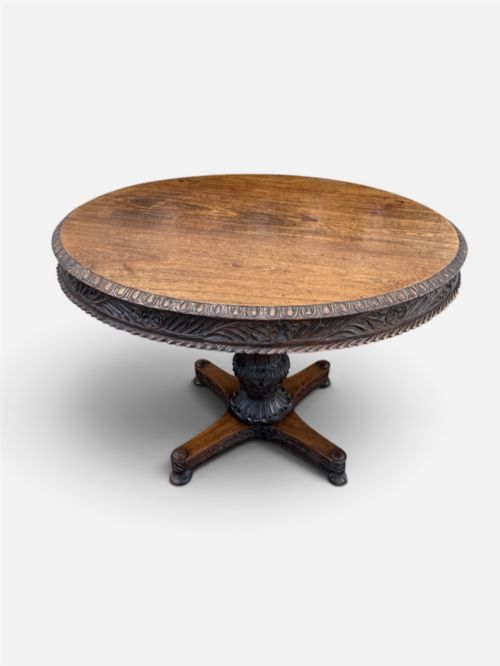
The dominant forms are circular and oval tables supported on central pedestals with solid carved bases. Alongside standard Victorian items, the selection includes Anglo-Indian productions with mother of pearl inlay, alongside specimen tables incorporating burr elm and marquetry.
These items functioned flexibly in period houses, operating as centre tables in large reception rooms before pivoting flat for meals. Their snap-top mechanisms allowed them to stand against walls to maximise floor space.
How they were made
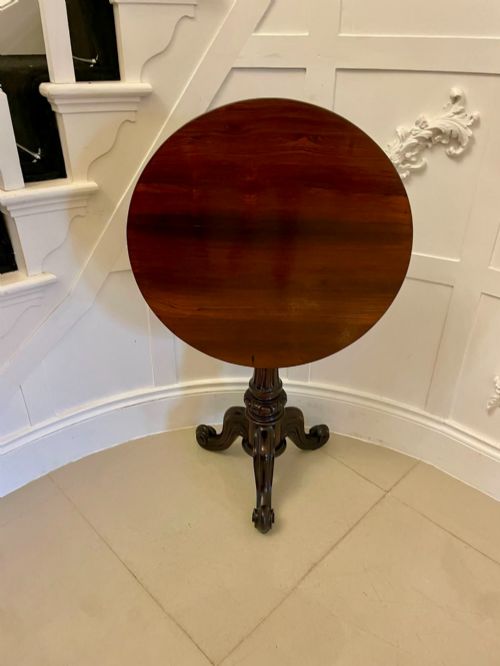
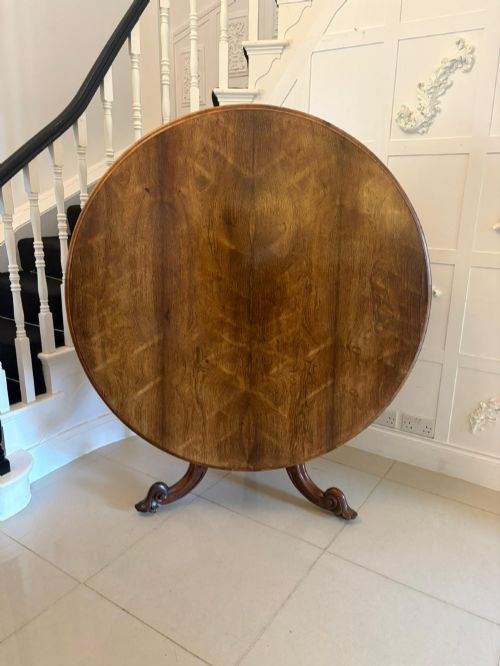
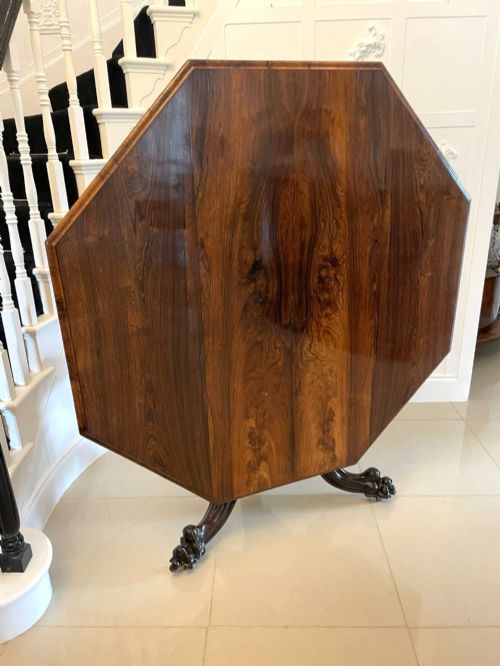
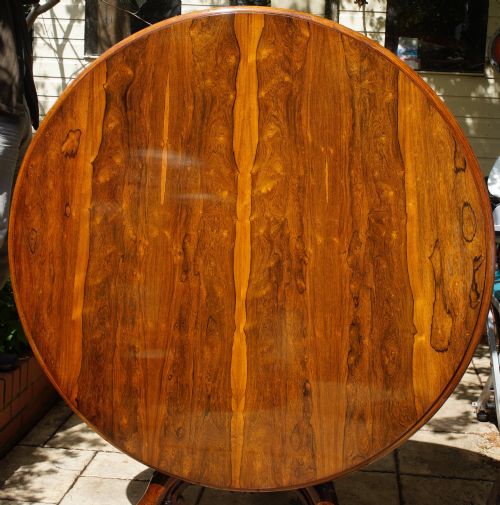
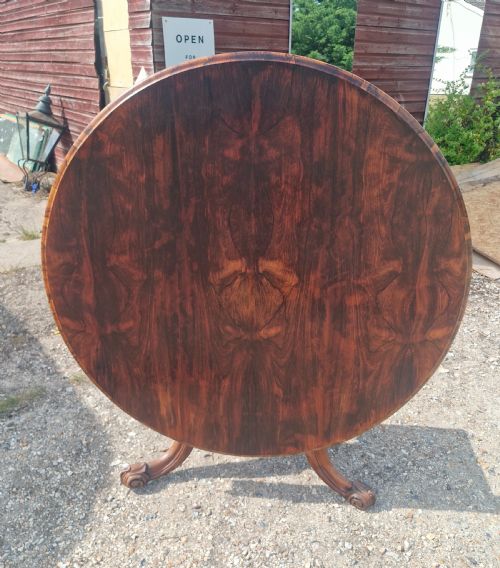
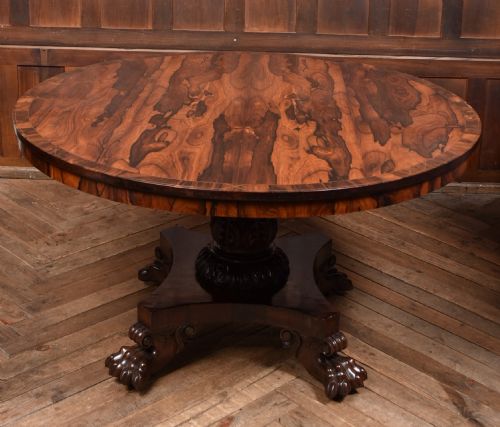
Cabinet makers utilised dense rosewood and rosewood veneer laid over secondary timbers like mahogany, building deep circular tops that resisted warping. Surfaces frequently display figured grain patterns developed from carefully selected timber logs.
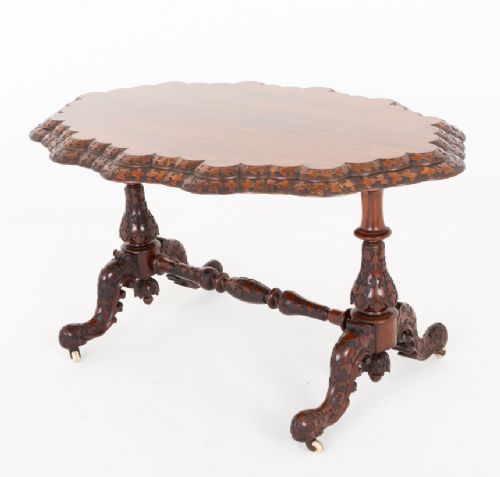
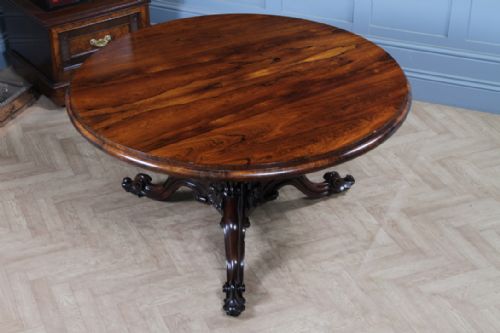
Pedestals combine turned solid rosewood columns with heavy tripartite or quadrupartite bases, often enriched with carved scrollwork and brass castors. The tilting mechanism relies on robust iron catches and pivots fitted securely beneath the top.
The listings here include diverse materials alongside primary rosewood, recording brass, mahogany, mother of pearl, walnut, and burr elm.
What varies in quality
The standard of a piece rests on the selection of timber figures, the depth and crispness of the hand carving on the base, and the stability of the tilt mechanism. Superior examples display seamless veneer matching across large circular surfaces and substantial pedestal proportions.
Workshop origin distinguishes ordinary production from finer items, particularly those bearing maker attributions such as Gillows or James Winter. Details like mother of pearl inlay, marquetry work, or secondary timbers like burr elm indicate higher manufacturing ambition.
Gillows·James Winter
The Victorian Rosewood Tilt Top Glossary
- Tilt-top
- A table top hinged to a central pedestal so it can pivot to a vertical position. This mechanical feature allowed large tables to be stored against walls when not in use.
- Loo table
- A large round or oval table designed for Victorian card games like loo. They are almost invariably built with tilt-top actions.
- Snap-top
- An alternative term for a tilt-top table utilising a spring catch to lock the surface horizontally. It secures the table firmly in use.
- Centre table
- A freestanding table finished on all sides to stand in the middle of a room rather than against a wall. These frequently incorporate the tilt mechanism.
- Breakfast table
- A nineteenth century term for a dining table sized for morning meals or smaller gatherings. They typically measure smaller than full dining tables and often feature pedestal bases.
- Specimen table
- A tabletop constructed from multiple decorative woods arranged in geometric patterns or individual sample blocks. These display exceptional cabinet work.
Victorian Rosewood Tilt Top: Frequently Asked Questions
How do you operate the tilt mechanism?
A brass catch or wooden toggle beneath the top releases the mechanism, allowing the surface to pivot upward against the central pillar.
A second locking component usually secures the table in the vertical position so it remains stable when stored.
Were these tables used for dining?
Yes, larger circular and oval examples served as breakfast tables or informal dining furniture in nineteenth century homes.
Their sturdy pedestal construction provided adequate legroom for seating several people comfortably around the perimeter.
How do I care for rosewood surfaces?
Keep these tables away from direct sunlight and strong heat sources to prevent the rosewood veneer from drying or splitting.
Apply quality beeswax sparingly and buff gently with a soft cloth to maintain the natural lustre of the timber.
How to tell William IV from Victorian pieces?
William IV examples generally display heavier proportions, bolder scrolling pedestal carvings, and warmer reddish-brown rosewood grain.
Later Victorian items often introduce more slender turned supports, lighter walnut elements, or decorative marquetry and inlay work.