



Antique Tripod Screen
An antique tripod screen is an adjustable fireside heat reflector raised on a slender stand, designed to protect the face from the fierce blaze of an open hearth.
Antique Tripod Screen
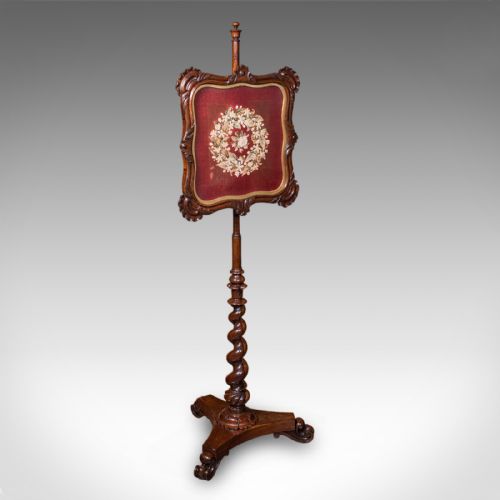
An antique tripod screen takes the form of a vertical panel mounted on an adjustable pole, supported by a three-legged base designed to stand near a fireplace. These pieces emerge predominantly from the Georgian, Regency, and Victorian periods, manifesting in rich timbers such as mahogany and rosewood.
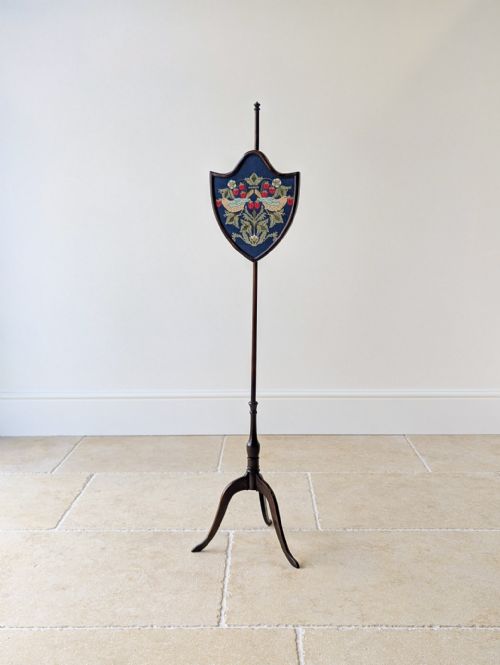
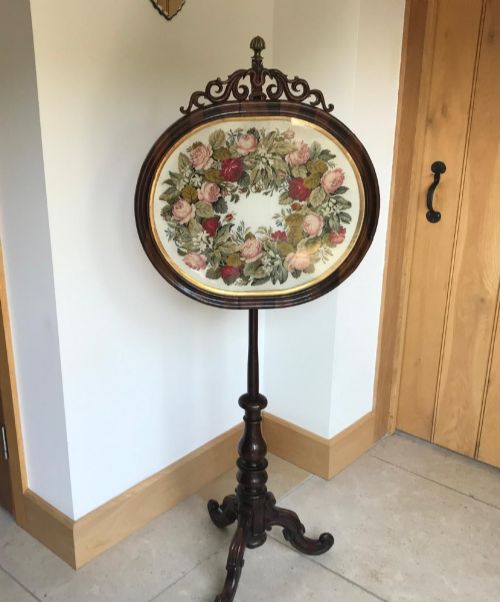
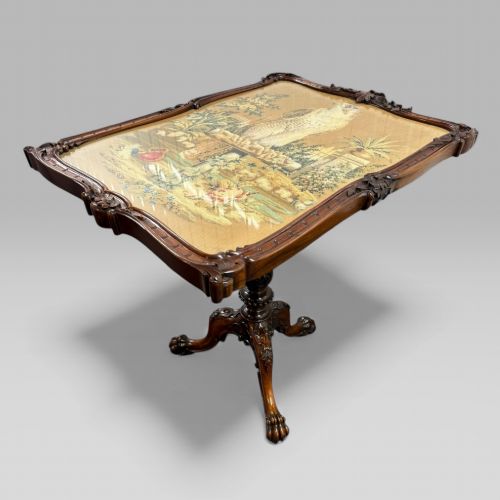
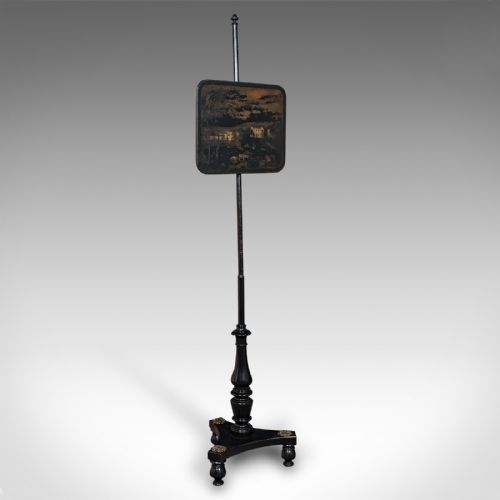
The primary version met on this page is the pole screen, featuring a sliding needlework, tapestry, or printed panel that could be raised or lowered to block the heat. Makers also fashioned these stands using brass, walnut, and satinwood, occasionally incorporating tilt-top mechanisms or clever conversions into side tables and lamps.
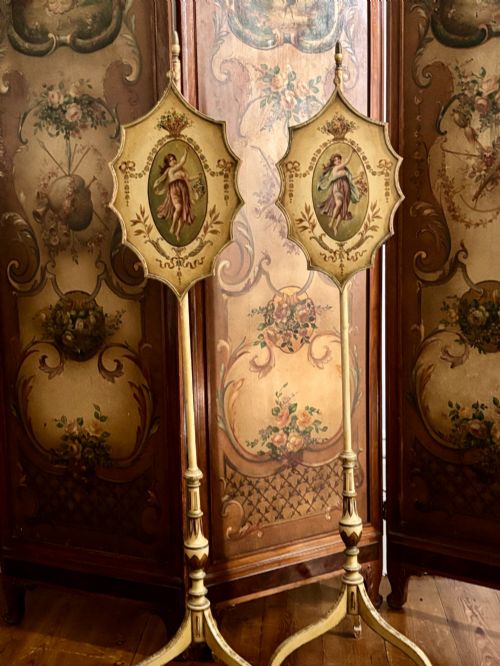
Forms span from simple George III tripod bases to elaborately carved William IV and Victorian iterations, sometimes encountered in pairs. The central shaft rests firmly upon three feet, frequently terminating in spade feet or scroll motifs suited to the refined drawing rooms of the nineteenth century.
Materials and construction
Cabinetmakers constructed the slender tripod bases and vertical poles from dense hardwoods like mahogany, rosewood, and walnut, turning the timber on a lathe to achieve the characteristic pillar. Brass fittings and adjustment screws allowed the panel to glide smoothly up and down the pole and remain fixed at the desired height.
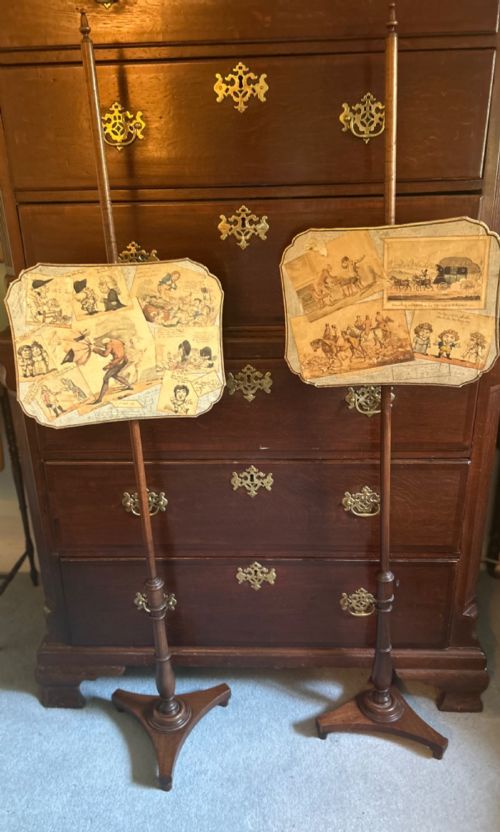
The screens themselves display textile art, utilising wool, silk, and glass within needlework or tapestry panels, alongside satirical prints and painted surfaces. Skilled hands mounted these delicate panels within wooden frames, occasionally integrating giltwood or inlaid details to catch the flickering light of the hearth.
A few clever makers fitted these elegant stands with satirical prints, ensuring guests had witty reading material while warming their shins.
Judging quality in tripod screens
Quality rests heavily on the crispness of the timber carving on the tripod base and the stability of the central adjustment mechanism. Pieces bearing sophisticated details like spade feet, gilt brass mounts, or finely figured rosewood and mahogany separate themselves from simpler workshops.
The preservation and artistry of the central panel dictate much of the distinction, as hand-worked tapestry, intricate needlework, or original satirical prints demand superior craftsmanship. Proportion matters greatly, ensuring the slender column supports the weight of the screen harmoniously without wobbling upon its three legs.
Gillows
The Antique Tripod Screen Glossary
- Pole screen
- A vertical fireside screen mounted on a tall central pillar with a tripod base, featuring an adjustable panel to deflect heat from an open fire. This serves as the primary form for this search phrase.
- Needlework
- Hand-stitched textile art using yarn or thread upon a canvas mesh, frequently employed to create the decorative panels held within these frames.
- Tilt-top
- A tabletop mechanism allowing the surface to pivot to a vertical position when not in use, occasionally integrated into the design of these tripod stands.
- Regency
- A British design period spanning the early nineteenth century, characterised by classical restraint, elegant scrolling supports, and exotic woods like goncalo alves.
- Giltwood
- Timber treated with a thin layer of gold leaf or gilt preparation, adding bright decorative accents to the frame or stand.
Antique Tripod Screen: Frequently Asked Questions
What is an antique tripod screen used for?
These pieces served a practical domestic purpose in period homes, functioning primarily as adjustable heat shields to protect a lady's complexion from the intense glare and warmth of an open coal fire.
Positioned close to the hearth, the sliding panel could be raised or angled to block the heat while leaving the rest of the room to enjoy the ambient temperature.
How do I adjust the height?
Most examples utilise a sliding collar or a brass thumbscrew mechanism located at the back of the panel hub, allowing the screen to glide vertically along the wooden pole.
Users simply loosen the mechanism, position the textile or framed panel at the desired height to intercept the heat, and tighten it gently to hold the piece in place.
Can these screens still be used near a modern fireplace?
While central heating renders the original heat-shielding function largely obsolete, these tripod stands continue to serve as decorative room dividers or striking focal points in a traditional sitting room.
Care should be taken to keep antique textiles and dry timber away from excessive direct heat sources to prevent warping or fading of the delicate fabrics.