

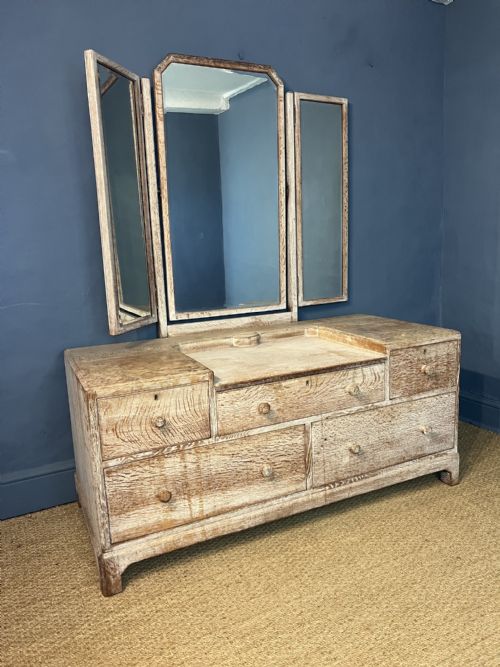
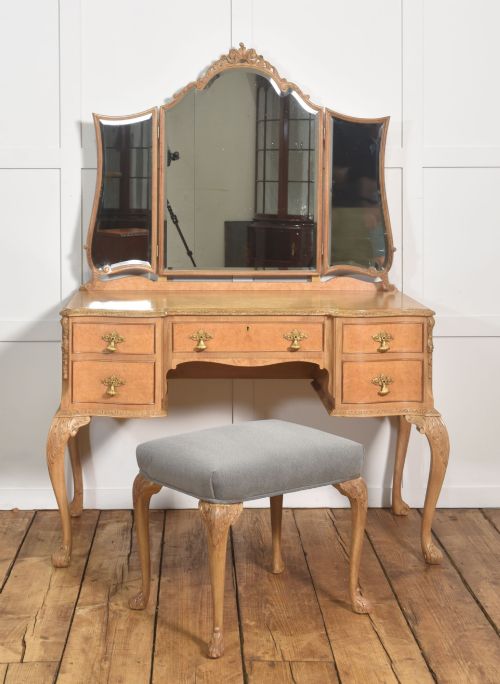


Antique Triple Mirror Vanity
An antique triple mirror vanity offers adjustable reflection through hinged side panels, bringing practical elegance and period character to a dressing space.
Antique Triple Mirror Vanity
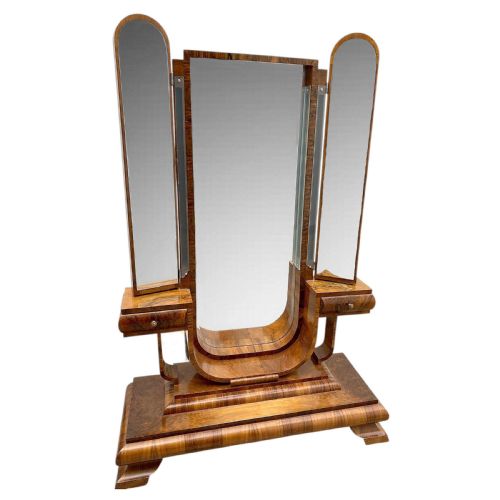
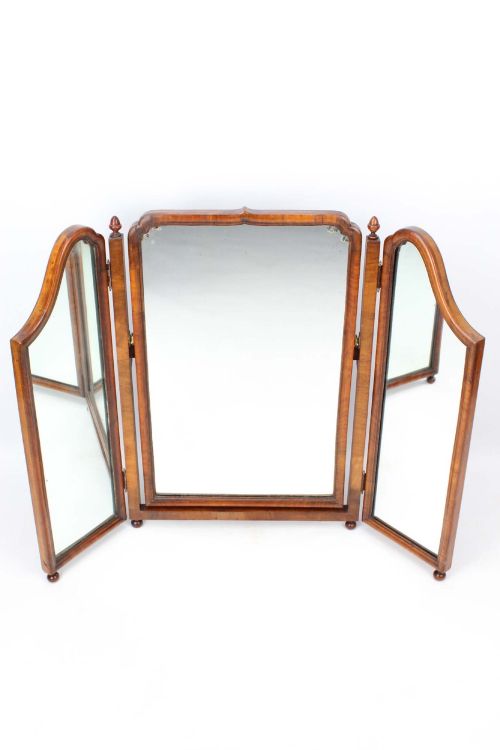
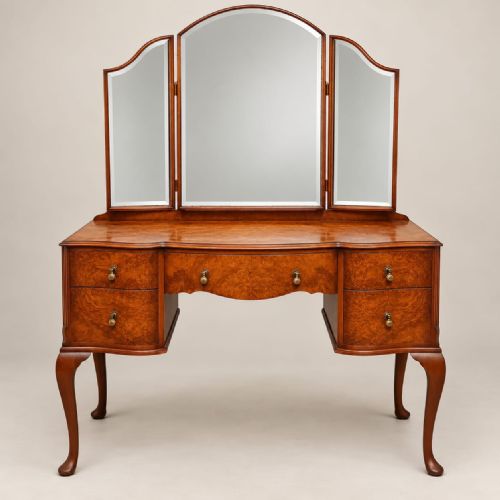
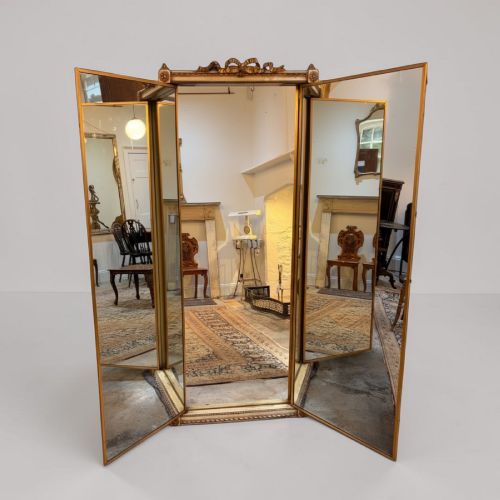
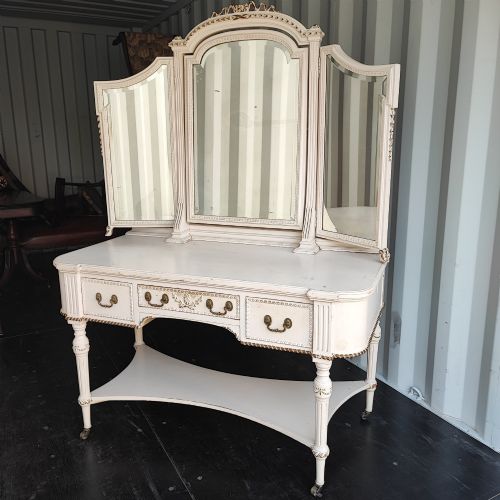
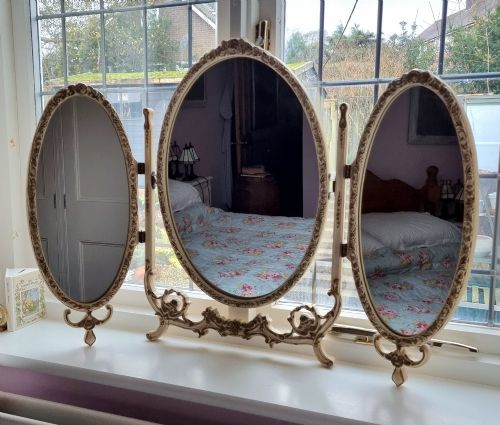
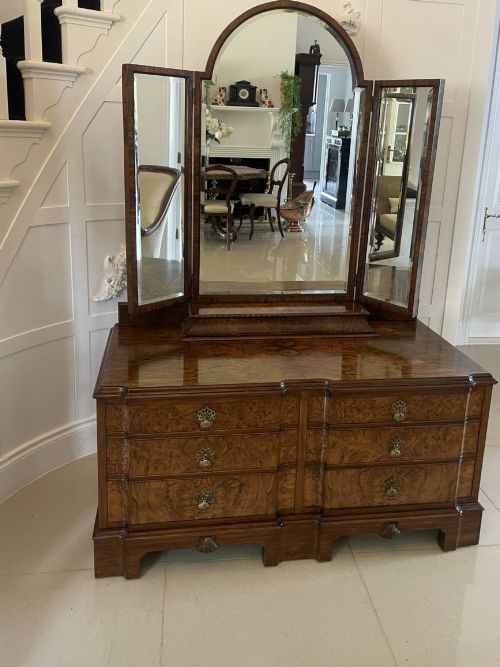
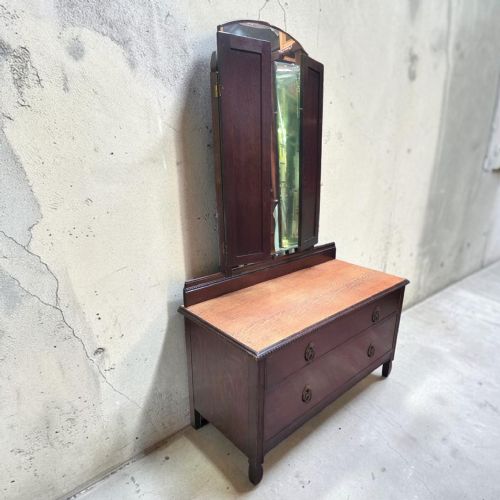
When you search for an antique triple mirror vanity, you are looking at dressing tables, dressing table mirrors, and wall mirrors designed with a central glass flanked by two adjustable side panels. These pieces span from the nineteenth century through the Edwardian era and into the 1920s and 1930s, capturing revival styles alongside modernist design.
The most common forms on this page combine a fitted table base with a freestanding or attached triptych glass assembly, often accompanied by matching stools or integrated drawers. You will also encounter smaller folding table mirrors and wall-mounted variants designed for specific boudoir configurations.
Stylistic influences range widely across the periods, incorporating Queen Anne Revival, Louis XV and Louis XVI revivals, French Rococo, and clean-lined Art Deco. This variety ensures that whether your room calls for heavy carved oak or sleek burr walnut, a suitable period example exists.
How they were made
Cabinet makers utilised a foundation of solid oak, walnut, or imported exotic timbers like burr walnut, applying fine veneers over stable carcases to achieve rich decorative grain patterns. Gesso and carved wooden frames were frequently employed on French-influenced revival pieces to build up elaborate relief ornamentation.
Metal hinges and brass brackets provide the mechanical movement for the folding side wings, allowing users to angle their reflections precisely. Original mirror glass is often bevel-edged and set into rebated wooden or gilded frames.
Antique Triple Mirror Vanity Retail Price Guide 2026
Typical asking prices for triple mirror vanity among the pieces listed under this phrase on Sellingantiques today, from the lower quarter to the upper quarter. They describe what is for sale here now, not the wider market.
Many a Victorian morning began with a triple mirror, ensuring no stray curl escaped notice before the carriage arrived.
What varies in quality
Quality in these pieces is dictated by the selection of timber veneers and the crispness of any applied carving or gesso work. Exemplary pieces display continuous grain matching across drawer fronts and mirror frames, whereas simpler examples rely on plain timber or basic mouldings.
The sophistication of the hardware marks another distinction between standard production and top-tier workshop output. Robust, bespoke brass hinges and finely silvered mirror plates separate distinguished commissions from mass-produced domestic furniture.
Maples of London and Paris·Heals·Maurice Adams·Brot
The Antique Triple Mirror Vanity Glossary
- Triptych
- A three-panel assembly where two hinged wings flank a fixed central section. This configuration allows the user to view side profiles during grooming.
- Burr Walnut
- A prized timber harvested from walnut tree growths, yielding intricate, swirling grain patterns. Cabinet makers selected it for high-end decorative surfaces.
- Gesso
- A plaster-like mixture applied to wood surfaces and carved before gilding or painting. It creates the raised ornamentation seen on revival frames.
- Limed Oak
- A wood finishing technique where a white composition is rubbed into the open grain of oak. This treatment lightens the appearance of the timber.
- Venetian Decorated
- Glasswork incorporating etched or painted motifs, often associated with traditional mirror production from Italy. It adds decorative depth to the reflective surface.
Antique Triple Mirror Vanity: Frequently Asked Questions
How do I clean the mirror glass?
Use a soft cloth slightly dampened with water or a mild glass cleaner applied to the cloth rather than directly onto the glass. This prevents moisture from seeping behind the silvered backing or damaging old wooden frames.
Avoid harsh ammonia-based products that can degrade vintage silvering or discolour surrounding gesso and wood finishes over time.
Can I replace the mirror glass?
Replacing mirror glass is possible, but original bevelled glass should be retained wherever feasible to maintain the historical integrity of the piece. Many collectors prefer minor age foxing over modern replacement glass.
If replacement is necessary due to damage, consult a specialist restorer who can source antique-spec glass with appropriate thickness and bevelling.
How do I care for burr walnut?
Keep burr walnut surfaces away from direct sunlight and heat sources to prevent the fine veneers from drying out, cracking, or fading. Regular dusting with a dry lint-free cloth maintains the finish.
Apply a quality furniture wax sparingly once or twice a year to nourish the timber and preserve the chatoyancy of the grain.