



Cream Vanity Table
A cream vanity table brings together painted woodwork, dressing stools, and mirrors from the nineteenth century through the Art Deco era.
Cream Vanity Table
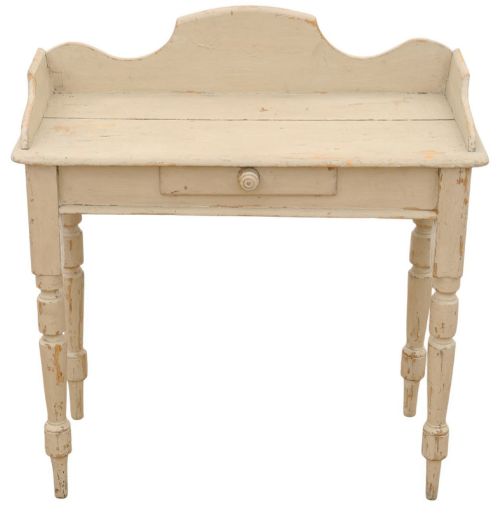
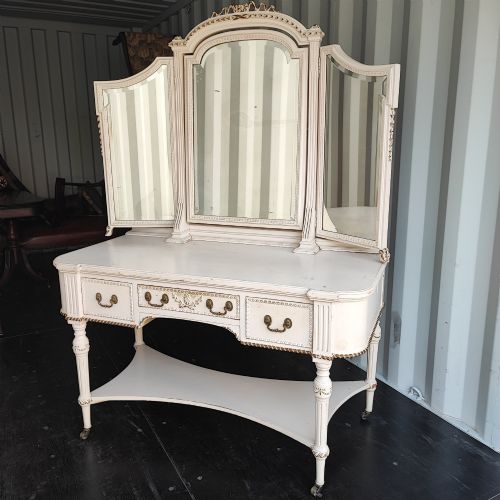
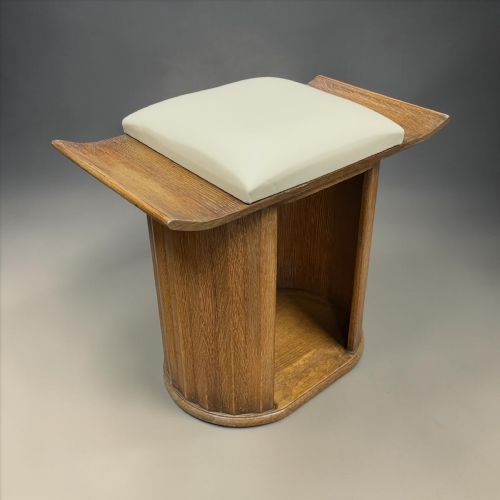
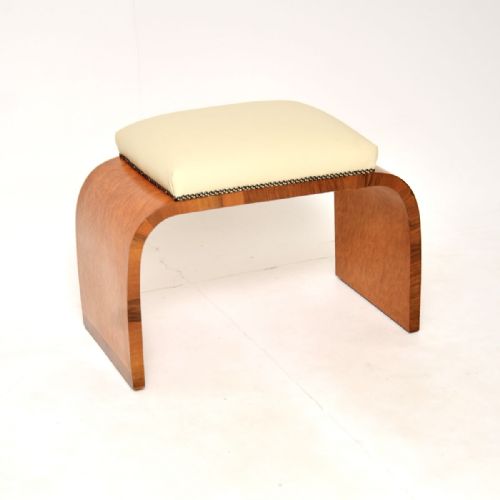
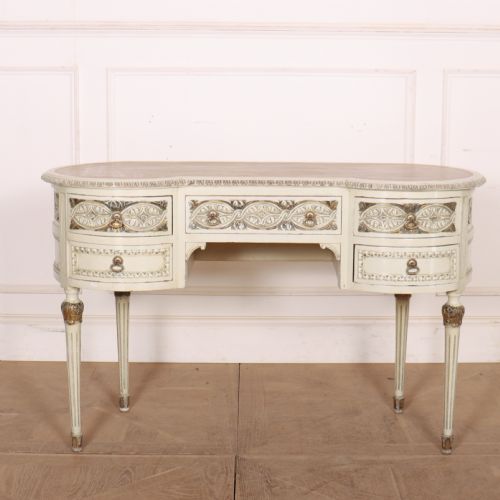
When searching for a cream vanity table, buyers encounter a selection spanning Victorian, Edwardian, and Art Deco periods, featuring painted wood finishes and matching seating. These forms include dressing tables, mirrors, desks, and upholstered stools designed for private chambers and boudoirs.
Materials and construction methods
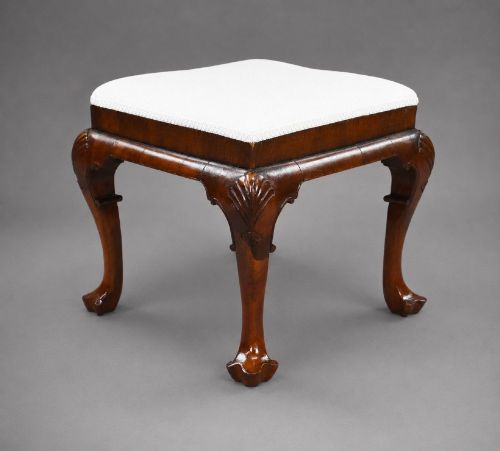
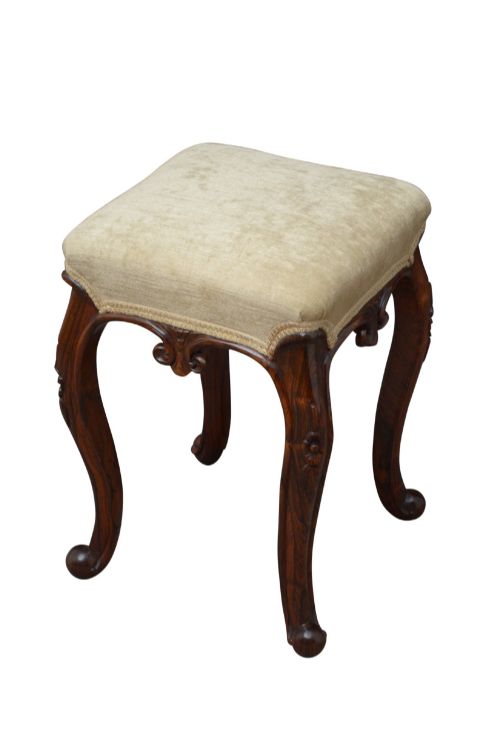
Craftsmen built these dressing items using solid hardwoods such as mahogany, walnut, and goncalo Alves, frequently applying painted finishes or retaining natural grains on maple and wood surfaces. Structural ornamentation relied on hand carving, cabriole legs, and turned supports.
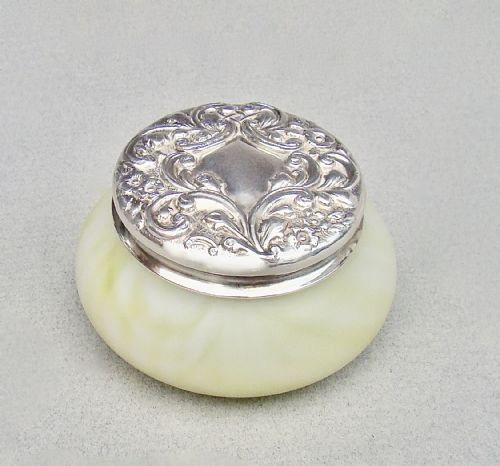
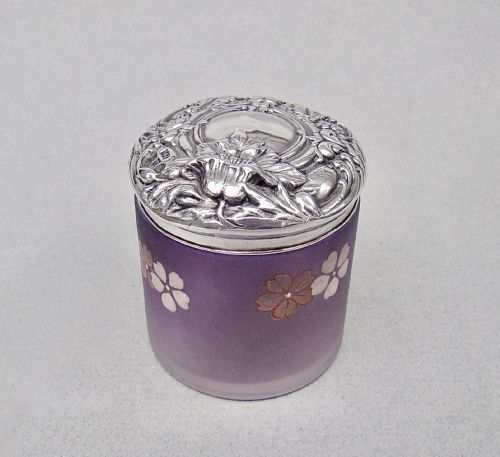
Upholstery forms a key component of the seating, utilising fabrics, leather, and damask secured with buttoning or traditional padding. Smaller accessories incorporate silver lids, frosted glass, bone, and ceramic elements.
Listings feature items spanning the nineteenth century, Victorian, Edwardian, and 1930s periods in mahogany, walnut, painted wood, and leather.
Distinctions in quality and execution
Quality separates through the crispness of wood carving, the integrity of original painted finishes, and the selection of cabinet timbers like birds eye maple over standard woods. Superior examples display balanced proportions in revival styles such as Queen Anne, Chippendale, and Louis formats.
Seating demonstrates excellence in the joinery of the frame and the quality of the textile upholstery, from damask to stitched leather. Mirrors and small dressing accessories show distinction in the weight of the glass, silver hallmarks, and ceramic bodies.
Harry and Lou Epstein·A. Bromet & Co
The Cream Vanity Table Glossary
- Cabriole leg
- A furniture leg that curves outward at the knee and inward at the ankle, ending in a pad or scroll foot. This shape appears frequently on Victorian and revival stools.
- Birds eye maple
- A figure in maple wood that resembles tiny swirling eyes, valued for its decorative grain pattern on Art Deco furniture.
- Damask
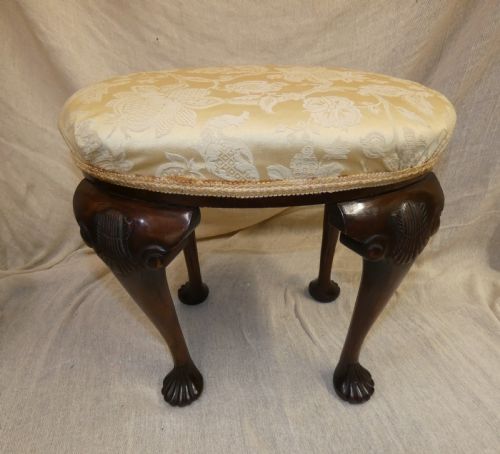
- A reversible figured fabric woven on a jacquard loom, often utilised for upholstery on period dressing stools.
- Triple mirror
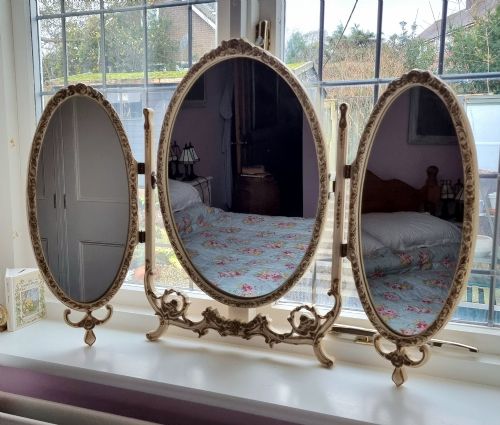
- A dressing mirror featuring a large central plate flanked by two smaller adjustable side mirrors, popular in nineteenth and twentieth century dressing sets.
Cream Vanity Table: Frequently Asked Questions
What periods do these cream vanity tables come from?
The pieces span the nineteenth century, Victorian era, Edwardian period, and the nineteen-thirties Art Deco movement.
Craftsmen and makers across these decades utilised varied woods, painted surfaces, and upholstery styles.
How do I match a stool to a dressing table?
Look to the stylistic cues such as cabriole legs, painted wood finishes, or walnut and mahogany frames.
Revival designs like Queen Anne and Chippendale provide clear historical matches for period dressing furniture.
What fabrics are used on the dressing stools?
Upholstery includes leather, damask, and buttoned fabric finishes tailored to the seating frames.
These materials reflect the decorative tastes of the Victorian, Edwardian, and Art Deco eras.
Are the mirrors original to the dressing tables?
Mirrors in this category include triple dressing table mirrors and painted dressing mirrors from the nineteenth and twentieth centuries.
Each piece reflects the specific design standards of its production era.