



Antique Triple Back Sofa
An antique triple back sofa offers extended seating grounded in classic chair back joinery, bringing formal elegance to a traditional drawing room.
Antique Triple Back Sofa
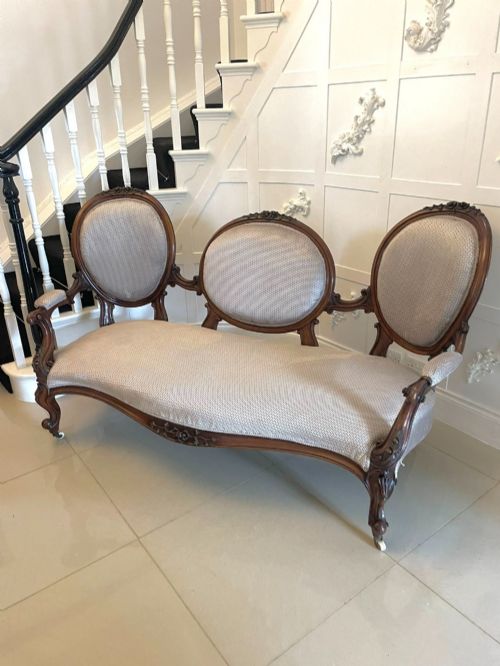
An antique triple back sofa unites the appearance of three distinct chairs into a single extended piece of seating, creating a formal silhouette. These pieces appear across the nineteenth century and into the early twentieth century, drawing on earlier eighteenth-century chair-making forms.
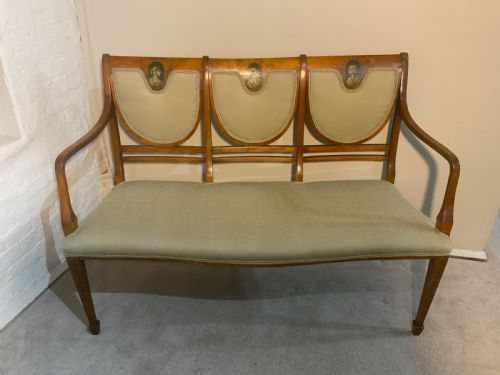
Most examples found here utilise mahogany, walnut, or satinwood frames, often shaped with shield, cameo, or pierced splat designs. Makers arranged these chair forms side by side to seat multiple guests while retaining the upright posture of individual parlor chairs.
Makers adapted these multi-chair frames into distinct regional styles, ranging from English Regency and Victorian interpretations to continental Dutch and Italian forms. The resulting settees function as principal seating arrangements in larger rooms, balancing architectural woodwork with upholstered seats.
How they were made
Cabinetmakers constructed the structural frames of these sofas from dense hardwoods such as mahogany and walnut, employing traditional mortise and tenon joinery to bear the weight across three connected chair backs. Satinwood provided a pale contrasting surface for inlaid decoration and painted detailing.
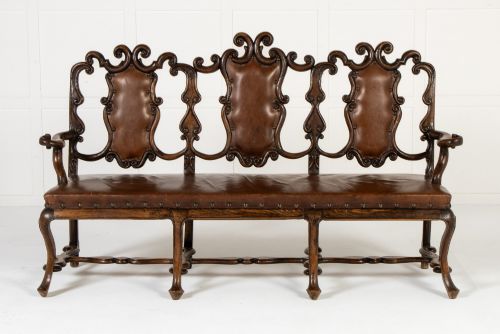
Carvers shaped the splats, rails, and arms by hand, applying pierced designs, gadroon carving, or gilt accents depending on the prevailing style. Upholsterers then webbed and stuffed the drop-in or fixed seats using traditional textiles and fabrics suited to the period.
Antique Triple Back Sofa Retail Price Guide 2026
Typical asking prices for triple back sofa among the pieces listed under this phrase on Sellingantiques today, from the lower quarter to the upper quarter. They describe what is for sale here now, not the wider market.
Mahogany and walnut remain the predominant framing materials across these nineteenth-century listings.
What varies in quality
The refinement of the hand-carved details across the three back splats determines the visual success of the piece, separating standard workshop production from master craftsmanship. Crisp execution in the joinery ensures the extended frame remains rigid over centuries of use.
The choice of secondary timbers and the precision of fine satinwood inlay or painted finishes indicate the original commission tier. Well-preserved upholstery foundations and original brass castors further distinguish higher-status survivals from heavily altered examples.
The Antique Triple Back Sofa Glossary
- Splat
- The vertical wooden strip down the middle of a chair back, often shaped, pierced, or carved. In multi-back sofas, these form the visual rhythm of the seating.
- Settee
- An upholstered bench with a back and arms, designed to seat multiple people. The term frequently overlaps with sofa in period descriptions.
- Satinwood
- A durable, yellow-brown timber with a lustrous grain, favoured for fine inlay and decorative cabinetwork during the eighteenth and nineteenth centuries.
- Shield back
- A chair back shaped in the outline of a heraldic shield, popularised by Hepplewhite and frequently repeated in triple back sofa designs.
- Drop-in seat
- A removable seat frame upholstered separately before being dropped into the wooden rebate of the chair or settee frame.
Antique Triple Back Sofa: Frequently Asked Questions
How many people do these sofas seat?
These sofas typically accommodate three sitters across their linked chair-back structure, though certain larger or distinct formats can seat up to four. Their design prioritises structured upright seating over deep lounging.
Buyers should check the internal seating length between the arms to ensure it meets their practical requirements for daily use in a reception room.
Where should I place an antique triple back sofa?
These sofas suit formal reception rooms, large hallways, or drawing rooms where their architectural woodwork and extended profile can be viewed properly. They work well against principal walls or floating in spacious period interiors.
Avoid placing them in areas with direct sunlight or fluctuating humidity to protect the polished wood surfaces and period upholstery fabrics.
How do I distinguish between Regency and Victorian examples?
Regency pieces often display cleaner classical lines, painted or gilded satinwood finishes, and restraint in their carved ornamentation. Victorian iterations tend to feature heavier walnut frames, cameo backs, and more robustly padded upholstery.
Examining the turning of the legs and the profile of the arm supports usually reveals the shift in cabinet-making tastes between the early and late nineteenth century.
Are these sofas comfortable for daily lounging?
These sofas were built for upright parlor conversation rather than reclining, offering firm support rather than deep cushioning. Their chair-back construction encourages an upright posture.
Owners often add supportive antique-style cushions if they intend to use the settee for extended periods of relaxation in a living space.