




Antique Trio End Tables
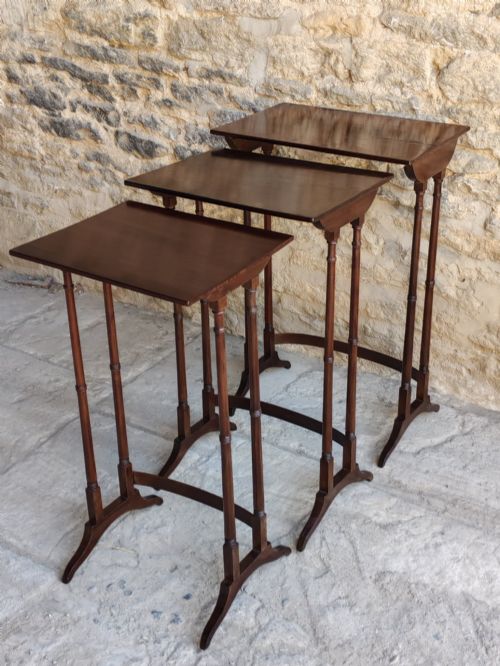
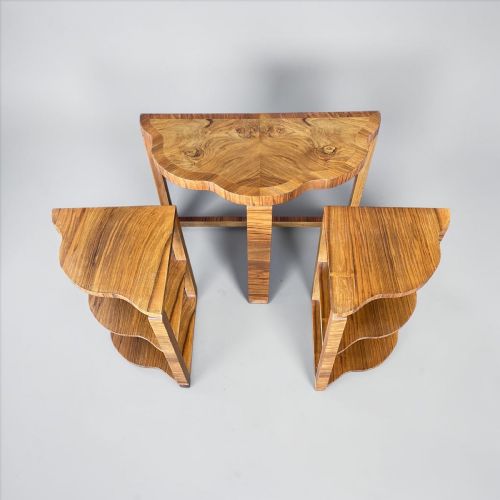
Antique trio end tables are nested sets of three graduated surfaces designed to save space, bringing useful tiers of wood right to hand.
Antique Trio End Tables
When you search for antique trio end tables, you are looking at nests of three tables that slide neatly beneath one another. These pieces serve as flexible surfaces in sitting rooms, pulling out to hold drinks or books and tucking away when floor space is tight.
The versions you are most likely to meet on this page take the form of nests of three tables spanning periods from the Georgian era through to the early twentieth century. Makers constructed them in matching sets where each smaller table fits precisely inside the frame of the next one up.
Originating in traditional cabinet-making traditions, these items appear in styles ranging from clean Georgian and Regency designs to Edwardian inlaid work and Jacobean Revival oak. They remain practical additions to a room, offering multiple tabletops without cluttering the floor.
What varies in quality
The grade of timber and the precision of the joinery set the better examples apart from standard workshop output. Superior pieces show crisp cabinet work where the nesting action is smooth and the smaller tables slide home without binding or wobbling.
Decorative detail marks another division in quality, moving from plain timber surfaces to finely executed wood inlay and balanced proportions. The integration of specialised materials like embossed leather also elevates the sophistication of the piece.
A sturdy oak set brings barley twists to the party, proving that even a space-saving nest can have a dramatic leg.
The Antique Trio End Tables Glossary
- Nest of tables
- A set of graduated tables designed to fit one beneath another to save floor space. They are frequently used informally beside seating.
- Inlay
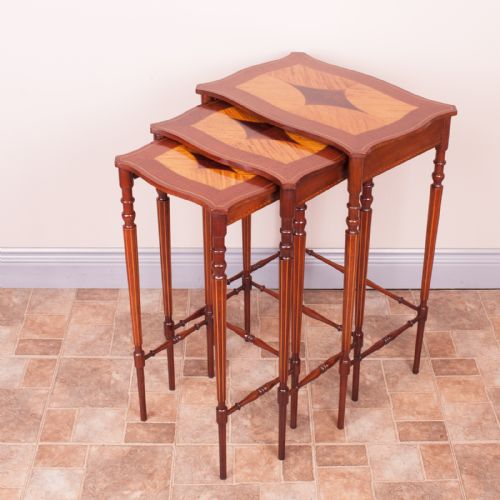
- A technique where contrasting woods such as satinwood and boxwood are fitted into the surface of a primary timber to form decorative patterns. This work requires considerable skill from the cabinet maker.
- Barley twist
- A carved wooden column resembling a twisted rope, common in Jacobean Revival furniture. It adds considerable texture and visual weight to the legs of a table.
Antique Trio End Tables: Frequently Asked Questions
What are antique trio end tables used for?
These sets function primarily as flexible side tables in living spaces, holding cups, books or lamps as needed throughout the room.
Because the smaller tables slide away beneath the largest one, they provide extra surface area instantly without demanding permanent floor space.
How do I spot an Edwardian nest?
Edwardian examples often feature light wood inlay work such as boxwood and satinwood set into a mahogany ground. The frames tend to be lighter in proportion than their Georgian predecessors.
They reflect the domestic interior trends of the early twentieth century, balancing practicality with delicate decorative detailing.
Are all these tables made of mahogany?
Mahogany is common among the pieces listed here, but cabinet makers also utilised rosewood and oak depending on the period and style. Some heavy oak versions feature barley twist turnings.
Secondary woods and decorative veneers add further variety to the materials encountered across different workshops.
Can I use these tables separately?
Each table in the nest is an independent freestanding item once pulled out from the set. You can place them around a room individually whenever guests visit.
When the gathering ends, they simply slide back together into a single compact unit.