


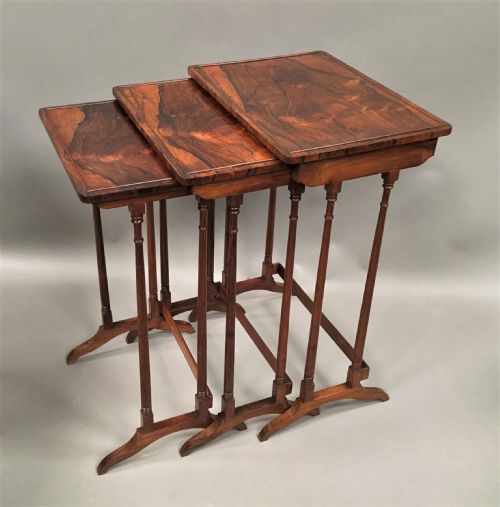


Rosewood Side Table Set
A rosewood side table set brings tiered functionality and rich grain to a room, offering graduated tables that tuck neatly away when not required.
Rosewood Side Table Set
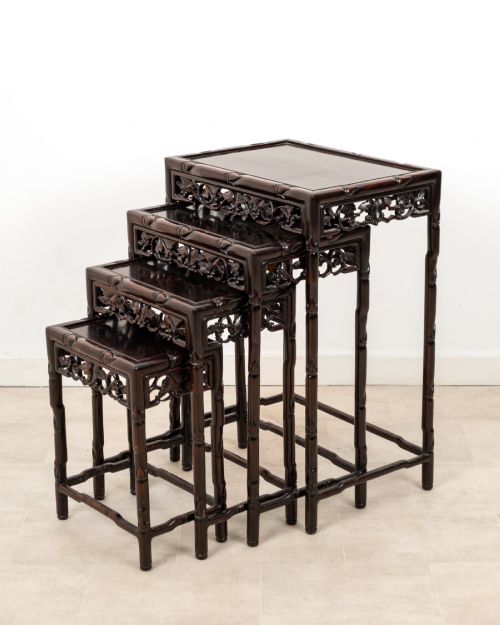
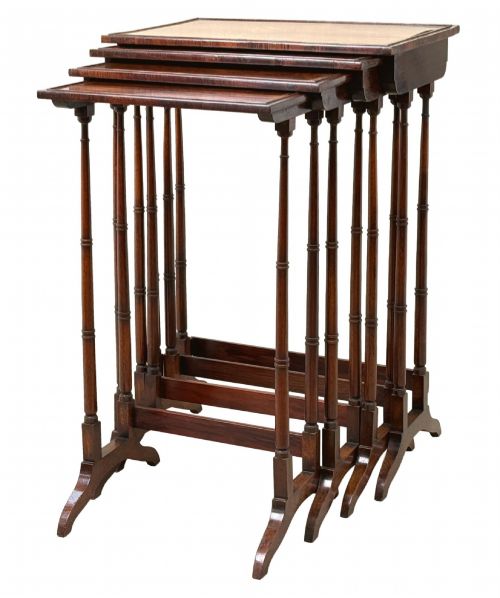
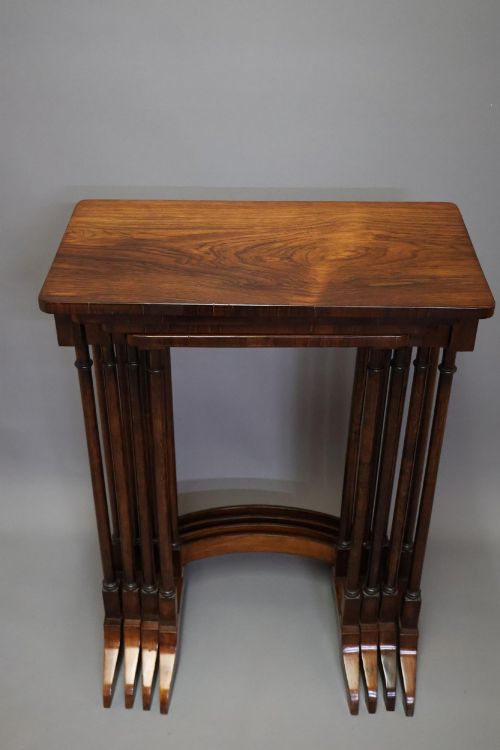
A rosewood side table set typically comprises a nest of graduated tables designed to slide beneath one another, saving space whilst providing multiple surfaces when entertained. Buyers searching for a rosewood side table set most frequently encounter Regency quartetto tables and Chinese hardwood nests from the nineteenth century.
The form ranges from English Regency quartetto sets with slender column supports to carved Chinese export pieces featuring multiple occasional tables. These sets appear in various configurations, from threes and fours up to larger groups, combining practical utility with decorative presence.
How they were made
Cabinetmakers utilised dense tropical rosewood and exotic hardwoods, often selecting stock for dramatic grain patterns and deep colouration. Some examples incorporate satinwood inlay, leather, or marble inserts into the tops.
Construction techniques involve precise joinery to ensure the graduated frames slide smoothly within one another without binding. Simulated faux rosewood finishes also appear on alternative timbers, achieved through skilled grain painting.
Listings feature rosewood, hardwood, satinwood, and leather across Regency and Victorian periods.
What varies in quality
Quality rests in the selection of the timber and the crispness of any carved detailing, particularly on Chinese Qing Dynasty or Regency frames. Superior sets display matched grain patterns across the graduated tops and robust underframe construction that maintains stability.
The refinement of the legs and feet, whether turned columns, sabre supports, or pierced brackets, distinguishes workshop standards. Original surfaces and patination elevate an example above those with heavy modern intervention.
Gillows·W&C Wilkinson London
The Rosewood Side Table Set Glossary
- Quartetto
- A matched set of four graduated occasional tables designed to nest together. They gained popularity in Regency England for tea service and reading.
- Nest of tables
- A group of smaller tables sized so that each smaller one slides beneath the next larger one. This space-saving design became common during the nineteenth century.
- Chinese export
- Goods manufactured in China specifically for Western markets, often combining traditional Asian joinery with European forms. These pieces frequently feature carved hardwood panels and robust frames.
- Simulated rosewood
- Timber painted or stained to imitate the rich dark grain and warm tones of genuine rosewood. This technique provided an alternative aesthetic during the nineteenth century.
Rosewood Side Table Set: Frequently Asked Questions
What is a quartetto table set?
A quartetto set consists of four graduated tables designed to fit neatly one inside another. They were widely produced during the Regency period for versatile entertaining.
Each table is fractionally smaller than the last, allowing the entire group to occupy the floor space of just one small table.
How were nesting tables used?
These sets served multiple functions in nineteenth-century drawing rooms, from holding tea cups and writing materials to displaying decorative objects. Servants could easily pull out individual tables as needed and return them when finished.
Their mobility made them practical additions to seating areas where permanent large tables would obstruct movement.
How do I identify a Regency set?
Regency tables typically feature clean classical lines, slender turned or sabre legs, and premium rosewood veneers with pronounced grain. Makers during this era often employed mahogany or oak as secondary woods beneath the show veneers.
Attributions to known London makers sometimes appear on these pieces through stamps or specific construction traits.
Are Chinese export nests different?
Chinese export sets from the late nineteenth century generally utilise dense indigenous hardwoods rather than European rosewood. They frequently incorporate intricate carved aprons, pierced brackets, and traditional mortise and tenon joinery.
These pieces reflect the cultural exchange between Chinese workshops and Western buyers during the late Qing Dynasty.