


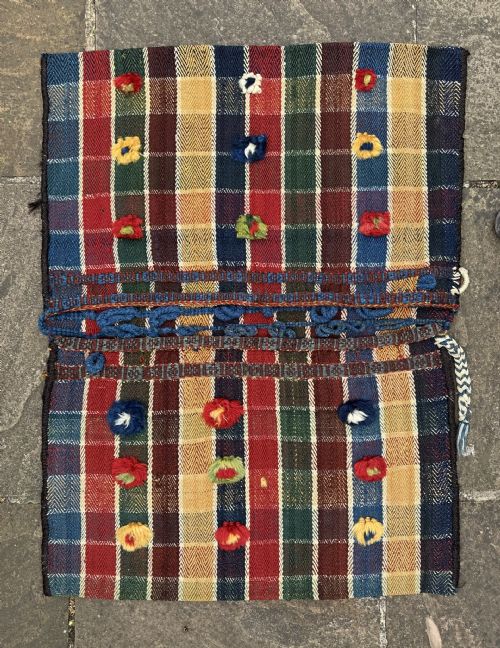
Antique Tribal Kilim Bag
An antique tribal kilim bag is a utilitarian textile woven by nomadic and village peoples, prized for its robust flatweave geometry and rich natural dyes.
Antique Tribal Kilim Bag
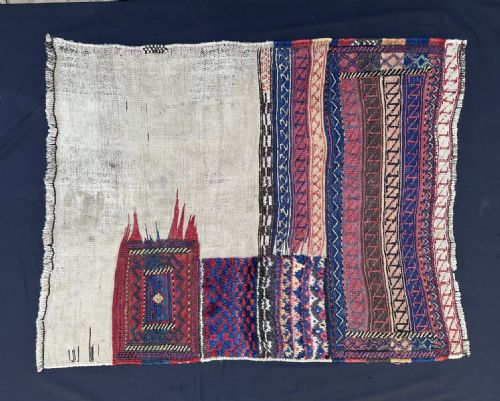
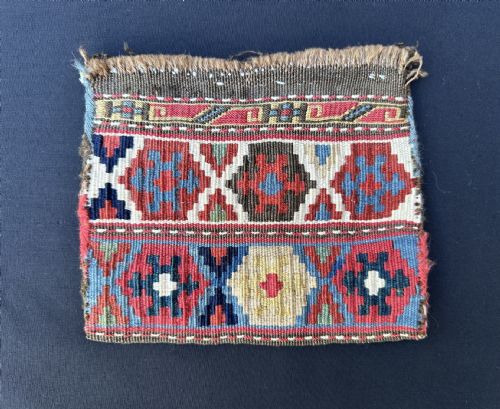
When you search for an antique tribal kilim bag, you encounter functional containers made for nomadic life, including saddle bags, salt bags, wheat sacks, and storage chests known as mafrash. These textiles originate from Persian, Caucasian, Turkmen, and Anatolian tribal groups active during the nineteenth and early twentieth centuries.
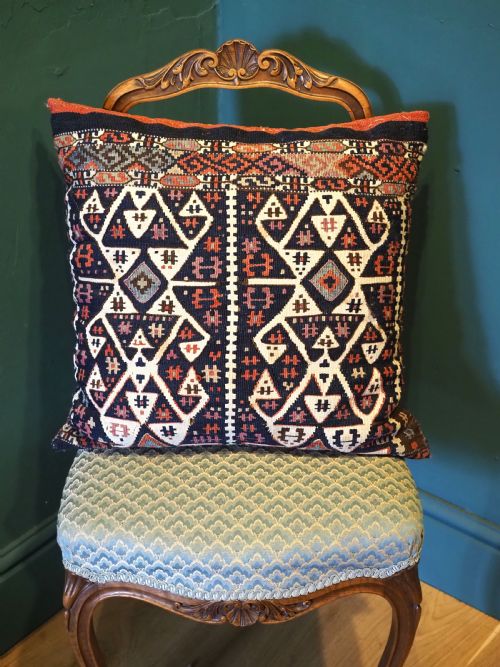
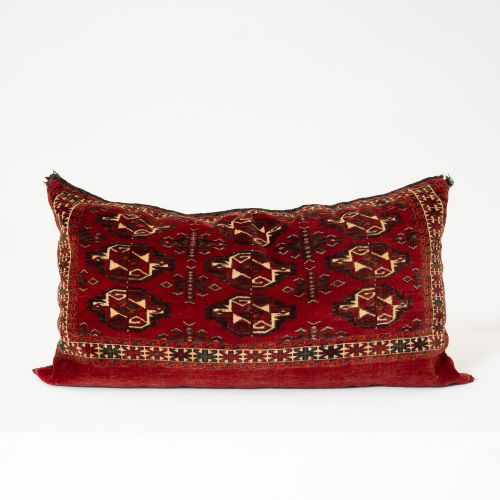
The pieces on this page span the period from the mid-nineteenth century up to the 1920s, reflecting the utilitarian output of groups such as the Shahsavan, Qashqa'i, Bakhtiari, and Yomut Turkmen. Many survive as complete pairs, storage bags with original backs, or bag faces later adapted into cushions and pillows.
Materials and construction
These bags rely primarily on hand-spun wool and cotton, often reinforced with goat hair for structural durability along edges and base seams. Cowrie shells and leather occasionally appear as protective amulets or reinforcement on specific saddle and storage pieces.
Weavers utilised slit-tapestry flatweave techniques alongside banded weft work and supplementary weft float designs. Artisans dyed the wool using natural colour sources, producing varied palettes across Anatolia, Persia, and the Caucasus.
Materials documented across these textile items include hand-spun wool, cotton, goat hair, leather, and decorative cowrie shells.
Factors determining quality
Quality rests on the crispness of the geometric design and the complexity of the flatweave structure. Pieces retaining their original backs, tassels, and complete dimensions command greater interest than isolated bag faces.
The depth and saturation of natural dyes distinguish finer examples from standard work. Tighter knotting or weaving density and the condition of the hand-spun wool further separate regional outputs.
Shahsavan Nomads·Bakhtiari Lor Tribes·Yomut Turkmen·Zaggar Mengal Baluch
The Antique Tribal Kilim Bag Glossary
- Kilim
- A flatwoven textile produced without a pile by tightly interweaving warp and weft strands. This technique creates lightweight, durable storage containers and rugs.
- Mafrash
- A large rectangular storage bag or chest panel used by nomads for bedding and household goods. These pieces typically display banded flatweave designs.
- Chuval
- A large Turkmen tent-storage bag traditionally used for storing personal belongings and household items. They often feature distinct guls or primary medallions.
- Namakdan
- A specialised narrow-necked salt bag woven by nomadic groups. Their bottle-like shape prevents salt from spilling during transport.
- Tacheh
- A utilitarian wheat or grain sack produced by Luri and Bakhtiari tribes in Western Persia. These function primarily as heavy-duty agricultural storage.
Antique Tribal Kilim Bag: Frequently Asked Questions
What were antique tribal bags used for?
Nomadic groups utilised these woven containers for practical storage and transport during seasonal migrations. They held salt, grain, bedding, and personal belongings inside tents or across the flanks of pack animals.
Over time, many of these utilitarian items transitioned into domestic furnishings as families settled. Today, collectors preserve them as decorative wall hangings or convert them into cushions.
How do I care for an antique kilim bag?
Keep these textiles out of direct sunlight to prevent natural dyes from fading over time. Gentle vacuuming through a mesh screen removes surface dust without damaging the flatweave structure.
Avoid washing them with water or chemical detergents, as hand-spun wool and natural dyes react poorly to moisture. Consult a specialist textile conservator for professional cleaning.
How do I distinguish regional tribal styles?
Persian and Caucasian pieces often display intricate geometric layouts, while Turkmen examples feature repeating guls and bold banded designs. Anatolian Yuruk and Kurdish pieces generally present heavier wool and earthier palettes.
Examining the specific weave structure, border motifs, and dye combinations helps pinpoint the originating tribal group.
Are original backs important on these bags?
Original backs significantly enhance the integrity of a storage bag by preserving its complete historical form. Many surviving fragments exist only as bag faces, making complete examples with intact backs and side seams uncommon.
Inspect the reverse side for matching plain weave or original banding that matches the front aesthetic.