




Tribal Wool Tassel Hanging
These tribal wool tassel hanging pieces are authentic nomadic textiles from Persia and Central Asia, prized for their rich wool work and tactile fringe.
Tribal Wool Tassel Hanging
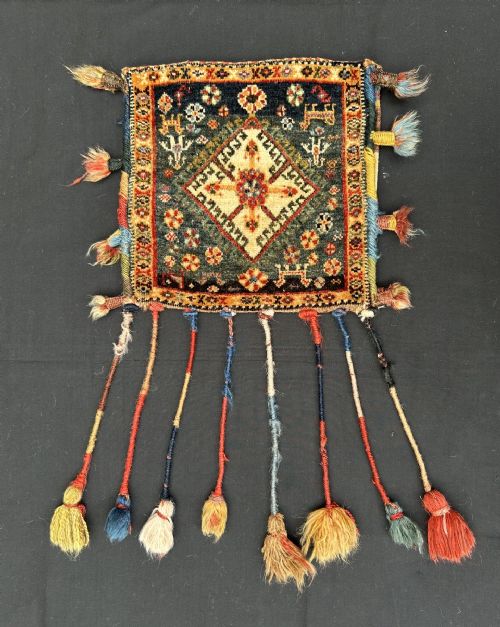
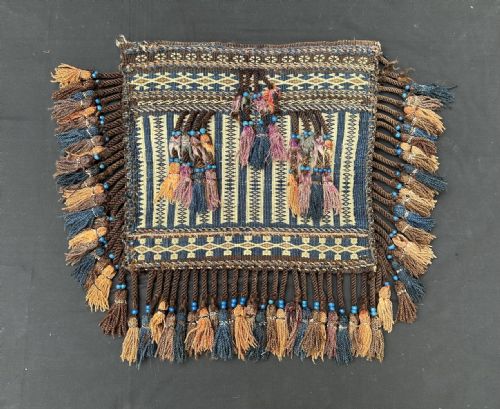
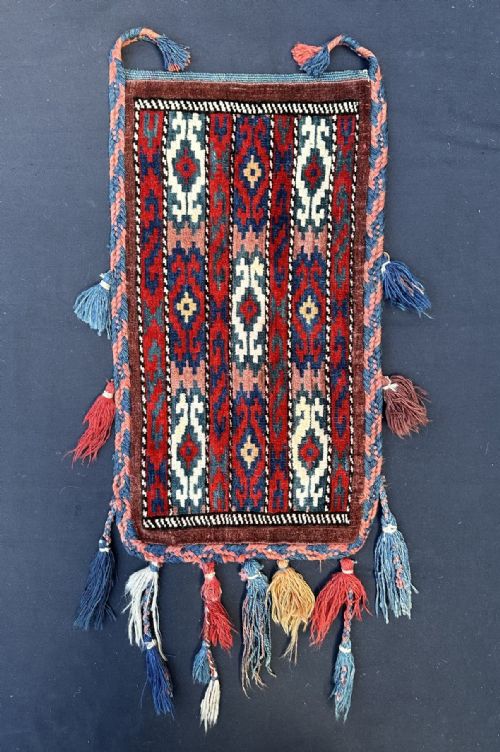
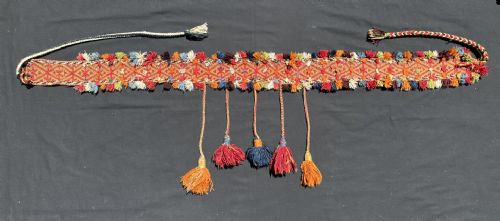
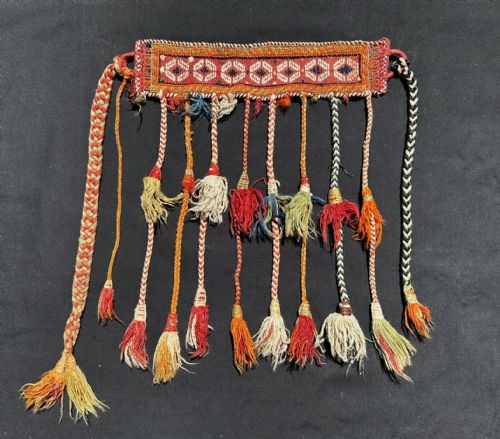
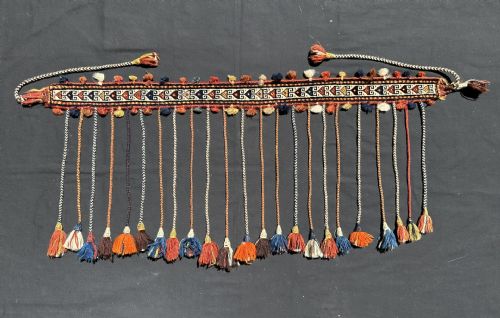
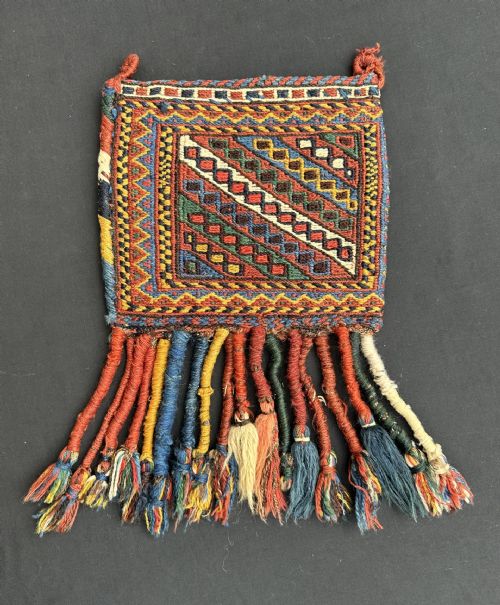
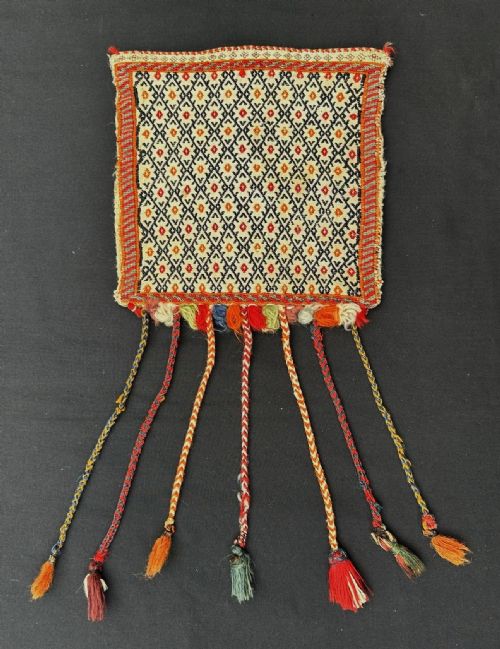
A tribal wool tassel hanging typically originates from nomadic and semi-nomadic groups across Persia, Afghanistan, and Central Asia, taking forms such as utility bags, animal trappings, tent decorations, and horse blankets. These items served functional roles in daily nomadic life before finding a place as decorative wall textiles.
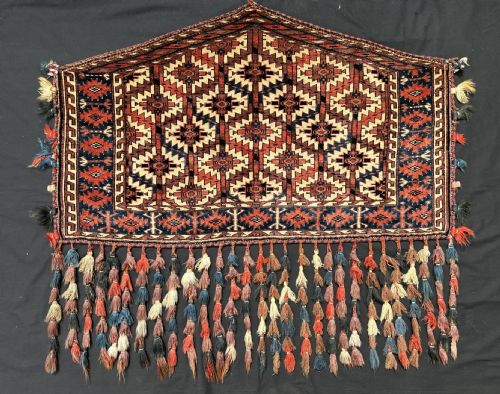
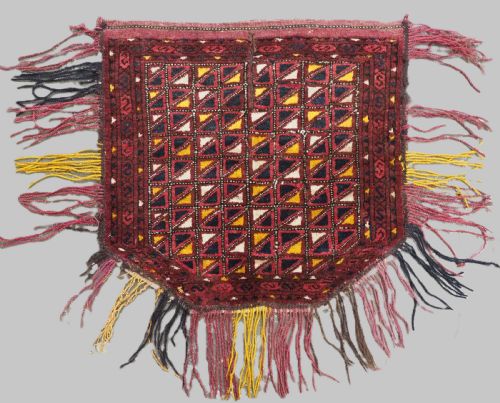
The pieces available on this page stem from late nineteenth and early twentieth century periods, reflecting the traditional craft of groups including the Qashqai, Yomut, Baluch, Afshar, and Lakai Uzbeks. Buyers encounter functional pouches, saddle covers, asmalyks, and spindle bags adapted for display.
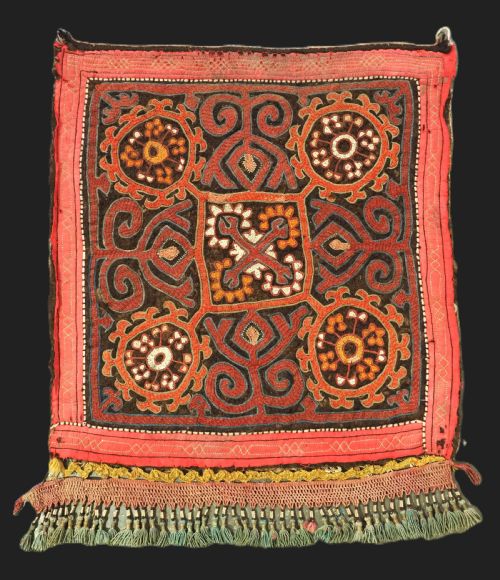
Each object embodies the distinct regional weaving and decorative traditions of its makers, whether from the Fars province of Persia or the steppes of Turkmenistan. The inclusion of original tassels and fringes defines the visual character of these historic textiles.
How they were made
The foundation of these pieces relies heavily on hand-spun wool and cotton, often coloured using natural dyes that yield deep, enduring hues over decades of use. Silk embroidery and wool pile provide texture and contrast against flat-woven grounds.
Makers embellished the textiles with applied fringes, horse hair, glass beads, and leather elements to create dynamic surface variation. Felt panels and wool grounds received meticulous needlework, as seen in the embroidered felt pieces from Kyrgyzstan.
Nomadic weavers constructed utility pouches and tent trappings with structural durability in mind, utilising dense knotting, flat-weave techniques, and secure attachments for tassels and hanging loops.
Listings span periods from the eighteen-seventies to the nineteen-thirties, incorporating materials like silk, felt, leather, and glass beads.
What varies in quality
The integrity of the wool and the vibrancy of the natural dyes distinguish superior examples, as does the complexity of the tribal design pattern. Well-preserved pieces retain their original structure and full complements of hanging elements without heavy restoration.
The fineness of the weave and the precision of the embroidery or pile work indicate the skill of the individual maker within a specific tribal group. Rich detail in minor motifs and secure attachment of tassels reflect a higher standard of craftsmanship.
The Tribal Wool Tassel Hanging Glossary
- Asmalyk
- A large, pentagonal trapping made by Turkmen tribes, traditionally used to decorate the flanks of a bridal camel during wedding processions. These pieces often feature elaborate geometric patterns and heavy tassel work.
- Torba
- A small storage bag produced by nomadic groups in Central Asia and Persia, designed for use inside a tent or yurt. They display characteristic tribal motifs and flat-weave or pile structures.
- Namakdan
- A traditional salt bag woven by nomadic tribes such as the Baluch, featuring a narrow neck and expanded body for storing rock salt. These utilitarian items demonstrate intricate weaving techniques and decorative fringes.
Tribal Wool Tassel Hanging: Frequently Asked Questions
What is a tribal wool tassel hanging used for?
These items originated as functional nomadic objects, including storage pouches for household goods, animal trappings for horses and camels, and tent decorations. Nomadic groups utilised them within portable dwellings for practical storage and ceremonial display.
Today, collectors mount these textiles on walls to display their historical weaving, natural dyes, and tactile tassel details. They serve as focal points in interior spaces that celebrate traditional textile art.
How do I care for an antique wool hanging?
Protect the textile from direct sunlight to prevent natural dye fading and keep the wool fibres from drying out over time. Gentle vacuuming through a mesh screen helps remove dust without disturbing delicate tassels or embroidery.
Avoid hanging the piece in areas of high humidity or moisture, which can damage natural animal fibres. Consult a specialist in antique textiles if cleaning becomes necessary.
Where do these tribal textiles come from?
The pieces originate primarily from regions across Persia, Afghanistan, and Central Asia, created by specific nomadic confederacies and tribes. Areas such as the Fars province, the Trans-Caspian steppes, and Uzbekistan produced distinct regional styles.
Different tribal groups, including the Yomut, Qashqai, Baluch, and Lakai Uzbeks, developed recognizable palettes, motifs, and construction methods tied to their geography.
How can I tell which tribe made a hanging?
Attribution relies on the specific combination of structural techniques, colour palettes, and characteristic motifs employed in the weave. For instance, Yomut Turkmen pieces often feature distinct göl motifs and asmalyk shapes, while Qashqai works display Fars province design traits.
Examining the materials, such as the use of Mogul red wool grounds or specific embroidery styles, helps narrow down the origin to particular groups like the Lakai or Afshar.