


Antique Transferware Tureen
An antique transferware tureen brings the rich pictorial scenes of nineteenth-century ceramic production directly to the table.
Antique Transferware Tureen
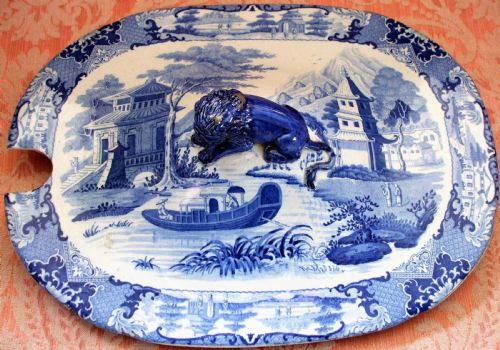
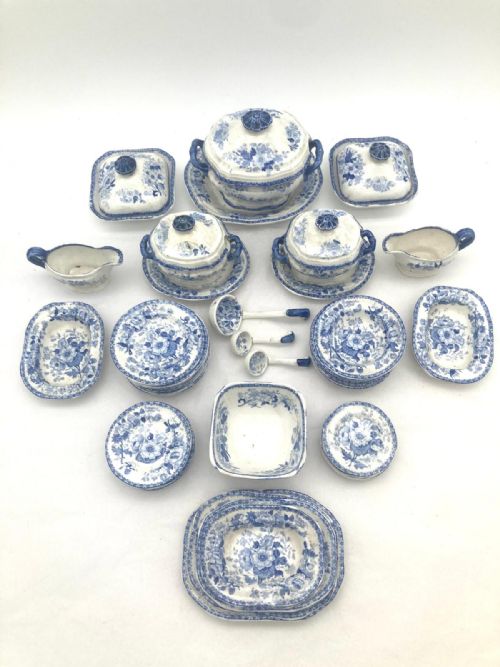
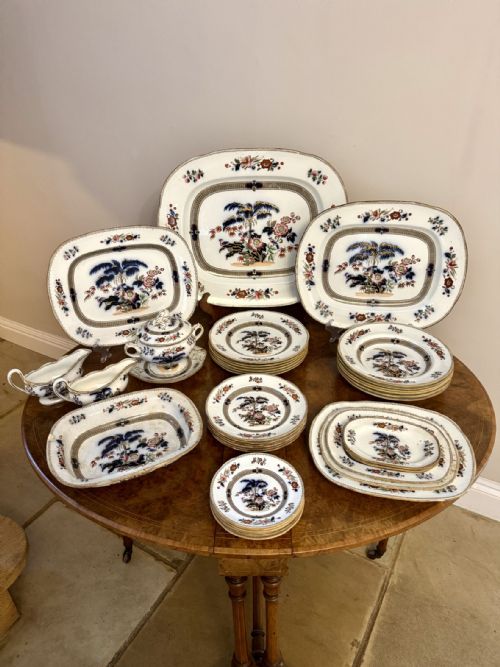
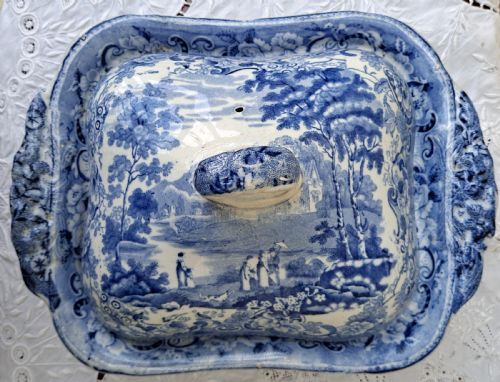
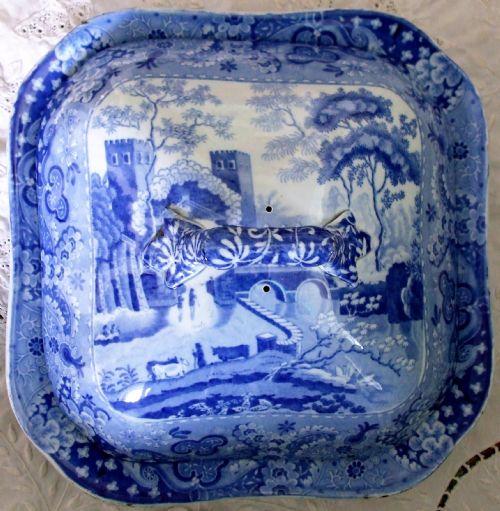
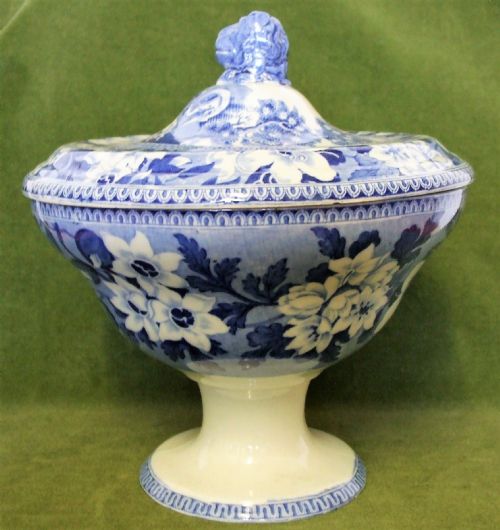
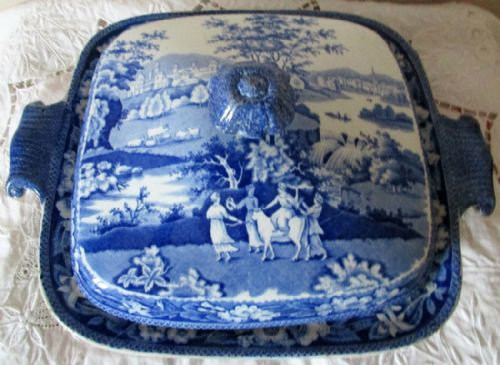
An antique transferware tureen serves as a vessel for soup, vegetables or sauce, manufactured during the Georgian and Victorian periods. Buyers will discover lidded vegetable tureens, smaller sauce tureens with stands, and complete child's services featuring blue and white printed designs.
The objects stem from English potteries working through the nineteenth century, utilising earthenwares, pearlware, creamware and ironstone. Pastoral views, classical ruins and orientalist motifs dominate the surface decoration of these table pieces.
Most examples found on this page date from the Georgian era up to the late Victorian period. They range from diminutive child's service pieces to large serving vessels complete with matching covers and ladles.
How they were made
Potters formed the body from ceramic materials such as earthenware, creamware, pearlware or ironstone, shaping them into tureens, covers and stands. Once shaped and biscuit fired, the vessel received its printed decoration.
Engraved copper plates transferred blue pigment onto tissue paper, which workers then applied by hand onto the porous ceramic surface before glazing and firing in the kiln. This copperplate transfer method allowed complex patterns like rural scenery and botanical motifs to be repeated with precision.
Listings feature eighteenth and nineteenth-century materials including creamware, pearlware, ironstone and earthenware decorated with blue transfer prints.
What varies in quality
The crispness of the transfer print defines the visual success of the piece, separating clear, deep blue applications from blurred or smeared patterns. The refinement of the ceramic body, whether delicate pearlware or heavier ironstone, also dictates the grade of the tureen.
Completeness alters the standing of a tureen, as matching covers, stands and ladles intact with the base elevate the piece. The skill of the original pottery and the depth of the modelled handles and feet further distinguish standard production from superior examples.
Robert Hamilton·Minton·Wedgwood·James Wallace and Co·J and R Clews·John Rogers and Son·John and Richard Riley·Ridgway·Spode·Copeland and Garrett·Doulton Burslem
The Antique Transferware Tureen Glossary
- Transferware
- Ceramic pottery decorated by pulling a design from an engraved copper plate onto tissue paper and pressing it onto the unglazed clay. This technique enabled intricate pictorial patterns to be mass-produced in blue and other colours during the nineteenth century.
- Pearlware
- A refined earthenware body developed by Josiah Wedgwood, featuring a bluish glaze that pooled in crevices to mimic Chinese porcelain. It forms the base for many early nineteenth-century blue and white printed vessels.
- Creamware
- A light-coloured earthenware perfected in the eighteenth century with a warm yellow-toned lead glaze. It served as a primary canvas for early printed tablewares.
- Ironstone
- A dense, durable type of heavy earthenware patented in the nineteenth century to withstand hard domestic use. It provides a sturdy white body for large serving tureens and dinner services.
- Flow blue
- A style of nineteenth-century transfer printing where vapours were introduced into the kiln to deliberately blur the cobalt blue design into the surrounding white glaze. The resulting effect gives the pattern a misty, bleeding appearance.
Antique Transferware Tureen: Frequently Asked Questions
What was an antique transferware tureen used for?
These tureens served hot food at the nineteenth-century dining table, holding soups, vegetables or sauces for guests. Larger pieces sat centrally on the table with matching covers to retain heat.
Smaller sauce tureens often included integrated stands and ladles for serving condiments. They formed part of larger dinner services intended for formal dining.
How do I date an antique transferware tureen?
Dating relies on identifying the ceramic body, such as early creamware or pearlware versus later ironstone, alongside the style of the printed transfer. Maker marks stamped or printed on the base provide specific attribution to nineteenth-century potteries.
The shape of the handles, the richness of the blue pigment and registration marks also help narrow the decade of manufacture.
How do I display an antique tureen at home?
Tureens sit well on sideboards, dining tables or open dresser shelves where their blue and white transfer patterns can be appreciated. Displaying the base with the cover slightly offset reveals the interior print and form.
Matching stands and ladles can be arranged alongside the main vessel to showcase the complete set together.
Are transferware tureens safe for everyday use?
While manufactured as functional tableware, nineteenth-century ceramics contain historical glazes that are best preserved through careful handling rather than daily dining. Hand washing in warm water protects the earthenware body and the delicate blue transfer print.
Displaying them as decorative objects prevents modern detergents and dishwashers from damaging the historic glaze.