



Antique Transferware Basin
These antique transferware basin pieces bring printed ceramic pattern and generous utility to a room, offering the bold blue and white design collectors prize.
Antique Transferware Basin
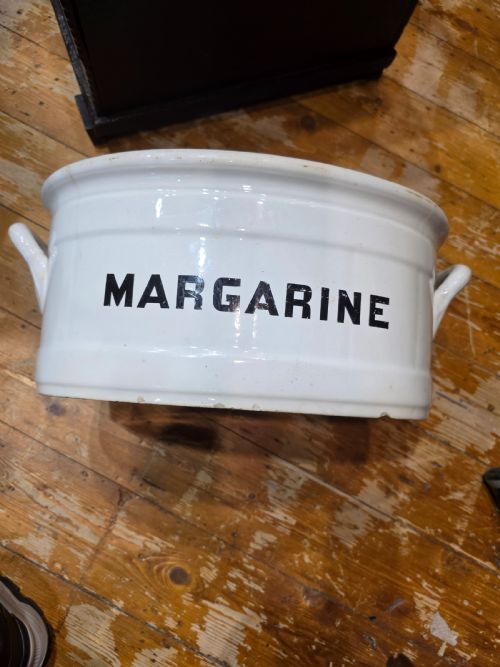
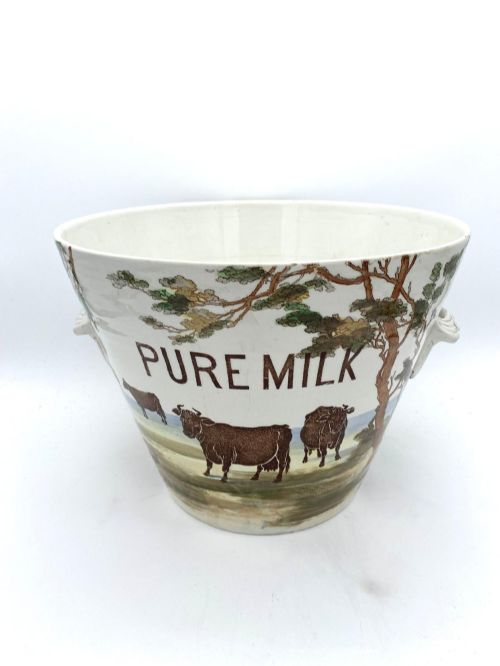
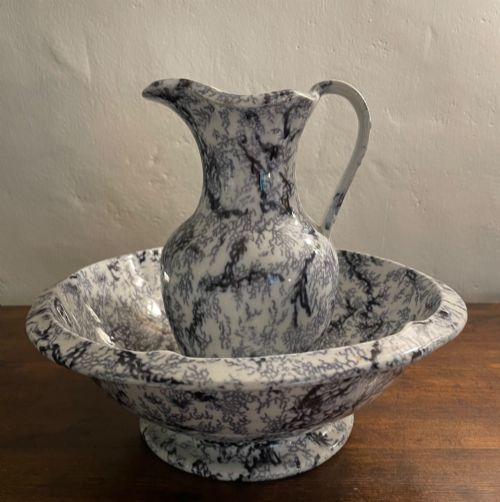
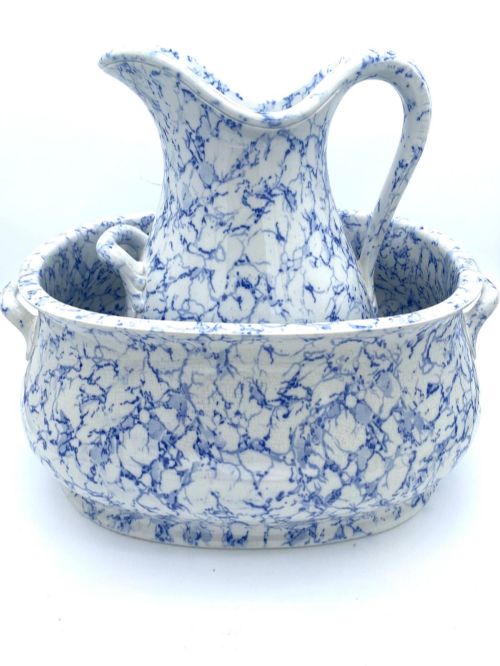
An antique transferware basin spans large footbaths, wash jugs, and complete bathroom sets made in the nineteenth century. The examples met on this page range from early nineteenth-century footbaths to Edwardian washstand sets.
Makers produced these ceramic vessels for personal hygiene and washing routines before indoor plumbing became common. Today, buyers encounter them as large decorative bowls, footbaths, and coordinated pitcher and basin sets.
The style draws on periods from Georgian and Regency through Victorian and Edwardian eras. Staffordshire potteries and firms like Minton and Doulton Burslem dominate the origins seen here.
How They Were Made
Potters formed these pieces in earthenware and pearlware, applying transfer-printed designs in blue, flow blue, or mulberry. Artisans then finished the ceramic bodies with a clear glaze to protect the printed pattern.
Certain vessels received additional embellishment such as gilt or gold leaf highlights, or featured moulded details like lion mask handles. Kiln firing fixed the earthenware body and the transfer-printed pigment together permanently.
Antique Transferware Basin Retail Price Guide 2026
Typical asking prices for transferware basin among the pieces listed under this phrase on Sellingantiques today, from the lower quarter to the upper quarter. They describe what is for sale here now, not the wider market.
Some nineteenth-century footbaths disguised themselves as classical urns so Victorian guests could soak their tired feet in neoclassical style.
What Varies in Quality
The crispness of the transfer print and the depth of the blue or mulberry pigment separate standard pieces from finer works. Rich flow blue printing and complex patterns show superior control in the kiln.
Maker attribution to notable potteries like Minton, Spode, or Doulton Burslem elevates a piece above anonymous Staffordshire production. The inclusion of matching jugs, liners, or complete bathroom sets alters the desirability of the basin.
Minton·Ridgway·Doulton Burslem·Spode·Heathcote
The Antique Transferware Basin Glossary
- Transferware
- Earthenware decorated by applying a printed design from a copper plate onto tissue paper and transferring it to the ceramic body. This technique allowed intricate pictorial scenes to be produced in quantity.
- Flow Blue
- A nineteenth-century style of transfer printing where the cobalt blue pigment intentionally bled into the surrounding glaze during firing. This created a hazy, atmospheric effect highly sought after by collectors.
- Pearlware
- A refined earthenware developed in the late eighteenth century with a slightly bluish glaze that pooled in recesses to mimic Chinese porcelain. It forms the body of many early nineteenth-century pieces.
- Footbath
- A large, oval ceramic vessel designed for soaking feet, often fitted with handles. These deep basins frequently feature bold blue and white transfer patterns.
- Wash Set
- A coordinated group of ceramic vessels for the bedroom washstand, typically comprising a large basin, a water jug, and smaller accessories. Complete sets preserved together are particularly notable.
Antique Transferware Basin: Frequently Asked Questions
How were antique transferware basins used?
These large ceramic vessels served practical washing and bathing purposes in nineteenth-century bedrooms before plumbed bathrooms existed. Water jugs and basins formed part of washstand sets for daily personal hygiene, while footbaths accommodated seated bathing.
The transfer-printed scenes provided decorative appeal in domestic interiors alongside their daily utility. Today, their generous scale and strong patterns suit repurposing as planter bowls or decorative display pieces.
How do I date an antique basin?
Dating relies on stylistic markers, ceramic bodies, and maker marks stamped or printed on the underside. Pieces span the Georgian, Regency, Victorian, and Edwardian periods.
Early nineteenth-century examples often use pearlware bodies with deep blue transfer prints, while later Victorian and Edwardian sets show different glaze formulations and bolder registry marks. Comparing the pattern style to documented manufacturer timelines narrows the decade of production.
What is flow blue transferware?
Flow blue is a distinct type of transfer-printed pottery where the cobalt pigment blurred into the surrounding white glaze during the kiln firing. Potters achieved this by introducing volatile substances into the kiln atmosphere.
The resulting soft, hazy outline gives the printed landscape or floral design a painterly, atmospheric quality. This technique reached peak popularity during the Victorian era.
Are wash sets found complete?
Complete wash sets comprising both the large basin and the matching water jug do survive from the Victorian and Edwardian periods. Finding multiple pieces that share the same pattern and maker remains possible.
Many basins and jugs became separated over decades of use, meaning individual pieces appear on the market just as often as matched sets. Collectors value matched multi-piece sets for their display impact.