


Antique Tortoiseshell Timepiece
An antique tortoiseshell timepiece brings rich organic warmth and precise mechanics together on a mantel or desk.
Antique Tortoiseshell Timepiece
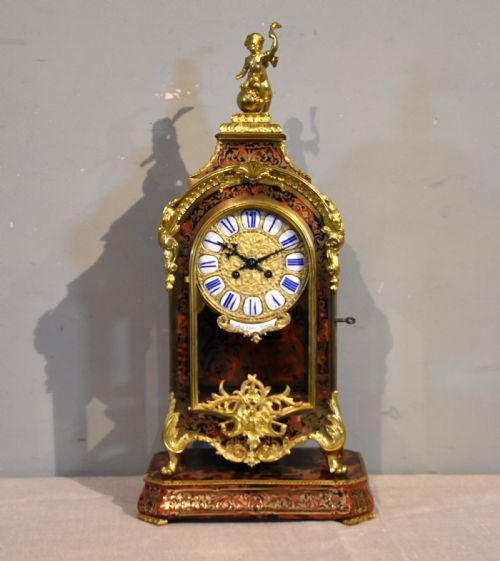
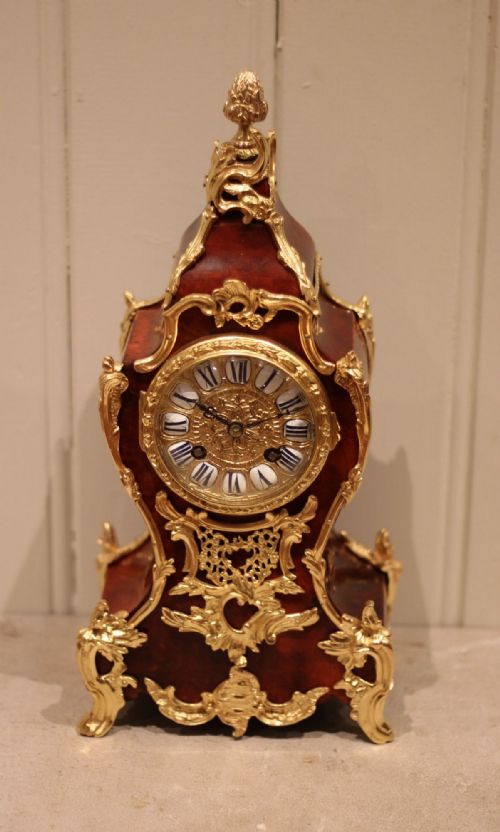
An antique tortoiseshell timepiece sits among mantel clocks, desk clocks, and boudoir clocks designed to keep time while serving as decorative centrepieces. The version most commonly met on this page is the French Boulle clock, often richly ornamented with cut brass inlay.
The selection spans the nineteenth century, including Regency, Victorian, and Edwardian periods, alongside pieces dating around eighteen-eighty to nineteen-thirty. Forms range from waisted mantel clocks and bracket clocks to miniature carriage clocks and boudoir pieces.
Makers and workshops across France and Britain produced these works, utilising distinct regional styles such as French Rococo Revival, Louis XV Revival, and Napoleon III. Collectors encounter both genuine tortoiseshell and faux tortoiseshell variants paired with silver, ormolu, and brass.
How they were made
Maker workshops built the carcasses of these clocks using wood before applying plates of tortoiseshell or faux tortoiseshell to the exterior surfaces. Artisans frequently employed Boulle marquetry techniques, cutting intricate brass patterns to fit flush against the dark shell backing.
Metal components such as ormolu, brass, and silver were cast, chased, and gilded to frame the dials, feet, and finials. Enamel featured prominently on clock faces for legible numerals, protected beneath fitted glass lenses within the metal bezels.
One petite boudoir clock carries a sporting provenance, presented formally by Sporting Sketches in the late nineteenth century.
What varies in quality
The execution of the brass inlay work separates standard domestic examples from master-level pieces, with finer Boulle clocks showing seamless integration between the metal and the translucent shell. Precision in the chasing of ormolu mounts and the crispness of enamel dials further define the upper tier.
The complexity of the clock movement, such as single fusee mechanisms by noted makers, dictates the mechanical standing of the piece. Preservation of the tortoiseshell veneer without extensive shrinkage or repair maintains the visual integrity of the case.
William Comyns·J Batson & Son·William Hardy London·A.D. Mougin
The Antique Tortoiseshell Timepiece Glossary
- Boulle
- A form of marquetry developed in France using tortoiseshell and brass inlaid together. This technique creates a tortoiseshell ground with brass ornament, or its reverse known as contre-partie.
- Ormolu
- Gilded bronze used extensively for decorative mounts on nineteenth-century clock cases. The finish provides a rich gold-coloured metallic contrast against dark tortoiseshell.
- Fusee
- A conical pulley used in spring-driven clocks to maintain even power delivery as the mainspring unwinds. This mechanism ensures more accurate timekeeping throughout the running cycle.
- Bracket clock
- A portable clock designed originally to sit upon a wall bracket or a dedicated shelf. Many examples retain their original matching wall brackets.
- Carriage clock
- A small, spring-driven timekeeper equipped with a carrying handle, originally made for travel. These pieces often feature glass panels exposing the escapement within an ormolu frame.
Antique Tortoiseshell Timepiece: Frequently Asked Questions
How do I care for a tortoiseshell clock?
Keep the timepiece away from direct sunlight and excessive heat sources to prevent the organic shell veneer from warping or drying out. Dust the surface gently with a dry microfibre cloth and avoid using harsh chemical polishes on the shell or ormolu mounts.
Ensure the mechanical movement is serviced periodically by a professional horologist to maintain proper lubrication and timekeeping accuracy.
What is the difference between a timepiece and a clock?
In traditional horological terms, a timepiece is a clock that simply indicates the time without including a striking mechanism or chiming train. Many mantel and boudoir pieces function purely as timepieces.
Clocks with striking trains contain additional gear trains and hammers to ring the hours and sometimes quarters, requiring more complex internal setups.
How do I date a tortoiseshell clock?
Dating relies on examining the style of the case, such as Regency lines or French Rococo Revival curves, alongside any maker signatures on the dial or movement. Materials like ormolu casting styles and enamel face construction also point to specific decades within the nineteenth and early twentieth centuries.
Engraved inscriptions or presentation plaques on the brass elements frequently provide a precise historical anchor for the manufacture date.
Where were most Boulle clocks made?
The majority of Boulle tortoiseshell clocks originating in the nineteenth century were produced in Parisian workshops following earlier Louis XV traditions. French makers refined the combination of tortoiseshell and cut brass inlay for an international clientele.
English firms also adopted these decorative techniques, producing notable bracket clocks and mantel timepieces during the Victorian and Edwardian eras.