







Antique Timber Wall Brackets
These antique timber wall brackets range from sturdy oak corbels to gilt wood capitals, holding architectural weight and display ledges with historic presence.
Antique Timber Wall Brackets
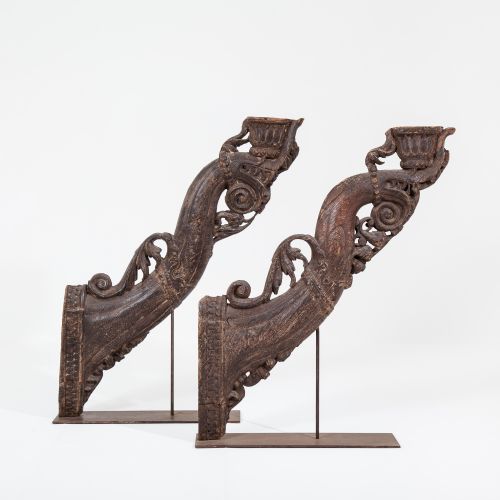
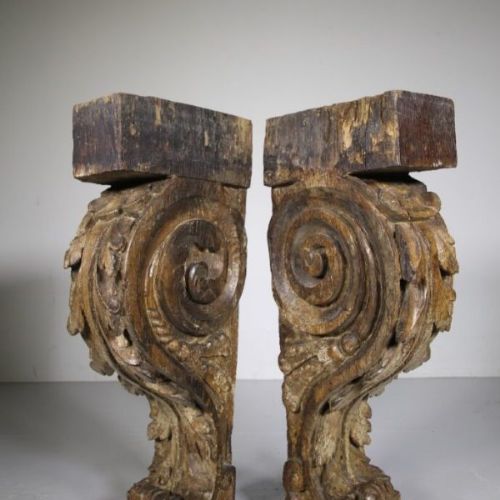
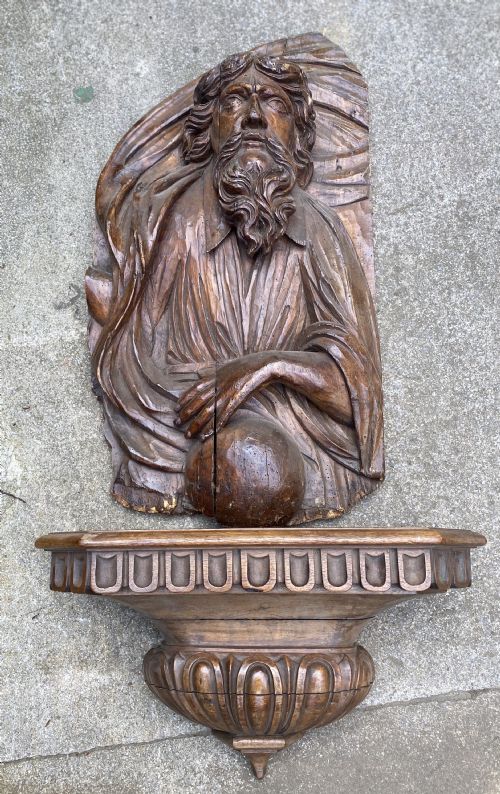
When searching for antique timber wall brackets, buyers encounter a diverse grouping of architectural salvage, structural supports, and wall-mounted display pieces spanning multiple centuries. The selection on this page demonstrates that these items extend well beyond simple shelving supports, encompassing carved wooden corbels, capitals, and architectural fragments.
The most prevalent examples include substantial carved oak pieces from the seventeenth and eighteenth centuries alongside later Victorian and Continental iterations. Many items serve secondary functions as sconces, clock brackets, or mirror supports, reflecting how architectural elements were repurposed for interior display.
Origins vary across British, French, and Italian workshops, displaying stylistic influences ranging from Baroque and Georgian to Italian Rococo Revival and French Chateau designs. Buyers select these fixtures to introduce authentic period texture, sculptural depth, and historical gravitas to vertical wall spaces.
How they were made
The construction of these pieces relies primarily on traditional woodworking techniques applied to dense timbers such as oak, walnut, and pine. Artisans shaped these materials using hand chisels and gouges to achieve high-relief carvings of figures, acanthus leaves, and classical Corinthian capitals.
Surface treatments frequently involve gesso application followed by silver leaf or gilding, particularly on Continental and later nineteenth-century pieces. Iron fixings and structural mounts were commonly integrated to secure the heavy timber brackets safely to masonry or lath and plaster walls.
Listings feature oak, walnut, and pine pieces spanning from the seventeenth century through the Victorian era, alongside gilt wood and iron elements.
What varies in quality
Quality in antique timber wall brackets is determined by the depth, sharpness, and anatomical accuracy of the hand carving. Pieces featuring crisp relief work and spirited figural representations stand apart from mechanically produced or heavily worn examples.
The integrity of the original timber surface and the survival of early gilding or gesso finishes dictate the desirability of a piece. Structural stability and the preservation of original mounting points also influence the overall standard of each bracket.
The Antique Timber Wall Brackets Glossary
- Corbel
- A projecting bracket of stone, wood, or metal that supports a weight above it. In timber examples, these often feature elaborate figural or scroll carvings.
- Capital
- The uppermost member of a column or pilaster, frequently adapted as a wall bracket. They display classical orders such as Corinthian leaf motifs.
- Gesso
- A plaster-based mixture used as a smooth surface for painting or gilding on wood. It provides the reflective base for silver leaf applications.
- Fusee
- A conical pulley used in clockwork to ensure even tension as the mainspring unwinds. This mechanism appears in specialised wall clock brackets.
- Architectural salvage
- Building materials and decorative elements rescued from older structures for reuse. Many wall brackets originate from dismantled historic interiors.
Antique Timber Wall Brackets: Frequently Asked Questions
How do I mount an antique timber wall bracket safely?
Heavy wooden brackets require secure fixing directly into wall studs or solid masonry using appropriate steel screws andrawl plugs. The original iron mounting points should be assessed by a professional to ensure they can support the weight of the timber.
Lighter decorative capitals and carved panels may utilise modern internal brackets or concealed keyhole fixings designed to sit flush against the wall surface without damaging the historic wood.
What is the difference between a corbel and a bracket?
A corbel is specifically a solid block of timber or stone projecting from a wall to bear a heavy structural load, often featuring substantial depth. Brackets can describe a broader category of wall supports that are lighter or more decorative in execution.
Within historic interiors, corbels usually display more robust figural or architectural carving, whereas brackets may include functional shelves, clock rests, or sconce arms.
How should I clean historic carved wood?
Historic carved timber surfaces should be cleaned strictly with a dry, soft-bristled brush to remove accumulated dust from deep recesses. Water, harsh detergents, and modern chemical polishes must be avoided to prevent damage to aged wood and delicate gilding.
Microbial growth or stubborn grime requires evaluation by a conservation specialist who can apply appropriate treatments without stripping the historical patina.
Can these brackets support heavy objects?
Solid oak and walnut brackets from earlier centuries possess significant structural strength capable of supporting substantial weight if properly anchored to a wall. However, suitability depends entirely on the condition of the individual piece and the integrity of its joints.
Pieces with delicate applied gesso, silver leaf, or intricate openwork carving are generally intended for decorative display rather than weight-bearing utility.