

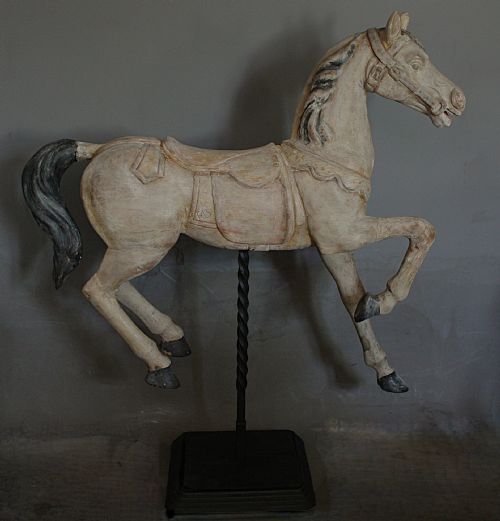


Antique Timber Rocking Horse
An antique timber rocking horse brings centuries of playroom character straight into a modern sitting room.
Antique Timber Rocking Horse
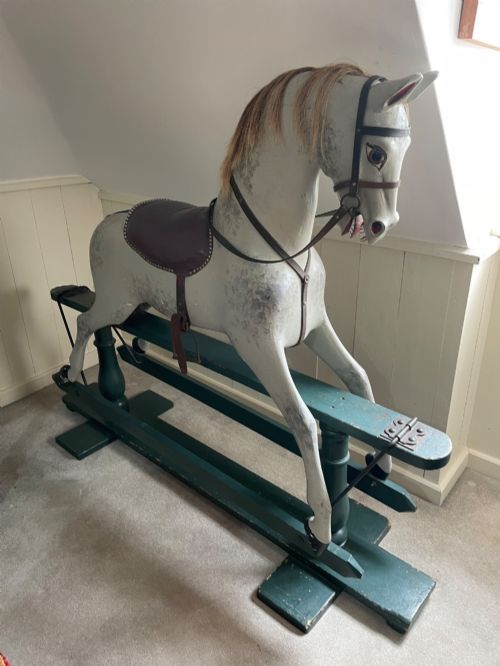
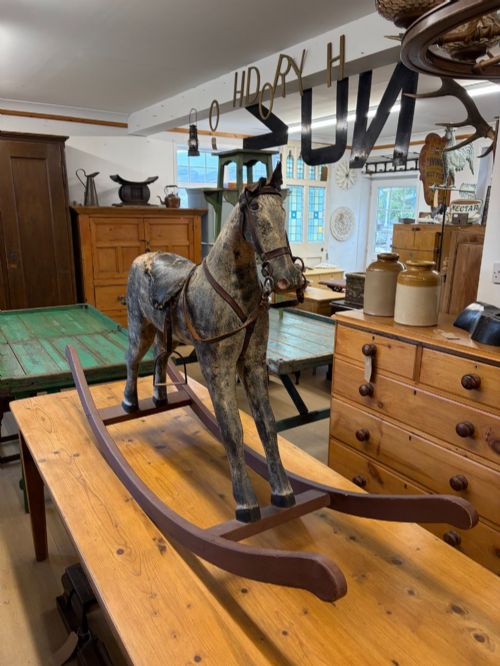
Every antique timber rocking horse on this page represents a distinct chapter of children's furniture and folk art history. The examples span the nineteenth century through the early decades of the twentieth century, capturing various interpretations of the form. Buyers encounter both utilitarian nursery toys and decorative wooden sculptures shaped by skilled hands.
The pieces appearing here lean heavily into traditional craftsmanship, showcasing works from the Victorian era and regional folk traditions. Makers utilised solid timbers, applying paint and leather details to bring each animal to life. These horses range from substantial workshop-made swings on stands to naive primitive carvings.
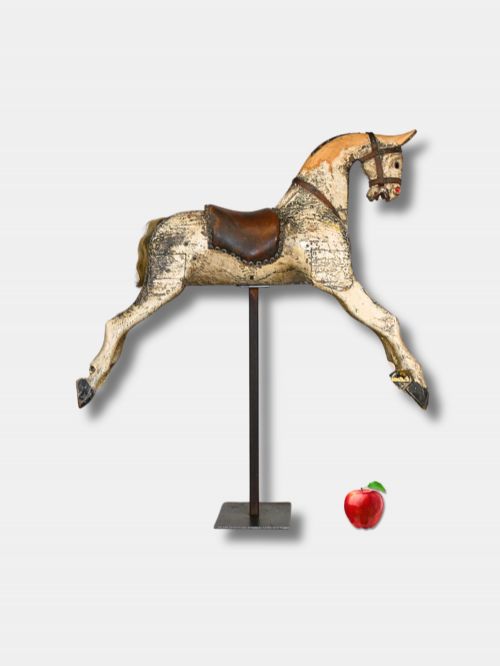
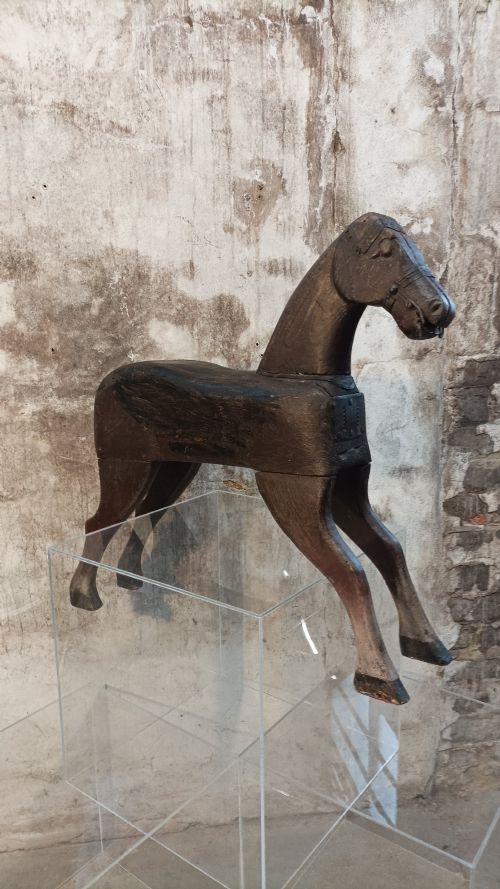
The selection includes specific regional identities, such as Anglo-Indian folk art pieces alongside English works. Certain forms function strictly as decorative sculptures, while others retain their traditional rocking mechanisms. Every horse demonstrates the distinct wear of past play and long preservation.
Construction and materials
Makers constructed these figures primarily from carved wood and pine, forming the core bodies and swing stands. Iron and general metal components reinforced the rocking mechanisms and structural joints. These sturdy materials ensured the toys survived generations of heavy use.
Makers applied original paint layers to finish the wooden surfaces, often complemented by horsehair manes and tails. Genuine leather elements frequently appeared in the tack, saddles, and bridles. This combination of carved timber and organic textiles gave each horse its realistic texture.
Antique Timber Rocking Horse Retail Price Guide 2026
Typical asking prices for timber rocking horse among the pieces listed under this phrase on Sellingantiques today, from the lower quarter to the upper quarter. They describe what is for sale here now, not the wider market.
A good primitive horse watches the room with wide, hand-carved eyes that have supervised a century of nursery secrets.
Assessing quality
Quality rests upon the depth of the carving and the preservation of the original surface paint. Pieces with detailed facial expressions and well-defined anatomical forms stand apart from simpler, highly naive carvings. The integrity of the wooden structure underpins the overall merit of the piece.
The survival of early components, such as genuine horsehair and original leather tack, elevates a piece significantly. Workshop attribution, particularly to notable makers of the period, adds historical weight. Pieces retaining their original stands demonstrate greater completeness than loose sculptures.
The Antique Timber Rocking Horse Glossary
- Folk Art
- Objects created within a traditional culture by self-taught or local artisans rather than professional academic sculptors. These pieces often display a charming, unpretentious disregard for strict proportion.
- Primitive
- A descriptive term for early items showing simple construction methods and unrefined artistic execution. Such objects rely on direct, robust forms rather than intricate detail.
- Original Paint
- The earliest surviving decorative surface applied by the maker, untouched by later modern retouching. Collectors prize this layer for its authentic historical patina.
- Carved Wood
- Material shaped by cutting and chipping timber into a three-dimensional sculptural form. This method defines the primary body of every horse listed here.
- Stand
- The supportive wooden or iron frame upon which the rocking mechanism operates. Many nineteenth-century horses required these sturdy floor bases to sustain their motion.
Antique Timber Rocking Horse: Frequently Asked Questions
Are these horses safe for children to ride?
Most antique timber rocking horses function better as decorative sculptures or historical display items than as active playthings. Their aged wooden structures and historical paint layers require careful preservation.
Buyers intending frequent use should inspect the stability of the stand and the internal joints. Gentle handling ensures these fragile historical artefacts survive without sustaining new damage.
What is folk art style?
Folk art encompasses items made by traditional craftspeople outside the formal academic art traditions. These pieces embody regional tastes and practical utility rather than strict artistic rules.
In rocking horses, this style manifests as charmingly bold proportions and straightforward carving techniques. Every artisan brought personal interpretation to the animal's expression.
How should I care for painted wood?
Preserving the surface requires keeping the horse away from direct sunlight and steady moisture fluctuations. Dusting gently with a dry, soft cloth prevents grime accumulation without harming the finish.
Avoid using modern chemical polishes or water on historic paint layers. Maintaining a stable indoor environment protects both the timber and the original pigments.