

Antique Timber Hall Chair
An antique timber hall chair offers a striking statement for an entranceway, combining sturdy construction with distinct period character.
Antique Timber Hall Chair
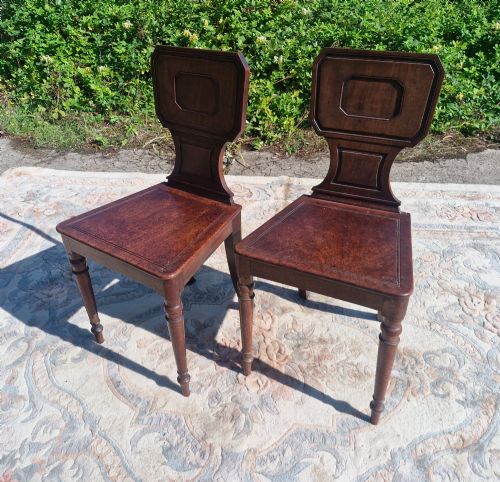
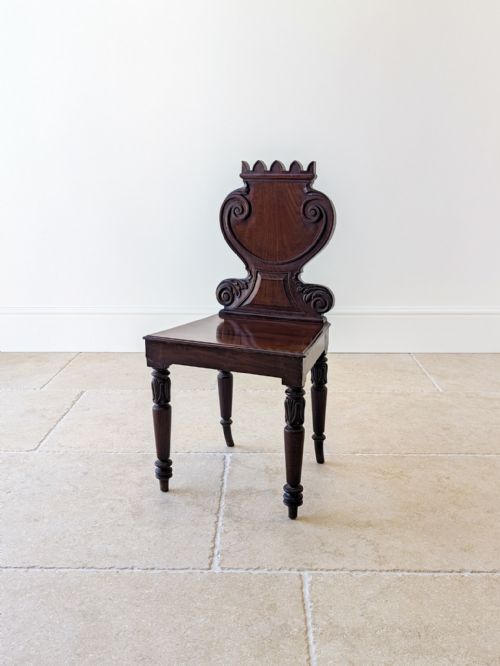
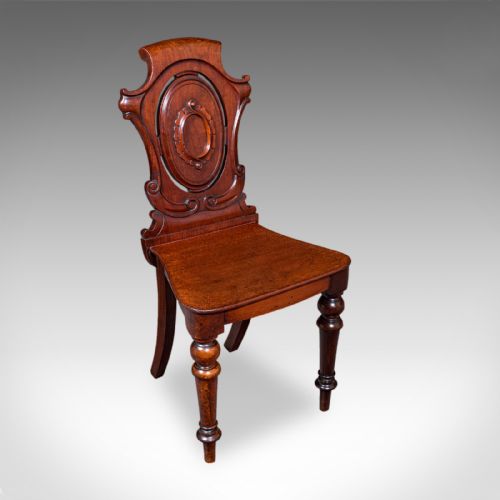
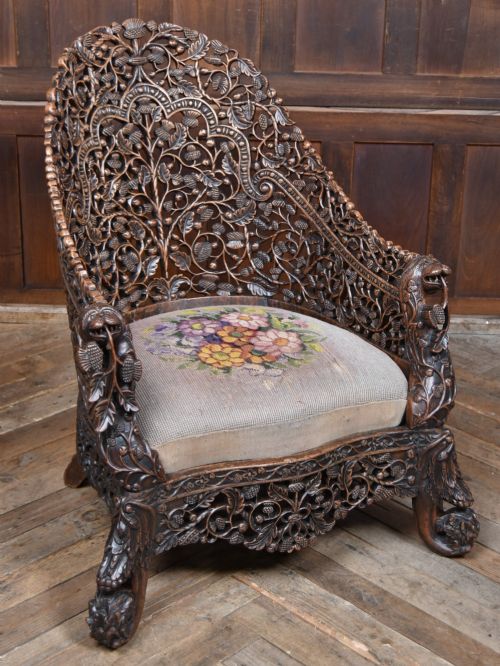
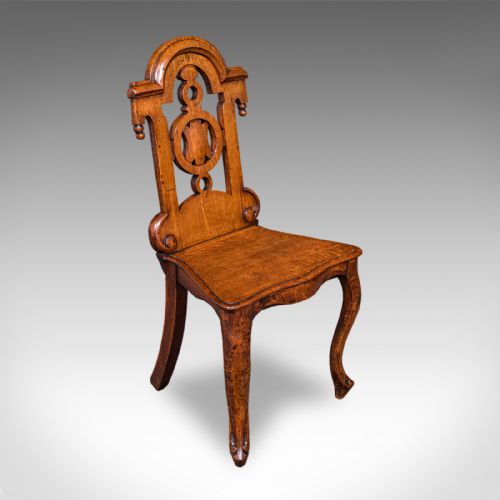
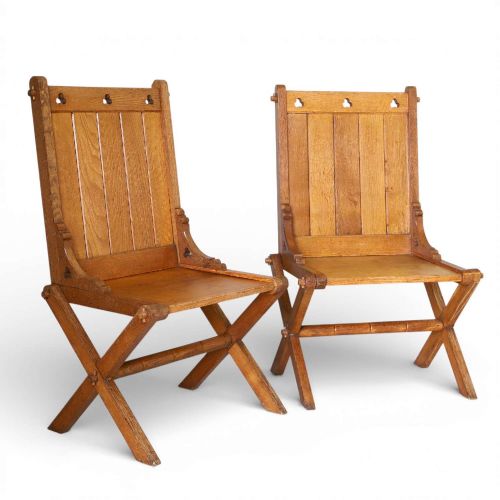
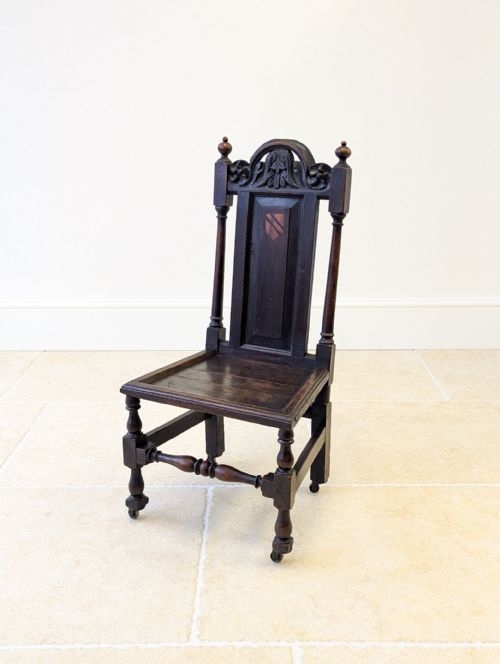
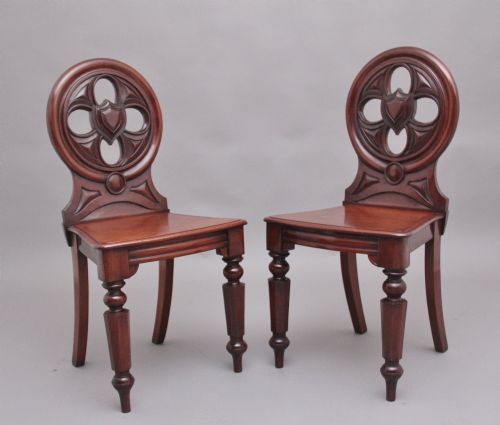
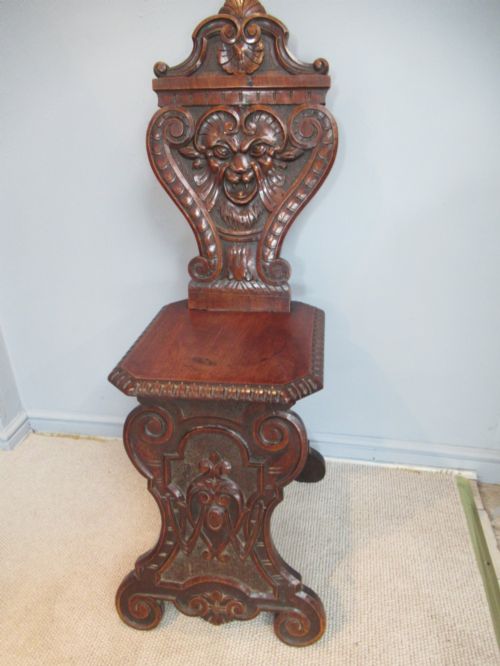
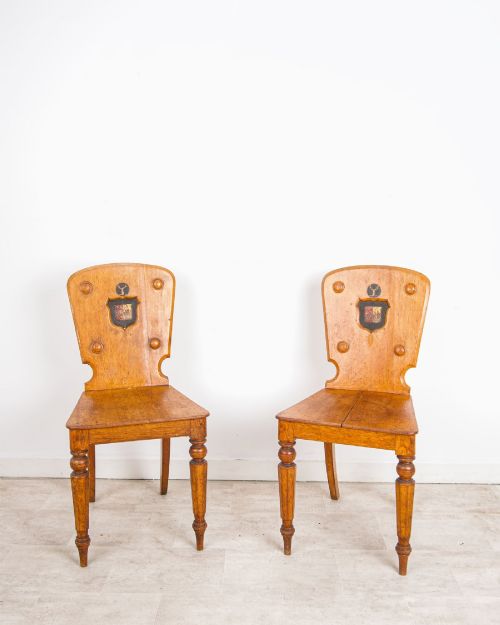
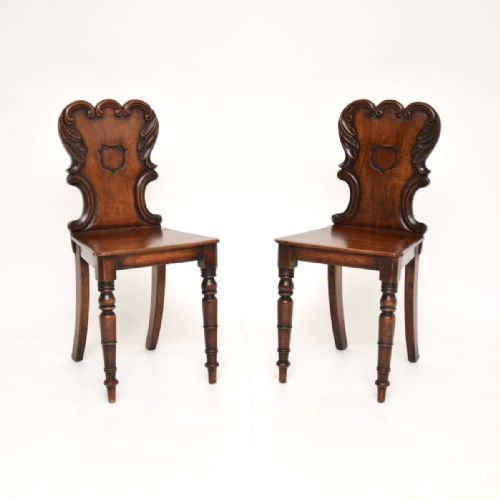
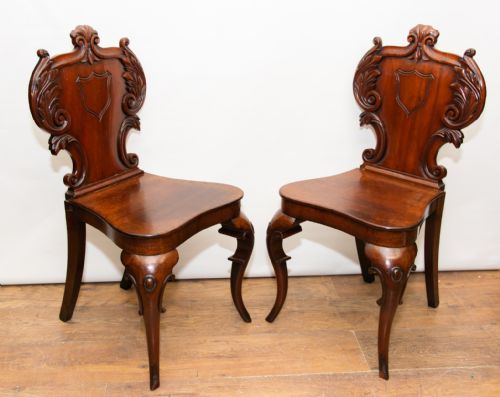
An antique timber hall chair is a rigid, upright seat traditionally placed in a grand entrance hall or reception room rather than used for long periods of sitting. These pieces often feature solid wood seats, carved or shield-shaped backs, and occasional armorial details intended to display family lineage or status to arriving guests.
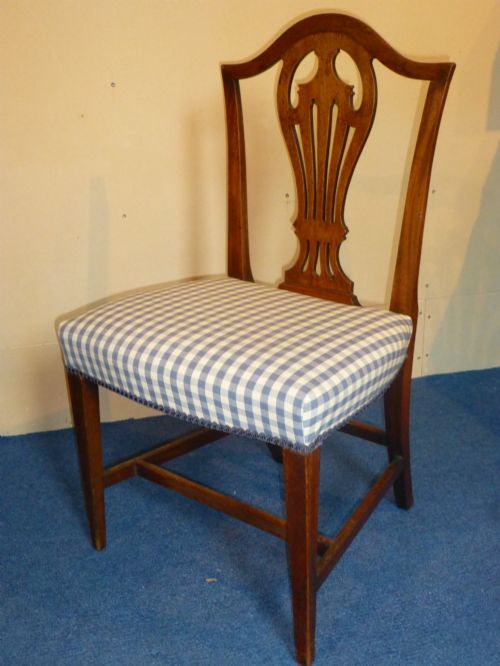
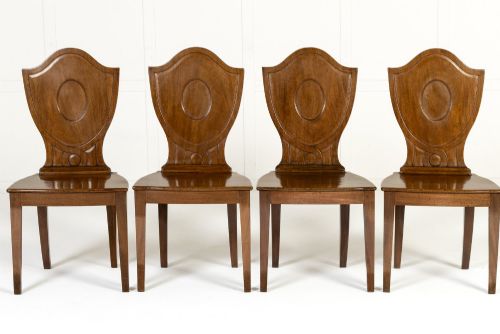
The selections available here span several distinct eras, with Victorian and Regency interpretations appearing most frequently alongside earlier Georgian and William IV examples. Mahogany and oak dominate the forms, frequently shaped into shield backs or panelled designs that reflect the prevailing architectural tastes of their respective centuries.
Beyond standard single seats, buyers encounter matched pairs and larger sets alongside occasional variants incorporating Gothic Revival or Jacobean influences. These functional seats bridge the gap between utilitarian hallway furniture and decorative art.
Materials and construction methods
Cabinet makers utilised dense timbers such as mahogany, oak, walnut, and fruitwood to construct these rigid seats, ensuring they could withstand heavy daily use in busy corridors. These woods were often turned, carved by hand, or polished to a deep sheen that highlighted the natural grain.
Joinery techniques relied on sturdy mortise and tenon joints to secure the upright backs to the solid wooden seats without the need for extensive upholstery. Details such as trefoil cut-outs, heraldic shields, and carved shell motifs were worked directly into the timber frame.
Listings demonstrate a strong presence of mahogany and oak, stretching across Regency, Victorian, and Georgian eras.
Distinctions in quality
The depth and crispness of the hand-carved ornamentation separate standard utility pieces from masterworks commissioned for country houses. Finely chiselled armorial bearings, intricate pierced splats, and deeply figured mahogany veneers indicate a higher standard of workshop production.
Structural integrity and the retention of original timber surfaces govern the desirability of each piece. Chairs that retain their deep, honest patina without excessive modern intervention command greater appreciation among collectors.
Gillows·White, Allom and Co
The Antique Timber Hall Chair Glossary
- Shield back
- A chair back shaped like a heraldic shield, popular during the Georgian and Victorian periods. This design often incorporates carved centre splats or painted crests.
- Armorial
- Relating to heraldry or family coats of arms. These motifs were frequently carved or painted onto the wooden backs of entranceway seats.
- Gothic Revival
- An architectural and decorative style drawing inspiration from medieval forms. Pieces in this category often display pointed arches, trefoil details, and heavy timber construction.
- Splat
- The vertical central strip of wood in the back of a chair. In entrance seating, this element is frequently shaped, pierced, or carved with heraldic symbols.
- Patina
- The surface sheen and mellowing developed by wood over centuries of handling and exposure. It serves as an indicator of age and honest preservation.
Antique Timber Hall Chair: Frequently Asked Questions
Where were hall chairs placed?
These rigid seats were positioned along the walls of grand entrance halls, vestibules, and corridors in large houses. They served primarily as decorative furnishings for waiting visitors rather than comfortable lounging seats.
Because they occupied prominent public areas of a home, their designs were chosen to impress guests before they entered the main reception rooms.
Are antique hall chairs comfortable?
Traditional entrance seating is notably firm and upright, designed with solid wood seats and rigid backs rather than deep cushioning. They encourage correct posture rather than long periods of relaxation.
Collectors appreciate them for their sculptural silhouettes and historic presence rather than everyday ergonomic comfort.
Can I use a hall chair at a dining table?
Their narrow proportions and sturdy wooden construction make them suitable for occasional use around a dining table. However, the lack of padding means they are best suited for short meals.
Using them as accent seating in a hallway or bedroom remains the most faithful way to display their historic form.