
Antique Timber Bedroom Chest
An antique timber bedroom chest brings practical storage and centuries of cabinet-making skill into a modern home.
Antique Timber Bedroom Chest
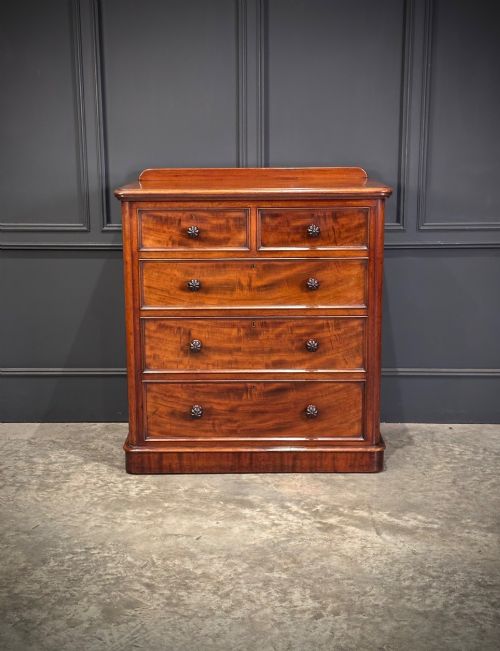
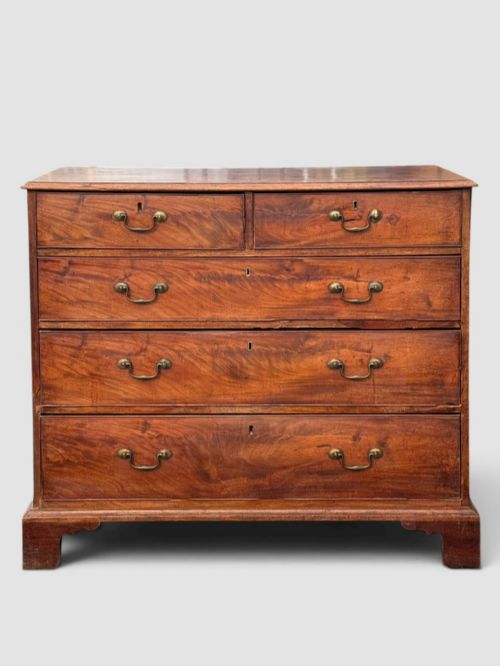
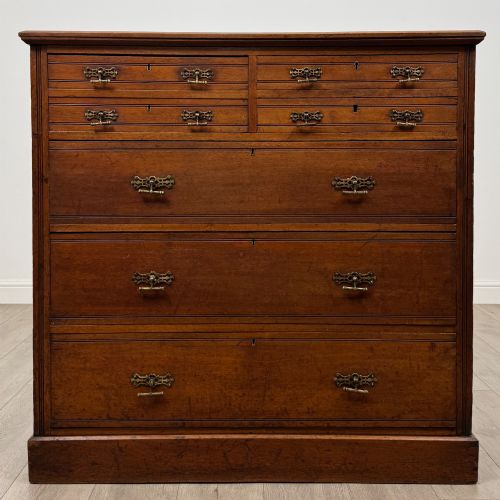
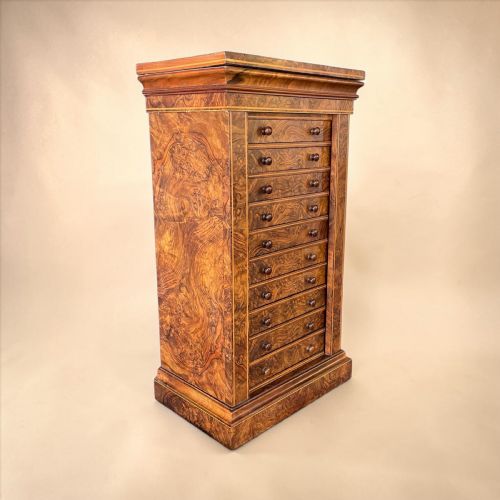
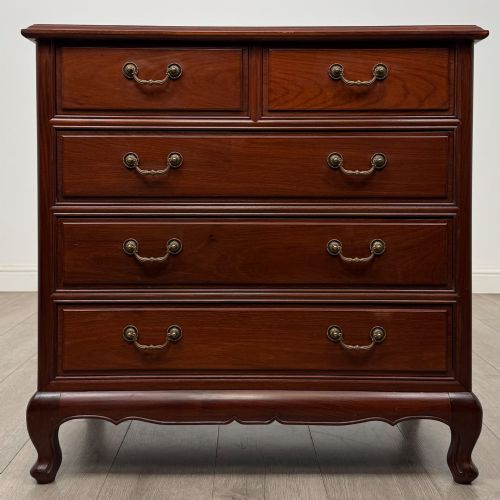
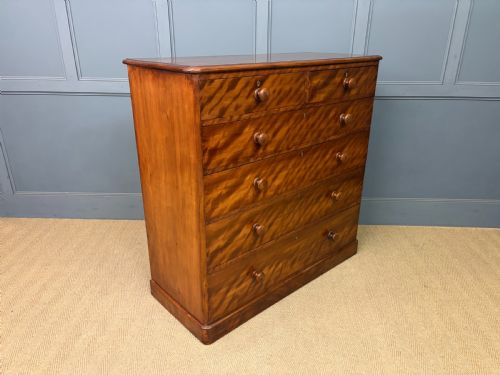
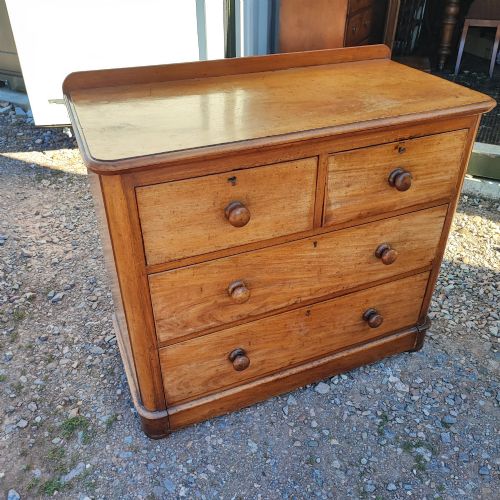
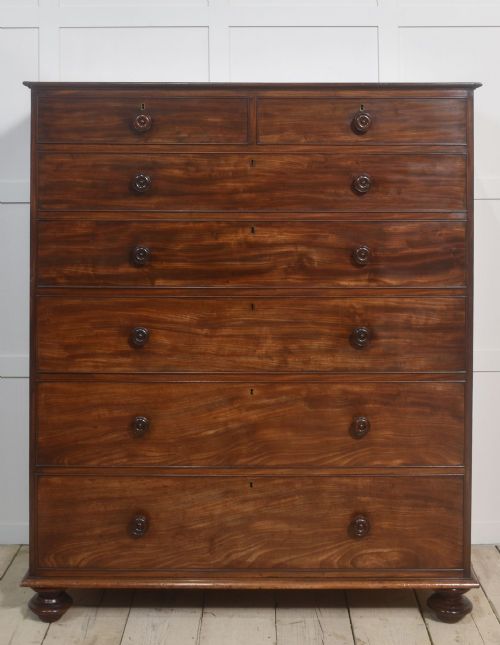
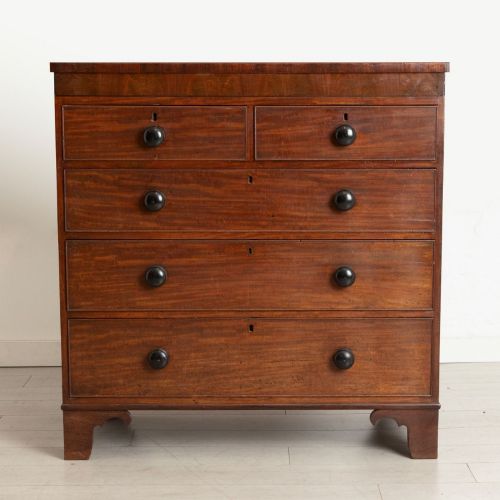
An antique timber bedroom chest serves as a robust storage unit, typically encountered here in Victorian, Georgian and Edwardian iterations. Buyers seek these pieces for their generous proportions, deep drawer configurations and warm timber patination accrued over generations of daily domestic service.
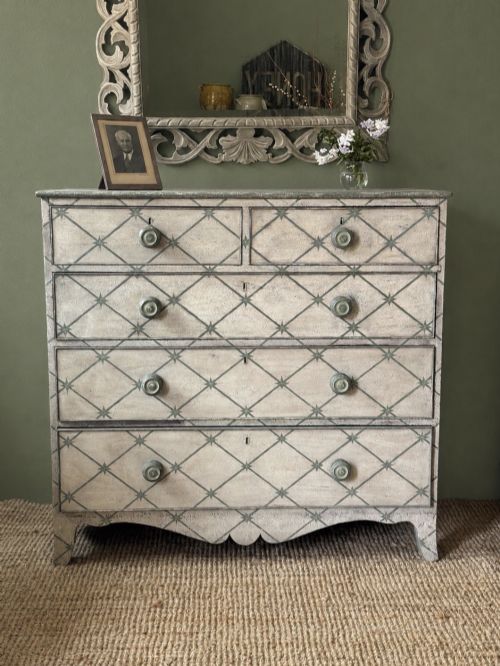
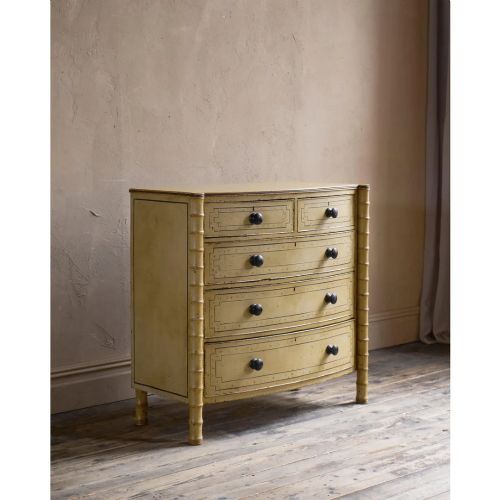
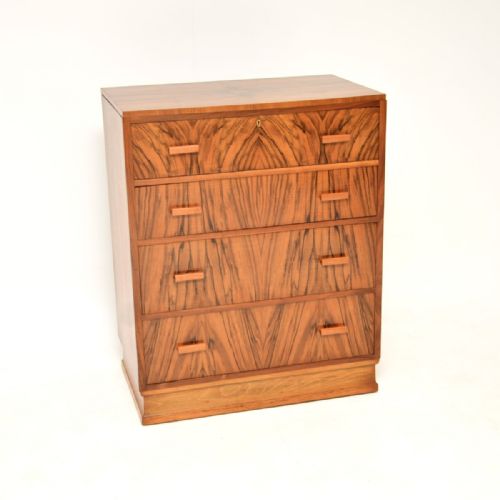
The selection ranges from tall Wellington chests and bow-fronted designs to low commodes and linen presses. Mahogany and walnut appear frequently, alongside utilitarian pine and decorative painted finishes suited to traditional and contemporary sleeping quarters alike.
Construction formats vary from simple three-drawer configurations to complex arrangements featuring secret compartments and graduated drawers. Each piece reflects the domestic requirements of its original period, balancing functional utility with refined proportions.
Materials and construction methods
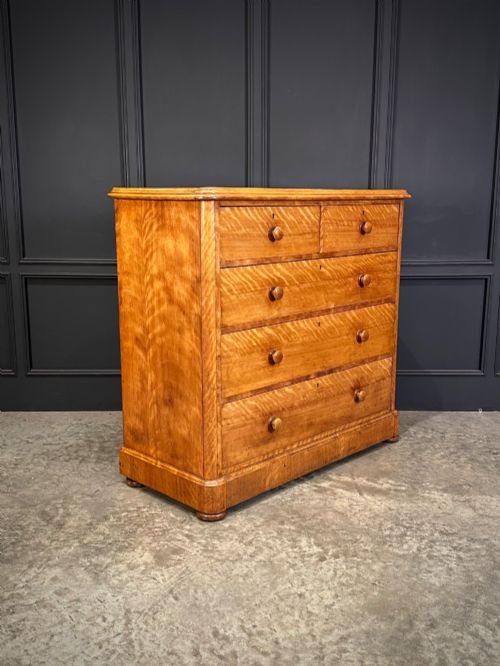
Cabinet makers built these chests using dense hardwoods like mahogany, oak and walnut, often applying finely figured veneers such as burr walnut or satinwood to primary surfaces. Drawer frames typically utilise secondary softwoods like pine, joined with hand-cut dovetails that indicate traditional workshop assembly.
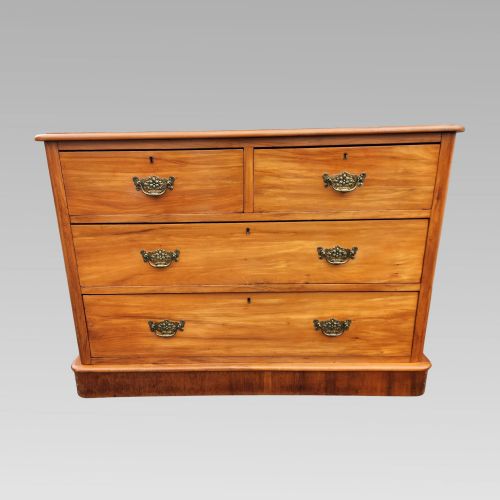
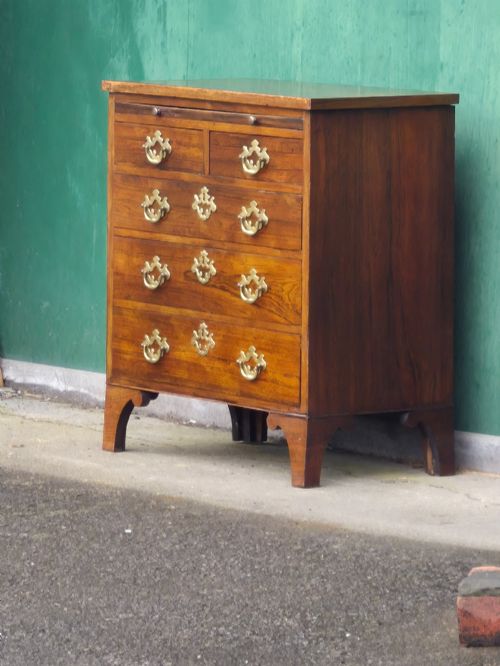
Surface finishes rely on shellac-based French polishes, wax coatings or historic paint applications like scumble and decorative schemes. Brass drop handles, ring pulls and escutcheons are fixed with slotted iron screws, anchoring the hardware securely to the drawer fronts.
Listings feature pieces spanning the seventeenth through the twentieth centuries, utilising mahogany, oak, walnut, satinwood, pine and paint.
Distinguishing quality across the range
Quality rests in the crispness of the dovetail joints, the selection of timber veneers and the retention of original hardware such as brass handles and locks. Superior examples demonstrate tight grain matching across drawer fronts and smooth drawer running action within the carcase.
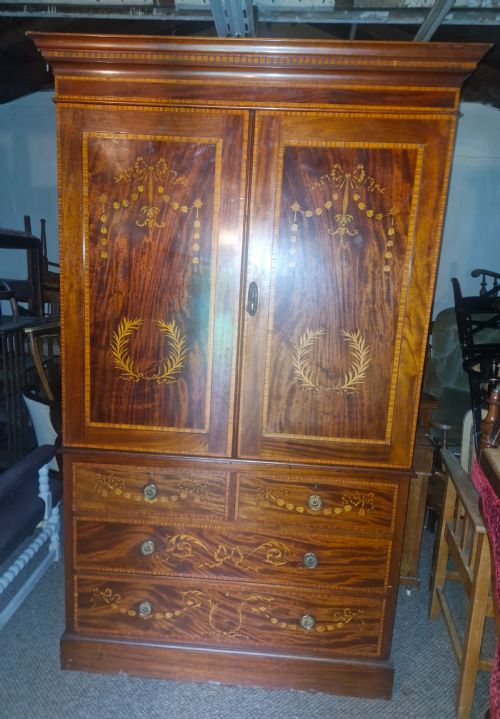
Finer pieces exhibit thoughtful detailing like crossbanding, boxwood stringing or subtle inlay work, whereas simpler utilitarian items rely on straightforward plank construction and painted finishes. Original backboards and undisturbed interior linings elevate the integrity of a piece significantly.
Jas Shoolbred·Heal & Son·Druce & Co.·C. Hindley
The Antique Timber Bedroom Chest Glossary
- Wellington chest
- A tall, narrow chest of drawers characterised by a hinged locking stile on one side that secures all drawers simultaneously.
- Bow-fronted
- A cabinet design featuring a convex, curved front facade that projects outward in a smooth arc.
- Dovetail
- A traditional interlocking woodworking joint formed by wedge-shaped fingers, prized for its exceptional tensile strength.
- Scumble
- A decorative paint technique involving a translucent top layer manipulated with combs or rags to simulate wood grain or texture.
- Linen press
- A tall storage cabinet featuring upper sliding trays or shelves for textiles above a base of wider storage drawers.
Antique Timber Bedroom Chest: Frequently Asked Questions
How do I clean an antique wooden chest?
Dust the surfaces regularly with a soft, dry cloth to prevent grit accumulation in the timber grain. Avoid modern silicone sprays and harsh chemical cleaners that degrade historic french polish.
Apply a microcrystalline wax sparingly once or twice a year to nourish the wood and maintain a protective barrier against moisture.
Are these chests suitable for modern clothes storage?
Solid timber drawers provide robust space for modern garments, though interior depths vary across different historical periods. Georgian and Victorian drawers offer deep storage capacities suitable for bulky jumpers and linens.
Check internal drawer surfaces for cleanliness and smooth linings to ensure delicate fabrics do not catch on historic timber.
How do I date a timber chest of drawers?
Examine the construction methods visible inside the drawers and along the backboards of the carcase. Hand-cut dovetails and irregular hand-sawn timber marks point toward Georgian and early Victorian origins.
Machine-sawn components and standardised fixings generally indicate later Edwardian or twentieth-century manufacture.
Can I place a chest in a central bedroom location?
Finished backs and polished sides appear on select refined pieces, allowing freestanding placement away from walls. Standard utilitarian chests usually feature plain deal backboards intended to face directly against a wall.
Ensure placement avoids direct sunlight and active heat sources to prevent timber shrinkage and veneer splitting.