


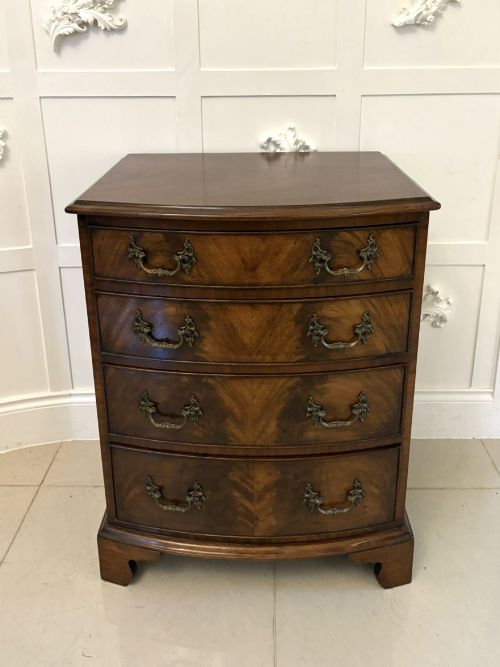
Edwardian Bedroom Drawers
Edwardian bedroom drawers are practical timber chests designed for personal storage, combining period craftsmanship with enduring utility for the modern interior.
Edwardian Bedroom Drawers
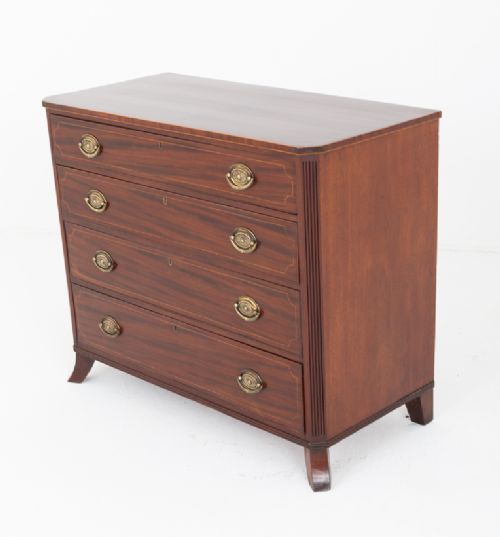
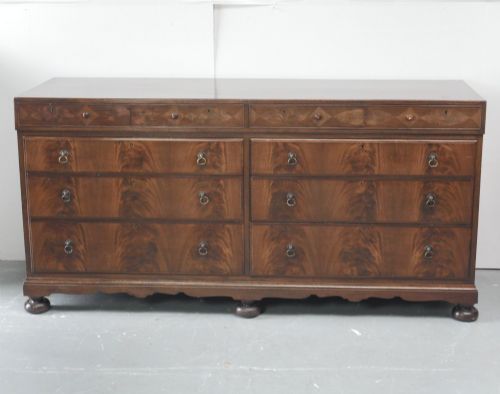
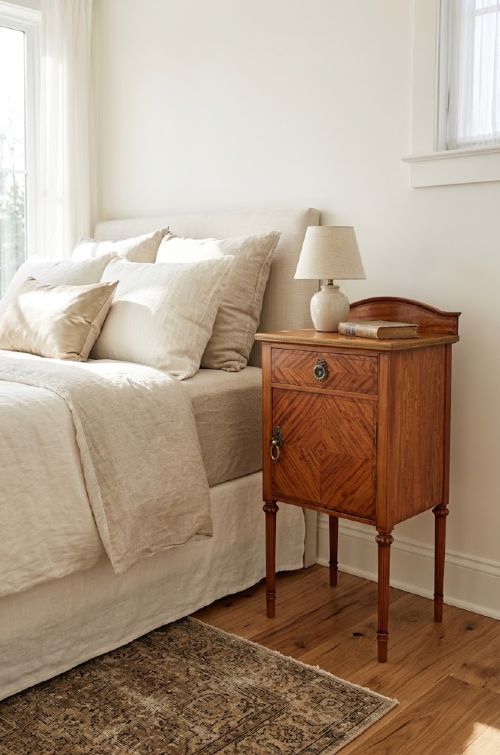
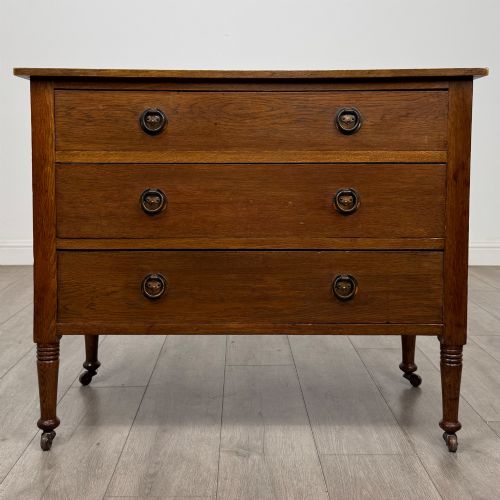
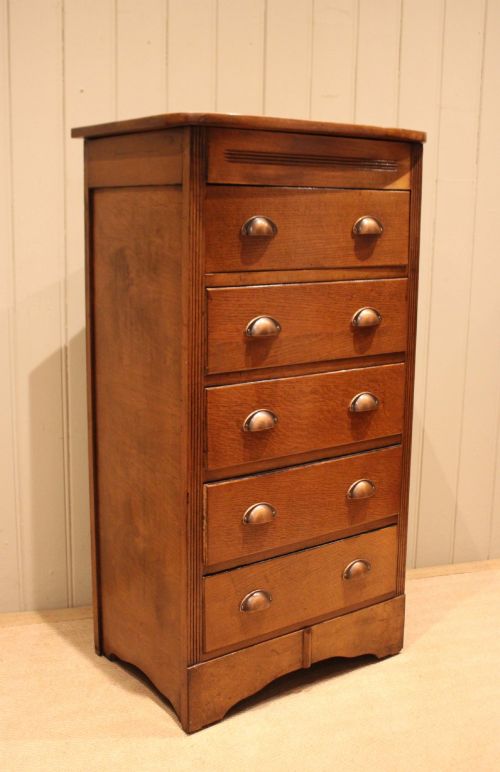
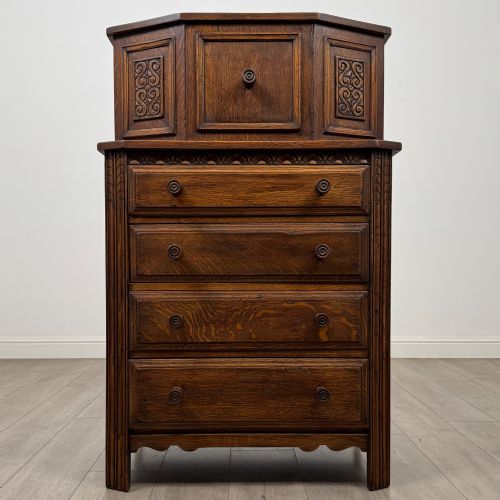
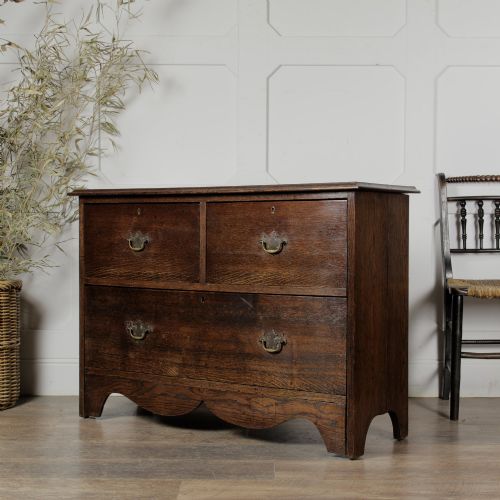
Edwardian bedroom drawers encompass a variety of timber storage forms, most frequently appearing as straightforward chests of drawers, tallboys, and compact bedside tables. These pieces originate primarily from the early twentieth century, though the selection also includes revivals of earlier Georgian and Regency aesthetics alongside late Victorian overlaps.
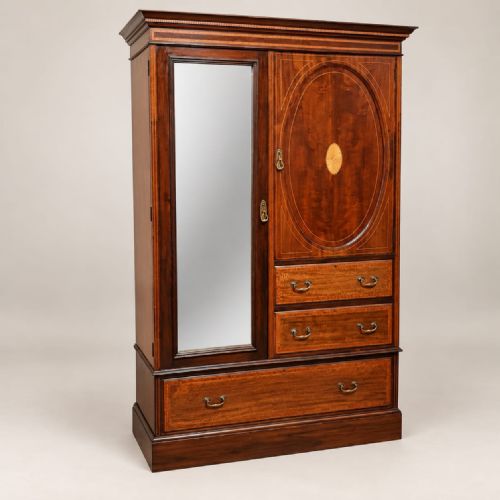
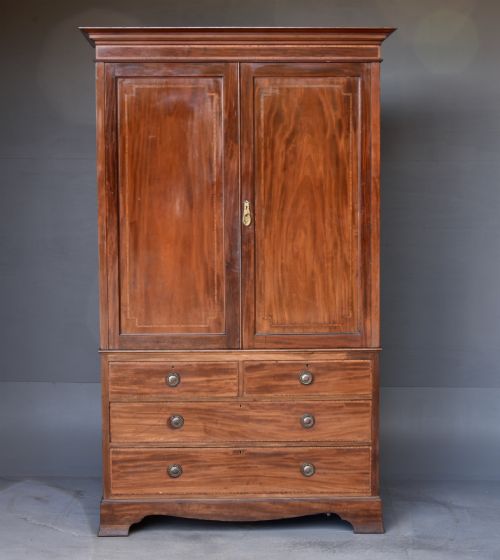
Mahogany and oak dominate the selection, often complemented by satinwood banding, walnut, and occasional painted finishes. Alongside standalone chests, buyers encounter related chamber furnishings such as dressing tables, wardrobes, and bedside cupboards reflecting the period's domestic requirements.
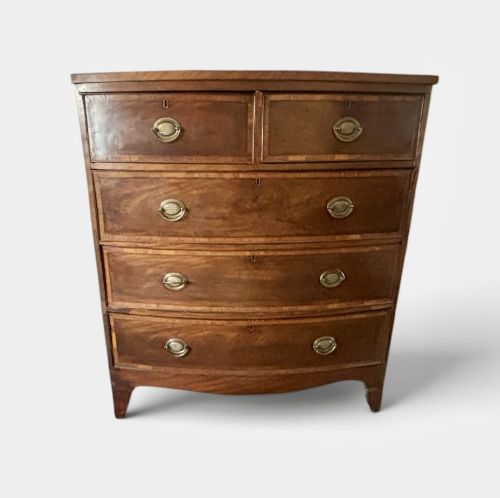
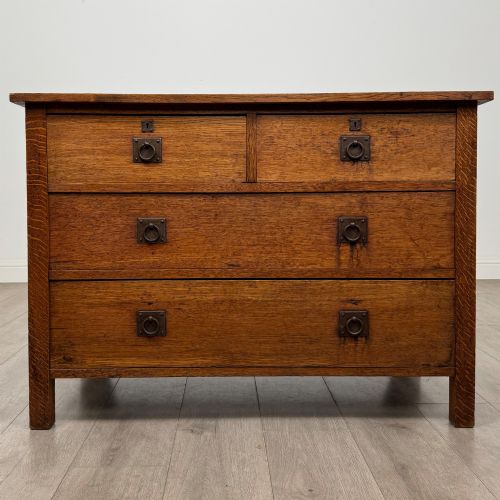
The construction ranges from plain utility items in golden oak to highly figured mahogany bow-fronted chests and pieces bearing maker stamps from prominent firms. This variety allows collectors to source items suited for both modest bedroom spaces and more formal period room settings.
Materials and construction methods
Cabinet makers of the period relied heavily on solid hardwoods like mahogany and oak, frequently applying veneers of satinwood or burr walnut to drawer fronts and top surfaces for decorative effect. Brass hardware, including drop handles and key escutcheons, provides functional contrast to the dark and golden timber tones.
Drawer construction typically employs traditional joinery techniques, ensuring stability across standard chests, tallboys, and bedside cabinets. Carved details and stylistic nods to Georgian or Arts and Crafts ideals appear across various pieces, reflecting the diverse workshops active at the turn of the century.
Listings feature woods including mahogany, oak, satinwood, walnut, and brass hardware across forms from bedside tables to tallboys.
Distinctions in quality
Quality in these bedroom pieces rests upon the selection of timber figures, such as highly figured mahogany or burr walnut, and the precision of the cabinet joinery. Superior examples demonstrate careful matching of wood grain across drawer tiers and refined execution of stylistic elements like bow fronts or satinwood banding.
Workshop provenance further divides the range, with documented pieces from established makers commanding greater interest than unmarked utility items. The integrity of the original brass hardware and the crispness of any applied carving also separate standard commercial production from finer commissions.
Whytock & Reid·maples & co·Jas Shoolbred·Sir Clough Williams-Ellis
The Edwardian Bedroom Drawers Glossary
- Bow front
- A convex curved front to a chest of drawers that projects outward in the centre. This decorative shape gained popularity during the Georgian period and remained favored in Edwardian cabinet work.
- Tallboy
- A tall chest of drawers, often constructed as one chest stacked upon another or as a single elevated unit. It maximises vertical storage capacity while occupying a small floor footprint.
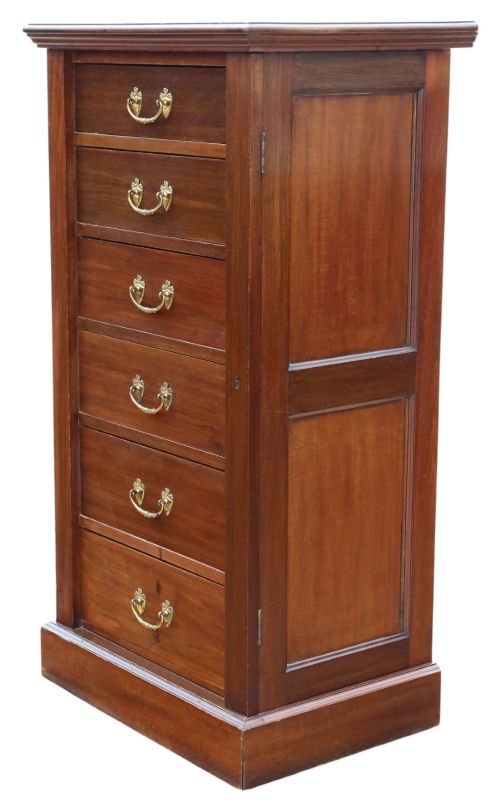
- Wellington chest
- A tall, narrow chest of drawers secured by a hinged vertical locking stile on one side. This locking bar typically fastens with a key to secure all drawers simultaneously.
- Satinwood banding
- A narrow strip of pale, exotic satinwood inlaid into the darker primary timber of a drawer front or top. It provides a sharp visual border on mahogany and walnut pieces.
- Brushing slide
- A pull-out shelf integrated into the upper section of a chest above the drawers. It provided a temporary horizontal surface for sorting clothes or grooming.
- Wardrobe
- A tall standing cupboard used for hanging garments, frequently paired with matching chests of drawers in bedroom suites. Edwardian examples often include mirrored doors and internal drawer compartments.
Edwardian Bedroom Drawers: Frequently Asked Questions
How do I identify Edwardian bedroom drawers?
Edwardian pieces typically date from around 1900 to the 1910s, showing lighter proportions than heavy Victorian furniture. They frequently utilise oak, mahogany, or satinwood, often incorporating classical revival styles or simple Arts and Crafts lines.
Examine the construction methods and hardware for turn-of-the-century characteristics. Maker stamps or labels inside drawer boxes can also confirm the exact period of manufacture.
What is a Wellington chest?
A Wellington chest is a tall, narrow set of drawers featuring a locking side flap. This hinged wooden bar fastens over the drawer edges to secure the contents.
Originally designed for secure storage of personal valuables or documents, these chests offer significant vertical storage space while taking up minimal floor area in a bedroom.
Are bedside tables common in this style?
Bedside tables and small cupboards from this era appear regularly alongside larger chests of drawers and wardrobes. They were often produced as individual items or as components of larger bedroom suites.
These compact tables provide convenient surface space and enclosed storage next to a bed. They match the primary timber finishes of the main wardrobe and chest.
How should I care for antique mahogany drawers?
Maintain mahogany surfaces by dusting regularly with a soft, dry cloth. Avoid placing timber furniture near direct heat sources or strong sunlight to prevent the wood from drying out or fading.
Apply a quality beeswax periodically to nourish the polish and preserve the grain. Handle drawers gently to maintain the integrity of the original joints and runners.