
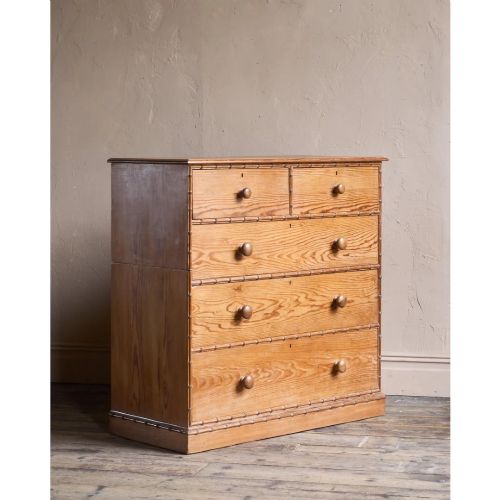
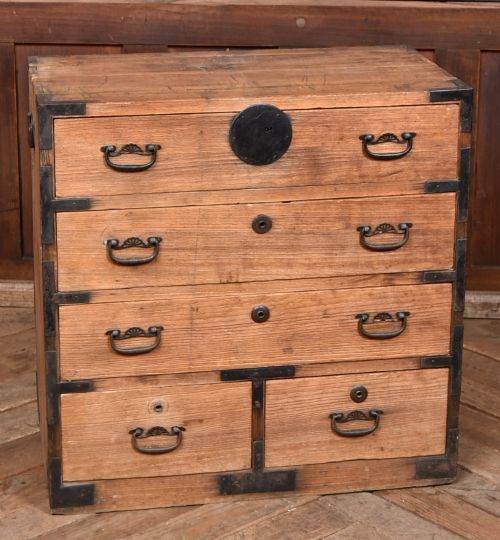
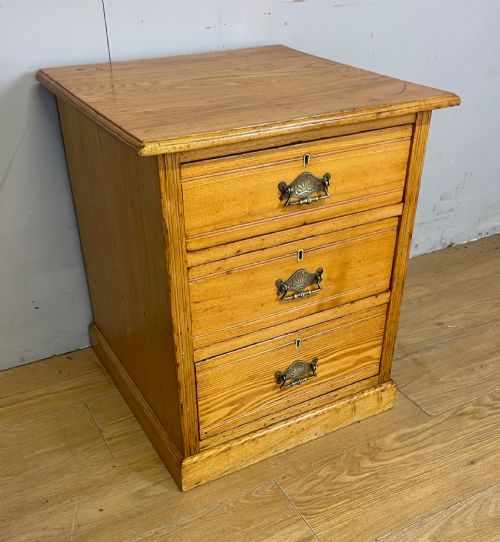
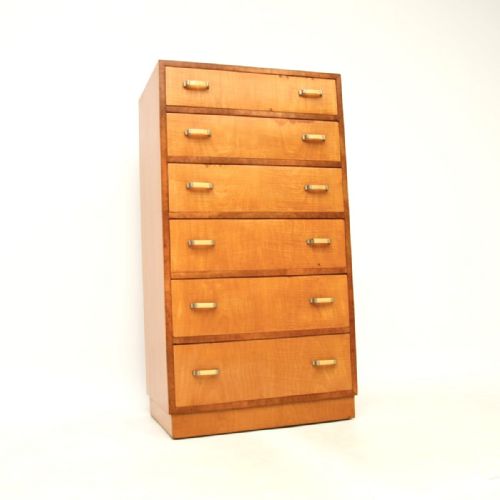


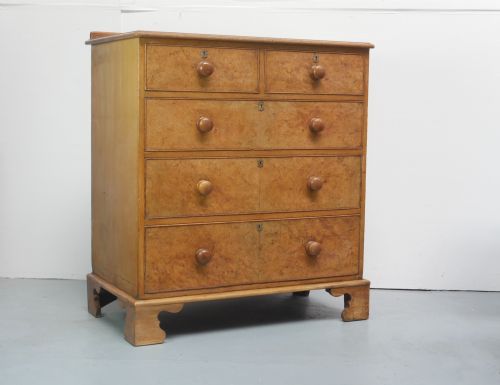


Light Wood Chest of Drawers
A light wood chest of drawers brings warmth and pale grain to a bedroom, ranging from French commodes to English satinwood pieces.
Light Wood Chest of Drawers
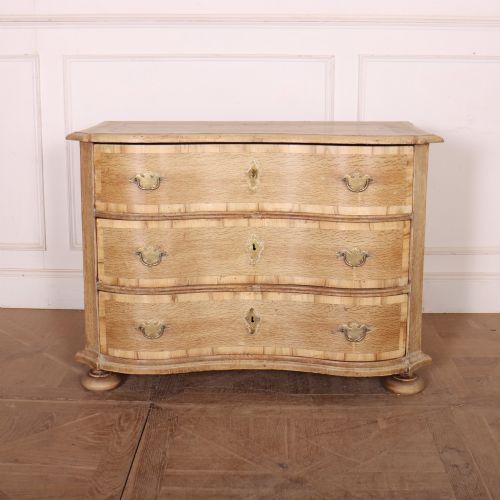
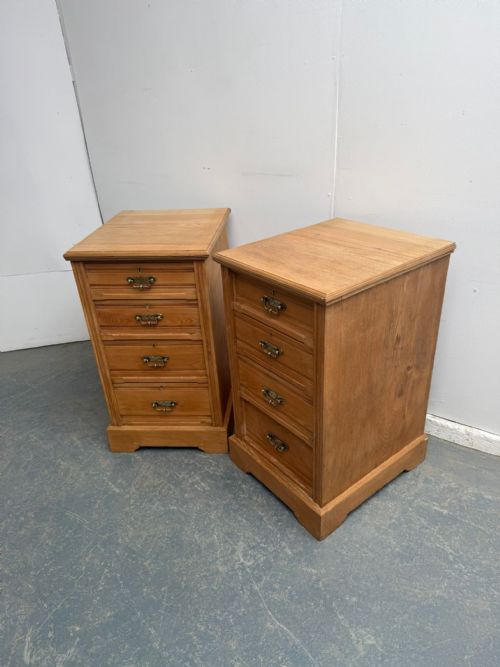
A light wood chest of drawers encompasses practical storage furniture rendered in pale timbers like ash, pine, oak, satinwood, and birch. Buyers seeking a light wood chest of drawers encounter diverse regional expressions, from Swedish neoclassical chests to English Arts and Crafts designs.
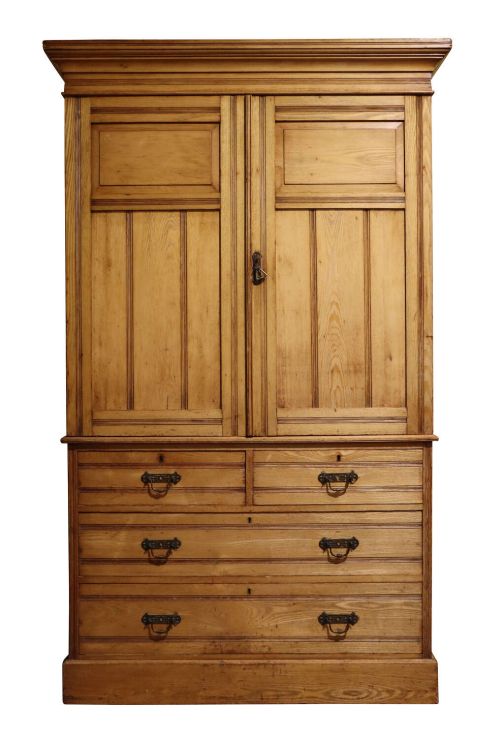
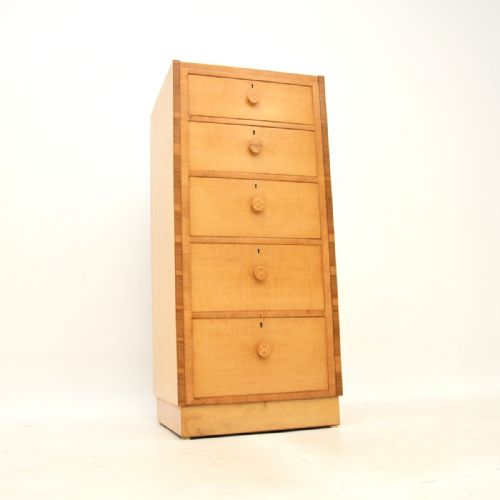
The selection ranges widely across centuries, incorporating eighteenth-century limed oak commodes, nineteenth-century Scandinavian birch pieces, and twentieth-century Art Deco birds eye maple items. Chests of drawers dominate the forms, accompanied by tallboys, bedside cabinets, and linen presses.
Continental pieces frequently display serpentine fronts and carved details, while British examples lean towards rectilinear proportions or the honest construction of the Arts and Crafts movement.
How they were made
Cabinetmakers utilised pale native and exotic timbers such as ash, satinwood, sycamore, and birch, often selecting figured veneers like birds eye maple to highlight natural grain patterns. Structural carcases frequently relied on pine or oak, joined with traditional techniques suited to the period.
Surface finishes varied from waxed or polished treatments that preserved natural tones to intentional bleaching and liming processes used in eighteenth-century and Art Deco workshops. Brass or metal hardware, including handles and key escutcheons, completed the construction.
What varies in quality
Quality rests upon the selection of timber and the sophistication of its figuring, where matched veneers and choice satinwood or birds eye maple elevate a piece above standard pine or utility construction. The integrity of the drawer construction and the subtlety of carved or serpentine moulding distinguish accomplished workshop output from simpler output.
Proportion and decorative restraint dictate the visual success of pale furniture, ensuring the light timber serves the design rather than overwhelming it. Maker attribution, such as work associated with Hille or Betty Joel, further separates standard regional items from notable studio pieces.
Maple & Co·Hille·Howard and Sons·Betty Joel
The Light Wood Chest of Drawers Glossary
- Commode
- A decorative chest of drawers or cabinet, frequently of French or Austrian origin, often featuring a serpentine front.
- Tallboy
- A tall chest of drawers, typically constructed as one chest stacked upon another to maximise vertical storage.
- Bleached oak
- Oak timber treated to lighten its natural dark tone, popular in eighteenth-century and twentieth-century decorative schemes.
- Satinwood
- A durable, lustrous tropical timber with a pale yellow colour, much utilised in fine cabinet-making.
- Serpentine
- A furniture front characterised by a wavy outline with a convex centre flanked by concave curves.
Light Wood Chest of Drawers: Frequently Asked Questions
How do I clean a light wood chest?
Dust regularly with a soft, dry cloth to prevent grime accumulation on pale timber surfaces. Avoid harsh chemical cleaners that strip traditional wax or polish finishes.
Apply a quality beeswax sparingly when the wood appears dry, buffing gently to maintain a soft sheen without darkening the grain.
Are these chests suitable for small bedrooms?
Pale furniture inherently reflects light, making compact chests and bedside cabinets effective for smaller rooms without feeling visually heavy. Tallboys and narrow drawer configurations provide substantial vertical storage capacity with minimal floor space demands.
Consider shallow depths and raised legs to maintain an open, airy feel in confined layouts.
How do I identify Art Deco light wood pieces?
Art Deco examples frequently showcase exotic pale veneers like birds eye maple and sycamore combined with streamlined, geometric silhouettes. Makers from this period embraced symmetry and sleek surfaces, sometimes pairing the light wood with contrasting walnut details.
Construction methods and distinct styling cues from workshops active around the nineteen-twenties and thirties help confirm the era.
What distinguishes Swedish birch from English ash?
Swedish birch exhibits a pale, blonde tone with subtle flame figuring, characteristic of nineteenth-century Scandinavian design traditions. English ash often displays a more pronounced, open grain pattern favoured by Arts and Crafts cabinetmakers.
Examining the secondary timbers inside the drawer carcase frequently clarifies the regional origin of the piece.