






Antique Timber Architectural Bracket
An antique timber architectural bracket is a heavy structural support that brings centuries of hand-carved weight and presence to a modern wall.
Antique Timber Architectural Bracket
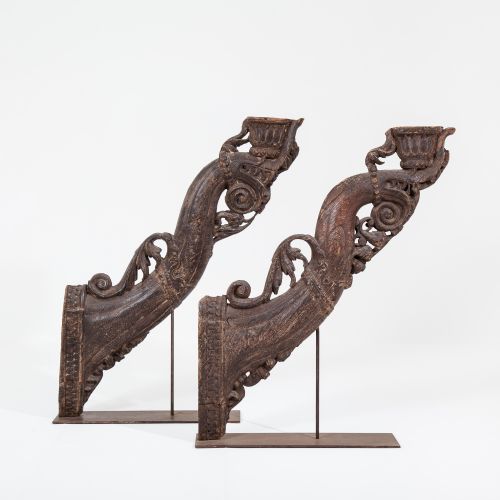
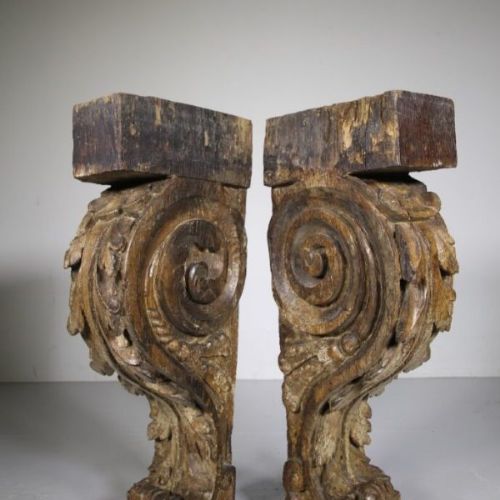
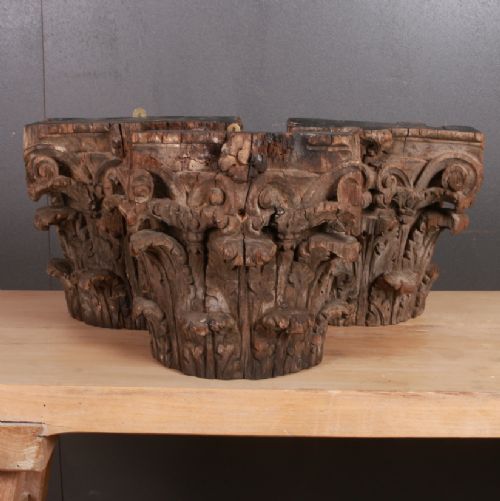
When you search for an antique timber architectural bracket, you find structural elements salvaged from historic buildings, ranging from domestic interiors to grand institutional facades. These heavy wooden supports take the form of wall brackets, corbels, and capitals that once carried the load of beams or cornices.
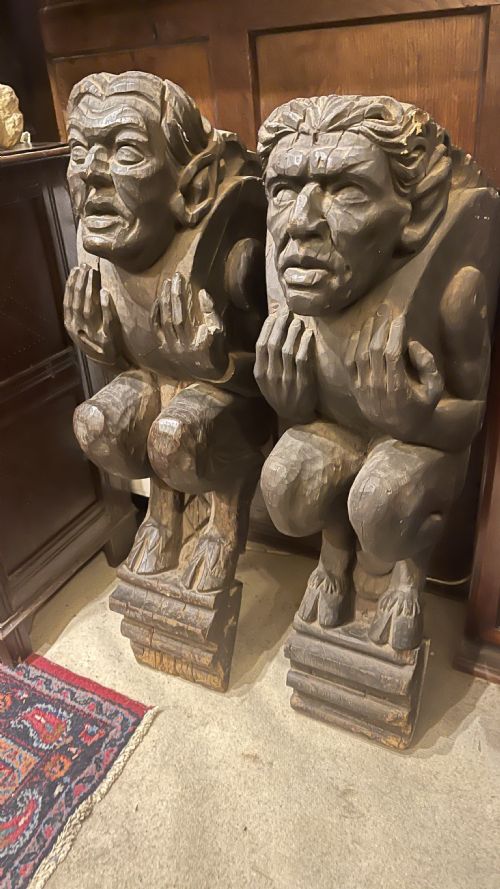
The examples available here span several distinct periods, most notably the sixteenth, seventeenth, and eighteenth centuries, alongside Georgian pieces and nineteenth-century interpretations. You will encounter single figurative caryatids alongside matched pairs in oak, pine, and carved timber.
Origins vary across European and continental workshops, with Flemish Renaissance, traditional Indian, and Victorian Gothic styles all represented. Each bracket demonstrates how structural timberwork was given sculptural form by historical carvers.
How they were made
The carvers behind these pieces worked primarily in dense hardwoods like oak, alongside softer pine and general carved timber, shaping the material with hand chisels and gouges. Grain selection dictated how deeply a craftsman could cut without compromising the load-bearing integrity of the corbel or bracket.
Surface treatments range from bare aged wood to remnants of historic paint and gesso, recording the layers applied over centuries of interior and exterior use. Iron fixings occasionally remain embedded in the timber where structural pins held the bracket to the wall.
Styles represented include Flemish Renaissance, Georgian, neoclassical, and traditional Indian roof decoration.
What varies in quality
Quality in these timber brackets rests entirely on the confidence of the carving and the depth of the relief work. A superior seventeenth-century caryatid or figurative corbel displays strong anatomical understanding and crisp drapery, whereas lesser pieces rely on mechanical repetition and shallow surface detailing.
Survival of the original timber surface and the integrity of the silhouette separate standard architectural salvage from exceptional sculptural works. The best examples retain their raw structural vigour without excessive modern intervention or unsympathetic timber replacement.
The Antique Timber Architectural Bracket Glossary
- Caryatid
- A carved female figure serving as an architectural support in place of a column or pilaster. These figures often appear on seventeenth-century wall brackets with arms folded or holding drapery.
- Corbel
- A structural piece of stone or timber projecting from a wall to carry a weight. In timber, these are frequently carved in the form of heads, figures, or classical scrolls.
- Capital
- The uppermost member of a column or pilaster, spreading outward to receive the weight of the architrave. Corinthian examples on this page feature carved acanthus leaves.
- Gesso
- A plaster mixture used as a smooth base for painting on wood. Traces of this preparation remain on certain period carvings.
- Architectural Salvage
- Building materials and decorative elements rescued from structures slated for demolition or restoration. This category encompasses the wall brackets and roof decorations found here.
Antique Timber Architectural Bracket: Frequently Asked Questions
How were these timber brackets originally used?
These pieces served as structural load-bearing supports beneath ceiling beams, overhanging eaves, or mantelpieces in historic buildings.
Over time, many have been repurposed as decorative wall shelf supports or displayed purely as independent sculptures.
Can these brackets support heavy weight today?
While many retain their original strength, their load capacity depends entirely on the condition of the timber and how securely they are anchored to modern wall studs.
It is wise to consult a professional builder before using antique timber brackets to support heavy shelving or architectural loads.
How do I distinguish seventeenth-century oak from later copies?
Seventeenth-century oak exhibits deep patination, shrinkage cracks, and tool marks left by hand adzes and pit saws rather than modern machinery.
The carving style of early figures often shows the distinct Flemish Renaissance or Tudor influence typical of the period.
Should I remove old paint and gesso traces?
Historic layers of paint, gesso, and wax provide crucial evidence of a bracket's age and history.
Preserving these surface remnants maintains the integrity and visual depth of the carved timber.