


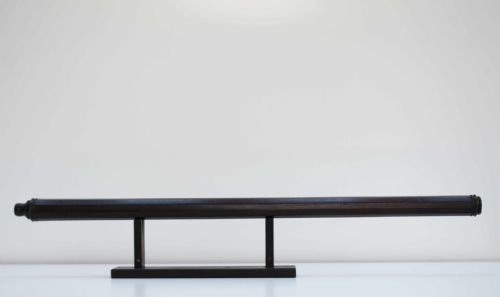
Antique Terrestrial Telescope
An antique terrestrial telescope brings distant views into sharp focus through polished brass and leather.
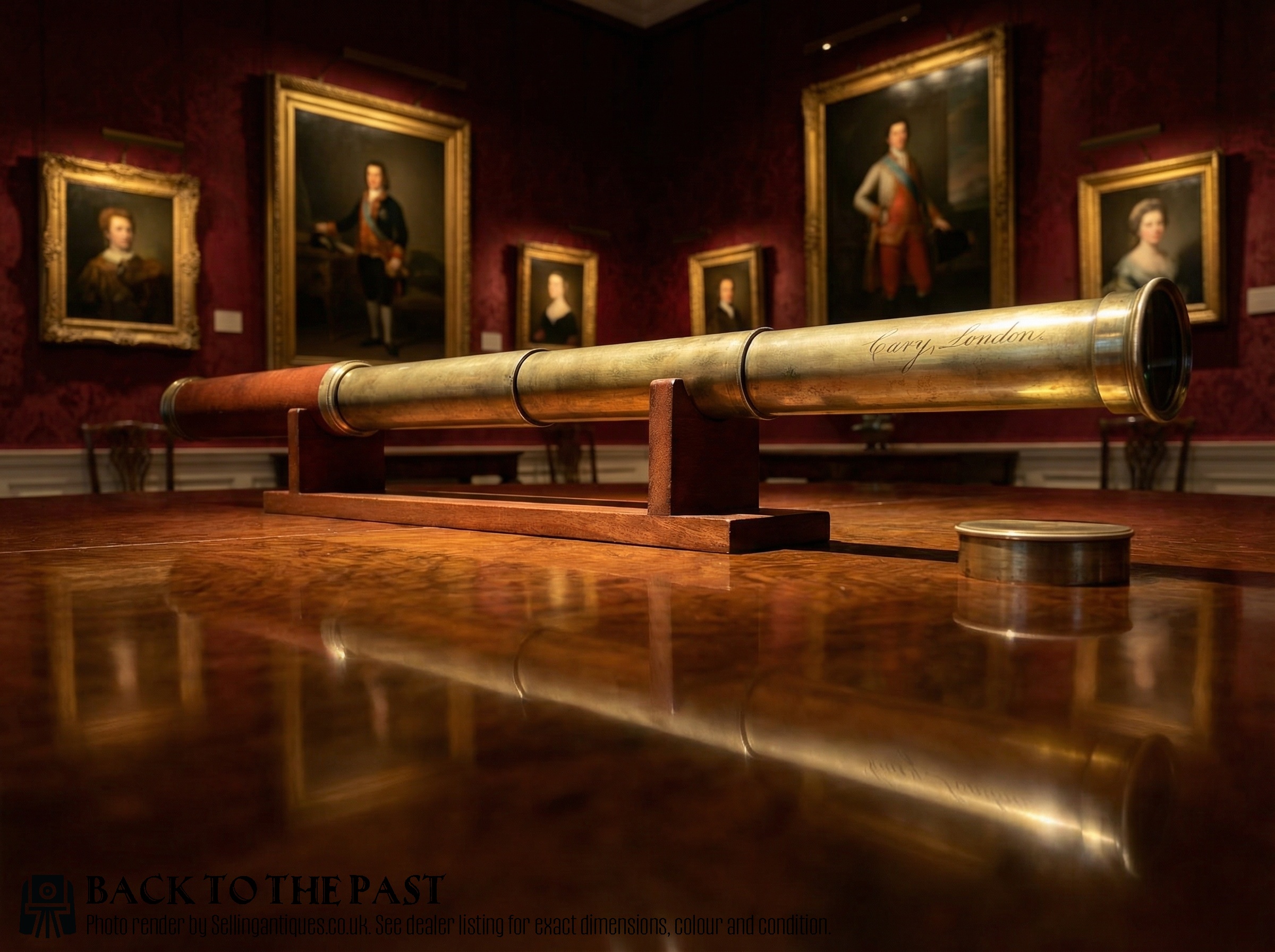
Antique Terrestrial Telescope
An antique terrestrial telescope is an optical instrument designed primarily for viewing distant land objects rather than the night sky, producing an upright image through internal erecting lenses. These instruments span from the Georgian period through the Victorian era and into the Edwardian years, reflecting shifts in science and travel.
Most examples found in daily trade take the form of portable draw telescopes, featuring multiple sliding brass tubes that collapse down for transport. Larger library and campaign variants also appear, offering stability on desk stands or durability for field operations.
Materials and Construction
Makers relied heavily on polished brass for the primary barrel tubes, providing structural rigidity and resistance to corrosion during outdoor use. Glass lenses formed the optical path, while timber and leather served as tactile coverings for hand-held draws.
Construction techniques involved machining sliding draw tubes to tight tolerances so they extended smoothly without binding. Wood species like mahogany, fruitwood and iron reinforced specific mounts or body sections depending on whether the instrument was meant for a library table or a military campaign.
Early makers stamped day or night on barrels, hoping owners would bravely test them during midnight storms.
Judging Quality
Quality rests upon the optical clarity of the glass and the precision of the brass draw tubes, which determine how smoothly the instrument extends and locks. Maker attribution to known optical houses also shifts the standing of a piece within the market.
The choice of exterior finish matters greatly, with supple leather jackets or finely turned mahogany barrels indicating superior craftsmanship compared to plain metal tubes. Overall proportions and the crispness of maker signatures engraved on the final draw tube complete the assessment.
Steward of London·Broadhurst Clarkson & Co·Cary London·L Casella London·Davis of London·John Gilbert·JH Steward·Dollond·JP Cutts·Henry Ward·Lawrence & Mayo·Spencer Browning·Ross·Berge·Banks of London·Negretti & Zambra
The Antique Terrestrial Telescope Glossary
- Terrestrial
- Designed for viewing objects on land rather than stars. This orientation requires an internal system of lenses to ensure the image appears right side up.
- Draw
- A sliding brass tube that extends from the main barrel to adjust focus and length. Telescopes are frequently categorised by how many draws they possess.
- Refractor
- An optical system that uses lenses to bend light and form an image. These instruments form the vast majority of historical portable spyglasses.
- Achromatic
- A lens design that corrects for colour distortion by combining glass types. This improvement delivers a much cleaner image edge.
- Campaign
- Built for military use in the field. These robust instruments often feature protective leather sleeves and sturdy wooden components.
Antique Terrestrial Telescope: Frequently Asked Questions
How do I use an antique telescope?
Extend all the brass draws fully until the instrument reaches its maximum length. Adjust the smallest draw nearest the eyepiece gently inward or outward until the distant view snaps into sharp focus.
Support the main barrel steadily with both hands or rest it upon a stable surface to combat hand shake at higher magnifications. Keep the protective lens caps on when storing the instrument to protect the glass from dust.
Were these used at sea?
Many examples served officers and lookouts aboard ships for spotting landmarks and other vessels. Variants specifically designated as officer of the watch or day and night models catered directly to maritime routines.
Salt air and rough handling meant these pieces needed robust brass and leather construction to survive life on deck. Their collapsible nature allowed sailors to stow them quickly below deck when weather turned foul.
How can I date an antique telescope?
Makers often engraved their business names and addresses onto the final draw tube near the eyepiece. Cross-referencing these specific addresses with trade directories reveals the exact years the workshop operated at that location.
Stylistic shifts also offer clues, as Georgian pieces tend towards simpler single draws with wooden barrels, while Victorian examples frequently utilise multi-draw brass and leather configurations.