

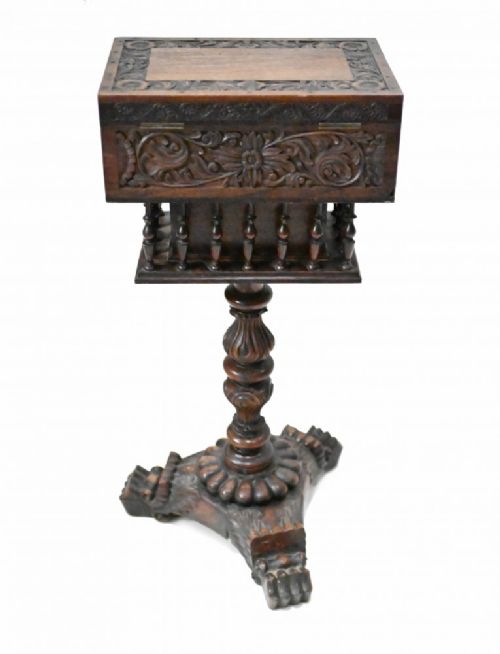


Antique Tea Table Box
An antique tea table box unites the refined purpose of tea storage with the sturdy presence of a small table or fitted container.
Antique Tea Table Box
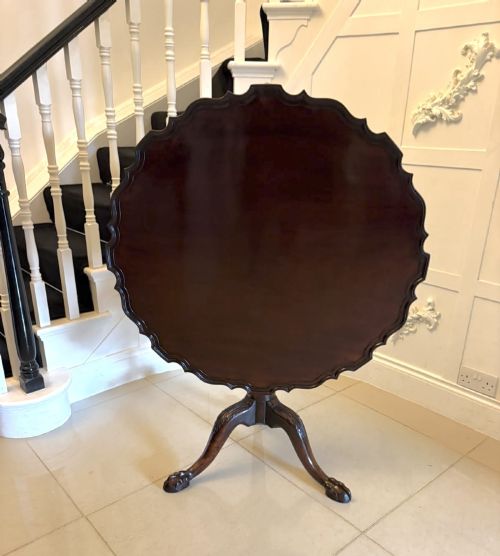
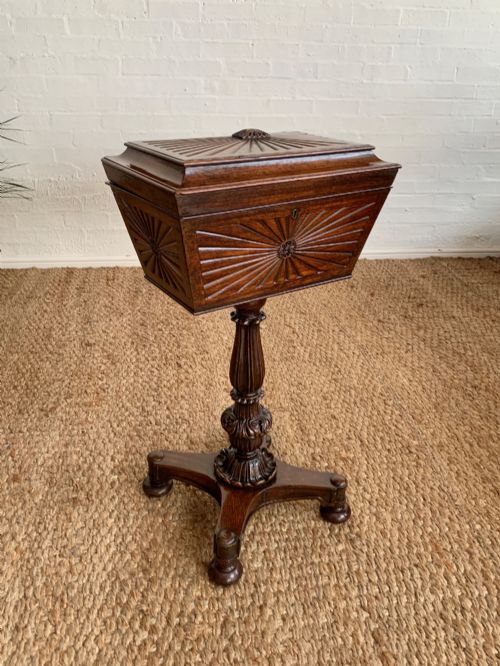
An antique tea table box encompasses a variety of forms designed to hold tea leaves, sugar, and biscuits, frequently taking the shape of freestanding teapoys, tabletop caddies, and lidded boxes. These pieces emerge predominantly from the Georgian, Regency, William IV, and Victorian eras, reflecting shifting domestic habits around tea consumption and entertaining.
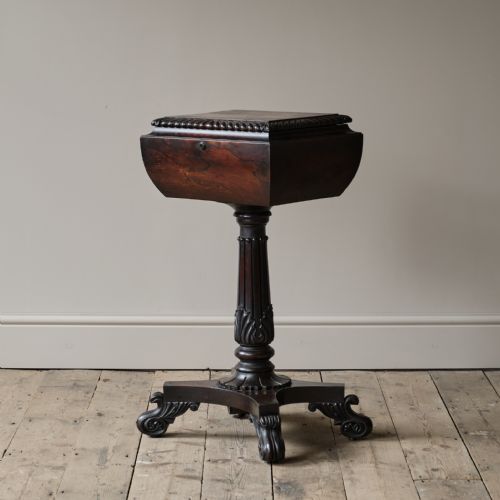
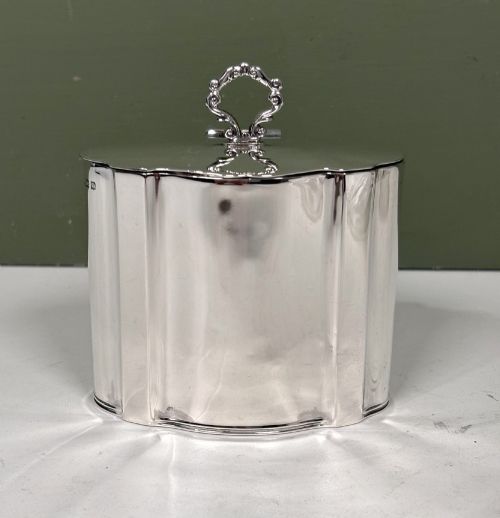
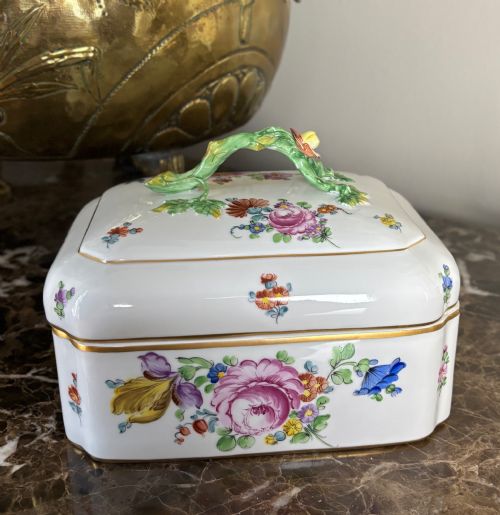
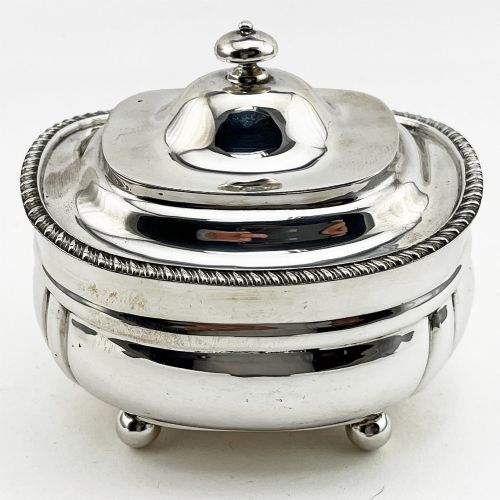
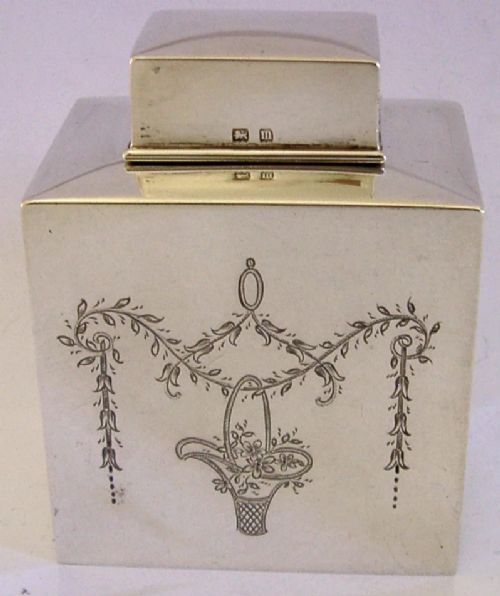
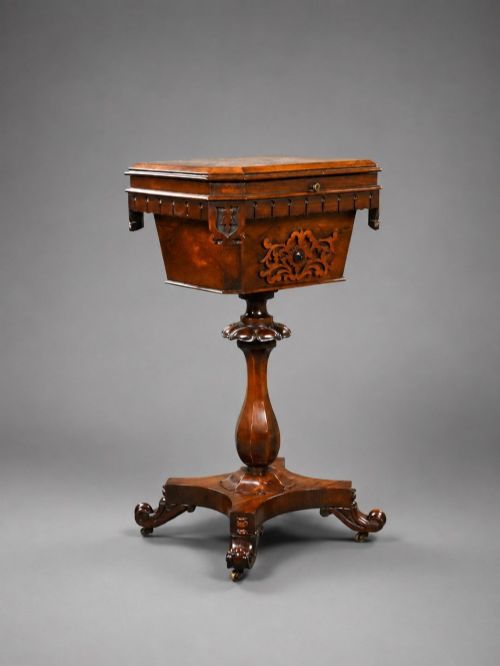
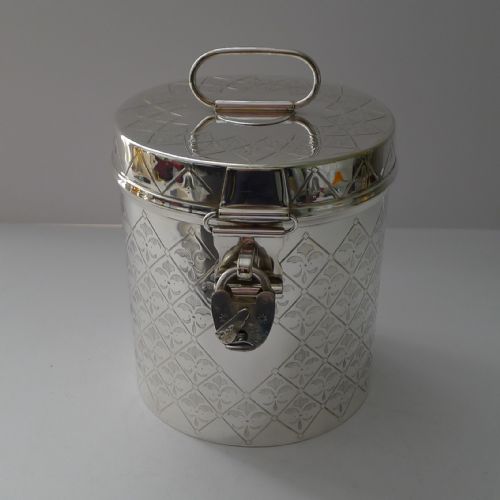
The objects on this page range from elaborate rosewood and mahogany teapoys resting on pillar stands to sterling silver and silver-plated caddies, alongside novelty biscuit barrels and ceramic jars. Many double as work tables or small chests, combining internal compartments for dry leaves with decorative surfaces suited to a parlour or drawing room.
How they were made
Cabinetmakers constructed these pieces using dense hardwoods like mahogany, rosewood, and padouk, often employing brass inlay, gesso decoration, and intricate carving to enrich the exterior. Interior compartments frequently lined with velvet preserved the aroma of expensive leaves.
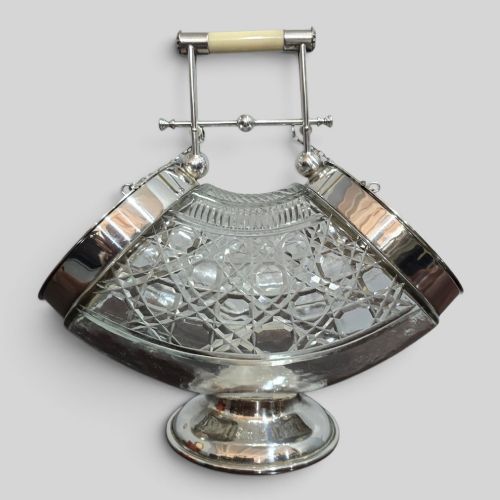
Silver containers and mounts utilised sterling silver and silver plate, sometimes paired with cut glass or ceramic bodies to create novelty biscuit barrels and table boxes. Workshops applied stamping and hobnail cutting to achieve tactile surfaces and precise geometric patterns.
Some biscuit barrels take the shape of heavy metal weights, hiding afternoon snacks inside gym equipment.
What varies in quality
Quality rests on the selection of timber veneers and the precision of cabinetmaking details, such as tight joints, functional locks with original keys, and intact interior mixing bowls or foil linings. Pieces bearing maker stamps from established workshops demonstrate higher craftsmanship.
The weight and purity of the metal components, alongside the crispness of chased silver or hand-cut glass, distinguish finer caddies and biscuit boxes from standard production items. The harmony between decorative elements like sunburst carving or brass inlay and the overall proportions dictates the standing of each piece.
Zimmermann·Mappin and Webb·Gillows
The Antique Tea Table Box Glossary
- Teapoy
- A pedestal table or stand fitted with a lidded box for storing tea, popular during the Regency and Victorian periods.
- Caddy
- A small container or box specifically designed for holding loose tea leaves securely.
- Sarcophagus
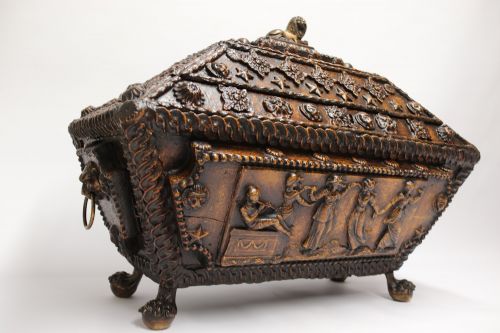
- A box shape featuring sloping sides and a domed lid, frequently utilised in Regency and William IV teapoys.
- Padouk
- A heavy, durable tropical hardwood with a reddish hue, often found in colonial furniture.
- Hobnail
- A decorative glass-cutting pattern resembling the hobnails used on heavy boots, seen on Edwardian biscuit barrels.
Antique Tea Table Box: Frequently Asked Questions
What is a teapoy?
A teapoy is a lidded box designed to hold tea, often mounted on a central pillar with tripod feet or a robust cabinet base. These pieces served as movable stations for preparing tea in the parlour before servants brought in the hot water.
Over the nineteenth century, the form evolved from simple tabletop boxes to elaborate freestanding furniture pieces with internal compartments and mixing bowls.
How were tea caddies used?
Tea caddies held precious black and green tea leaves under lock and key, as tea was an expensive commodity in Georgian and Victorian households. The mistress of the house kept the key to control distribution and prevent servants from taking the leaves.
Inside, these boxes typically featured separate compartments for different varieties of tea and a central glass or metal mixing bowl where the blends were combined.
How do I date a tea table box?
Dating relies on identifying the prevailing stylistic traits, timber choices, and construction methods of periods like the Regency, William IV, or Victorian eras. Georgian and Regency pieces often feature rosewood veneers and brass inlay, while later Victorian examples introduce heavy carving and mixed materials.
Maker marks, hallmarks on silver mounts, and stamps on the wood provide definitive chronological markers when present.
Are biscuit barrels the same as tea caddies?
Biscuit barrels are lidded containers designed specifically to store dry biscuits for afternoon tea, whereas tea caddies are built for loose tea leaves. Biscuit barrels emerged later in the nineteenth century and frequently combined silver plate with cut glass, ceramic, or oak.
While both belong to the tea service tradition, their internal layouts and physical proportions reflect their distinct culinary contents.