


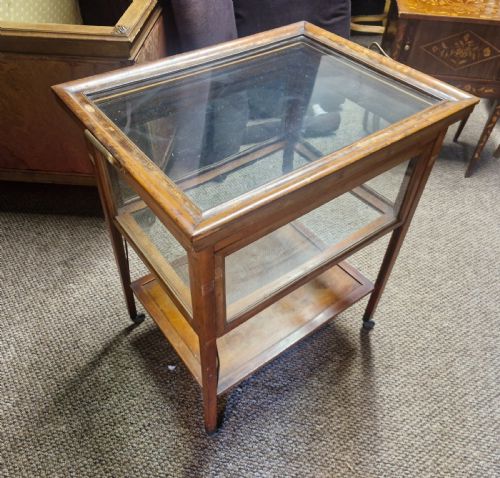


Antique Tea Cart Tray
An antique tea cart tray brings everyday utility and period charm to a room, offering a versatile surface that lifts off to serve drinks or display glassware.
Antique Tea Cart Tray
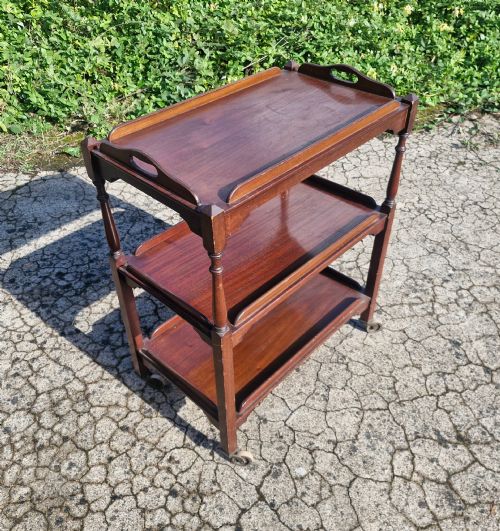
When you search for an antique tea cart tray, you encounter pieces designed to serve afternoon tea or host drinks, frequently incorporating removable trays atop wheeled trolley frames or standing independently as serving pieces.
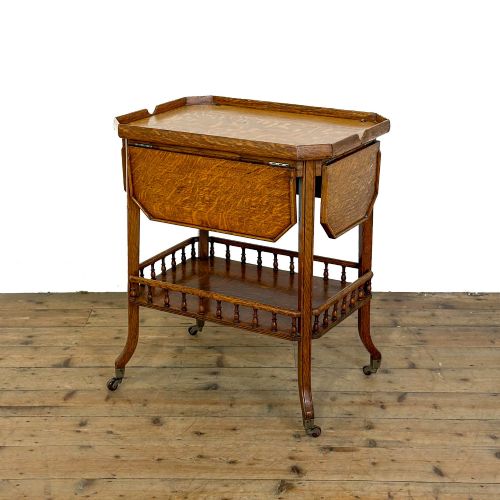
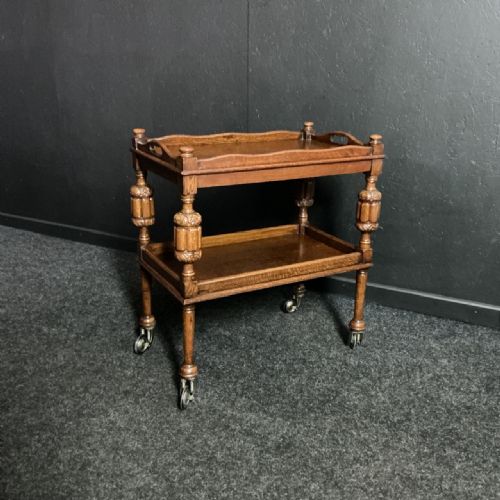
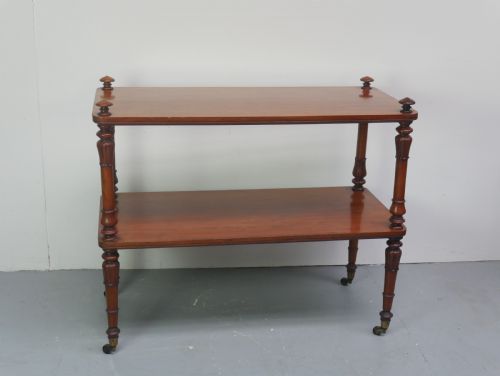
The versions most commonly met on this page span the Edwardian period, the 1920s, and the Victorian era, appearing in forms such as tea trolleys with lift-off sections, drop-side servers, and standalone metal or wooden trays.
These items bridge furniture and tableware, combining the mobility of a tea trolley with the dedicated surface of a serving tray in mahogany, oak, silver plate, or brass.
How they were made
Cabinet makers utilised timber such as mahogany and oak to construct the structural frames and removable tray bases, often applying ebonised finishes or inlay for decorative effect.
Metalwork played a central role in the creation of these pieces, utilising brass fittings, EPNS, and silver plate to form gallery edges, handles, and wheels.
Plywood and glass also appear in the construction of later trays and trolleys, reflecting changing manufacturing techniques through the early twentieth century.
Antique Tea Cart Tray Retail Price Guide 2026
Typical asking prices for tea cart tray among the pieces listed under this phrase on Sellingantiques today, from the lower quarter to the upper quarter. They describe what is for sale here now, not the wider market.
What varies in quality
The standard of timber selection and the precision of the joinery set the better examples apart from simpler utility items, with figured mahogany and solid oak showing superior cabinet work.
Metal quality is evident in the weight and detail of silver plating, brass galleries, and mounts, where substantial casting and crisp edges denote finer workshop production.
Design integration defines the upper range, seen where removable trays fit seamlessly into the trolley frames and feature coordinated handles or inlaid details.
Asprey London
The Antique Tea Cart Tray Glossary
- Gallery tray
- A serving tray featuring a raised pierced metal or wooden border around the edge. This prevents glasses and decanters from sliding off when the tray is carried.
- EPNS
- Electroplated nickel silver. A common base metal method used to apply a silver coating to household wares.
- Drop sides
- Hinged flaps on the sides of a trolley or table top that fold down when not needed. They allow the piece to occupy less space in a room.
- Jacobean Revival
- A nineteenth and twentieth century style inspired by seventeenth century British furniture. It relies on dark oak, heavy turnings, and geometric panels.
Antique Tea Cart Tray: Frequently Asked Questions
What is an antique tea cart tray?
An antique tea cart tray is either a removable top section designed to lift off a tea trolley or a standalone serving tray from the Victorian or Edwardian eras. These pieces combined the portability needed for entertaining with decorative woodwork or silver plating.
They reflect the social habits of the late nineteenth and early twentieth centuries, when afternoon tea and home drinks service required specialised furniture and tableware.
How do I use an antique tray today?
These trays function well on sideboards, coffee tables, or bar carts for holding glassware, decanters, and cocktail accessories. Removable versions can still serve guests directly while the trolley base remains stationary.
Their sturdy timber or metal construction makes them practical for daily use in contemporary living spaces, adding period character to a room.
How do I date an Edwardian tea tray?
Edwardian trays often feature inlaid mahogany, silver plating, or brass gallery edges produced around the turn of the twentieth century. Stylistic cues draw from late Victorian elegance combined with lighter Edwardian proportions.
Makers' marks, where present on silver plated pieces, help narrow down the production decade and workshop origin.
What materials were used for these trays?
Woods such as mahogany and oak form the basis of the wooden trays and trolleys, sometimes enhanced by ebonising or marquetry inlay. Metal elements typically involve brass handles, silver plate, and EPNS over a base metal.
Later pieces from the 1920s and 1930s incorporate materials like plywood and glass alongside traditional timber frames.