


Antique Tazza Bowl
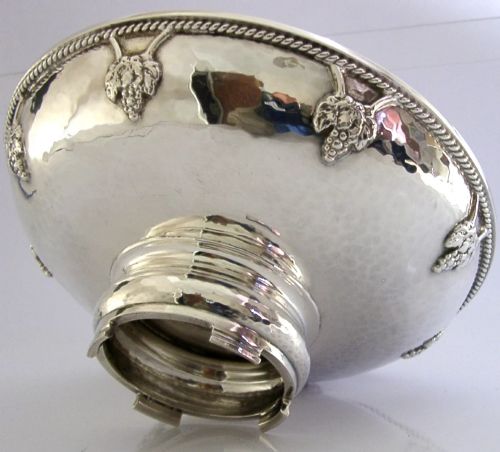
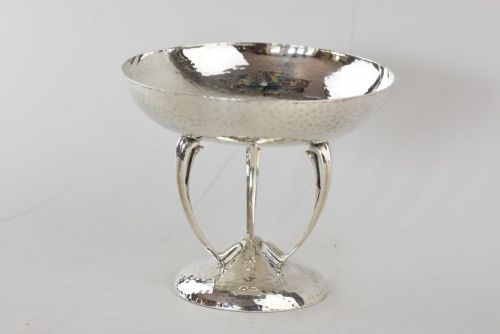
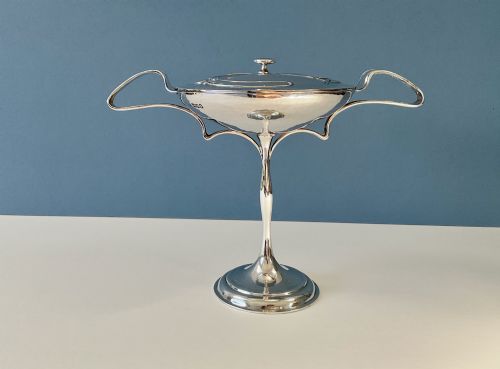
When you handle an antique tazza bowl, you hold a pedestal dish designed to elevate fruit or sweets above the dining surface.
Antique Tazza Bowl
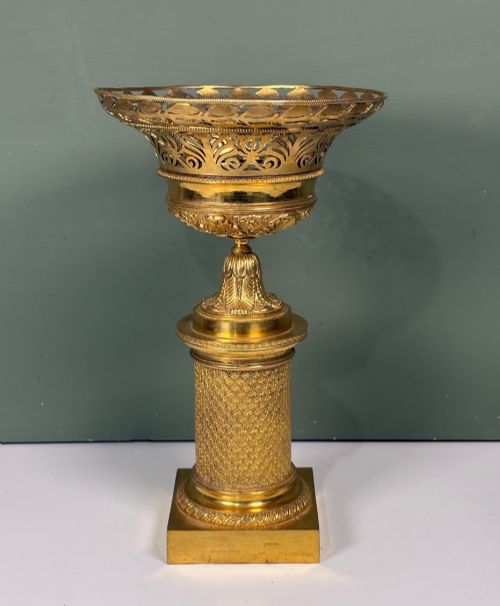
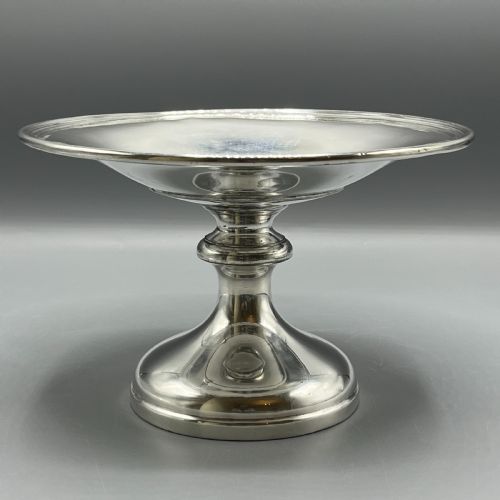
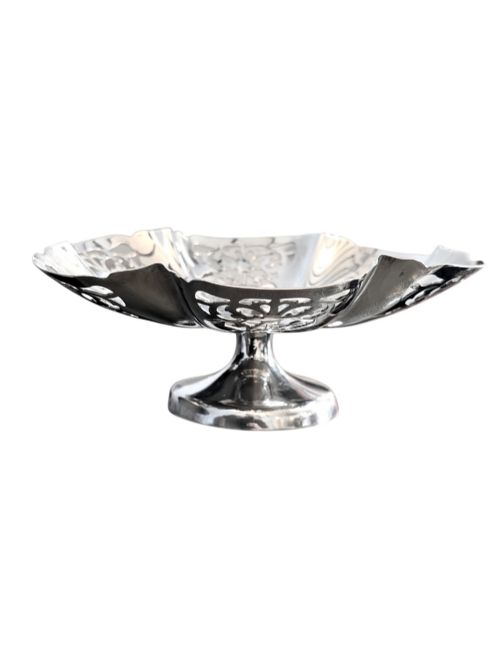
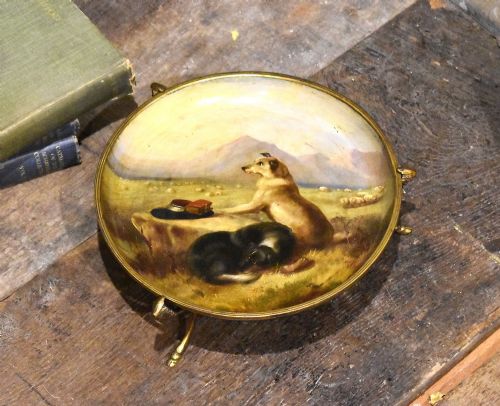
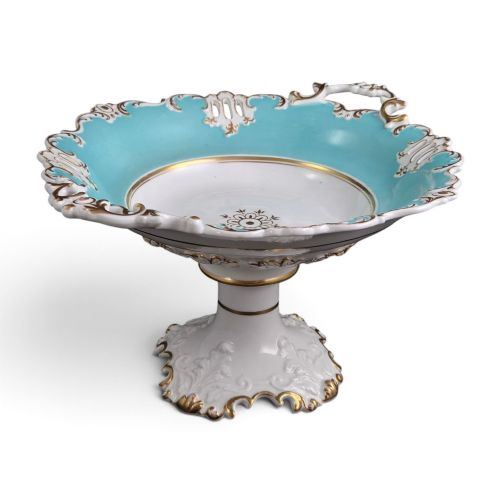
An antique tazza bowl typically takes the form of a shallow dish supported by a central foot or pedestal, originating from formal dining traditions. The pieces appearing here span the nineteenth century through the early decades of the twentieth century, encompassing Victorian, Edwardian, and Art Deco design eras.
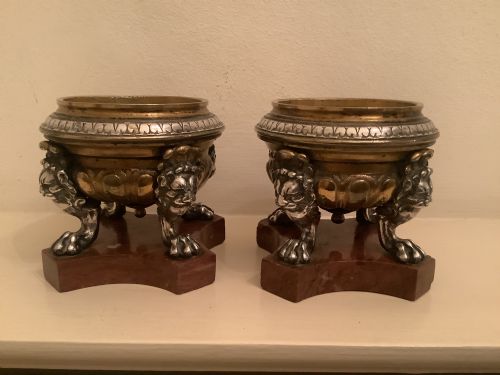
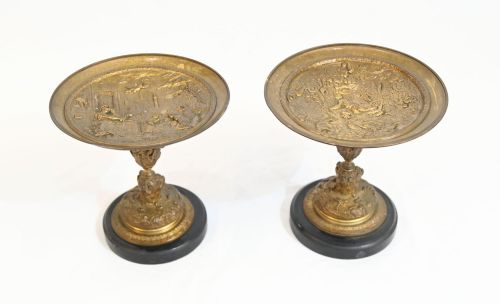
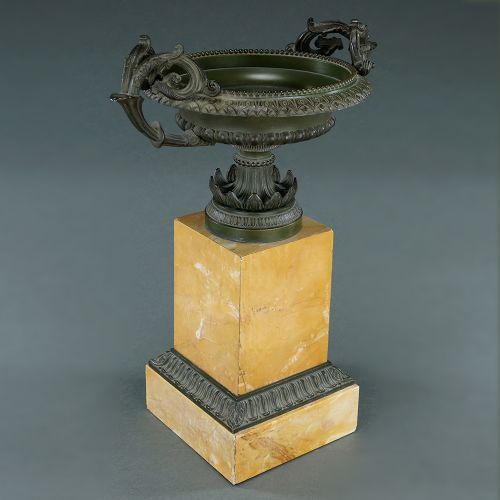
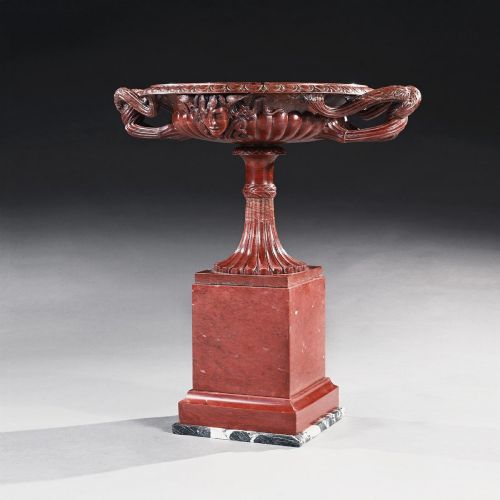
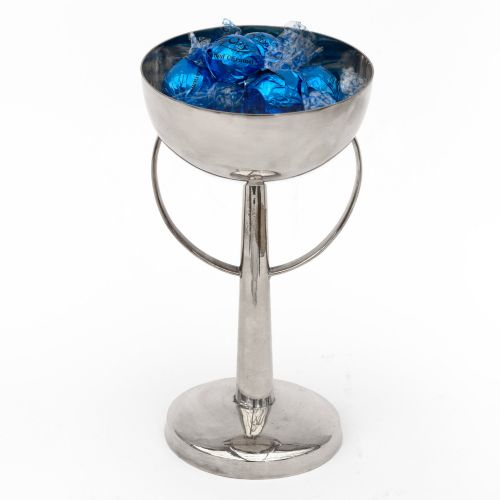
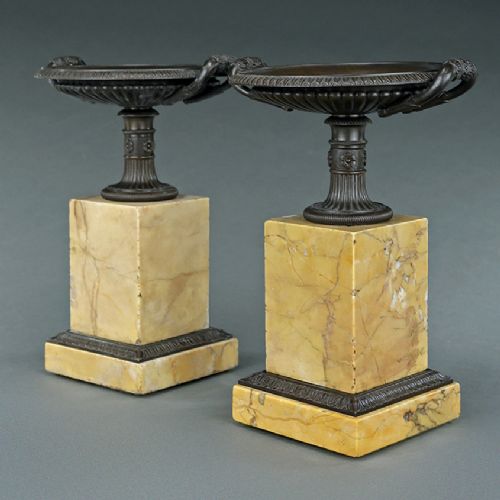
Makers produced these pedestal dishes in various materials, ranging from porcelain and crystal glass to sterling silver and cast bronze mounted on marble bases. Grand Tour souvenirs from Italy sit alongside French ormolu works and English ceramic productions from factories such as Coalport and Spode.
Buyers encounter forms that function as decorative centrepieces, fruit bowls, or smaller bonbon dishes for the table. The scale shifts from diminutive marble and Blue John examples to large gilt bronze and crystal compositions designed to anchor a room.
Materials and construction
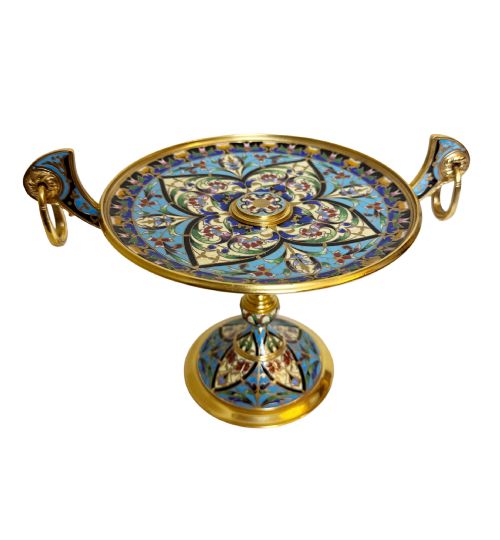
Casting and chasing dominate the metal examples, where artisans worked in bronze, ormolu, and sterling silver, frequently combining metals with carved stone bases like Siena marble or onyx. Champlevé enamel and inset agate cabochons add colour and texture to the metal frameworks.
Glass and ceramic pieces rely on mould-blowing, cutting, and hand-painting, paired with metal mounts secured by threaded screws or pins. Woodwork utilises turning and carved decoration, seen in oak fruit bowls and musical mechanisms housed within turned bodies.
Antique Tazza Bowl Retail Price Guide 2026
Typical asking prices for tazza bowl among the pieces listed under this phrase on Sellingantiques today, from the lower quarter to the upper quarter. They describe what is for sale here now, not the wider market.
Musical wooden fruit bowls from the 1920s play tunes while you select an apple.
Standards of execution
Quality rests upon the crispness of the casting in metal mounts and the depth of hand-cut facets in crystal glass dishes. Superior examples display meticulous chasing on bronze and ormolu, where decorative motifs remain sharp and well-defined rather than soft or smoothed over.
The choice of raw material dictates the standing of the piece, particularly with mineral specimens like Blue John, Ashford marble, and Rosso Antico, where natural figuring and flawless turning elevate the object. Integration between dissimilar materials, such as porcelain bowls fitted to gilt bronze bases, reveals the precision of the assembly.
Benedetto Boschetti·Coalport·Goldsmiths and Silversmiths Company·Spode·Charles Boyton
The Antique Tazza Bowl Glossary
- Tazza
- A shallow bowl or dish mounted on a stem and foot, used originally for serving wine or confectioneries. The form derives from Renaissance metalwork and classical pottery.
- Ormolu
- Gilt bronze produced by applying a mercury-gilding mixture to cast brass or bronze. This technique creates a rich, durable golden surface seen frequently on French decorative arts.
- Grand Tour
- A cultural journey undertaken by wealthy young Europeans through France and Italy during the eighteenth and nineteenth centuries. Souvenirs included miniature bronzes and carved marble tazzas.
- Champlevé
- An enamelling technique where troughs or cells are carved into the surface of a metal object and filled with vitreous enamel powder before firing.
Antique Tazza Bowl: Frequently Asked Questions
What was an antique tazza bowl used for?
These pedestal vessels served primarily as display pieces for fruit, sweetmeats, or biscuits during formal dining. Hosts placed them at the centre of the table or on sideboards to add height and visual interest to the spread.
Over time, their function shifted toward pure ornamentation, acting as decorative centrepieces that showcased the owner's taste and the maker's skill in handling precious materials.
How do I date a metal tazza?
Dating relies heavily on the stylistic vocabulary of the mounts, such as the classical restraint of French Empire pieces or the flowing vegetal lines of Art Nouveau. Maker's marks, hallmarks on silver, and the specific casting techniques employed also provide clear chronological markers.
Examining the construction methods, including the type of screws or fixings used to join the bowl to the pedestal, helps confirm the period of manufacture.
How should I clean a bronze and marble tazza?
Dust bronze and ormolu gently with a soft, dry brush to prevent accumulation in recessed chased areas. Avoid commercial metal polishes, which can strip the original gilding or patination from the surface.
Marble bases require only a wipe with a slightly damp cloth, followed immediately by a dry one, keeping moisture away from any exposed stone fissures or joined metal mounts.
What is the difference between a tazza and a comport?
Both terms describe elevated dishes on pedestals, but 'tazza' leans toward antique, classical, or Continental forms with shallow bowls and decorative mounts. 'Comport' often appears in nineteenth-century English contexts, particularly regarding ceramic and glass dessert services.
In practice, makers and sellers used both words interchangeably for centuries, depending on regional vocabulary and prevailing retail fashions.