



Antique Tapestry Table
An antique tapestry table brings rich textile panels and worked needlepoint into everyday rooms through sturdy mahogany, walnut and rosewood frames.
Antique Tapestry Table
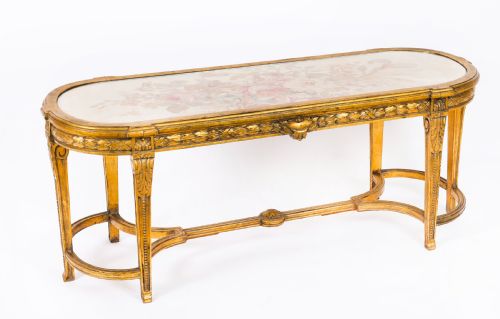
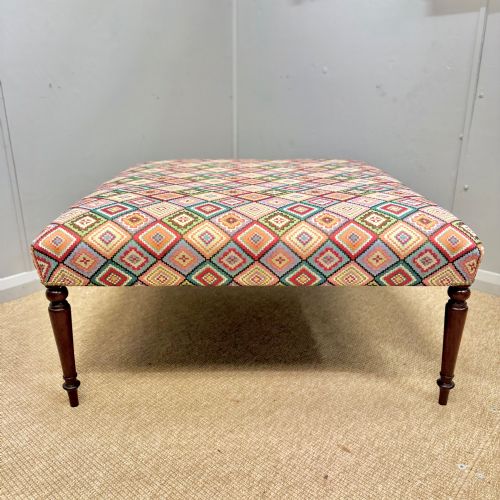
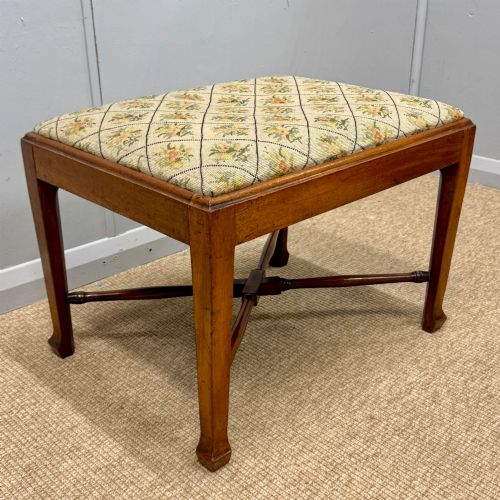
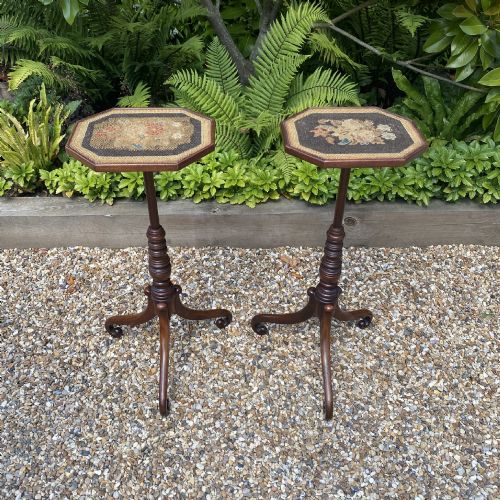
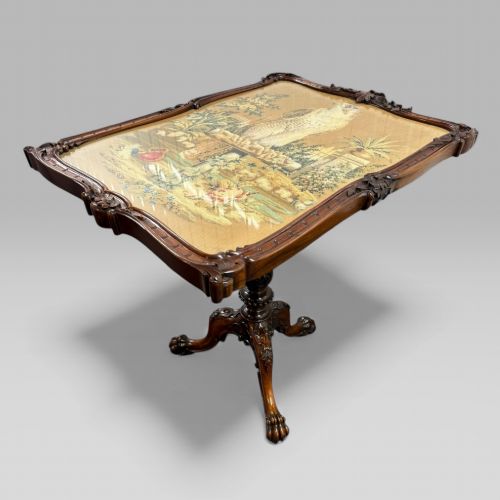
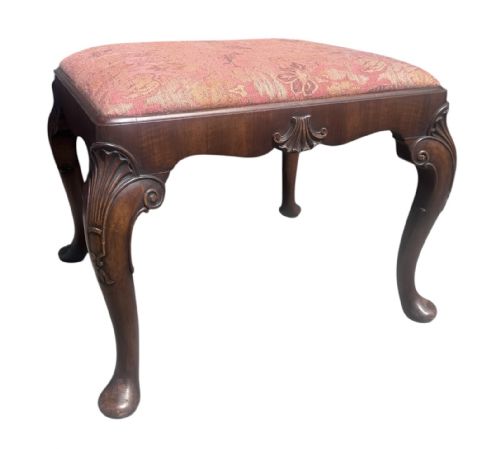
An antique tapestry table brings together small occasional furniture and worked textile panels, appearing most often as stools, footstools, sewing stands and occasional tables from the Victorian period and the nineteenth century. These pieces combine wooden frames in mahogany, walnut and rosewood with embroidered tops, needlepoint panels or woven fabric inserts.
Buyers also encounter related forms such as folding screens, fire screens and wine tables that incorporate textile elements or serve adjacent domestic uses. The selection spans Georgian designs through to Edwardian and early twentieth-century revivals, reflecting varied regional tastes and workshop traditions.
How they were made
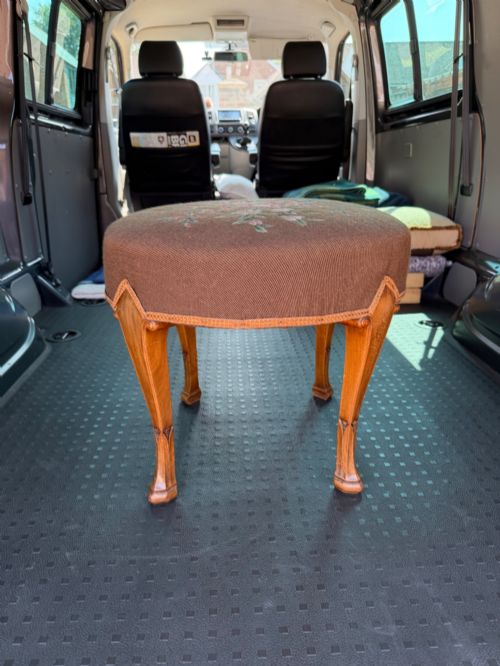
Frames rely on dense timbers including mahogany, walnut and rosewood, shaped with turned supports, cabriole legs or cross stretchers to provide stability. Cabinetmakers utilised traditional joinery alongside carving, gilding and ebonising to finish the structural woodwork.
Upholstery and textile work involve wool, silk and fabric stitched onto canvas or felt grounds. Needlepoint, embroidery and tapestry techniques secure the decorative surface within the wooden rebate or frame.
Tables double as fire screens when the embroidered panel tilts upward to block the hearth heat.
What varies in quality
Quality rests in the crispness of the timber carving and the tightness of the joinery across the frame. Well-made examples maintain structural rigidity in their legs and stretchers without looseness at the joints.
The density and fineness of the needlework or textile panel set apart the superior pieces. Tightly worked wool or silk stitches demonstrate greater durability and precision in the historic design.
Gillows·H Ogden of Manchester·Whytock and Reid
The Antique Tapestry Table Glossary
- Needlepoint
- A type of canvas work embroidery stitched by hand using wool or silk yarn. It forms the durable decorative top seen on many nineteenth-century stools and table inserts.
- Tripod table
- A small freestanding table supported by three pillar legs radiating from a central column. This form provides compact utility beside seating.
- Fire screen
- A movable panel designed to shield occupants from the radiant heat of an open hearth. Many examples incorporate adjustable tapestry or embroidered fabric panels.
- Cross stretcher
- Wooden bracing members intersecting diagonally between the legs of a table or stool for added strength. They frequently feature a central finial or turning.
- Giltwood
- Timber that has been coated with a thin layer of gold leaf or metallic gilt gesso. It appears on revival furniture frames from the nineteenth century.
Antique Tapestry Table: Frequently Asked Questions
What is an antique tapestry table?
An antique tapestry table or related stool incorporates historic needlepoint, embroidery or woven textile panels within a wooden frame of mahogany, walnut or rosewood.
These pieces served functional roles in period interiors as sewing stands, occasional surfaces or upholstered seating.
How do I date an antique tapestry piece?
Dating relies on timber choice, construction methods, and stylistic cues such as Queen Anne revival cabriole legs or Victorian rosewood frames.
Needlework techniques and textile types also offer clues to the period of manufacture, ranging from Georgian origins to early twentieth-century revivals.
Were these tables used for sewing?
Many examples functioned specifically as sewing or work tables, featuring fitted compartments or internal storage beneath the hinged tapestry top.
They allowed nineteenth-century makers to combine practical needlework storage with a decorative decorative textile surface.
How do I care for antique tapestry wood?
Protect the wooden frames by maintaining stable indoor humidity and applying appropriate wax polish sparingly to nourish the timber.
Keep textile panels away from direct sunlight to prevent fading of the historic wool and silk threads.