

Antique Tapestry Rug
When searching for an antique tapestry rug, collectors find woven and embroidered textiles originating from Central Asia, Persia, and Eastern Europe.
Antique Tapestry Rug
The term antique tapestry rug covers a wide range of flatweaves, embroideries, and piled floor coverings made for domestic or ceremonial use. Pieces carrying this description span Central Asian tribal work, Persian flatweaves, and European decorative panels from the nineteenth and early twentieth centuries.
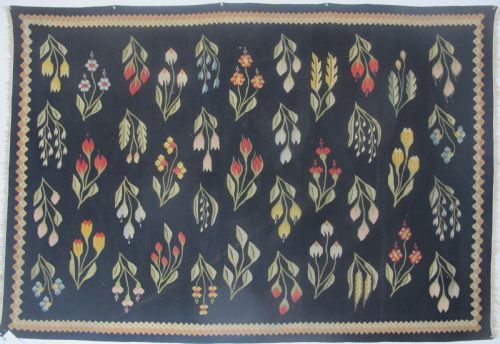
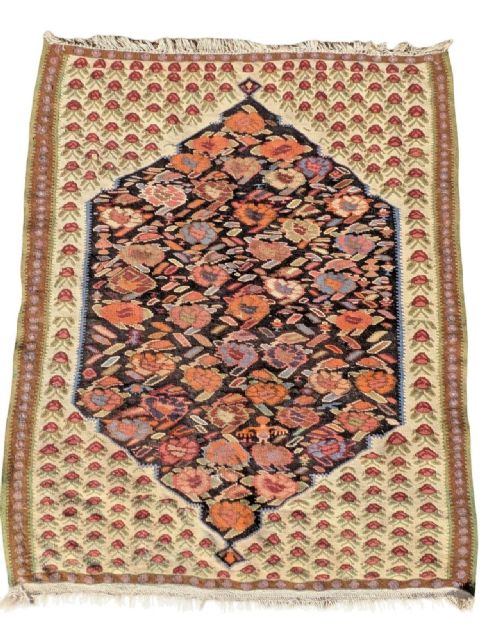
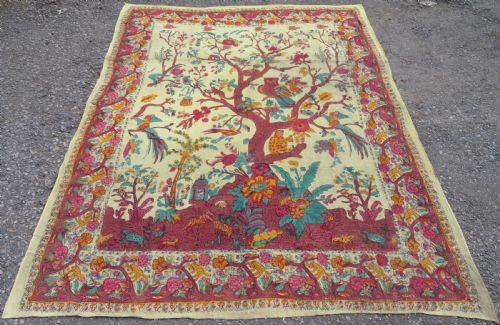
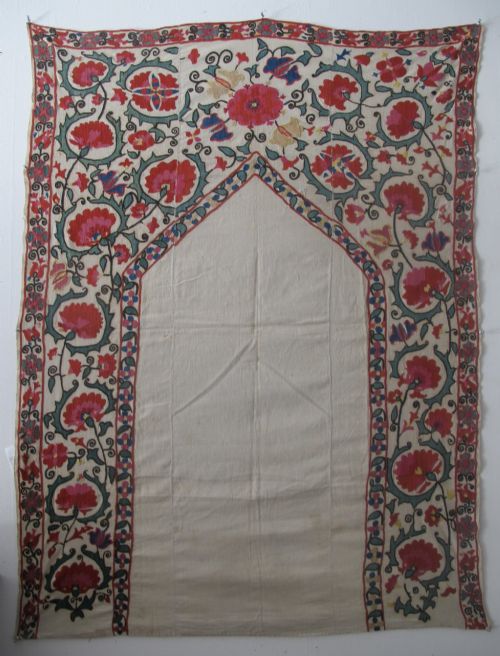
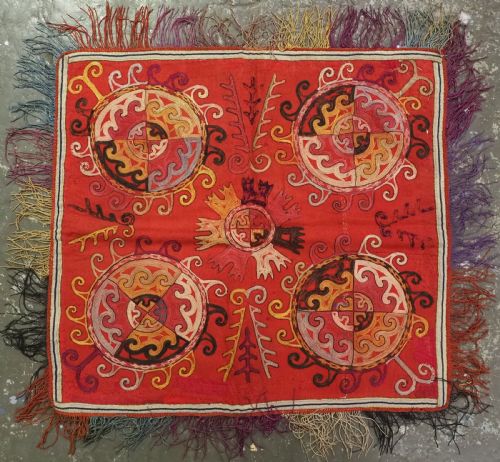
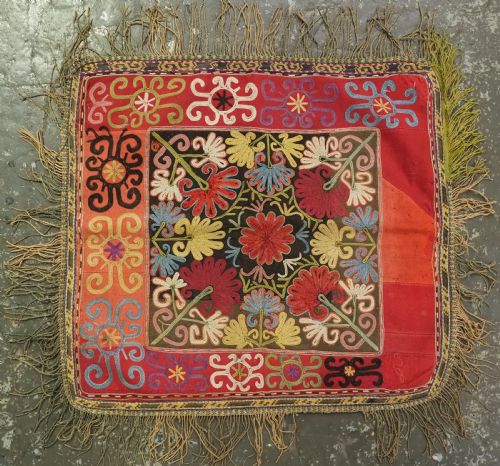
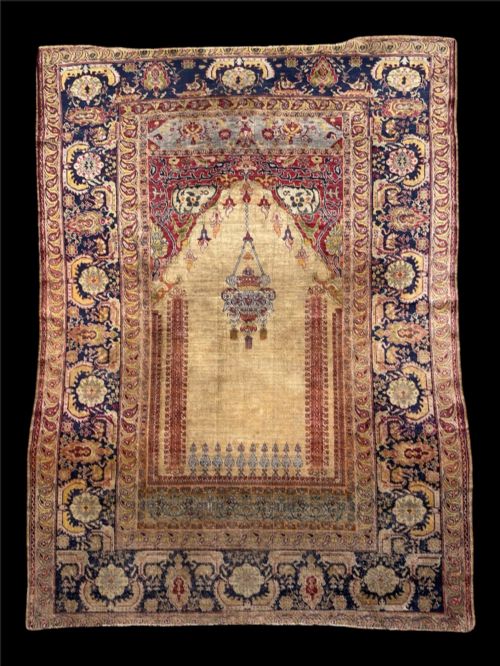
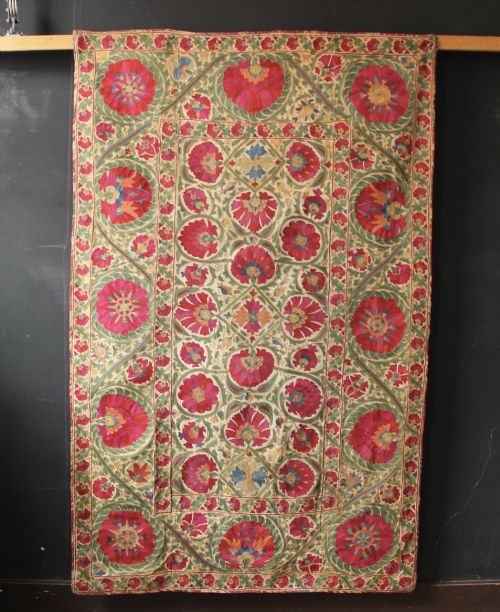
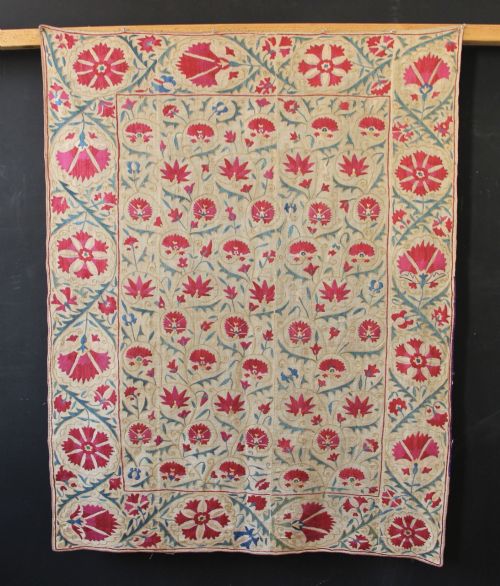
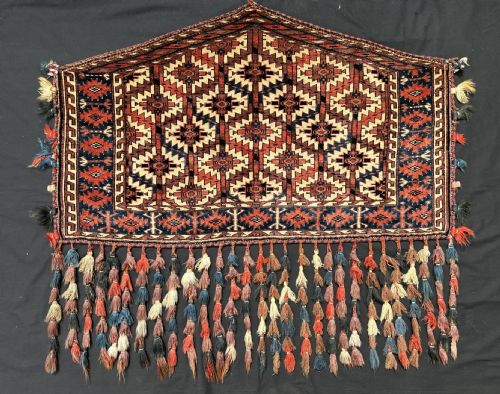
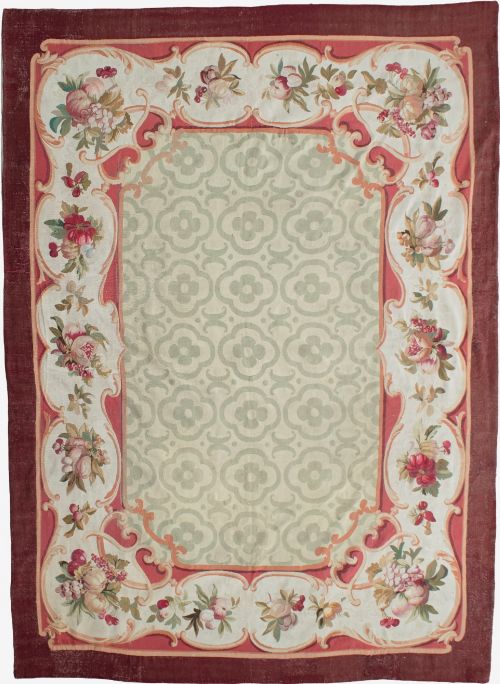
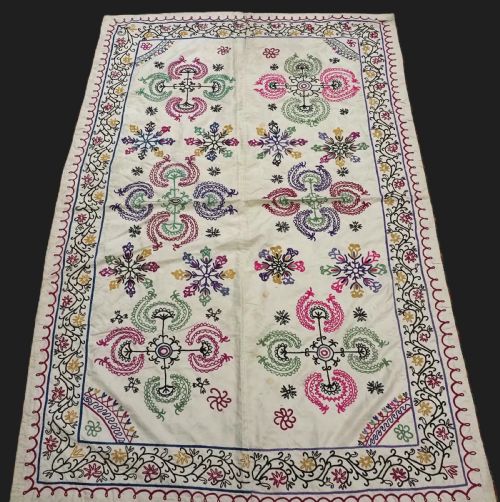
Buyers will encounter items such as Uzbek suzanis, Turkmen asmalyks, Persian kilims, and floral European needlepoints. These textiles served various functions, from wall hangings and dowry pieces to floor coverings and bed covers.
Originating from diverse regions including the Caucasus, Anatolia, and Bessarabia, these works reflect distinct local weaving and embroidery traditions. Each form carries specific motifs and structural traits tied to its geographic source.
How they were made
The primary materials used in these pieces are wool, cotton, and silk, often combined with natural dyes derived from plants and minerals. Artisans applied these fibres through flatweaving, pile knotting, or needlework embroidery upon canvas, felt, and cotton foundations.
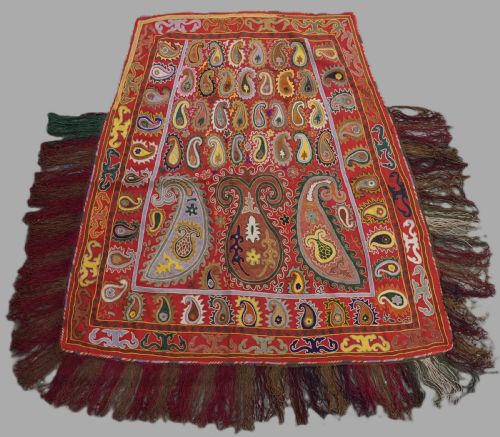
Techniques varied by region, ranging from the intricate silk-on-cotton stitching of Central Asian suzanis to the slit-weave construction of kilims and the dense needlepoint of European panels. Applique work utilising felt and leather also appears in regional tribal artefacts.
Makers utilised locally sourced materials, ensuring that the wool density and silk quality correspond directly to the specific pastoral or urban workshop traditions of the originating community.
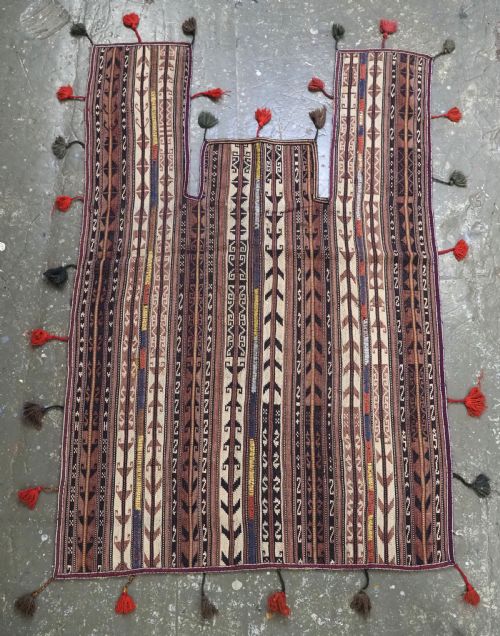
Several ceremonial horse covers and camel trappings in the collection preserve the festive steps of nomadic wedding processions.
What varies in quality
Quality in these textiles depends upon the precision of the execution, the fineness of the weave or embroidery, and the integrity of the materials. Pieces featuring tightly packed stitches or high knot counts demonstrate superior technical skill by the maker.
The vibrancy and complexity of the palette also distinguish finer examples, particularly where natural dyes have maintained their depth and variation across the textile surface. Compositional balance within traditional tribal or floral designs marks the difference between standard production and masterwork output.
The Antique Tapestry Rug Glossary
- Suzani
- An embroidered tribal hanging from Central Asia, typically worked in silk thread on a cotton or linen foundation. These textiles were traditionally created as part of a bride's dowry.
- Kilim
- A flatwoven carpet or rug produced without a pile, common throughout Anatolia, Persia, and the Caucasus. They are constructed by interweaving warp and weft strands tightly together.
- Asmalyk
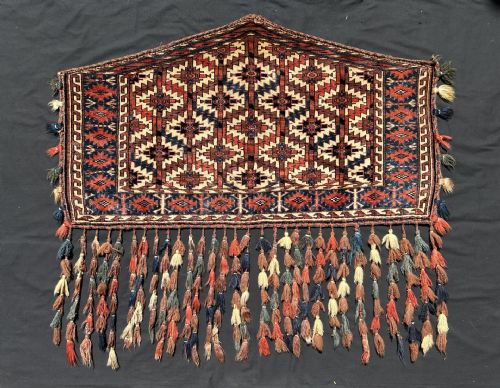
- A pentagonal trapping produced by the Yomut Turkmen and other tribes, historically hung on the flanks of a camel during wedding processions. They feature characteristic geometric gul motifs.
- Sumac
- A Near Eastern flatweaving technique that wraps supplementary weft threads around the warp to produce a textured, durable surface resembling embroidery on the front.
- Chuval
- A large storage bag face made by Turkmen tribes, featuring repeating primary motifs known as guls. These pieces were utilised inside traditional yurts for household storage.
Antique Tapestry Rug: Frequently Asked Questions
How were antique tapestry rugs used originally?
These textiles served multiple purposes within traditional households and nomadic communities, functioning as floor coverings, wall decorations, bedding, and ceremonial horse trappings. Many items were created specifically for domestic interiors or as part of a bride's dowry.
Nomadic groups utilised portable woven panels for practical storage and tent decoration, while urban workshops produced decorative carpets and panels for affluent homes. Their functions dictated their scale, material composition, and structural resilience.
How do I care for an antique textile?
Protect fragile fibres and natural dyes by keeping textiles out of direct sunlight to prevent fading and degradation over time. Gentle vacuuming through a mesh screen helps remove dust without pulling loose threads.
Avoid hanging heavy embroidered panels by a single point, as this places undue stress on the fabric foundation. Professional conservation cleaning is recommended for antique wool and silk pieces.
How can I tell regional styles apart?
Regional attribution relies on identifying specific motifs, structural techniques, and colour palettes unique to particular tribes or workshops. Central Asian suzanis are recognised by large floral medallions worked in silk, while Turkmen pieces feature geometric guls on deep red fields.
Persian and Caucasian flatweaves utilise distinct geometric or stylized floral language. Comparing the foundation materials and edge finishes further clarifies the geographic origin.
What is the difference between a flatweave and embroidery?
Flatweaves are constructed by interweaving warp and weft threads on a loom to create a textile where the design is integral to the woven structure itself. Kilims and sumacs are primary examples of this method.
Embroidery involves stitching decorative threads onto a pre-existing foundation fabric, such as cotton or felt. Suzanis and Rasht panels demonstrate this additive needlework technique.