





Antique Tambour Commode
An antique tambour commode offers discreet bedside storage with sliding wooden slats, combining Georgian elegance with practical ingenuity.
Antique Tambour Commode
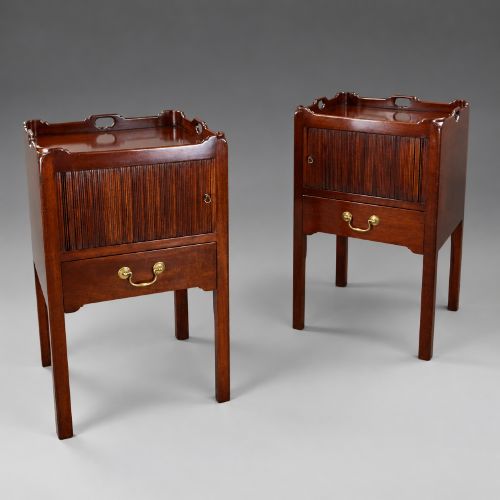
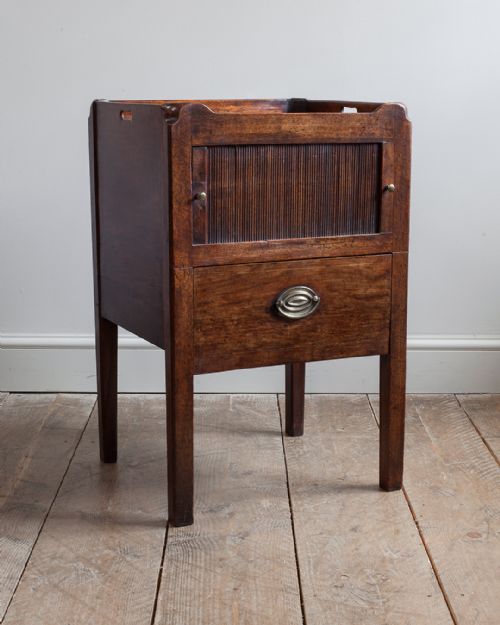
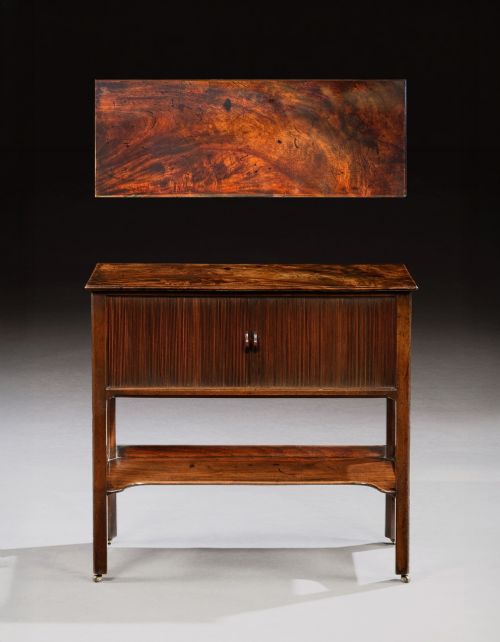
An antique tambour commode is a specialised form of small cabinet or bedside table designed to conceal its storage behind flexible strips of wood known as tambour. These pieces primarily date from the Georgian and Regency periods, alongside later 19th-century and early 20th-century revivals.
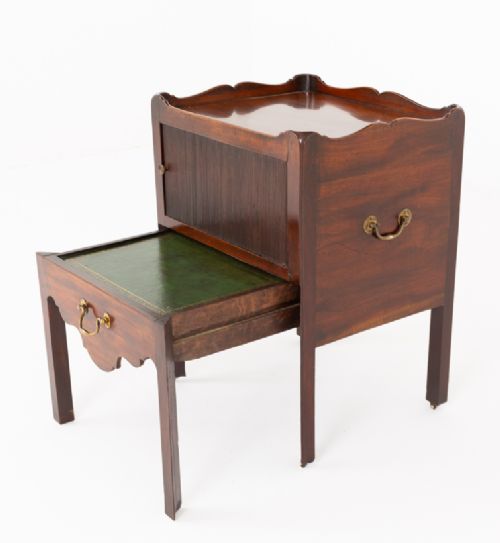
The most common form on this page is the bedside cabinet or nightstand, often configured with a tray top above the sliding door. Makers also produced serpentine, bow-front, and concave variations during the 18th century, alongside occasional chest of drawers and credenza formats.
The materials reflect standard British cabinet-making traditions of the Georgian era, relying heavily on mahogany complemented by lighter woods for contrast.
Materials and construction methods
Craftsmen built the primary carcase of an antique tambour commode using solid mahogany or mahogany veneers, often selecting timber with rich grain patterns. Drawer linings and secondary woods frequently included oak.
The defining tambour mechanism required cutting thin wooden slats and gluing them to a canvas or linen backing so they could slide smoothly within grooved tracks. Cabinet-makers added decorative detail through boxwood inlay, satinwood borders, and brass handles or pulls.
Listings feature mahogany predominantly, enhanced by boxwood inlay, satinwood, and brass hardware across Georgian and Regency periods.
Distinguishing quality across examples
Quality rests heavily on the precision of the tambour mechanism itself, where superior examples glide silently and align perfectly within their tracks without binding. The choice of timber also dictates standing, with finely figured mahogany and crisp boxwood inlay marking the better end of the range.
Structural flourishes such as serpentine, concave, or bow-front shapes demand greater carpentry skill than straight-sided carcasses. The presence of original brass hardware and untouched secondary timbers further elevates a piece.
Gillows
The Antique Tambour Commode Glossary
- Tambour
- A flexible shutter made of narrow vertical strips of wood glued to a fabric backing. This allows the door to slide around a curved track to conceal the interior.
- Commode
- A low cabinet or chest of drawers originating in the 18th century. In British usage, the term often describes bedside night stands and pot cupboards.
- Tray top
- A raised rim around the upper surface of a bedside table designed to prevent items from rolling off. This feature appears frequently on Georgian examples.
- Serpentine
- A shaped furniture front that curves outward in the centre and inward at the sides. It requires advanced woodworking skill to execute properly.
- Inlay
- A decorative technique where contrasting materials like boxwood are inserted into recesses cut into the primary wood surface. It creates geometric or floral borders.
Antique Tambour Commode: Frequently Asked Questions
What is a tambour door?
A tambour door consists of narrow vertical wooden slats attached to a flexible canvas backing, allowing the shutter to slide around a curved track.
This ingenious mechanism conceals the cabinet interior without requiring the clearance space needed by traditional hinged doors.
How do I use a tambour commode today?
These compact cabinets function ideally as bedside tables or small accent pieces in a living room, offering concealed storage for modern essentials.
The sliding shutter keeps items out of sight while maintaining a tidy silhouette in smaller spaces.
How do I spot a Georgian original?
Look for construction details such as hand-cut dovetails on internal drawers, secondary woods like oak, and the rich patina of aged mahogany.
Proportions and timber choice typically align with 18th-century cabinet-making standards rather than later 20th-century revival methods.
What maintenance do these cabinets need?
Keep the tambour tracks clean of dust and debris to ensure the sliding slats continue to move freely without binding.
Apply a traditional beeswax polish occasionally to nourish the mahogany and preserve the depth of the finish.