
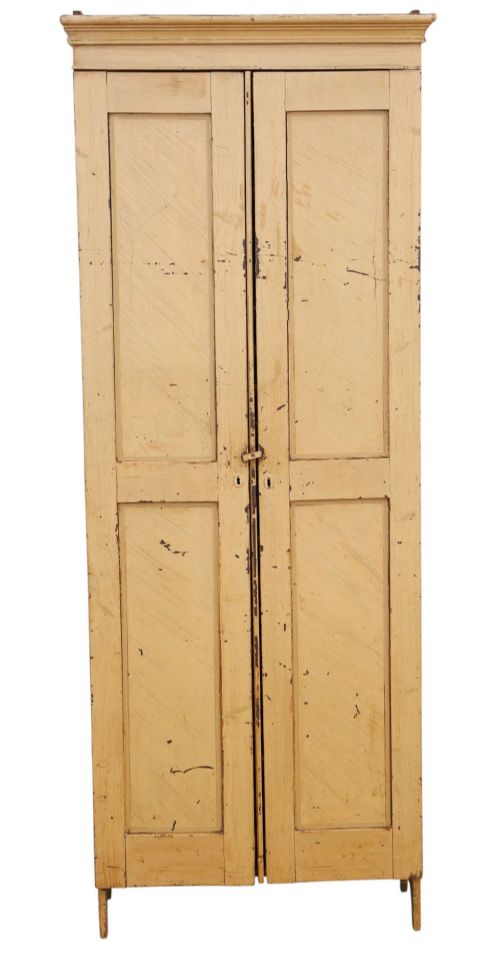
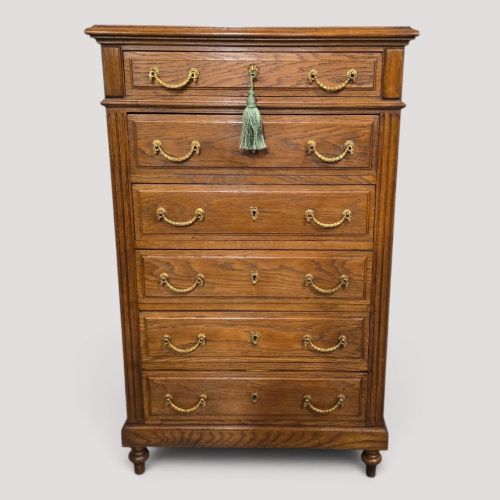
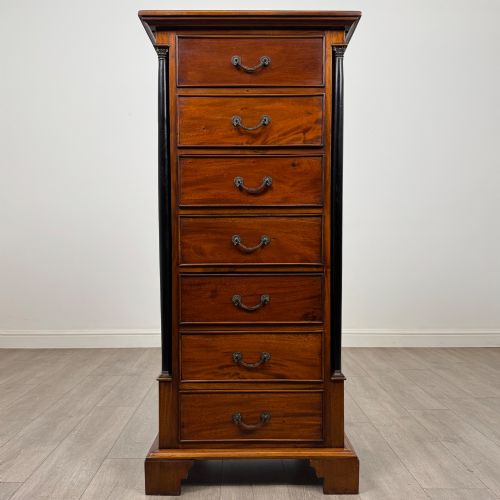
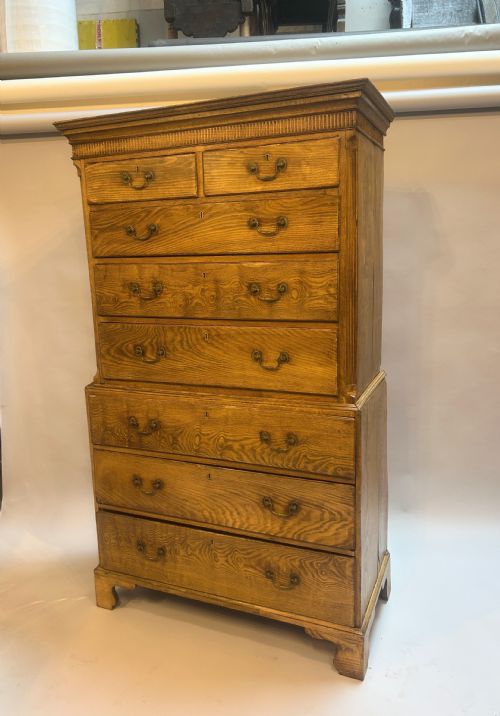
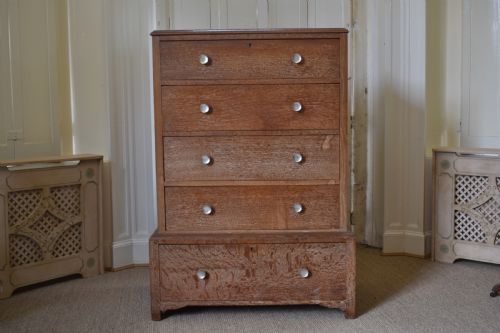
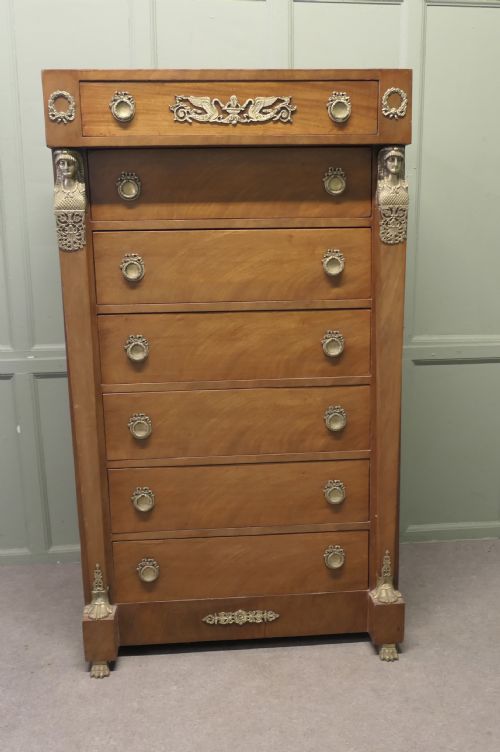
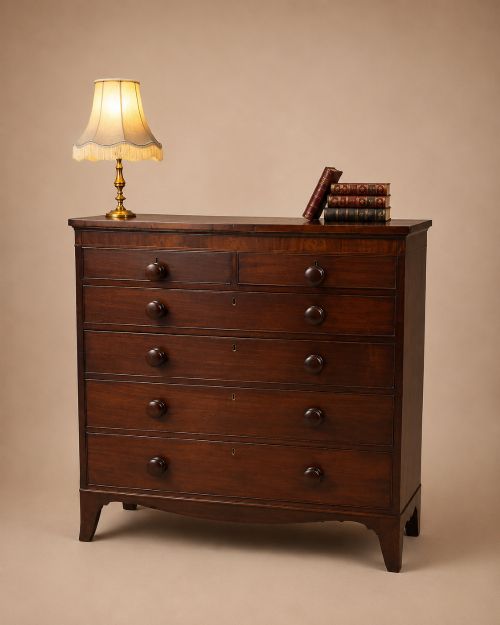
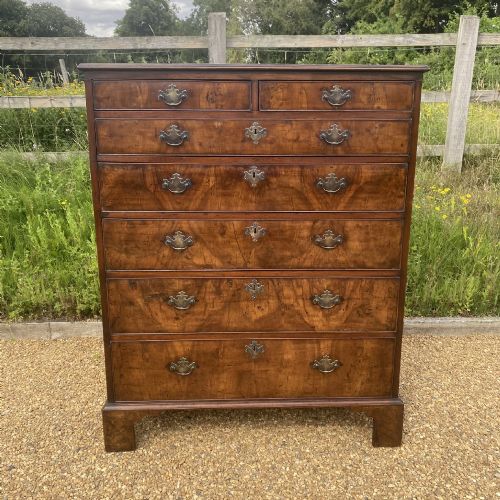
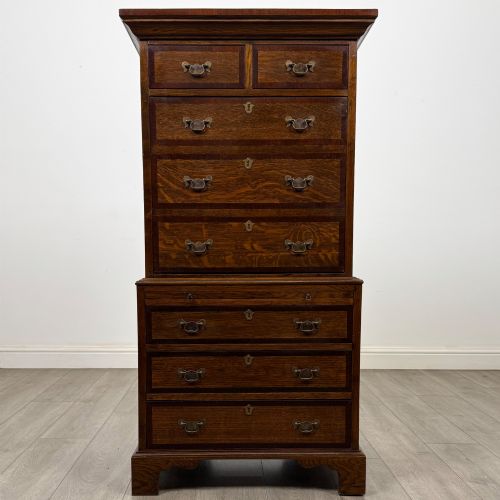
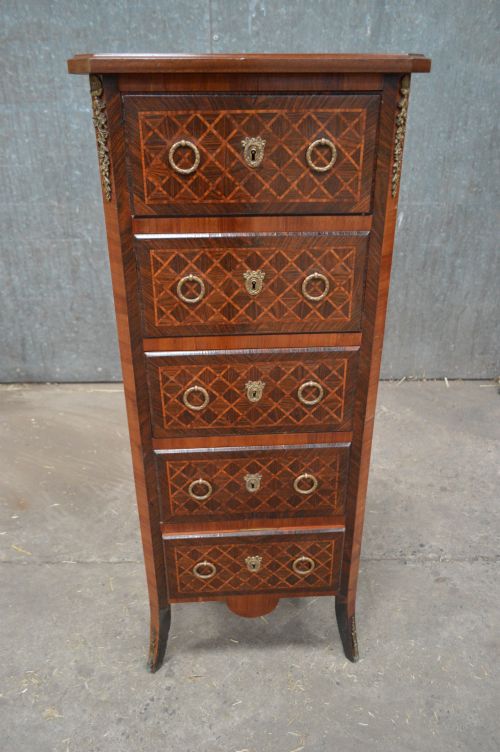
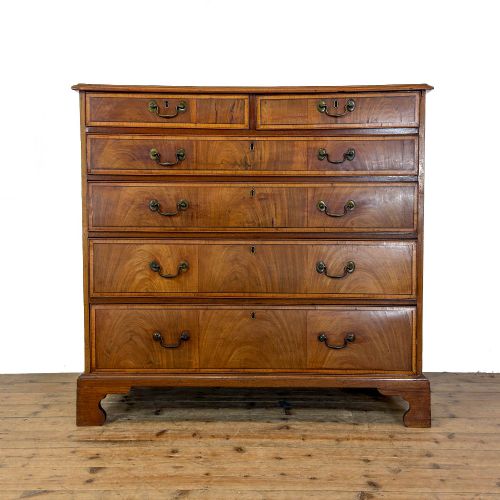
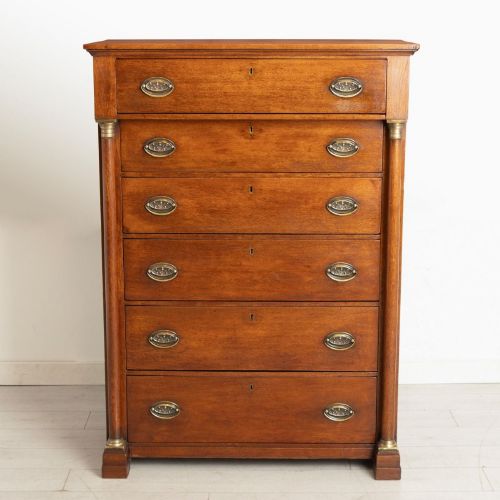
Antique Tall Dresser
An antique tall dresser brings vertical presence and substantial storage to a room, offering practical utility through tiered drawers and display space.
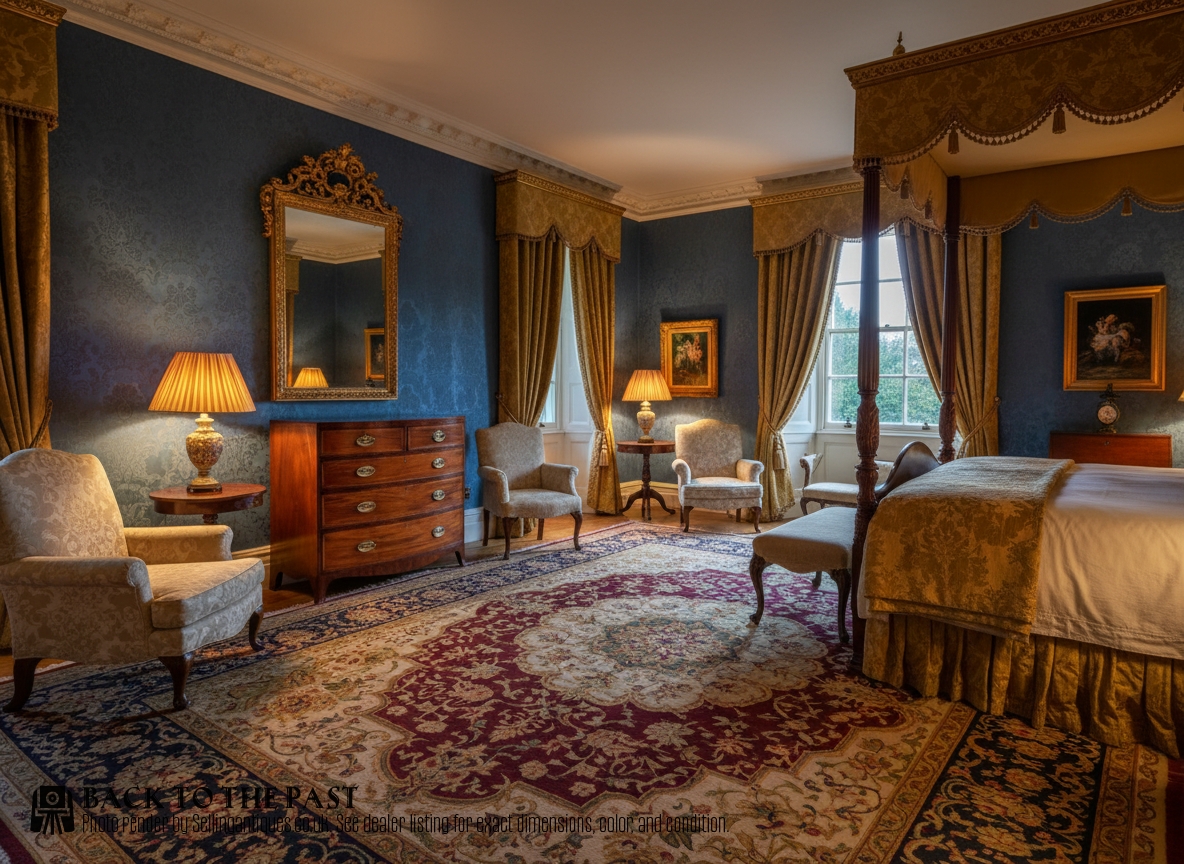
Antique Tall Dresser
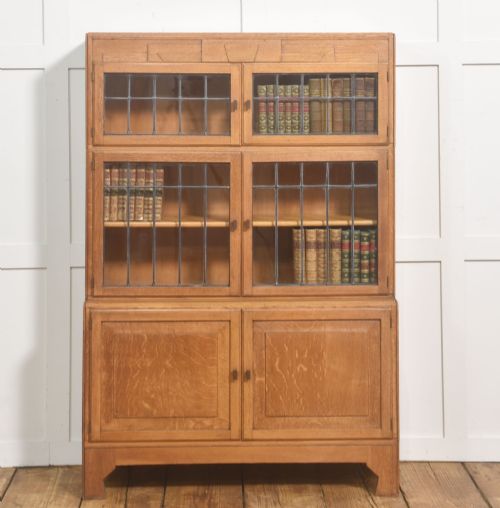
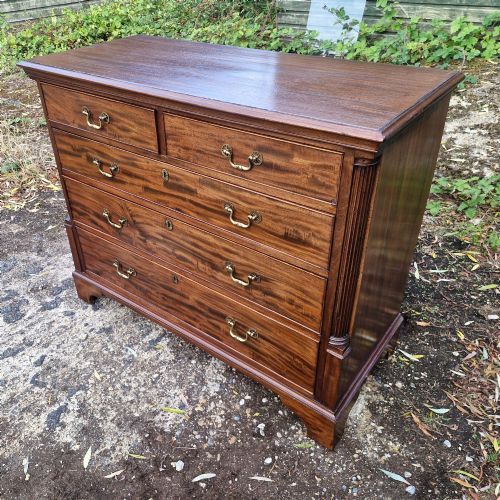
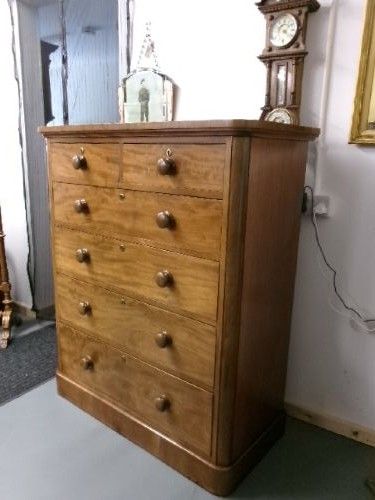
When searching for an antique tall dresser, you encounter several distinct vertical forms designed to maximise storage without claiming excessive floor space. The selection spans tallboys, chests of drawers reaching five or more heights, narrow cupboards, and traditional pine kitchen dressers with upper display sections.
The pieces listed on this page originate from periods ranging through the Georgian, Victorian, and Edwardian eras, alongside early twentieth-century examples. You will frequently find mahogany and pine constructions, alongside oak, walnut, and occasional painted finishes.
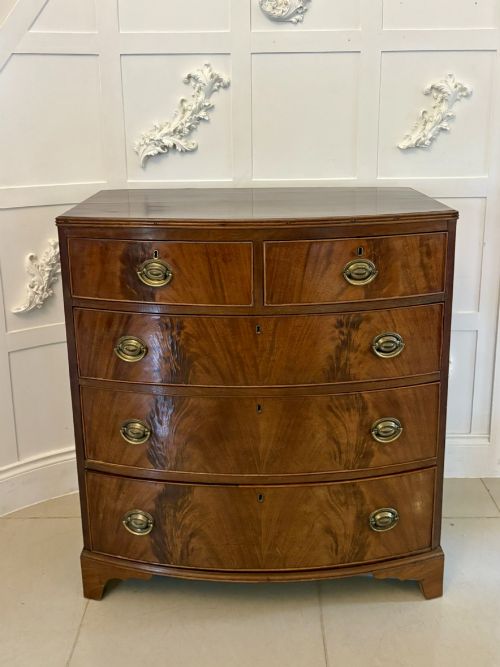
Forms vary from formal bow-fronted George III tallboys to rustic French provincial cupboards and tall pine farmhouse dressers. Each variant serves a specific domestic function, from linen storage to tableware display.
Materials and construction methods
Cabinet makers utilised dense native and imported timbers, primarily mahogany, oak, and pine, often selecting figured mahogany or burr walnut for primary visual surfaces. These woods were worked using traditional joinery techniques, including dovetail joints for drawer construction to ensure lasting structural integrity.
Secondary materials such as brass for handles and escutcheons, glass for glazed bookcase and display cabinet doors, and iron hardware provide functional and decorative contrast. Surfaces were finished with wax, polish, or paint, allowing the natural grain or applied colour to define the exterior.
Several tall dressers arrive ready to wax or paint, offering a domestic project for the enthusiastic decorator.
Factors of quality and execution
The distinction between standard pieces and the finest examples lies in the selection of timber and the precision of the cabinet work. Superior items display carefully matched veneers, such as crossbanded burr walnut or figured mahogany, integrated seamlessly into the structural frame.
Proportion and decorative restraint dictate the aesthetic tier of each piece. Fine items incorporate well-executed details like graduated drawers, subtle stringing, or period brass handles that complement the overall scale without overwhelming the design.
The Antique Tall Dresser Glossary
- Tallboy
- A tall chest of drawers, often consisting of one chest stacked upon another, providing significant vertical storage capacity.
- Chest-on-chest
- An alternative term for a tallboy where a smaller upper chest sits directly on a larger lower chest.
- Crossbanding
- A decorative border of veneer laid with the grain running perpendicular to the surrounding surface.
- Bow front
- A convex, curved front elevation commonly found on Georgian and Victorian chests of drawers.
- Dovetail
- A traditional interlocking joint utilised in drawer construction for superior strength and durability.
Antique Tall Dresser: Frequently Asked Questions
What is the difference between a tallboy and a standard chest of drawers?
A tallboy typically rises higher than a standard chest by incorporating additional vertical storage tiers or taking the form of a chest-on-chest.
This elevated design allows you to store a greater volume of clothing or linens while occupying a minimal footprint on the floor.
How do I care for a polished mahogany surface?
Maintain the timber by applying a quality beeswax polish periodically and buffing gently with a soft, lint-free cloth.
Keep the piece away from direct sunlight and radiators to prevent the mahogany from drying out or splitting over time.
Are pine dressers suitable for modern kitchens?
Pine dressers offer robust storage and display space that integrates well into contemporary or traditional kitchen settings.
Many examples feature adjustable shelving or glazed upper cabinets which prove practical for storing crockery and glassware.
How can I identify a Georgian piece?
Georgian pieces generally exhibit classic proportions, high-quality timber selection such as figured mahogany or walnut, and fine hand-cut dovetails.
Look for period hardware styles and traditional cabinet-making techniques characteristic of the eighteenth century.