


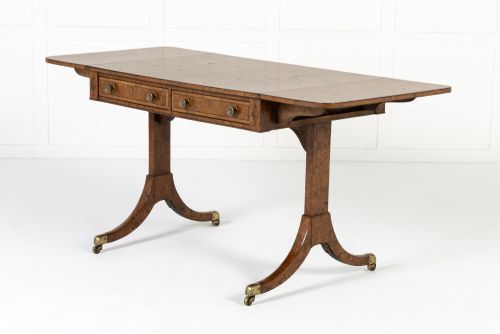
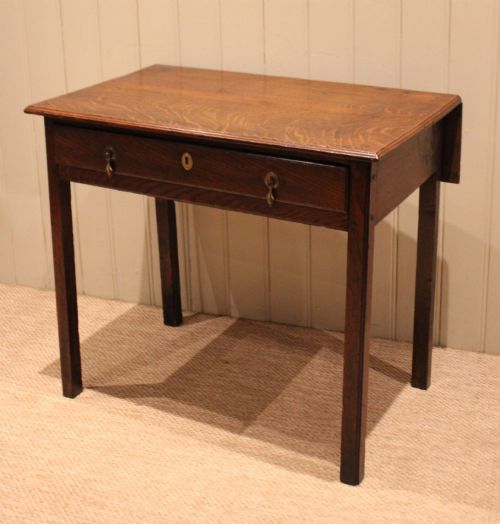
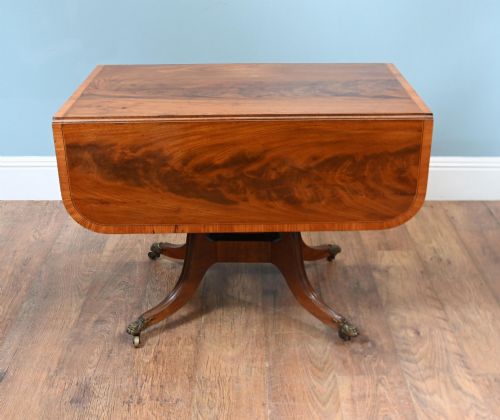
Antique Table with Leaf
An antique table with leaf provides extendable dining and versatile surfaces through clever drop leaves, gatelegs, or removable sections.
Antique Table with Leaf
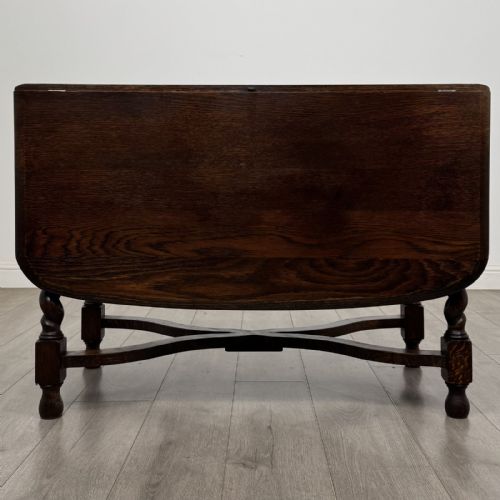
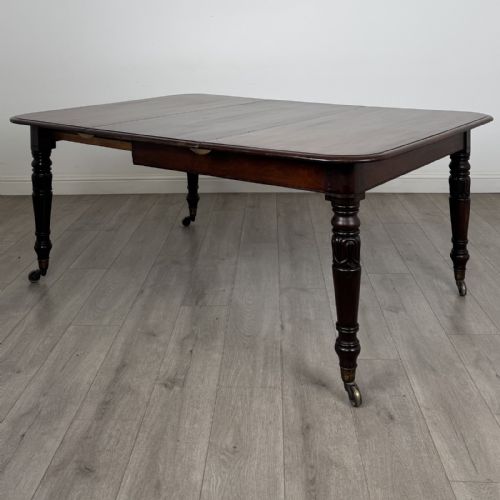
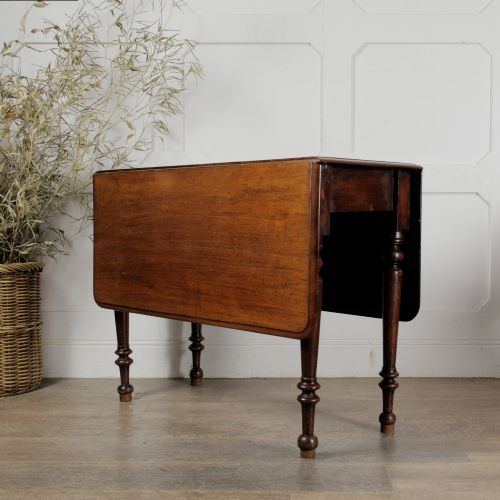
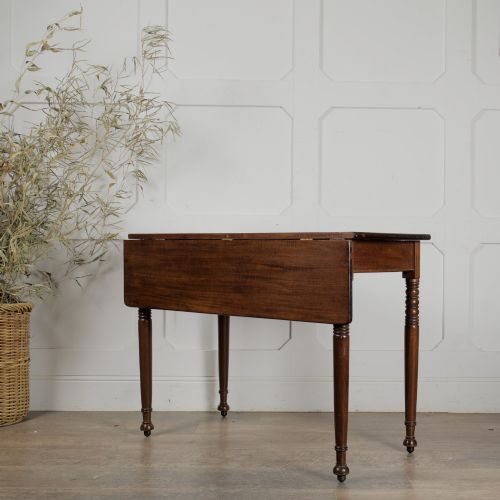
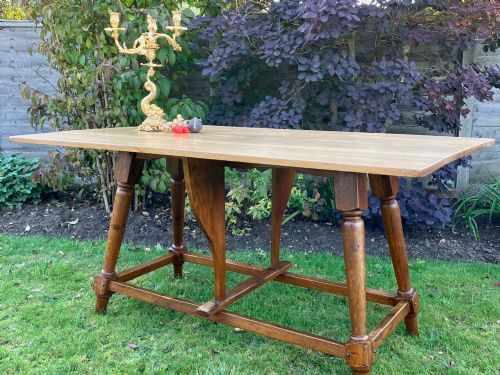
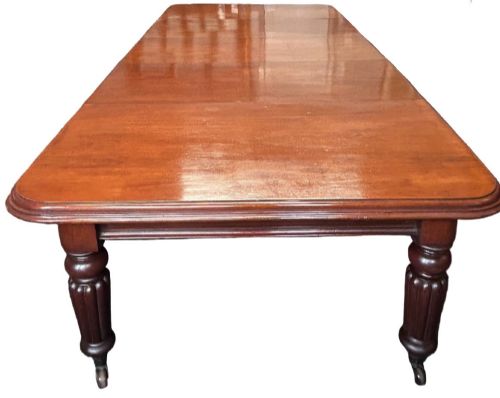
An antique table with leaf spans compact drop-leaf and gateleg formats from the seventeenth and eighteenth centuries alongside large pillar-and-scroll dining tables from the Georgian, Regency, and Victorian eras.
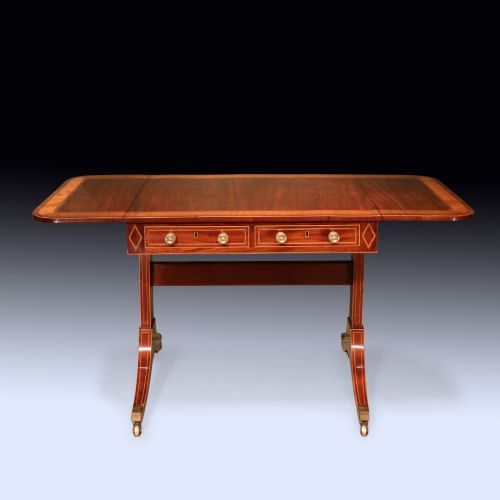
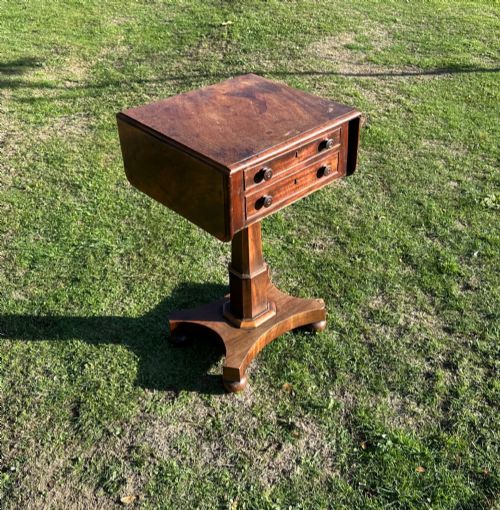
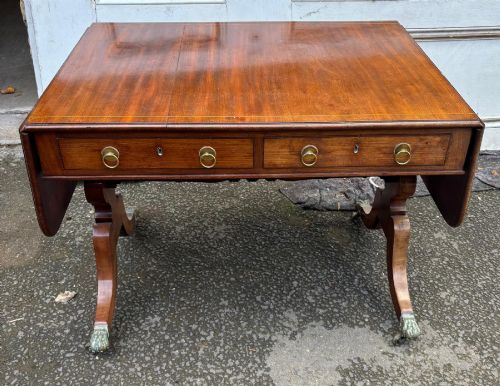
Dining formats appear frequently alongside smaller Pembroke, sofa, and occasional tables equipped with folding flaps or extension leaves.
Pieces originate across the nineteenth century primarily, with earlier oak examples and later Edwardian variations also represented.
Materials and construction
Timbers focus heavily on mahogany, oak, and walnut, frequently selected for figured grain or enriched with satin birch, rosewood, and partridge wood cross-banding.
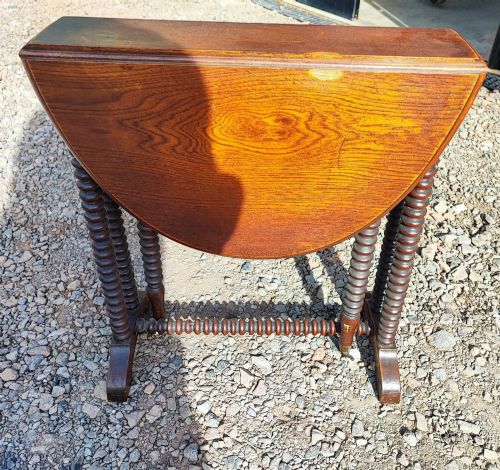
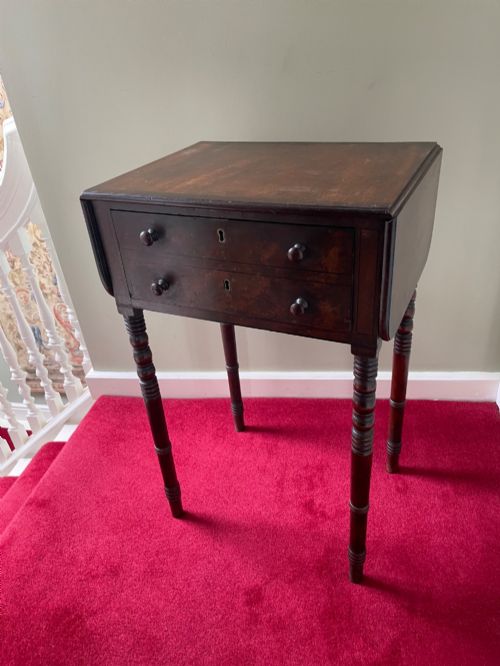
Structural embellishments include brass inlays, silver gilt, marble tops, and turned supports such as bobbin legs, bamboo-turned legs, and reeded pedestals.
Antique Table with Leaf Retail Price Guide 2026
Typical asking prices for table with leaf among the pieces listed under this phrase on Sellingantiques today, from the lower quarter to the upper quarter. They describe what is for sale here now, not the wider market.
Miniature sutherland tables shrink full-sized drop-leaf dining mechanics down to tabletop scale for reasons lost to Victorian whimsy.
Distinguishing execution
The standard of timber selection shapes the piece, from plainly utilitarian pine kitchen tables to finely figured mahogany and burr walnut dining surfaces.
The sophistication of the mechanism determines execution, whether folding drop flaps on delicate Pembroke tables or complex multi-pillar extending dining frameworks with original leaves.
The Antique Table with Leaf Glossary
- Drop leaf table
- A table with hinged flaps on one or both sides that fold down when not in use. These conserve floor space in smaller rooms.
- Gateleg table
- An antique table featuring hinged legs that swing outward to support folding drop leaves. This design dates back to the seventeenth century in English oak.
- Pembroke table
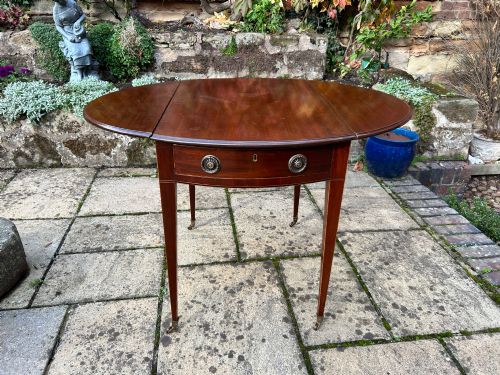
- A small rectangular table fitted with hinged drop leaves on the sides and one or more drawers. They often served light writing or work purposes.
- D-end table
- A dining table whose end sections form a semi-circle resembling the letter D. These sections detach or combine with central leaves to alter length.
Antique Table with Leaf: Frequently Asked Questions
How do drop leaf tables work?
Drop leaf tables utilise hinged side flaps supported by swinging legs or brackets. This allows the surface area to expand or contract depending on space requirements.
In older pieces, the hinges and swing-out gatelegs are constructed from matching timbers to integrate smoothly with the frame when lowered.
What is an extending dining table?
An extending dining table incorporates removable leaves that slot into the centre or draw out from the ends. Pillar bases or additional legs provide stability when fully opened.
Victorian and Georgian examples often manage heavy mahogany leaves supported by twin or triple pedestals.
Where were Pembroke tables used?
Pembroke tables functioned as versatile occasional writing or work surfaces in eighteenth and nineteenth-century parlours. Their drop leaves allowed them to sit compactly against walls.
Many examples include fitted drawers for papers or sewing implements, often retaining their original working keys.
How do I identify oak gateleg tables?
Oak gateleg tables display sturdy turned baluster or bobbin legs supporting thick plank tops. Their seventeenth and eighteenth-century construction relies heavily on pegged joints and solid oak timbers.
These pieces typically exhibit a deep, faded patina developed across centuries of domestic use.